The Week The Week
flag of US
US
flag of UK
UK
https://cdn.mos.cms.futurecdn.net/skoGBi9qKFoUtnNWkovjJQ.jpg

SUBSCRIBE

Try 6 Free Issues

Sign in
  • View Profile
  • Sign out
  • The Explainer
  • Talking Points
  • The Week Recommends
  • Podcasts
  • Newsletters
  • From the Magazine
  • The Week Junior
  • More
    • Politics
    • World News
    • Business
    • Health
    • Science
    • Food & Drink
    • Travel
    • Culture
    • History
    • Personal Finance
    • Puzzles
    • Photos
    • The Blend
    • All Categories
  • Newsletter sign up Newsletter
  • Brand Logo
    Tanker seizure, golden visa and impeachment ‘theater’

     
    TODAY’S INTERNATIONAL story

    US seizes oil tanker off Venezuela

    What happened
    The U.S. intercepted and seized control of an oil tanker off the coast of Venezuela yesterday. The merchant ship has been under U.S. sanctions “for years” after transporting “sanctioned oil from Venezuela and Iran,” Attorney General Pam Bondi said on social media. Venezuelan Foreign Minister Yvan Gil called the seizure “blatant theft and an act of international piracy” aimed at robbing Venezuela of its oil.

    Who said what
    “We’ve just seized a tanker on the coast of Venezuela — a large tanker, very large, the largest one ever seized, actually,” President Donald Trump told reporters yesterday. Asked what will happen to the oil, he said, “Well, we keep it, I guess.” The ship was seized by FBI and Homeland Security agents with military backing, Bondi said. “Using U.S. forces to take control of a merchant ship is incredibly unusual,” The Associated Press said.

    The operation was a “significant escalation in the U.S. pressure campaign against President Nicolás Maduro and his country’s oil-dependent economy,” The Washington Post said. The White House did not specify “the legal authority under which the vessel and its contents were seized.” It also wasn’t clear the U.S. “had the legal authority to keep the oil,” The New York Times said, but according to one official, a “federal judge issued a seizure warrant roughly two weeks ago because of the ship’s past activities smuggling Iranian oil, not because of links to the Maduro government.” 

    The tanker, identified as the Skipper by officials and maritime tracking firms, was sanctioned under its previous name, the Adisa, and was falsely flying the Guyana flag. Venezuela uses dozens of these “shadow” tankers to evade U.S. sanctions on oil exports, the backbone of its economy. The tankers “typically disguise their locations until long after departure” as they head to Malaysia or China, Venezuela’s top oil buyer, Reuters said. The U.S. is No. 2.

    What next?
    The vessel seizure was a “warning to other tankers waiting to dock and load up Venezuelan crude,” The Wall Street Journal said, citing a Pentagon official. It also “came just hours after Venezuelan opposition leader María Corina Machado left the country on a boat, an escape that potentially gave the Trump administration an opening to take more aggressive action against the Maduro regime.” Machado arrived in Oslo last night, missing her Nobel Peace Prize bestowal ceremony by hours.


    TODAY’S IMMIGRATION story

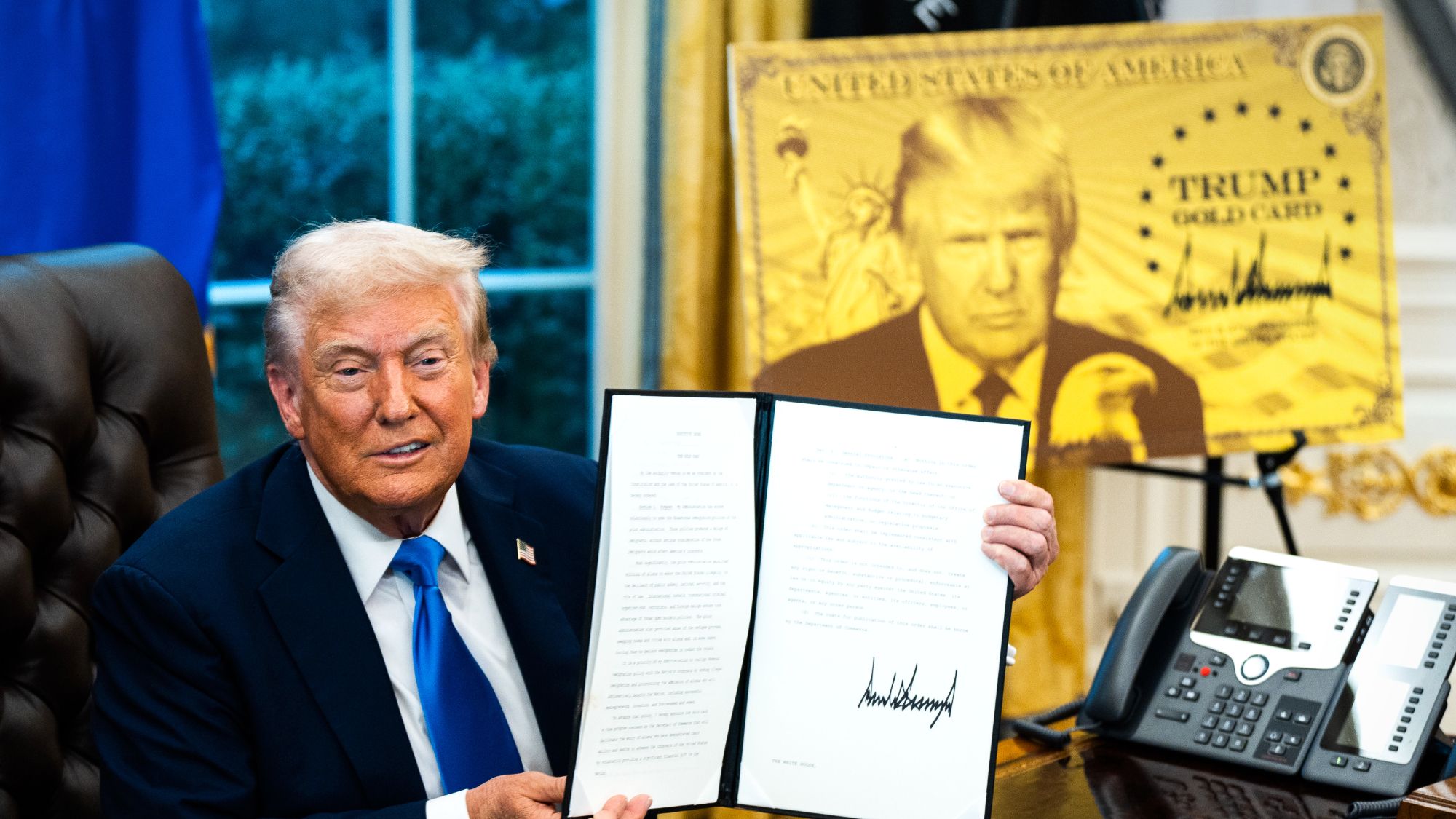
    $1M ‘Trump Gold Card’ goes live amid travel rule furor

    What happened
    President Donald Trump yesterday said his administration’s new “gold card” visa was open for sale, offering an expedited and “direct path to Citizenship for all qualified and vetted people” in exchange for a $1 million “gift,” or $2 million if their company is footing the bill. Hours earlier, U.S. Customs and Border Protection formally proposed requiring visitors from visa-exempt countries in Europe and Asia to provide a five-year social media history and detailed information about family members as a condition of entry to the U.S.

    Who said what
    Trump said his “Trump Gold Card” will ensure that U.S. businesses can “finally keep their invaluable Talent” and fill federal coffers. But the new visa, depicted as “gold, credit-card-shaped” and emblazoned with Trump’s photo, faces “questions about its viability and legality,” The Washington Post said. It also “underscores a striking contrast in the administration’s immigration stance: aggressive raids, restrictions and quick deportations alongside expedited entry to the ultrarich.” 

    The intrusive new “social media snooping rule” for visitors from the 42 countries in the Visa Waiver Program would “come into effect early next year — shortly before hundreds of thousands of football fans” travel to the U.S. for the World Cup, Politico said. Demanding five years of social media history “is outrageous” and would “seriously damage the U.S. tourist industry,” Irish lawmaker Barry Andrews said. “Even the worst authoritarian states in the world do not have such an official policy.”

    What next?
    Asked if he thought the new policy would harm tourism, Trump said no, telling reporters he wanted to “make sure we’re not letting the wrong people come into our country.” The proposal will be open for public comment for 60 days. “This is not a final rule,” CBP said in a statement, just the “first step in starting a discussion to have new policy options.”


    TODAY’S POLITICs Story

    Democrat files to impeach RFK Jr.

    What happened
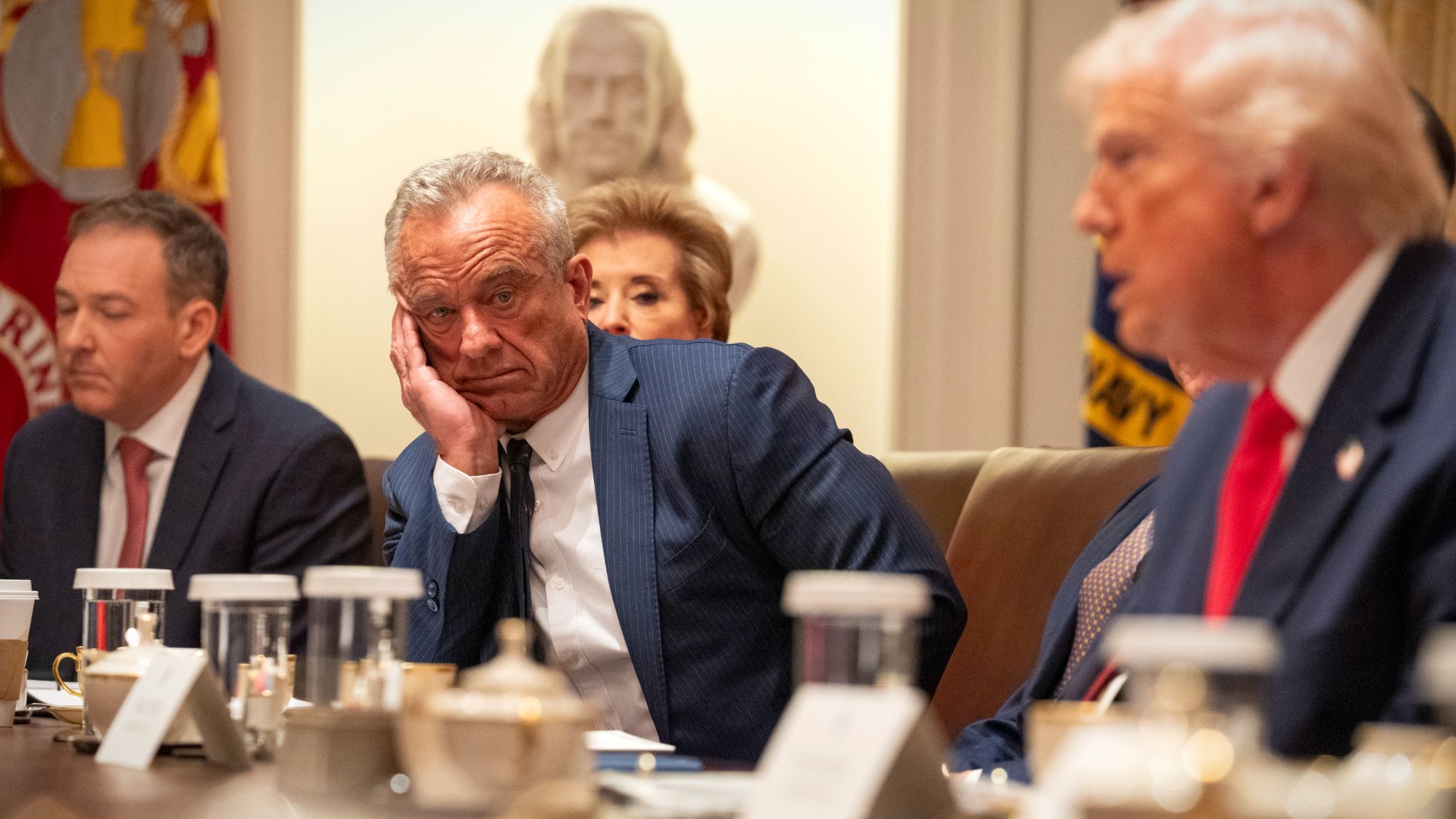
    Rep. Haley Stevens (D-Mich.) yesterday introduced articles of impeachment against Health and Human Services Secretary Robert F. Kennedy Jr., accusing him of “abuse of authority and undermining of the public health.” Stevens, who is running for Senate in a competitive primary, previously called on Kennedy to resign. She has also filed the “Stop RFK’s BS Act,” which would “reverse funding cuts Kennedy has overseen,” said The Hill.

    Who said what
    Kennedy has “driven up health care costs” while “tearing down the scientific institutions” Americans rely on, Stevens said in a press release. With Republicans in control of Congress, The New York Times said, it would be “close to impossible” for her “all but certainly futile” impeachment bid to “get a vote on the House floor or lead to a trial in the Senate.” 

    Stevens is “part of a growing group of House Democrats effectively going rogue by mounting impeachment efforts without support from party leadership,” Axios said. HHS spokesperson Andrew Nixon accused her of “partisan theatrics” intended to “elevate” her “standing in a failing, third-rate Senate bid.”

    What next?
    Stevens said her effort was more than “political theater” and more substantive than the impeachment measures filed by Reps. Shri Thanedar (D-Mich.) and Al Green (D-Texas). But many Democrats expressed “frustration” at the move, Axios said. “You can’t swing a cat without hitting an impeachable offense in this administration,” said Rep. Jared Huffman (D-Calif), but “it’s just deeply distracting and unproductive to make that our priority in this moment.” 


    It’s not all bad

    More than 2,000 dogs and their owners met up at Bosques de Palermo park in Buenos Aires on Monday on a mission to shatter the unofficial record for the world’s largest gathering of golden retrievers. The final count was 2,397 golden retrievers, with some dressed for the occasion in soccer jerseys, hats and colorful bandanas. Organizers said their gathering was heads and tails above the previous record of 1,685 set last year in Vancouver.


    Under the radar

    The great global copper swindle

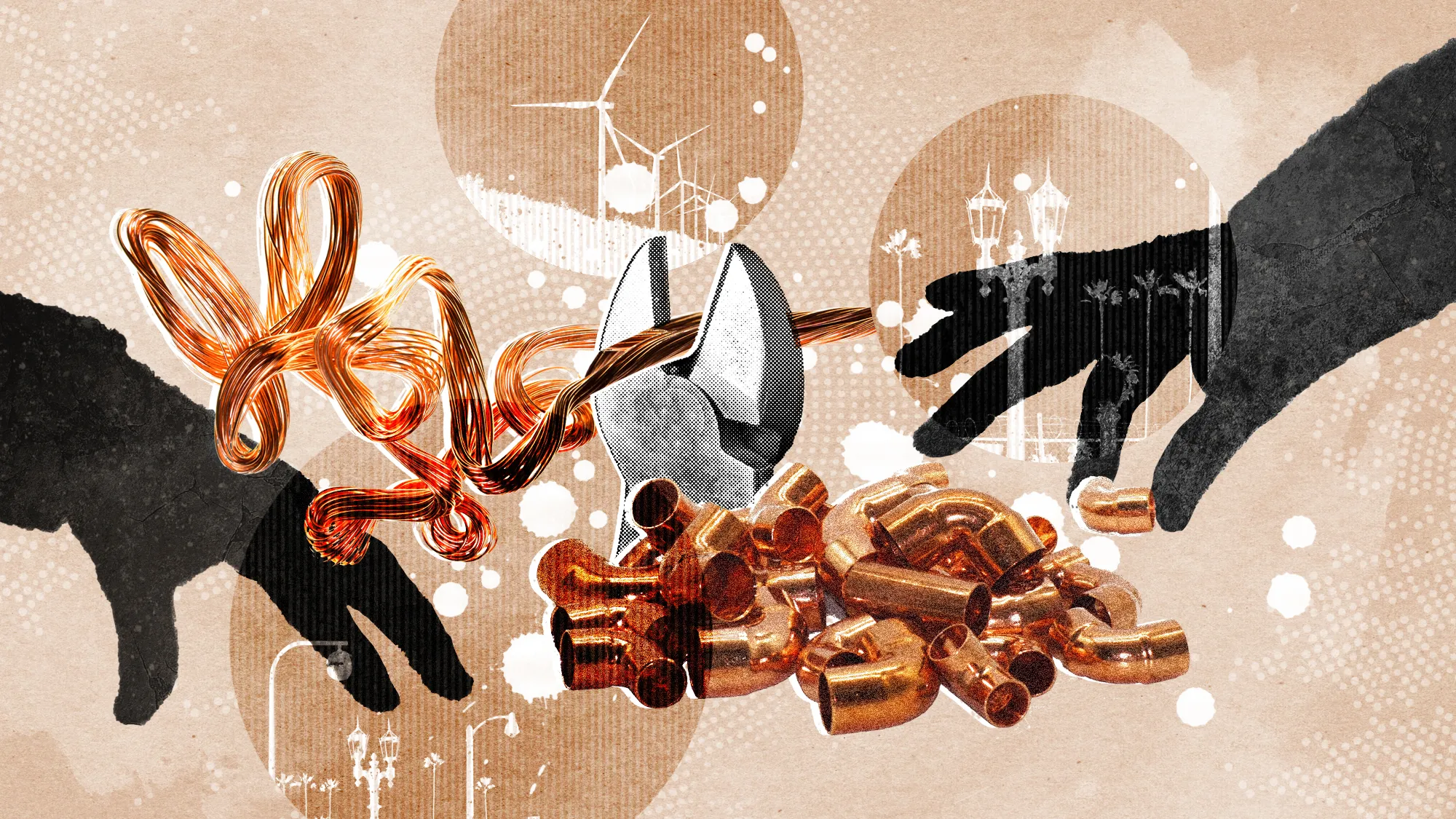
    Copper theft may not be the most glamorous crime in the world, but it is big business. It has grown to become a “multibillion-dollar problem worldwide,” Terry Goldsworthy, a criminology professor at Australia’s Bond University, said at The Conversation. 

    Metal theft is nothing new, but it’s “on the rise, largely linked to soaring commodity prices,” said Wired. This is especially true for copper, “a crucial component in everything from solar panels to electric vehicles, and computer chips to plumbing parts,” said The Logic. 

    Copper prices crashed nearly a decade ago due to factors including a Chinese ban on scrap imports, but they have steadily risen since the pandemic, and the metal is now roughly 30% more expensive than it was five years ago. That makes it a “more attractive target for criminals looking for a quick profit,” according to Goldsworthy. 

    A key target in recent years has been copper cabling, even if “the disruption caused is often totally disproportionate to the face value of the stolen material,” said Wired. These are the “conduits that keep people connected, the infrastructure that civilization depends on,” and “as the world electrifies,” this form of theft is getting “ever more serious.”

    The problem, according to The Logic, is that stopping copper theft “is a little like playing Whac-a-Mole.” That is why some forces have turned to predictive policing. Todd Foreman, director of law enforcement outreach at the Institute of Scrap Recycling Industries, uses data analysis to help criminologists anticipate future hot spots where metal thieves are likely to strike next.


    On this day

    December 11, 1972

    Eugene Cernan and Harrison Schmitt became the most recent people to walk on the moon. The astronauts performed three total moonwalks over three days as part of the Apollo 17 mission. Humans are slated to return to the moon in the coming years, with NASA’s Artemis program in an unofficial race with China’s Chang’e project.


    TODAY’S newspaperS

    ‘Fleeing into shadows’

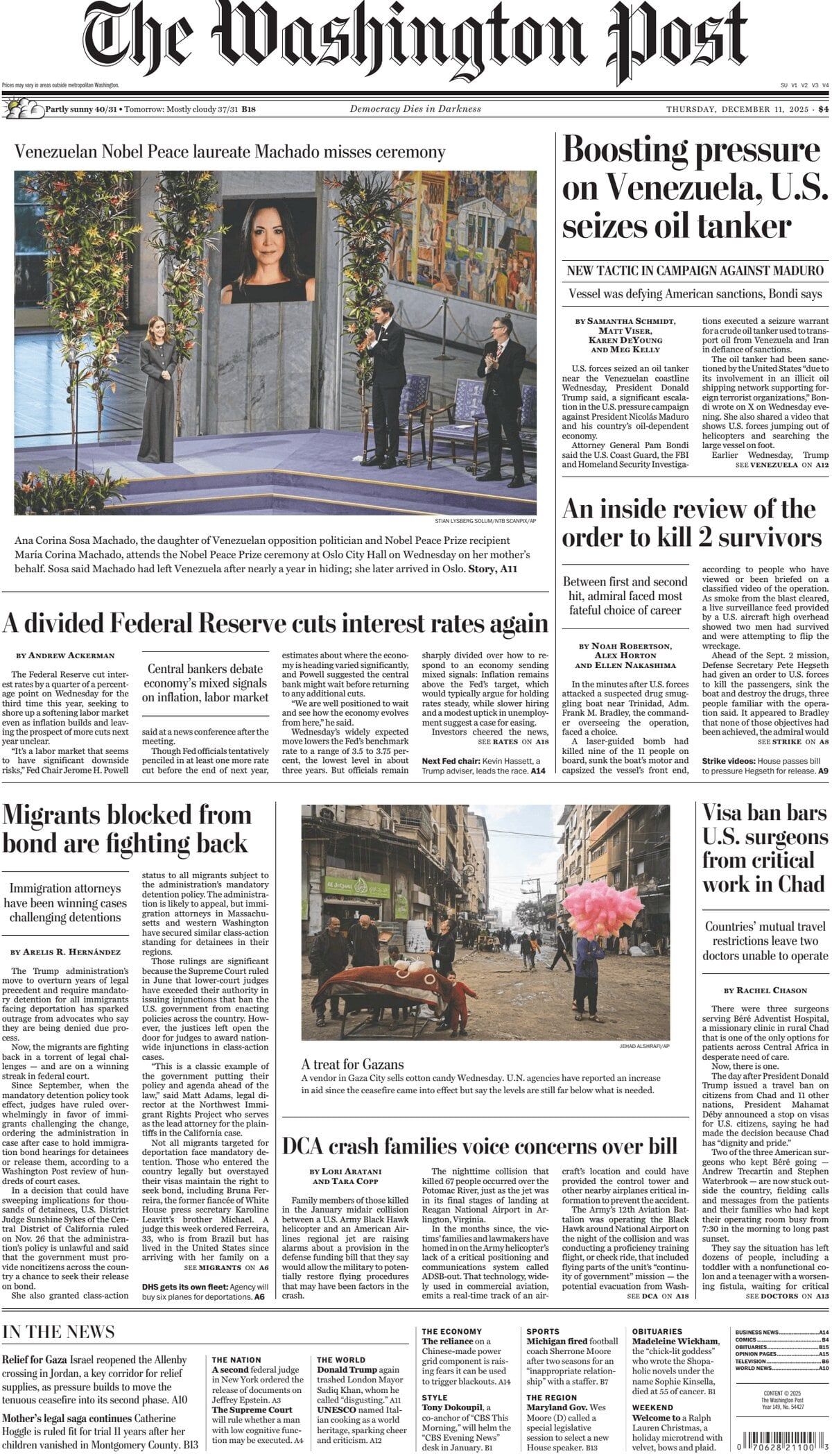
    “A divided Federal Reserve cuts interest rates again,” The Washington Post says on Thursday’s front page. “Fed cuts rates, signals a pause,” says The Wall Street Journal. “Trump’s drug boat claims don’t fly,” as “data shows Venezuela is not a major trafficker,” USA Today says. “FBI is directed to list ‘domestic terrorists’ in U.S.,” the Los Angeles Times says. “The faithful are fleeing into shadows” as “clergy see fewer immigrants amid deportation risk,” the Houston Chronicle says. “EPA is set to loosen rules on exposure to formaldehyde,” a “chemical known to cause cancer,” says The New York Times. 

    ► See the newspaper front pages


    Tall tale

    Going the distance

    It was love at first ride for Jon Alan Hale, a Disneyland fan who goes on the Radiator Springs Racers ride about 13 times during every visit to Disney California Adventure. Hale took his first spin on the “Cars”-themed racing ride in 2012 and ended up riding it seven times before the end of the day. He celebrated his 15,000th ride on Monday, joined by friends he has made at the park. “It’s like family,” he told The Associated Press. “They’re rooting for me.”


    Morning Report was written and edited by Nadia Croes, Catherine Garcia, Scott Hocker, Anya Jaremko-Greenwold, Justin Klawans, Rafi Schwartz, Peter Weber and Kari Wilkin, with illustrations by Stephen Kelly and Julia Wytrazek.

    Image credits, from top: U.S. Attorney General's Office / X via AP; Demetrius Freeman / The Washington Post via Getty Images; Carolyn Van Houten / The Washington Post via Getty Images; Illustration by Marian Femenias-Moratinos / Getty Images
     

    Recent editions

    • Evening Review

      Normalising the Taliban

    • Morning Report

      Australia’s sweeping social media ban begins

    • Evening Review

      How did NHS maternity care go so wrong?

    VIEW ALL
    TheWeek
    • About Us
    • Contact Future's experts
    • Terms and Conditions
    • Privacy Policy
    • Cookie Policy
    • Advertise With Us
    • FAQ
    Add as a preferred source on Google

    The Week UK is part of Future plc, an international media group and leading digital publisher. Visit our corporate site.

    © Future Publishing Limited Quay House, The Ambury, Bath BA1 1UA. All rights reserved. England and Wales company registration number 2008885.