The Week The Week
flag of US
US
flag of UK
UK
https://cdn.mos.cms.futurecdn.net/flexiimages/jzblygzdxr1769609154.gif

SUBSCRIBE

Try 6 weeks free

Sign in
  • View Profile
  • Sign out
  • The Explainer
  • Talking Points
  • The Week Recommends
  • Podcasts
  • Newsletters
  • From the Magazine
  • The Week Junior
  • More
    • Politics
    • World News
    • Business
    • Health
    • Science
    • Food & Drink
    • Travel
    • Culture
    • History
    • Personal Finance
    • Puzzles
    • Photos
    • The Blend
    • All Categories
  • Newsletter sign up Newsletter
  • Brand Logo
    Pentagon press access, Melania surprise and a chimp ‘civil war’

     
    TODAY’S PENTAGON story

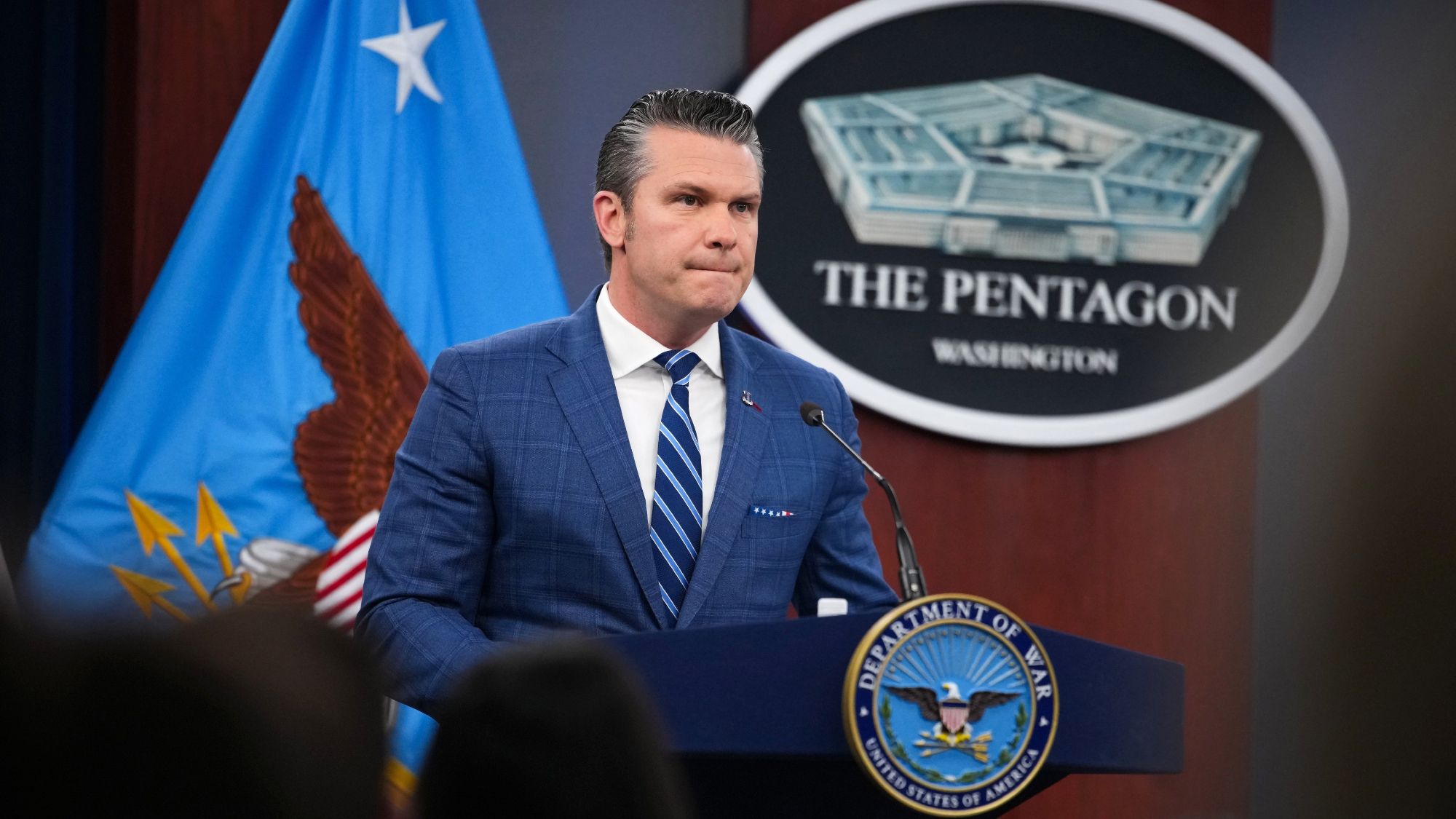
    Hegseth must open Pentagon to reporters, judge rules

    What happened
    A federal judge in Washington, D.C., yesterday threw out Defense Secretary Pete Hegseth’s revised effort to restrict press access at the Pentagon, saying the Defense Department “cannot simply reinstate an unlawful policy under the guise of taking ‘new’ action.” Suppression of “political speech is the mark of an autocracy, not a democracy,” U.S. District Judge Paul Friedman wrote, siding with The New York Times for the second time in a month in its challenge to Hegseth’s restrictions on reporters’ access to Pentagon sources and information. 

    Who said what
    Almost all reporters in the Pentagon press corps walked out in October after Hegseth tied their credentials to an agreement to “publish only information preapproved by Department of Defense channels,” Politico said. Friedman found that unconstitutional in a March 20 ruling, and yesterday he “voided the key parts of the revised policy,” including banning all unescorted movement through the Pentagon and evicting reporters from their longtime Correspondents’ Corridor offices to an “annex that has yet to be opened.” 

    Hegseth is trying to “dictate the information received by the American people” and “control the message” they “hear and see,” Friedman said. “The curtailment of First Amendment rights is dangerous at any time, and even more so in a time of war,” he added. “The Constitution demands better. The American public demands better, too.”

    What next?
    Frieman ordered the Pentagon to “fully restore Times reporters’ access,” The Washington Post said, and to “file a sworn declaration from a department official by April 16 detailing compliance.” A Pentagon spokesperson said the department will appeal the ruling. 


    TODAY’S EPSTEIN story

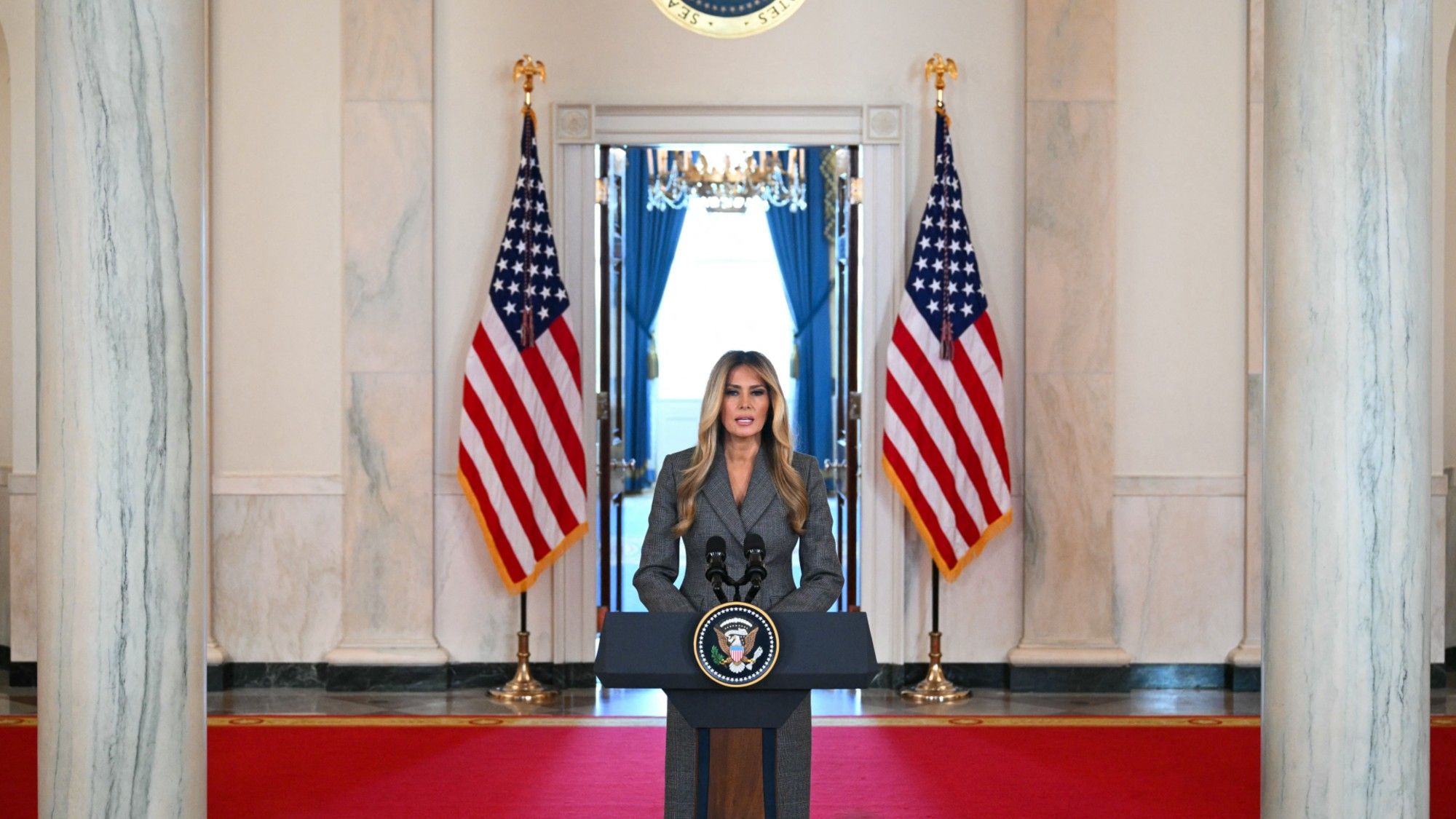
    Melania Trump denies ties to Epstein in surprise speech

    What happened
    First lady Melania Trump yesterday denounced “unfounded and baseless lies” connecting her with “the disgraceful Jeffrey Epstein,” calling unspecified reports and online images “mean-spirited attempts to defame my reputation.” Addressing reporters at the White House, she also called on Congress to hold a “public hearing specifically centered around the survivors,” allowing those who wish to have their sworn testimony “permanently entered into the congressional record.”

    Who said what
    The first lady’s “seemingly out-of-the-blue” remarks caught “the White House — and indeed, all of Washington’s political world — by surprise,” The Associated Press said. It was “not clear why she chose to speak out now,” The New York Times said, but her comments are “sure to supercharge” a “scandal” her husband “has been struggling to make go away since last summer.”

    The Epstein controversy had been “fading from public discourse amid the war with Iran,” CNN said, and some White House officials were “stunned by the timing of the remarks, which sparked rumors that the first lady was trying to get out ahead of something.” Sources close to Trump insisted she was just “increasingly frustrated by the online chatter.”

    What next?
    Congressional Democrats and some Republicans welcomed the call to let Epstein’s survivors speak. “We encourage” GOP leaders to “respond to the first lady’s request and schedule a public hearing immediately,” said Rep. Robert Garcia (D-Calif.).


    TODAY’S SCIENCE Story

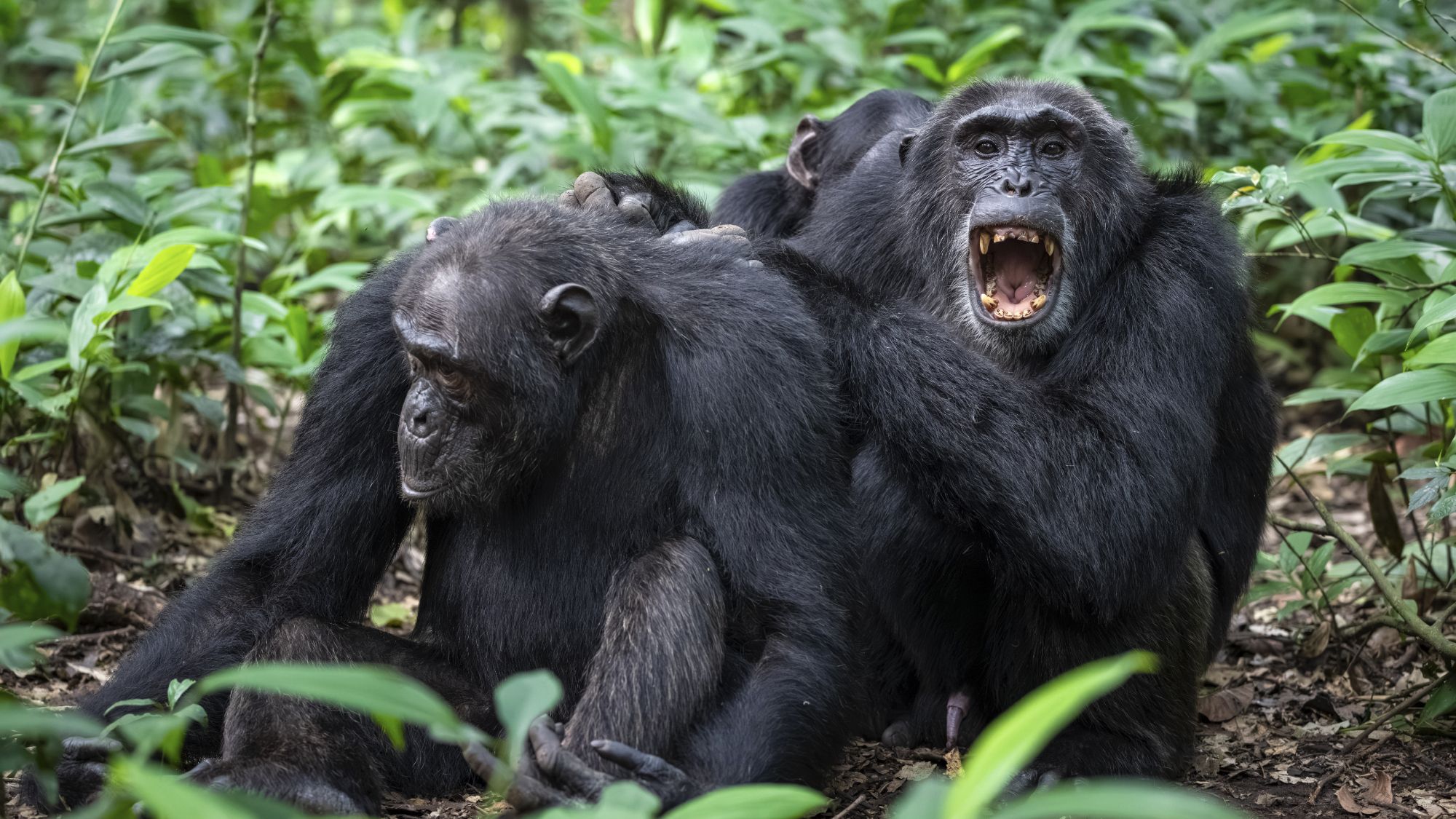
    Chimpanzee ‘civil war’ in Uganda baffles scientists

    What happened
    Two once-harmonious groups of chimpanzees in Uganda’s Kibale National Park suddenly became estranged and have spent the past eight years engaged in bloody conflict, according to a study published yesterday in the journal Science. This first-ever observation of animal “civil war” indicates that “group identities can shift and escalate into lethal hostility in one of our closest living relatives” without the “cultural markers often thought necessary for human warfare,” the researchers wrote.

    Who said what
    The researchers are “still trying to figure out what set off the conflict” in 2015, when the Central and Western clusters of the Ngogo chimpanzees stopped socializing or mating and starting fighting, The New York Times said. By 2018, “the hostilities began in earnest,” The Wall Street Journal said. The smaller Western cluster “launched coordinated lethal attacks,” targeting “rival adult males,” then young males, then infants. The researchers said they have observed 28 deaths, all among the Central cluster, exceeding “anything seen before among chimpanzees,” the Times said. Now, “it is conceivable that the Western cluster may ultimately eliminate the Central cluster.”

    One theory is that the schism came after “several male chimps who had bridged cliques within the larger group died from disease,weakening social ties,” said the Journal. It’s also possible “the apes were victims of their own success,” seeing “increased competition for food and mates” even though “resources were abundant.”

    What next?
    Further study of the Ngogo chimpanzees “may shed light on the roots of warfare in our own species,” the Times said, though the Trump administration’s proposed budget cuts have “cast doubt on whether the research will continue.”


    It’s not all bad

    The Hungarian company Makropa takes waste that can’t be recycled and turns it into concrete for roads and buildings. Waste Light Concrete is a “blend of binding additive, shredded waste and standard concrete-mixing ingredients” and can contain materials like sawdust, cigarette butts and rigid plastic, said Good News Network. The product is made in a way that allows it to “maintain its concrete chemistry,” so it’s “more durable and longer lasting” and can be used for more applications.


    Under the radar

    Darker seas are endangering the marine food chain

    The deep blue sea is becoming deeper — in color, that is. Human development is a primary cause for the reduction in light that can filter through the water, potentially disrupting the marine food chain significantly. Climate change is also contributing to — and being fueled by — the ocean’s growing opacity.

    Ocean darkening occurs when “changes in the optical properties of the oceans reduce the depth to which sufficient light penetrates to facilitate biological processes guided by sunlight and moonlight,” said a 2025 study published in the journal Global Change Biology. The part of the ocean that sunlight can penetrate, called the photic zone, is “home to 90% of marine species,” said the World Economic Forum. 

    Rather than just some patches of darkening, the phenomenon has affected “large, connected regions” of the ocean, said Tim Smyth, a marine scientist at Plymouth Marine Laboratory and co-author of the study, to New Scientist. “Roughly one‑fifth of the world’s oceans have darkened in some way.” The depth of the photic zone has also shrunk by more than 10% “across 9% of the global ocean,” said the study.

    Some of the main culprits of ocean darkening are “sediment runoff from agriculture, deforestation and development,” especially in coastal regions, said the World Economic Forum. Improved land management can play a large role in reducing the level of darkening. The good news is that the ocean has a “remarkable capacity to heal itself,” said Smyth. “Give marine ecosystems a little room to recover, and they often respond with surprising speed.”


    On this day

    April 10, 2001

    The Netherlands became the first country in the world to pass legislation legalizing euthanasia and physician-assisted suicide, subject to very specific criteria. Since the law took effect in 2002, nine other nations have legalized euthanasia: Belgium, Canada, Colombia, Ecuador, Luxembourg, New Zealand, Portugal, Spain and Uruguay.


    TODAY’S newspaperS

    ‘On shaky ground’

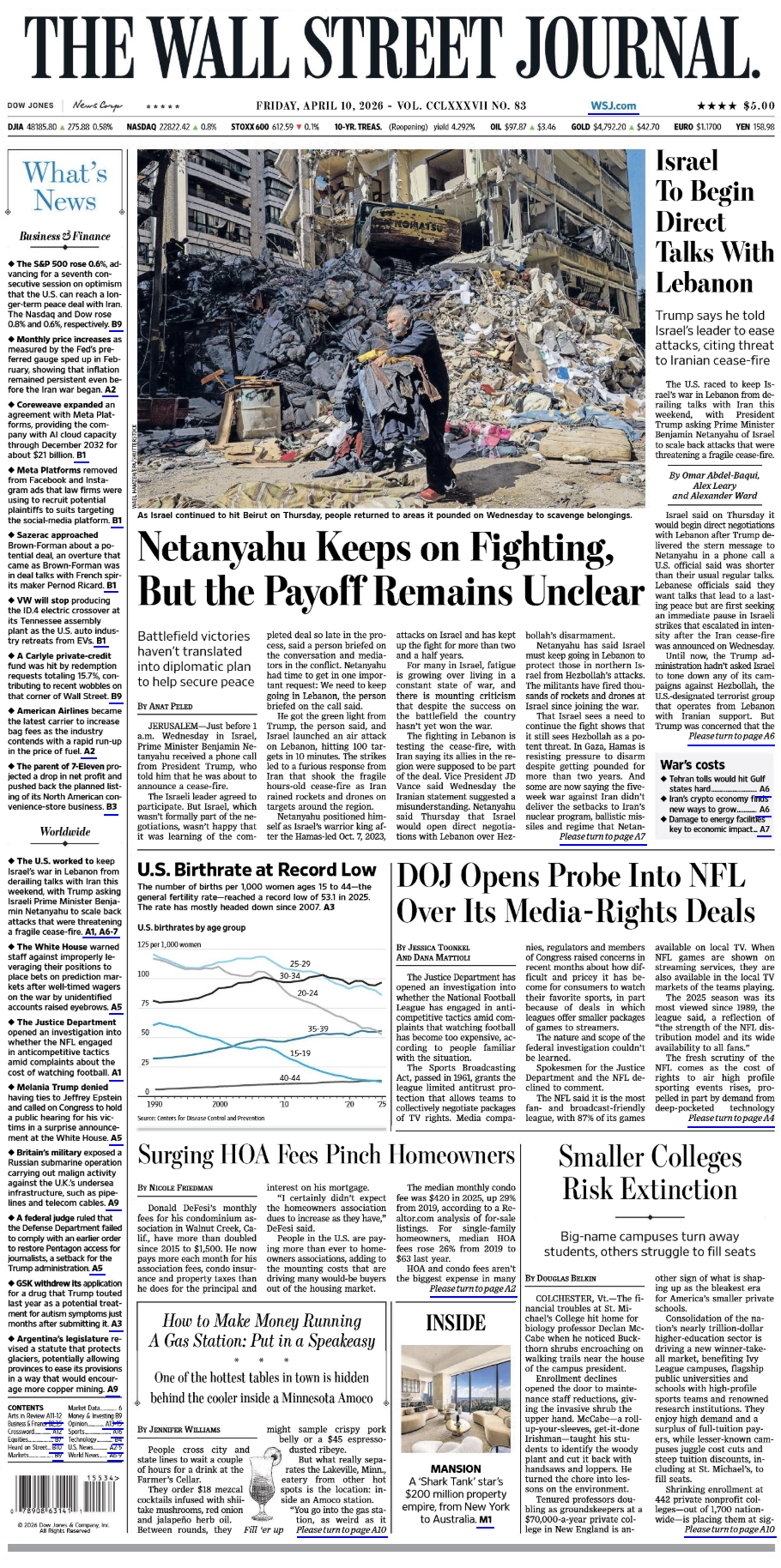
    “U.S.-Iran ceasefire is on shaky ground” as “Israel continues its attacks on Lebanon,” the Arizona Republic says on Friday’s front page. “Israel agrees to talks with Lebanon but vows no letup on Hezbollah,” The New York Times says. “Netanyahu keeps on fighting, but the payoff remains unclear,” The Wall Street Journal says. “Iranians fly flags of victory after pause in attacks,” The Washington Post says. “Gas prices top of mind for many amid war,” USA Today says. “Fuel prices up again,” says The Dallas Morning News. “Houston teen soccer captain deported,” the Houston Chronicle says. “Hurricane forecast: El Niño, caution,” says The Palm Beach Post. 

    ► See the newspaper front pages


    Tall tale

    Birds of a feather

    An orphaned baby chick has apparently found comfort in the embrace of an unlikely new surrogate mother: a feather duster. The chick was found wandering alone and brought to the Animal Rescue League of Iowa’s Second Chance Ranch, where it instantly settled into a warm enclosure. Volunteers watched as the chick cuddled up to the duster, meant to mimic a mama hen, and “snuggled in under their ‘mom’ to get warm,” the organization said on social media.


    Morning Report was written and edited by Nadia Croes, Catherine Garcia, Scott Hocker, Anya Jaremko-Greenwold, Justin Klawans, Rafi Schwartz, Peter Weber and Kari Wilkin, with illustrations by Stephen Kelly and Julia Wytrazek.

    Image credits, from top: Andrew Harnik / Getty Images; Mandel Ngan / AFP via Getty Images; imageBROKER / Moritz Wolf via Getty Images; Illustration by Stephen P. Kelly / Getty Images
     

    Recent editions

    • Evening Review

      Has China won the war in Iran?

    • Morning Report

      Iran closes Strait amid Israeli strikes on Lebanon

    • Evening Review

      The cost of a ceasefire

    VIEW ALL
    TheWeek
    • About Us
    • Contact Future's experts
    • Terms and Conditions
    • Privacy Policy
    • Cookie Policy
    • Advertise With Us
    • FAQ
    Add as a preferred source on Google Add as a preferred source on Google

    The Week UK is part of Future plc, an international media group and leading digital publisher. Visit our corporate site.

    © Future Publishing Limited Quay House, The Ambury, Bath BA1 1UA. All rights reserved. England and Wales company registration number 2008885.