The Week The Week
flag of US
US
flag of UK
UK
https://cdn.mos.cms.futurecdn.net/flexiimages/jzblygzdxr1769609154.gif

SUBSCRIBE

Try 6 weeks free

Sign in
  • View Profile
  • Sign out
  • The Explainer
  • Talking Points
  • The Week Recommends
  • Podcasts
  • Newsletters
  • From the Magazine
  • The Week Junior
  • More
    • Politics
    • World News
    • Business
    • Health
    • Science
    • Food & Drink
    • Travel
    • Culture
    • History
    • Personal Finance
    • Puzzles
    • Photos
    • The Blend
    • All Categories
  • Newsletter sign up Newsletter
  • WeekDay AM: 10 Things you need to know this morning
    IDF expands Gaza control, Sturgeon claims that she was ‘lied to’, and the rise of LitRPG

     
    today’s international story

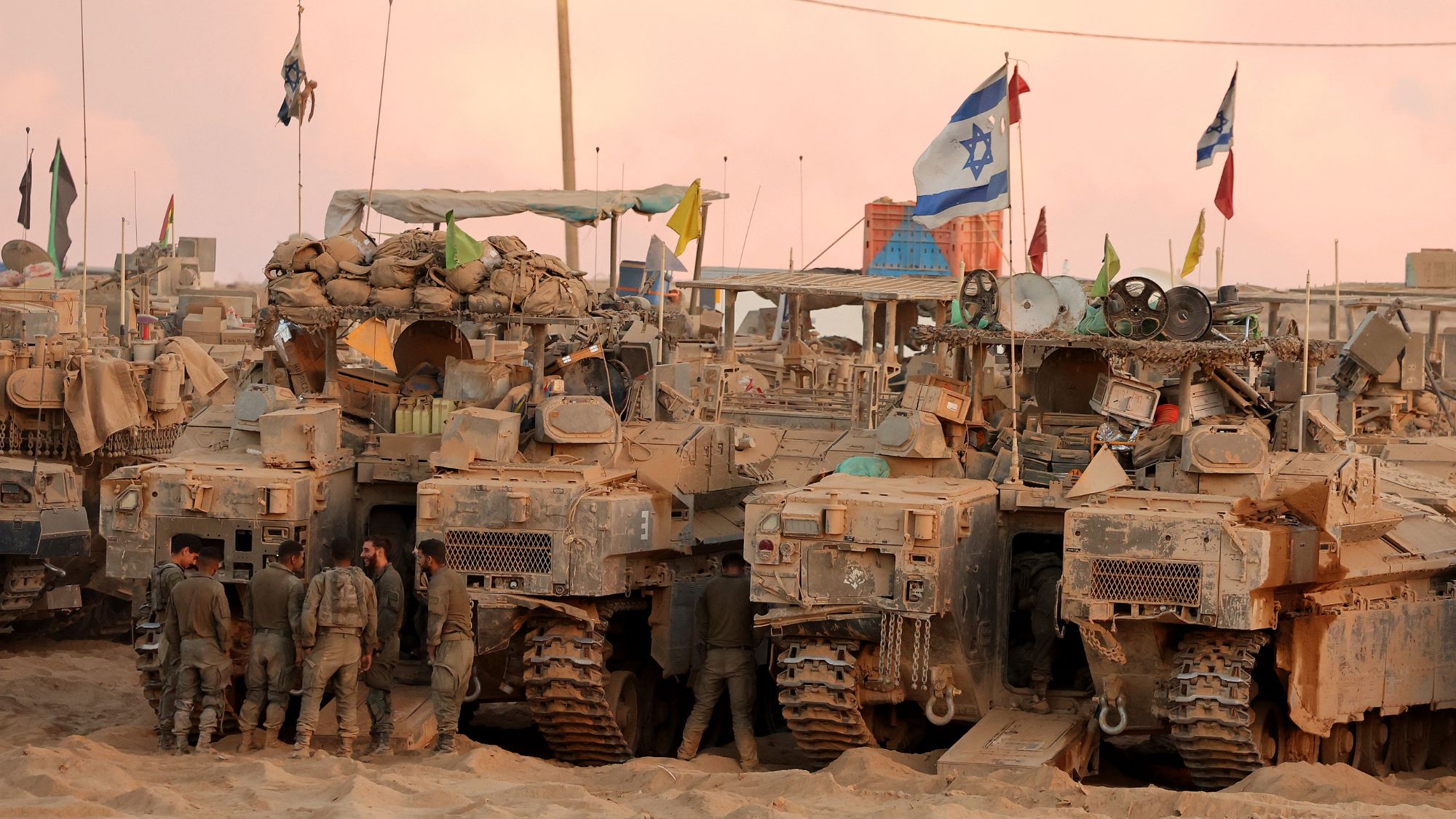
    Netanyahu orders IDF to seize ‘70% of Gaza Strip’

    What happened
    Israeli Prime Minister Benjamin Netanyahu said he had instructed the country’s armed forces to extend their control over Gaza to 70% of the territory, escalating concerns over the future of the fragile ceasefire with Hamas.

    Maps circulated by the Israeli military to aid organisations in April reportedly showed Israel already controlling close to two-thirds of the enclave. The seizure of more of Gaza would “force approximately 2 million Palestinians into a shrinking fraction of the coastal enclave’s shattered territory”, said Dana Karni and Tal Shalev on CNN.

    Last October’s ceasefire agreement required Israeli troops to pull back to a designated boundary known as the “yellow line”, leaving Israel in control of about 53% of the territory.

    Who said what
    Speaking at a conference in the occupied West Bank, Netanyahu said Israeli forces currently held about 60% of Gaza, up from 50% previously. “My directive is to move to – take it step by step – first of all 70,” he said.

    Hamas has accused Israel of redrawing the agreed line and undermining the ceasefire, calling it “an exposed attempt to impose new facts on the ground by force”. The move will “create catastrophic humanitarian conditions in the already devastated territory”, said Seham Tantesh in The Guardian.

    What next?
    UN envoy Nickolay Mladenov has warned that the current separation line could become permanent without renewed progress in negotiations.


    today’s politics story

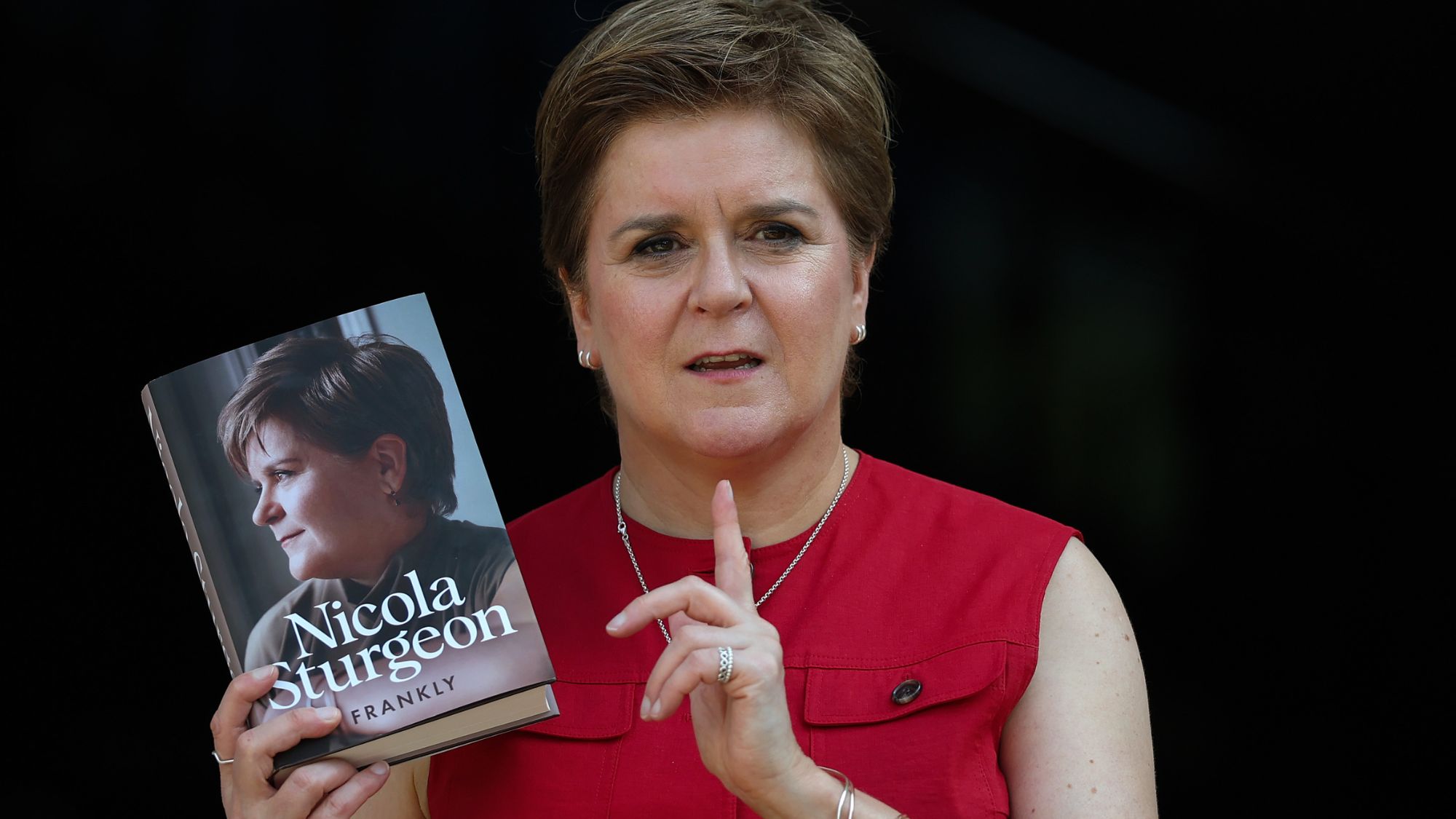
    Sturgeon says she was ‘lied to’ by ex-husband Murrell

    What happened
    Former Scottish first minister Nicola Sturgeon claims that she feels “deceived, betrayed and lied to” after her estranged husband Peter Murrell admitted to embezzling more than £400,000 from the SNP. The former CEO of the party this week pleaded guilty at the High Court in Edinburgh to misappropriating SNP money over a 12-year period.

    Who said what
    Speaking at a literary festival in County Kerry while promoting her memoir “Frankly”, Sturgeon described the aftermath of the case as the “worst week” of her life. She said she was struggling to reconcile the crimes with the man she believed she knew.

    Sturgeon “still has questions to answer”, said Euan McColm in The Spectator. She “sold herself as a politician of uncommon integrity”, but “that’s all over now”. Her political career “has ended not only in failure, but profound shame”.

    What next?
    Scotland’s first minister John Swinney said he was “appalled” by Murrell’s actions, but rejected calls for a parliamentary inquiry, arguing that the police investigation had already been exhaustive. The former SNP chief executive remains in custody ahead of sentencing on 23 June. A hearing examining the facts of the case is scheduled for 2 June.


    Today’s culture story

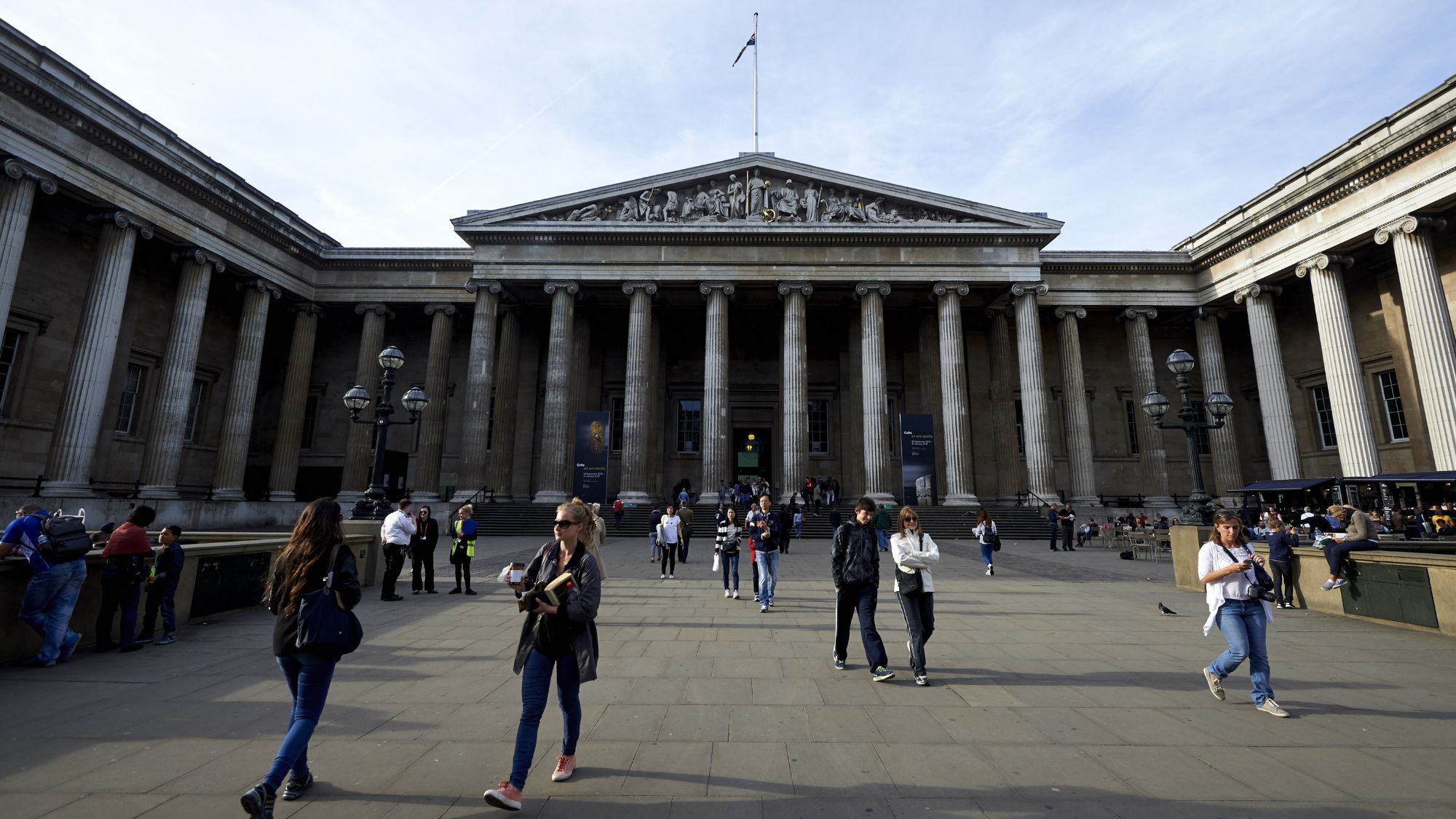
    British Museum under fire for delaying Jewish lecture

    What happened
    The British Museum has been criticised for postponing a lecture – part of the UK’s first Jewish culture month – over concerns about protesters.

    The keeper of the museum’s Middle East department was due to explore the ancient kingdoms of Israel and Judah through artefacts today. But yesterday the museum said it had learned that a “significant proportion” of registered attendees intended to “deliberately disrupt the event”. It decided with organisers to delay the lecture until it could take place “without disruption”.

    Who said what
    The British Museum “fully recognises the importance of lawful protest”, said its statement. But “we have a responsibility” to ensure that events “can proceed safely” and “without intimidation”.

    BBC historian and presenter Simon Schama said it sent a “terrible message”.

    Kemi Badenoch said the government should tell the publicly funded institution to “do what’s necessary to put this event on”. “Jewish culture month is meant to promote awareness of and celebrate Jewish culture in the UK,” said the Conservative leader. “This decision achieves precisely the opposite.”

    What next?
    More than 100 events are scheduled to take place before the end of Jewish Culture month on 16 June.


    It’s not all bad

    Women on TikTok are embracing “microfeminism” – tiny, often humorous acts that challenge everyday sexism. Popular examples include putting women’s names first in emails to couples, calling spiders “mummy long legs” or handing the larger restaurant portion to the woman at the table. The trend, championed by author and podcaster Tori Dunlap, has sparked millions of views online. Supporters say these playful gestures help highlight the subtle gender assumptions women face daily and encourage people to rethink them.

     
    under the radar

    The rise of LitRPG

    The line between gaming culture and traditional storytelling is being blurred – one quest notification at a time – as readers get addicted to novels that combine sci-fi and fantasy narratives with features from video games.

    These “gamified novels” are “going mainstream” and selling in their millions, according to The Economist.

    Standing for “literary role-playing game”, LitRPG is a genre of fiction that combines a traditional story with the mechanics from role-playing games and video games. Although a Russian publisher insists that it coined the term in 2013, versions of the genre had been popular in Asia since the turn of the century.

    The books “borrow the tropes of video and tabletop games”, and the characters “face challenges and grow stronger” as they “go on quests to obtain rewards”.

    For instance, in the novels of Matt Dinniman, whose books have sold more than six million copies, the hero “gets tougher as he punches goblins” and “defeats a monster” that is a mix of a “cosmic octopus” and “your average, suburban, anti-vax, let-me-talk-to-your-manager mom”.

    The reader is regularly “updated on his character stats, health bar, XP (experience points) and special skills”. “Video-game vernacular” offers a “useful shorthand” and “minor figures” in the story are called “NPCs: non-playable characters”.

    Many of the readers “grew up gaming or playing tabletop games like Dungeons & Dragons”, said USA Today. Brandon Dwane, a 28-year-old from Massachusetts, “never considered himself a reader”, but “that changed” when he began consuming LitRPG. Now he’s a “junkie” for the “dopamine” hits the novels give him.

     
    on this day

    29 May 1953

    Edmund Hillary and Tenzing Norgay were the first to reach the summit of Mount Everest as part of a British expedition. This week American climber and trail runner Tyler Andrews reportedly set a new speed record for an oxygen-assisted ascent of Everest, reaching the summit from Base Camp in just 9 hours and 55 minutes.

     
    Today’s newspapers

    ‘Burnham’s blast’

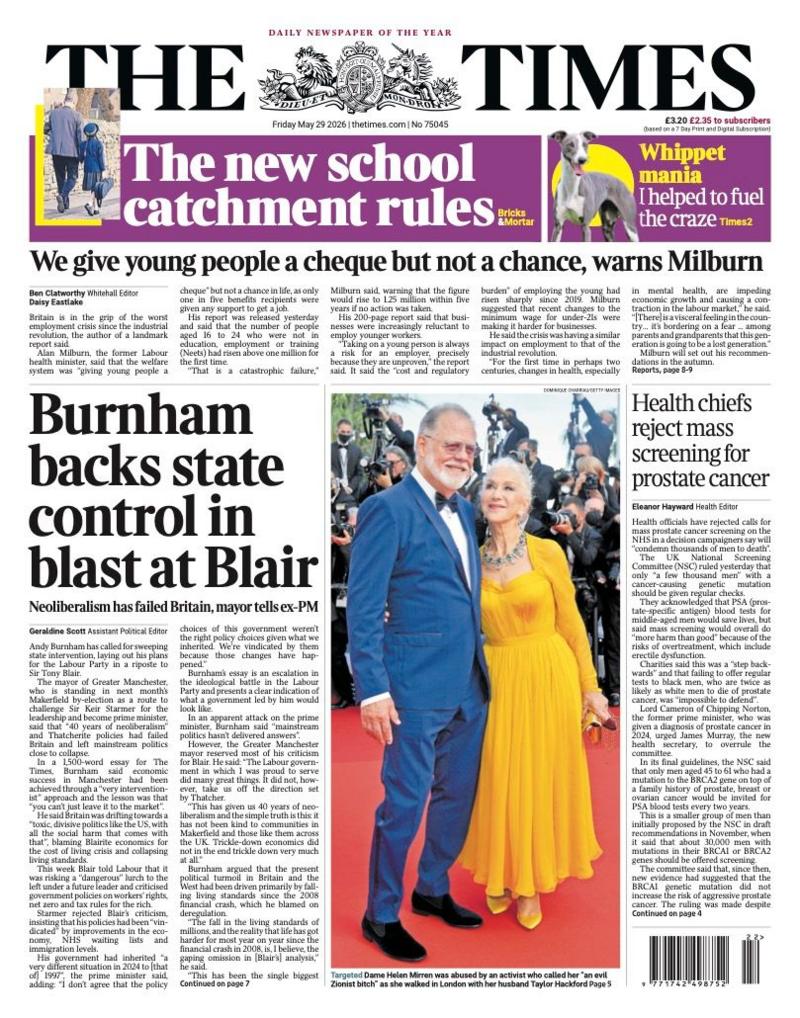
    “Burnham backs state control in blast at Blair”, says The Times. “Shame of Britain’s broken promise to lost generation”, says The Independent. “Netanyahu tells army to take 70% of Gaza”, says The Guardian. “Flags group ‘founder’ charged with murder”, says The Mirror. “Prostate screening set to be rationed”, says The Telegraph. “It’s all kicking off”, says The Sun, reporting on “World Cup ‘scam’ chaos”.

    See the newspaper front pages

     
    tall tale

    No Trump steaks

    A buffalo in Bangladesh has been spared from Eid al-Adha slaughter thanks to a government intervention – because of its perceived resemblance to Donald Trump. The rare albino, weighing nearly 700kg, had already been sold, but thanks to its tuft of blond hair there was an “unusual level of public interest”, said a home ministry official. At ⁠the last moment “the ⁠decision was taken to spare the buffalo from sacrifice due to security ‌concerns”. The buyer was refunded, and “Donald Trump” the buffalo has gone to the national zoo in Dhaka.

    Morning Report was written and edited by Arion McNicoll, Jamie Timson, Harriet Marsden, Ross Couzens and Chas Newkey-Burden, with illustrations by Julia Wytrazek.

    Image credits, from top: Jack Guez / AFP / Getty Images; Jeff J Mitchell / Getty Images; Niklas Halle’n / AFP / Getty Images; Illustration by Julia Wytrazek / Getty Images.

    Morning Report and Evening Review were named Newsletter of the Year at the Publisher Newsletter Awards 2025

    Recent editions

    • Evening Review

      Is the declining birth rate a crisis?

    • Morning Report

      Israel orders evacuations in Lebanon

    • Evening Review

      ‘Unduly lenient’ sentences and the law

    VIEW ALL
    TheWeek
    • About Us
    • Contact Future's experts
    • Terms and Conditions
    • Privacy Policy
    • Cookie Policy
    • Advertise With Us
    • FAQ
    Add as a preferred source on Google Add as a preferred source on Google

    The Week UK is part of Future plc, an international media group and leading digital publisher. Visit our corporate site.

    © Future Publishing Limited Quay House, The Ambury, Bath BA1 1UA. All rights reserved. England and Wales company registration number 2008885.