The Week The Week
flag of US
US
flag of UK
UK
https://cdn.mos.cms.futurecdn.net/flexiimages/jzblygzdxr1769609154.gif

SUBSCRIBE

Try 6 weeks free

Sign in
  • View Profile
  • Sign out
  • The Explainer
  • Talking Points
  • The Week Recommends
  • Podcasts
  • Newsletters
  • From the Magazine
  • The Week Junior
  • More
    • Politics
    • World News
    • Business
    • Health
    • Science
    • Food & Drink
    • Travel
    • Culture
    • History
    • Personal Finance
    • Puzzles
    • Photos
    • The Blend
    • All Categories
  • Newsletter sign up Newsletter
  • Brand Logo
    Pope tackles AI, Iran talks muddle and ICE pepper-sprays senator

     
    TODAY’S RELIGION story

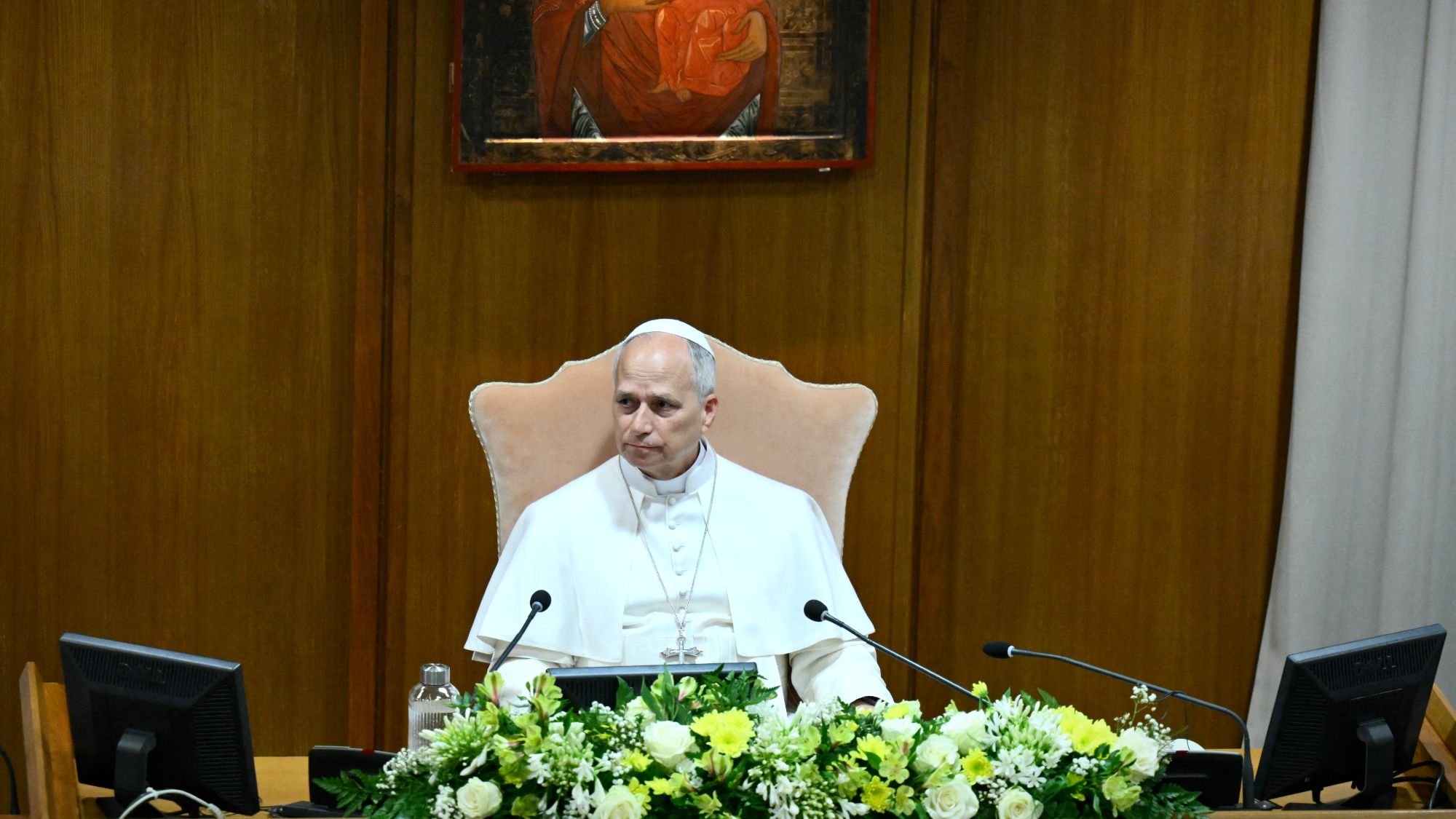
    Pope tackles AI in encyclical celebrating humanity

    What happened
    Pope Leo XIV yesterday released his first encyclical, “Magnifica Humanitas” (“Magnificent Humanity”), making a practical and moral case for “safeguarding the human person in the time of artificial intelligence.” AI “needs to be disarmed” as “an instrument of domination, exclusion and death,” the pope told a packed hall at the Vatican. “It must be at the service of all, and of the common good.” 

    Who said what
    Addressed to “all people of good will,” Leo’s “methodical” teaching document traced the Catholic Church’s established “social teaching and applied its core concepts,” including solidarity and the dignity of work, “to the digital revolution,” The Associated Press said. The document’s title “says it all,” The New York Times said: “In the end, Leo is less interested in technology than in humanity.” 

    “Technology should not be considered, in itself, as a force antagonistic to humanity,” Leo wrote, but “the pursuit of greater profits cannot justify choices that systematically sacrifice jobs.” AI’s growth needs to be guided by “robust legal frameworks, independent oversight, informed users and a political system that does not abdicate its responsibility,” he said. “A more moral AI is not enough if that morality is determined by a few.”

    What next?
    Tech and religion experts said Pope Leo’s encyclical “will likely become a benchmark in the debate over AI, a point of reference for policymakers, researchers and ordinary folk alike,” the AP said. The pope is “really doing the Lord’s work here, and I say that as an atheist,” humanist Harvard chaplain Greg Epstein said.


    TODAY’S IRAN WAR story

    US strikes Iran amid talks of imminent peace deal

    What happened
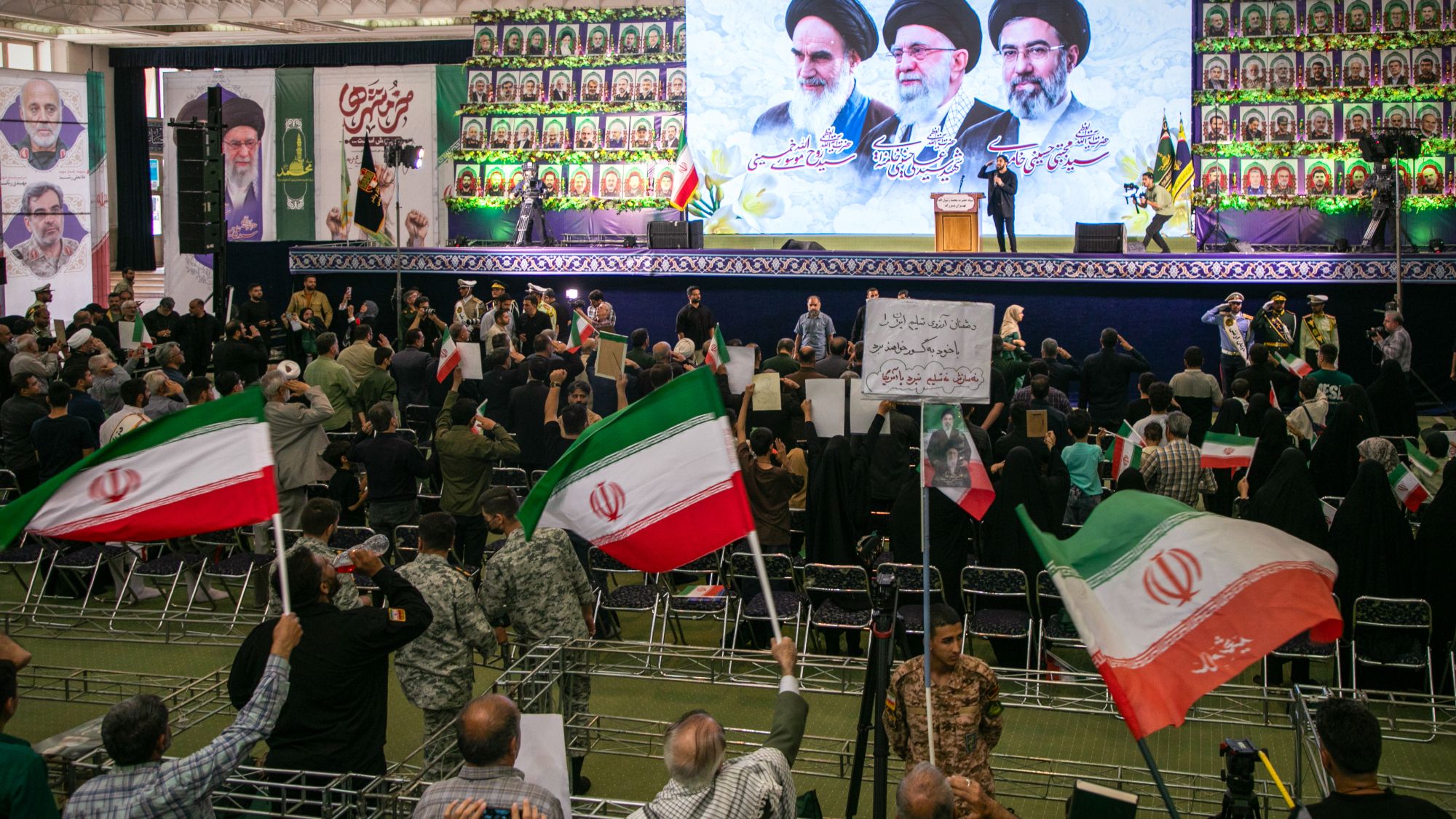
    The U.S. military last night said it had “conducted self-defense strikes” on Iranian missile sites and “boats attempting to emplace mines,” interrupting a weekslong ceasefire after a weekend of positive signals about an imminent peace deal. Earlier yesterday, President Donald Trump said talks on ending the war were “proceeding nicely.” An Iranian Foreign Ministry spokesperson said a “large portion of the issues” had been resolved but no “agreement is on the verge of being signed.” 

    Who said what
    The emerging framework indicates that Trump’s “mixture of threats and limited military operations” in Iran hasn’t “decisively shifted” Tehran’s negotiating stance, The New York Times said. After Republican hawks “slammed the contours of the deal,” The Wall Street Journal said, Trump “expanded the scope of his diplomatic ambition,” saying Saudi Arabia, Qatar and other Muslim countries must normalize relations with Israel as part of any agreement. Trump posted yesterday that “it should be mandatory” for all of them to “simultaneously” sign the Abraham Accords. 

    What next?
    Trump’s Israel normalization push could give him a way to cast any peace deal “as a larger regional success story instead of a climbdown,” the Journal said. But it’s “highly unlikely to be heeded” by the Saudis or Qataris, given Israel’s intransigence on Palestinian rights.


    TODAY’S IMMIGRATION Story

    US senator gassed by ICE at detention center protest

    What happened
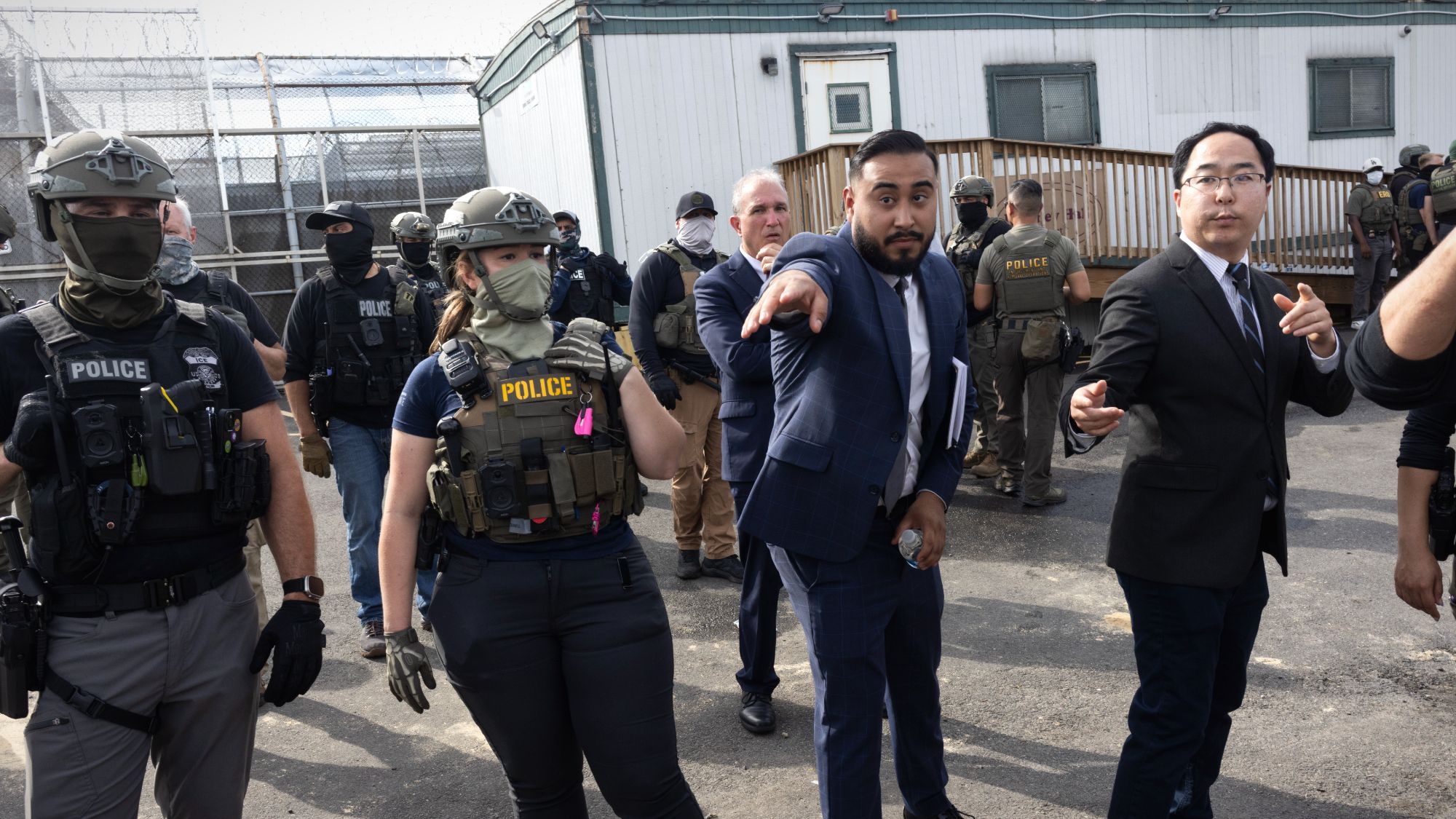
    New Jersey Gov. Mikie Sherrill (D) and other lawmakers yesterday joined a protest outside the Delaney Hall immigration detention facility, where detainees are on hunger strike amid complaints of rotten food and inadequate medical care. Sherrill said the Trump administration’s denial of her request for access to the Newark facility raised “serious questions about what they are trying to hide from public view.” Sen. Andy Kim (D-N.J.) (pictured above right), who did gain access, was caught in a cloud of tear gas and pepper spray fired by ICE agents in an armored vehicle outside the facility. 

    Who said what
    Protesters have gathered outside the privately run detention center since Friday to support the hunger strike. Tensions escalated after ICE moved strike leader Martin Soto to a different facility, allegedly to punish him. Lawmakers granted access criticised the conditions as inhumane and reiterated their calls for Delaney Hall’s closure. The Department of Homeland Security said the visits were “nothing more than a political stunt by New Jersey sanctuary politicians” and claimed “there is NO hunger strike at Delaney Hall.” 

    What next?
    The 1,000-bed facility “has emerged as a focal point” in President Donald Trump’s immigration crackdown, The New York Times said. Nationally, “nearly 50 ICE detainees have died since Trump’s return to office,” CNN said.


    It’s not all bad

    Eco Purge, a biodegradable plastic developed by an Irish teen that also removes microplastics from soil and water, has been crowned the European winner of the 2026 Earth Prize. Arya Satheesh, 18, will receive $12,500 in funding to scale up her invention for “real-world use in products like packaging and compost bags,” said Euronews. Eco Purge is made of a plant-based plastic embedded with enzymes that gradually release into the environment and break down microplastics.


    Under the radar

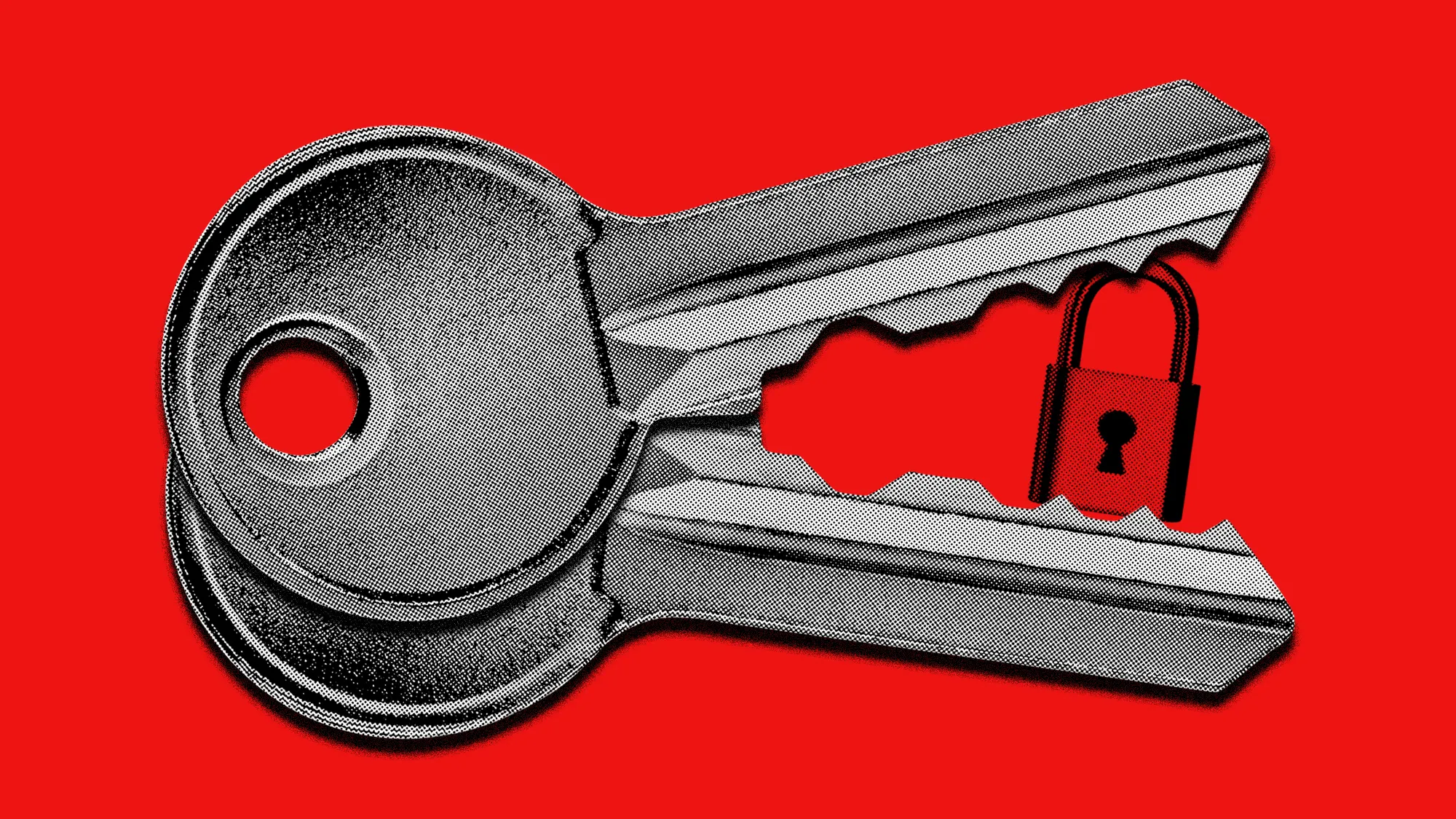
    ‘Q-Day’: cybersecurity’s lurking Armageddon

    Computer scientists have been warning for decades that a hypothetical doomsday involving quantum computing could be on the horizon. Now, cybersecurity experts are racing against the clock after Google recently announced that this “Q-Day” could be here much sooner than originally anticipated.

    Q-Day would arrive when quantum computers acquire “enough resources and stability to crack conventional cryptography,” said CNN. When that day arrives, it could spell disaster for millions of people’s private information, as “every financial transaction, medical file, email, location history and crypto wallet protected by today’s commonly used algorithms could be unlocked.”

    Unlike conventional computers, quantum computers utilize “quantum-mechanical phenomena” that allow them to “perform calculations that are practically impossible for even the most powerful supercomputers today,” said Forbes. Experts believe these computers could eventually crack RSA cryptography, the algorithm of prime numbers that helps to safeguard encryption. Some fear this could be accomplished “not in billions of years, but in hours or days.”

    It was previously believed that Q-Day was still far into the future, giving the tech world plenty of time to prepare new safeguards. But Google is now predicting that the day could arrive as soon as 2029, which means that “governments, companies and other entities may have far less time to prepare,” said CNN. 

    Many companies are being urged to boost their cybersecurity initiatives as Q-Day’s unwelcome advent looms. Google is “pushing for a transition to post-quantum cryptography, or the use of new, quantum-resistant algorithms to secure data against future attacks,” said Barron’s.


    On this day

    May 26, 1978

    Resorts Casino Hotel, the first legal casino in the U.S. outside of Nevada, opened in Atlantic City, New Jersey. While initial laws limited the number of hours people could gamble, the resort helped transform Atlantic City into a casino hotspot. Today, the city has nine casinos still in operation.


    TODAY’S newspaperS

    ‘Iran talks bog down’

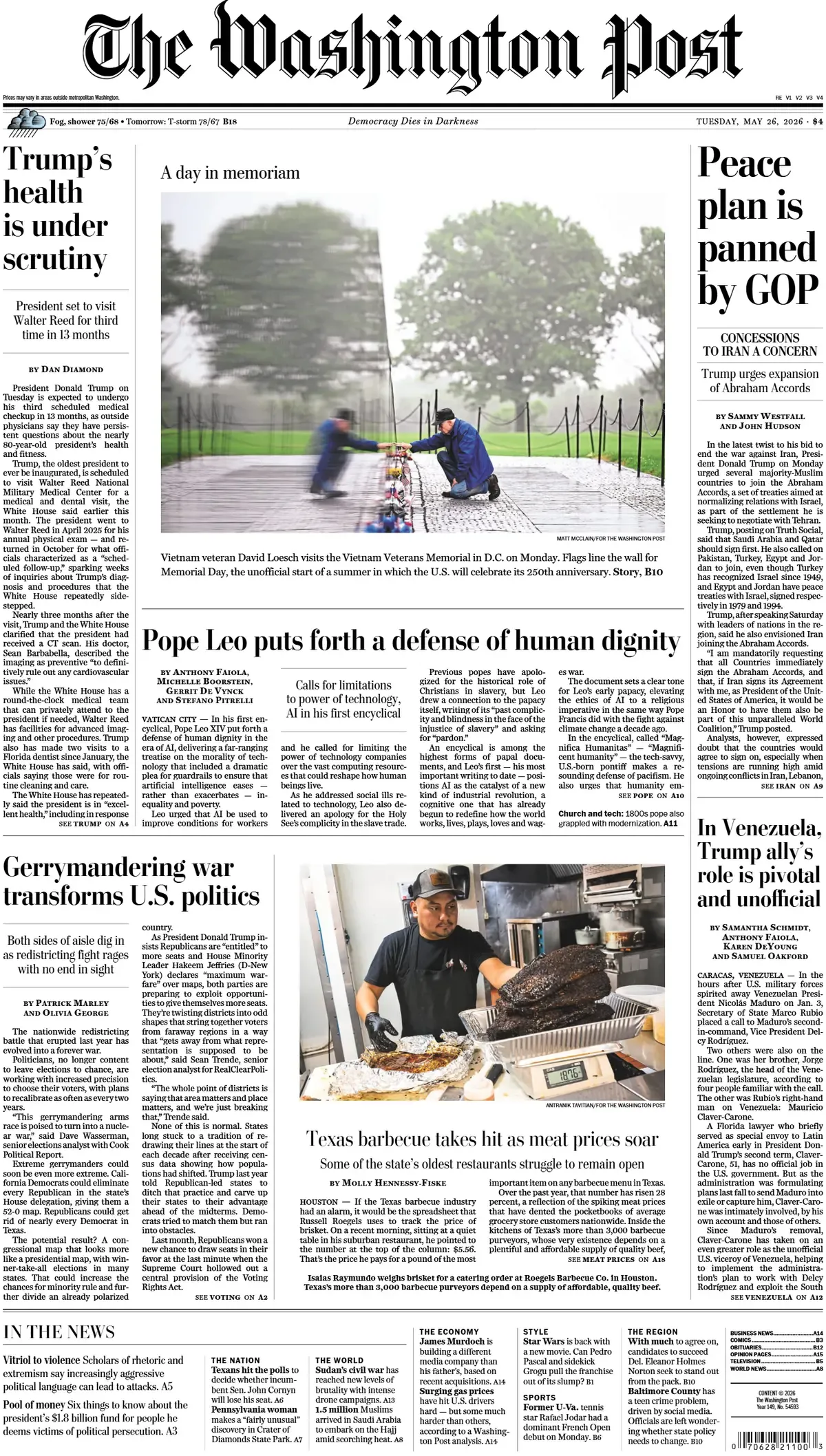
    “Iran talks bog down on first step to deal,” The Wall Street Journal says on Tuesday’s front page. “Trump, Iran leave big issues for later,” The Minnesota Star Tribune says. “GOP worries it’s Trump first, midterms last,” says The New York Times. “Trump faces health questions ahead of another medical visit,” The Philadelphia Inquirer says. “Pope puts forth a defense of human dignity,” The Washington Post says. Massachusetts rideshare drivers “first to unionize,” The Boston Globe says. “Officials: Threat of massive blast is averted,” says the Los Angeles Times. “In crisis mode, USPS delivers proud history,” says USA Today.

    ► See the newspaper front pages


    Tall tale

    Between a cop and a hard place

    A burglary suspect trapped in a wall for 10 hours was rescued after police officers on a coffee break heard his cries for help. Once the Salinas, California, cops pinpointed the man’s location between the coffee shop and a movie theater, they knocked down two walls to get to him. The suspect, who had fallen from the roof down into the wall space, was medically evaluated and then booked on suspicion of burglary.


    Morning Report was written and edited by Nadia Croes, Catherine Garcia, Scott Hocker, Anya Jaremko-Greenwold, Justin Klawans, Rafi Schwartz, Peter Weber and Kari Wilkin, with illustrations by Stephen Kelly and Julia Wytrazek.

    Image credits, from top: Alberto Pizzoli / AFP via Getty Images; Majid Saeedi / Getty Images; Andrew Lichtenstein / Corbis via Getty Images; Illustration by Stephen P. Kelly / Getty Images
     

    Recent editions

    • Evening Review

      Mind the white working-class gap

    • Morning Report

      Russia experiencing ‘problems’ in war, Putin concedes

    • Sunday Shortlist

      A charming ‘summer blockbuster’ at the Globe

    VIEW ALL
    TheWeek
    • About Us
    • Contact Future's experts
    • Terms and Conditions
    • Privacy Policy
    • Cookie Policy
    • Advertise With Us
    • FAQ
    Add as a preferred source on Google Add as a preferred source on Google

    The Week UK is part of Future plc, an international media group and leading digital publisher. Visit our corporate site.

    © Future Publishing Limited Quay House, The Ambury, Bath BA1 1UA. All rights reserved. England and Wales company registration number 2008885.