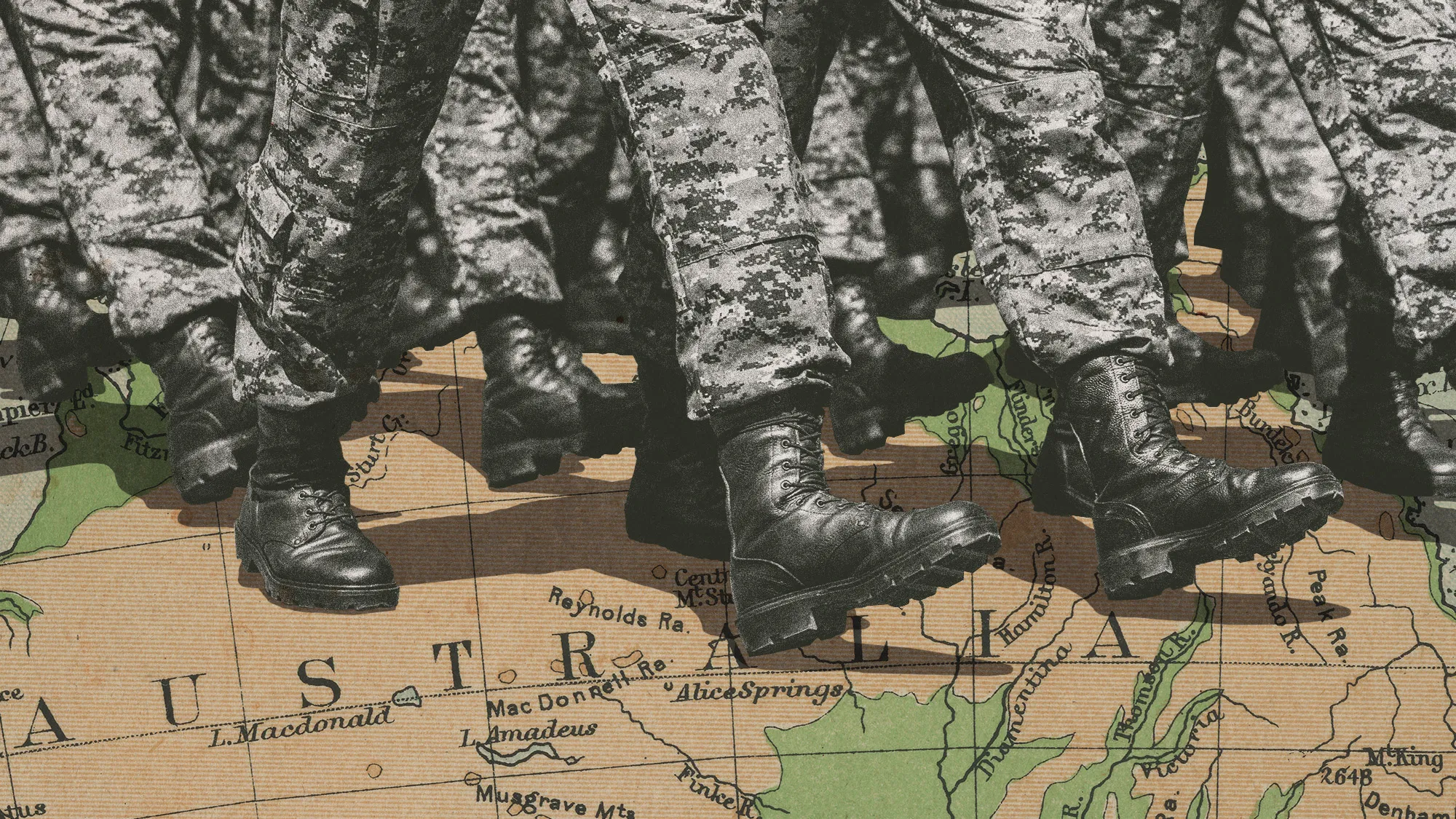
The U.S. military will include Australia in a global pre-positioning program for weapons, ammunition and vehicles for the first time, according to Agence France-Presse. This “growing U.S. footprint” is “important in terms of building our own military capability,” Australian Defense Minister Richard Marles told reporters in Western Australia. But critics, like University of Sydney international affairs expert James Curran, are asking whether Australia is “acting like America’s 51st state.”
Although Australia does not permit foreign military bases on its soil, it hosts U.S. Marines for exercises in the northern city of Darwin for six months of the year, and a “rotating force” of U.S.-commanded submarines will arrive in Western Australia next year, said AFP. If the U.S. and China “come to blows over Taiwan,” said The Wall Street Journal, the naval base in Western Australia “offers a berth” that would bring American nuclear-powered submarines “close to the fight” and provide a “haven if things go wrong.”
There’s “little political appetite” for a “massive increase in Australian defense expenditure,” said John Blaxland, an international security professor at Australian National University, to AFP. So “facilitating greater U.S. investment in Australian real estate is widely considered to be the most prudent approach to take.”
But if Australia changes its mind, there are “precedents” for close allies withdrawing permission for U.S. access to jointly operated military bases and airspace, Curran wrote in Australia’s Financial Review. Spain, Saudi Arabia and Kuwait have all restricted Washington’s use of such facilities, and Australia “could, if it so chose, do the same.” |