The Week The Week
flag of US
US
flag of UK
UK
https://cdn.mos.cms.futurecdn.net/flexiimages/jzblygzdxr1769609154.gif

SUBSCRIBE

Try 6 weeks free

Sign in
  • View Profile
  • Sign out
  • The Explainer
  • Talking Points
  • The Week Recommends
  • Podcasts
  • Newsletters
  • From the Magazine
  • The Week Junior
  • More
    • Politics
    • World News
    • Business
    • Health
    • Science
    • Food & Drink
    • Travel
    • Culture
    • History
    • Personal Finance
    • Puzzles
    • Photos
    • The Blend
    • All Categories
  • Newsletter sign up Newsletter
  • The Week’s Saturday Wrap
    Federal election interference, Olympic-sized costs, and a flop film

     
    controversy of the week

    Fulton County: A dress rehearsal for election theft?

    When FBI agents raided an elections center in Fulton County, Georgia, last week, carting off 700 boxes of ballots and related documents, some commentators shrugged that it was just another doomed attempt by President Trump to substantiate his “big lie” of the stolen 2020 election. But the real “goal is likely far more nefarious,” said Mary Ellen Klas in Bloomberg. Facing a GOP wipeout in November’s midterms, which would end his “ability to fend off accountability,” Trump is mobilizing the government to find or create evidence of electoral malfeasance in Democratic precincts, as a pretext for Republicans “taking control of ballots in key states in November.” Trump himself confirmed the plan this week, declaring that he wants to “nationalize the elections” and have the federal government—meaning Republicans—tally ballots in states he deems guilty of electoral “corruption.” His lackeys are ready to do the dirty work: Director of National Intelligence Tulsi Gabbard, Trump’s de facto “voter fraud” czar, was on site for the Fulton raid. By statute, the nation’s top spy boss is barred from involvement in domestic law enforcement. But as White House press secretary Karoline Leavitt explained it, Gabbard is “committed to ensuring a U.S. election can never, ever be rigged again.” 

    Trump will certainly “try to tamper with the midterms,” said Nick Catoggio in The Dispatch. But to understand last week’s raid we shouldn’t discount “the president’s aggrieved paranoia about Georgia,” and Fulton County in particular. Bogus tales of she-nanigans by Black poll workers at Atlanta’s State Farm Arena are among Trump’s favorite lies to explain his 2020 loss in the Peach State. And it was Fulton’s district attorney, Fani Willis, who later indicted Trump for trying to overturn the election—including by pressuring Georgia’s secretary of state to “find 11,780 votes”—forcing him through the humiliation of fingerprinting and a mug shot. This raid may have been partly revenge for those indignities, partly pre-emptive therapy for the Right’s next “painful election defeat.” 

    This is about more “than simply keeping Trump happy,” said Philip Bump in MS.now. Days before the raid, Attorney General Pam Bondi wrote to Minnesota Gov. Tim Walz, suggesting the Trump administration would withdraw ICE agents from his state if he handed over all the state’s voter records. Minnesota—one of two dozen mostly Democratic-led states the administration has sued to get their voter rolls—refused the request. Is the big plan to identify and purge Democratic voters, or merely to “gin up” more bogus claims of fraud? We don’t know. But the “threat to American democracy” could not be more villainous if it were spelled out in “letters clipped from newspapers and magazines.” 

    The president’s gambit is working, said Jeet Heer in The Nation. Even if Gabbard and FBI boss Kash Patel find no crimes in Fulton, and even if Democrats recapture the House in November, Trump will point to stunts like the Georgia raid “to justify ignoring congressional oversight.” We’re facing horrors far worse than that, said David French in The New York Times. The administration is already defying court orders, and is already deploying masked agents to terrorize Latino and minority communities. In November, how many minority voters will risk a trip to their polling station? And how many, when they get there, will find “they’re no longer on the voting rolls?” Yes, it’s only February. But Trump is stealing the midterms, or trying to, right now “in front of our eyes.”


    VIEWPOINT

    An aspiring Caesar

    “All emperors aim to leave their mark on history, and one facet of that is leaving their mark architecturally by building gleaming marble memorials of their reign. No president in American history has aspired to be Caesar as plainly as Trump has. To be a proper Caesar, you need proper grandeur. The new ‘Trump Kennedy Center’ is especially likely to have his fingerprints all over it in order to make it harder for his political enemies to remove all trace of him after he’s gone. God only knows what self-aggrandizing stunts he has planned for the 250th anniversary of American independence this summer, but nothing would capture the perversion of our founding ideals as succinctly as turning the semiquincentennial into a glorification ritual for a monarch.”

    Nick Catoggio in The Dispatch


    briefing

    The price of sporting glory

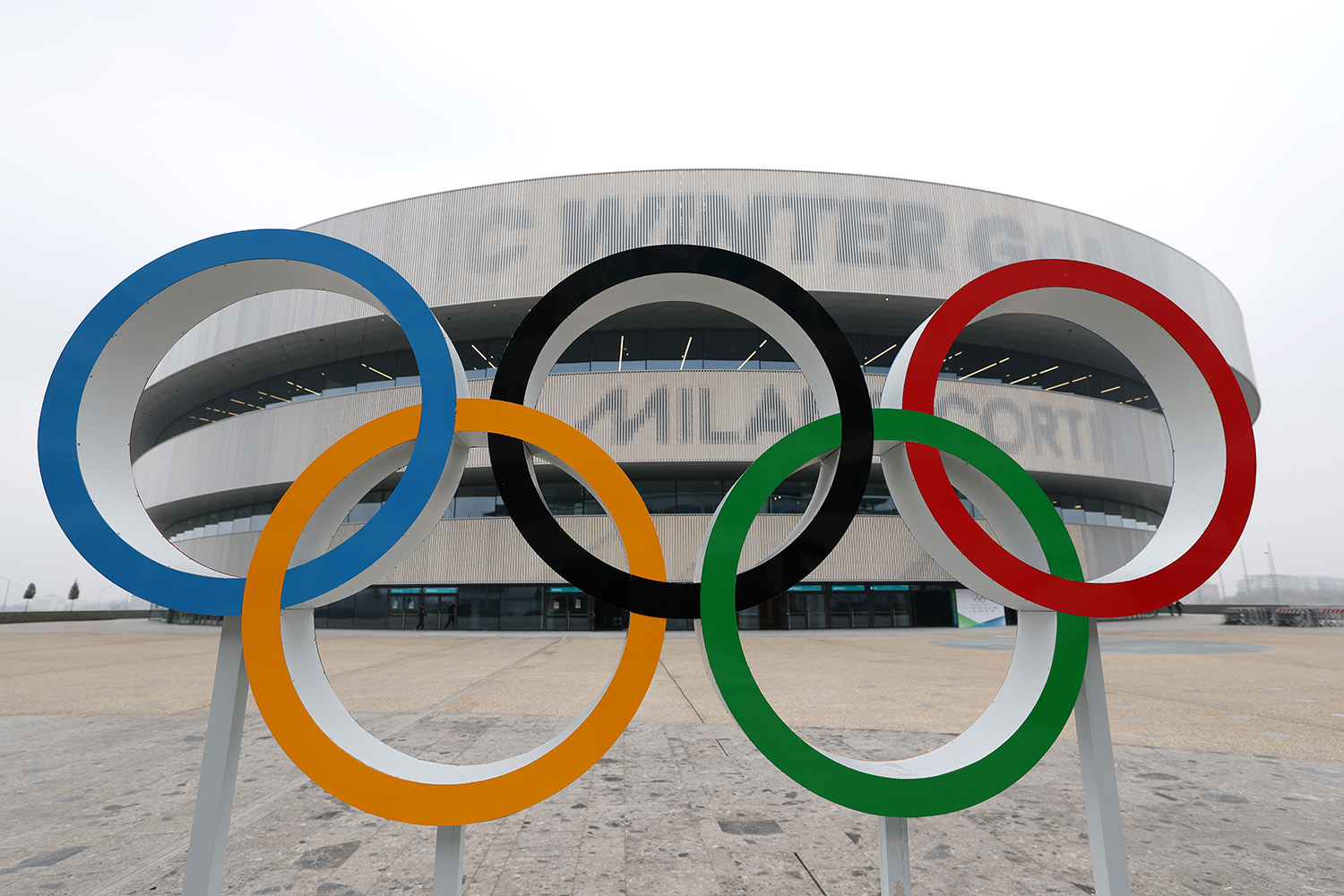
    The Milan-Cortina Winter Olympics kicked off this week. Will Italy regret playing host?

    Was Italy ready for the Games?
    Not entirely. But the Winter Olympics are now underway, and over the next two weeks, more than 3,500 athletes from 93 countries will compete across 16 sports, ranging from alpine skiing to luge to figure skating. These Olympics are the most geographically spread out of any Games in history, with 25 sporting venues and six Olympic Villages spanning some 8,495 square miles in Northern Italy. The two main hubs, the city of Milan and the alpine resort of Cortina d’Ampezzo, sit 250 miles apart. Construction delays and cost overruns have plagued the Games. Days before the opening ceremony, work was still ongoing at the Santagiulia arena, a new $292 million ice hockey venue in Milan; it was originally budgeted at $210 million. Some locals have been angered by the event’s environmental cost. Cortina Mayor Gianluca Lorenzi received death threats after centuries-old trees were felled to make way for a $131 million bobsledding track. Lorenzi insists that “the project is an added value for Cortina.” But history shows that the Olympics often leave behind a legacy of debt, white elephants, and bitterness.

    How much did these Games cost? 
    The Milan-Cortina Olympics have an operating budget of about $1.9 billion—which is largely covered by broadcasting and sponsorship deals, and sales of tickets and merchandise. But that budget does not include capital costs, including the construction of new Olympic venues or improvements to rail and road systems. The Italian government allocated about $4.2 billion in public money for infrastructure spending. The International Olympic Committee argues that the Games pay for themselves by raising a city’s profile and attracting tourists, and some reports suggest Milan-Cortina could deliver a $6 billion economic boost. But most host cities do not see a positive return on investment: Beijing spent $40 billion on the 2008 Summer Games and generated only $3.6 billion in revenue, while London 2012 spent $18 billion and generated $5.2 billion. “For many cities and many countries,” said sports economist Robert Baade, the Olympics are “a money-hemorrhaging endeavor.” 

    Why are the Games so expensive? 
    It’s partly because they’ve expanded to allow more events, more athletes, more venues, and more spectators. But it’s also due to each host city wanting their Games to be more impressive than the predecessor’s. One-upmanship, extravagant architectural plans, and a comparatively short construction schedule result in big bills, which are often not reflected in the original bids. An Oxford University study found that from 1960 to 2016, host cities went over budget by an average of 156%. For some Games, the cost overrun was far higher: The 2014 Winter Games in Sochi cost Russia at least $30 billion, 289% more than was expected at the time of bidding. And the 1976 Games in Montreal went 720% over projections, leaving the city with a $1.5 billion debt that took almost three decades to pay off.

    “There’s this kind of relentless underestimation of costs,” said sports historian David Goldblatt, “because if anyone knew the real bill at the beginning they would never sign up.” Only one host city has turned a profit in recent decades: Los Angeles. It was the sole bidder for the 1984 Games after the Montreal debacle, and insisted that most events be held in existing facilities. L.A. ended up with a surplus of over $200 million on revenues of $619 million. 

    What happens to new infrastructure? 
    Ideally, arenas and other facilities get repurposed when the athletes go home. A 2022 IOC report claims that 85% of venues built for past Olympics remain in use: Rome’s Olympic Stadium, built for the 1960 Games, is now home to soccer clubs Roma and Lazio, and the colossal National Aquatics Center used in Beijing 2008 is today a popular water park. But many facilities fall into disrepair, because they are too expensive to repurpose or are simply not needed. A $38 million aquatics stadium in Rio de Janeiro was left to crumble after the 2016 Games, while Athens is littered with decaying stadiums and pools from the 2004 Games. “We’ve got the ruins of ancient Olympia in Greece,” said historian Miles Osgood, “but now we’ve got the ruins of modern Olympia.” 

    Is there a more sustainable way? 
    Paris 2024 was promoted as the most sustainable tournament yet. Temporary structures were used to turn historic landmarks into venues—beach volleyball was played by the Eiffel Tower, judo bouts happened at the Champ de Mars—and existing facilities were refurbished and reused. With a total cost of $10 billion, Paris was the cheapest Summer Games in a quarter-century. But this stripped-back approach is possible only in cities with ample pre-existing infrastructure. “It will be very, very unlikely that we will see another city from an emerging economy or [one] that hasn’t hosted the Games already stage a new edition of the Games,” said Oxford University economist Alexander Budzier. The next Summer Games, in 2028, will take place in Los Angeles—which was selected after Budapest; Hamburg, Germany; and Rome pulled out of bidding over budget concerns. 

    How is L.A. faring? 
    Local leaders have pledged not to leave the city saddled with debt. As in 1984, Los Angeles aims to use existing facilities, and officials estimate the total cost of the event will come in at about $7 billion. That figure has swelled 30% since L.A. secured hosting rights in 2017, but sports economist Andrew Zimbalist said there’s still “a decent chance that L.A. is going to break even.” But many residents and experts wonder if spending on the Games is the best use of resources, with swathes of the city still struggling to rebuild from the devastating 2025 wildfires, an ongoing homelessness crisis, and the city’s nearly $1 billion budget deficit. “Given what the city and the region now face,” said Joel Kotkin, a fellow in urban studies at Chapman University, “why would you want to put more stress on it?”




    Only in America

    A Mississippi court has reinstated an assistant principal fired for reading I Need a New Butt! to second graders. Toby Price was dismissed in 2022 after officials determined that the picture book, about a boy who thinks his behind is broken because it has a “crack” in it, was “inappropriate.” The court called the decision “arbitrary and capricious,” given that other books in the school library mentioned butts or included images of nudity.


    talking points

    Melania: A film about nothing

    Amazon’s new Melania Trump documentary promised it would reveal the real woman behind the first lady’s steely exterior, said Monica Hesse in The Washington Post. But after sitting through this 104-minute exercise in superficiality, I can report “there’s nothing to see.” Melania, which follows the first lady as she prepares for Donald Trump’s second inauguration, is filled with scenes of the inscrutable ex-model trying on hats, strutting down hallways “in stilettos that never come off,” and attending meetings “about place settings and invitations.” Director Brett Ratner—exiled from Hollywood after being accused of sexual misconduct by multiple women—never unearths what Melania actually thinks about her return to the White House, or anything else. It doesn’t matter. Hiding her true personality “is, in fact, her personality.” Despite its vapidity, Melania took in $7 million in its first weekend, “the strongest opening for a documentary in a decade,” said Sam Adams in Slate. That would be impressive, if Amazon hadn’t spent an unprecedented $40 million buying the documentary and another $35 million marketing it. There’s an old Hollywood term for “a $75 million movie that opens with $7 million in box office: a flop.” 

    Melania isn’t a documentary, said Alexandra Petri in The Atlantic, it’s “a horror movie.” This is the tale of a woman who experiences none of the things that make life worth living: “meaningful conversations, shared laughter, petting a dog, casual interactions with someone who is neither an employee nor a family member.” In their place are “Fittings! More fittings! Pomp! Private jets! Expensively attired billionaires being served—I am not making this up—golden eggs.” Melania is trapped in an invisible bubble she will never be able to escape, “and she hasn’t even noticed.” Please don’t mistake her for a victim, said Maureen Dowd in The New York Times. The “Slovenian Sphinx” is not, as some liberals have fantasized, “Rapunzel in the tower, pining to be saved from the ogre imprisoning her.” She is comfortable with her husband’s authoritarianism, and “comfortable in the frosty vertical solitude of the tower, swaddled in luxury.” 

    “There is no reason for Melania to exist outside of rank corruption,” said Sonny Bunch in The Bulwark. Amazon founder Jeff Bezos spent $40 million buying this hagiography—$28 million of which went to Melania—in the clear hope of protecting his companies from government interference. “It’s all quite disgusting.” But it’s also quite fascinating to see just how many Americans will trek to a theater to “bask in the golden glow of Trump Tower,” and how such a “pure and naked instrument of graft and propaganda can be deployed to great effect on an audience happy to lap it up.”


    people

    Stewart’s simmering anger

    Kristen Stewart has learned to take Hollywood’s sexist attitudes in stride, said Susannah Butter in The Sunday Times (U.K.). She was recently talking to a male actor “I really love,” she says, when she noted that Method acting seemed to be a uniquely male phenomenon intended “to make acting seem like a feat that it is not. I think acting is just playing pretend; you don’t have to do 50 push-ups before a take.” Stewart, 35, says the actor grew defensive and responded that “he’d never met an actress that wasn’t crazy. A couple of years ago that would have made me turn red in the face, my ears would have started steaming, and I would have seemed exactly like what he wanted me to seem like: an angry woman. Instead, I continued and got to the end of my thought.” Moving behind the camera and becoming a director—her directorial debut, The Chronology of Water, came out last year—has been liberating. “Actresses get treated like shit, I’ve got to tell you. The first time I sat down to talk about my movie as a director, I thought, Wow, this is a different experience, they are talking to me like I’m somebody with a brain.” When asked about the roots of her feminist fury, though, she doesn’t point to her 27 years on camera but to her family. “I mean, I’m a little sister. I have a bunch of brothers, it’s f---ing hell.”


    Saturday Wrap was written and edited by Theunis Bates, Conor Devlin, Bill Falk, Allan Kew, Bruno Maddox, Rebecca Nathanson, Tim O’Donnell, and Zach Schonbrun.

    Image credits, from top: Reuters, Getty, Getty, Getty
     

    Recent editions

    • Evening Review

      The Winter Olympics: going off piste?

    • Morning Report

      Starmer says sorry to Epstein victims

    • Evening Review

      Where does Gaza go from here?

    VIEW ALL
    TheWeek
    • About Us
    • Contact Future's experts
    • Terms and Conditions
    • Privacy Policy
    • Cookie Policy
    • Advertise With Us
    • FAQ
    Add as a preferred source on Google

    The Week UK is part of Future plc, an international media group and leading digital publisher. Visit our corporate site.

    © Future Publishing Limited Quay House, The Ambury, Bath BA1 1UA. All rights reserved. England and Wales company registration number 2008885.