The Week The Week
flag of US
US
flag of UK
UK
https://cdn.mos.cms.futurecdn.net/flexiimages/jzblygzdxr1769609154.gif

SUBSCRIBE

Try 6 weeks free

Sign in
  • View Profile
  • Sign out
  • The Explainer
  • Talking Points
  • The Week Recommends
  • Podcasts
  • Newsletters
  • From the Magazine
  • The Week Junior
  • More
    • Politics
    • World News
    • Business
    • Health
    • Science
    • Food & Drink
    • Travel
    • Culture
    • History
    • Personal Finance
    • Puzzles
    • Photos
    • The Blend
    • All Categories
  • Newsletter sign up Newsletter
  • The Week’s Saturday Wrap
    Trump’s war, the uneven economy, and the ‘quack’ who would be surgeon general

     
    controversy of the week

    Iran: Will MAGA forgive Trump’s ‘betrayal’?

    President Trump’s war in Iran is barely a week old and “MAGA already hates” it, said Will Sommer in The Bulwark. This should not be surprising. From the first days of his 2016 campaign, the central pillar of Trump’s isolationist, “America first” agenda was a pledge to waste no more blood and treasure on new wars of choice and to stop trying to topple, in his own words, “foreign regimes that we know nothing about.” Now that the self-declared
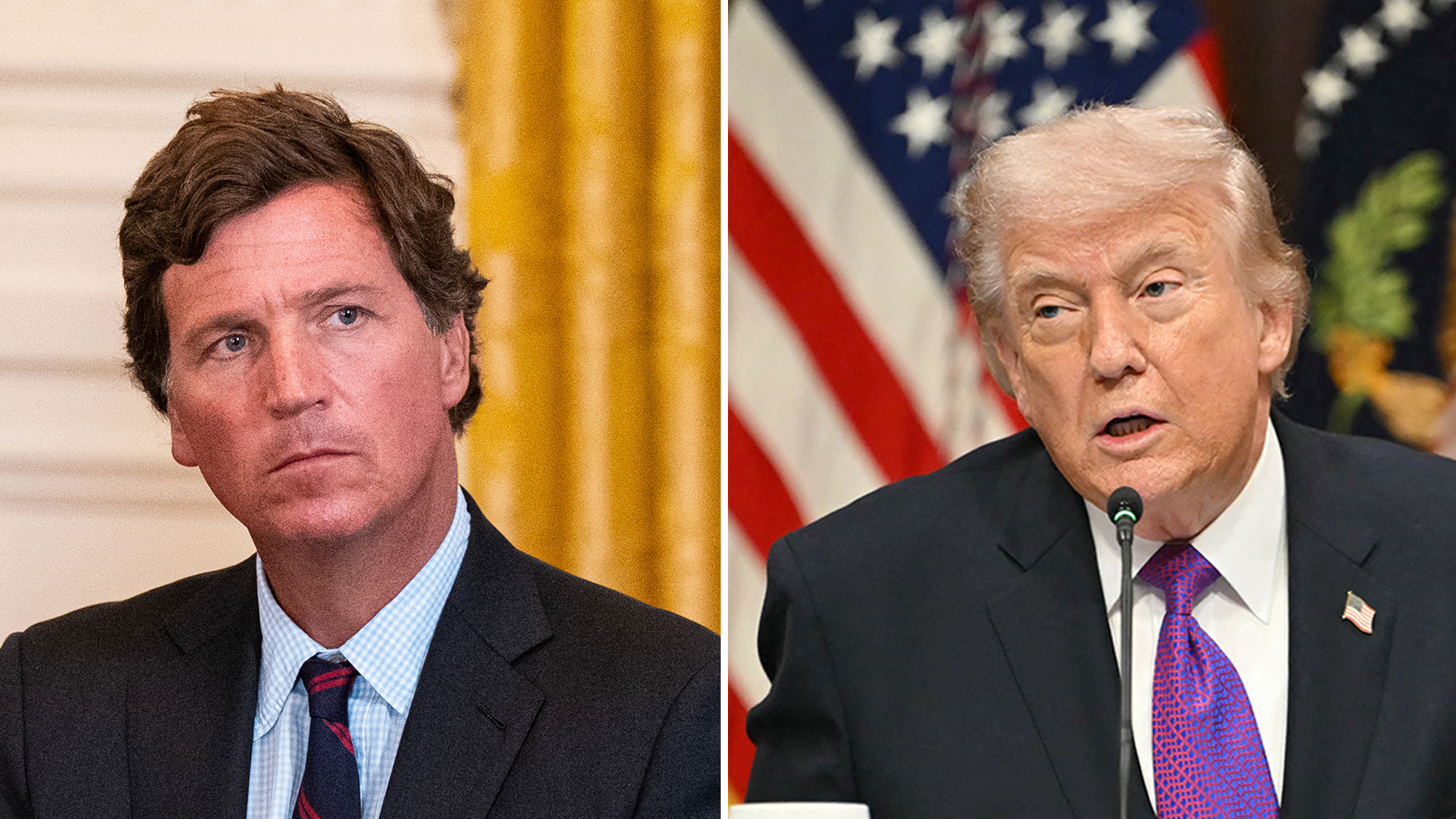
    “President of Peace” has done precisely that in Iran, the mood within MAGA is “dour.” Podcaster Tucker Carlson denounced the war as “absolutely disgusting and evil,” accusing Israel of having duped the administration into doing its Middle Eastern dirty work. Former House member Marjorie Taylor Greene accused Trump of “betrayal.” Other MAGA stalwarts, including former Fox News personality Megyn Kelly, commentator Matt Walsh, and misogynist influencer Andrew Tate, are also speaking out. For now, dissent is a minority position among Republicans, 77% of whom say they support the war, numbers that somewhat support Trump’s boast that “MAGA is Trump...and MAGA loves what I’m doing.” But it has only been a week, said Emma Ashford in Foreign Policy. With midterms looming and 59% of Americans already opposed to the war, Trump has no margin for error. He has “rolled the dice” and bet his presidency that this will be a “short successful war,” not another “disastrous Middle East quagmire.”

    Quagmires are off the table, said Marc A. Thiessen in The Washington Post. When Trump promised no new “forever wars,” he meant he wouldn’t send “U.S. boots into foreign hot spots” for multiyear “nation building” exercises such as we saw in Afghanistan and Iraq. Iran will be more like his January raid on Venezuela: a brief but overwhelming action to “decapitate” a hostile regime, involving few if any ground troops. What happens after that “will be up to the Iranian people.” Trump has not forgotten the lessons of Iraq, said Niall Ferguson in The Free Press, and there will be no attempt to build a Western-style democracy. The “one thing I can confidently promise” about war with Iran: “It will not last long.”

    That’s not how wars work, said Alex Shephard in The New Republic. In a region this complex and volatile, there are countless ways the conflict could “careen out of control” and require an infusion of U.S. ground troops—something Trump says he doesn’t have the “yips” about. Yes, it would be very like Trump to simply “declare ‘victory!’” and “walk away from the carnage,” in time to mend fences with MAGA and have voters forget about Iran before the midterms. But that will be hard if regional allies are bogged down in wars with Iran and its proxies, or if a regime even more dangerous than the one we’re trying to destroy arises in Tehran.

    What happens next will shape the Right for years to come, said David M. Drucker in Bloomberg. Many observers misidentify a significant chunk of the MAGA base as isolationist, when what it is really opposed to is losing. For them, bombing Tehran in a muscular show of American power is fine. Occupying it would be another matter entirely. Still, cracks in the MAGA coalition are showing—and if the war drags on and more America-first voters bail, it may “become impossible for the next Republican nominee to take the baton from Trump and win the White House.” That’s something for Trump’s most likely successors, Vice President JD Vance and Secretary of State Marco Rubio, “to think about.”


    VIEWPOINT

    Nukes are now a necessity

    “We inhabit a world order in which nuclear states can do whatever they want to nonnuclear states. International law is basically gone now that America, long leader of the international order, has abandoned the rule of law in favor of the law of the jungle. The only rational response for the rest of the world is to acquire nuclear weapons, as quickly as possible. I expect the next 20 years will see a great deal of nuclear proliferation as everyone from Canada to Germany to Poland to Japan to South Korea to Australia goes nuclear. Possession of nuclear weapons is now your only shield against aggression from Russia, China, and/or the United States.”

    Jonathan V. Last in The Bulwark


    briefing

    The K-shaped economy

    What happens when only the richest reap the benefits of economic growth?

    What is a K-shaped economy? 
    It’s a term used by a growing number of economists to describe the two-lane scenario they see playing out in the U.S., in which higher-
    income households on the upward arm of the K see their wealth increase while lower- income families are squeezed by stagnating incomes and rising prices. At a broad level, the economy appears healthy, with unemployment hovering at just over 4%, inflation edging down from a pandemic- era peak of 9.1% to about 2.5%, and stock markets hitting record highs. President Trump says Americans are living in a “golden age,” but many don’t feel it. Most industries are in a hiring freeze. Borrowing costs remain high. Inflation remains above the Federal Reserve’s 2% target. And because the top 10% of Americans own 87% of stocks, few people have directly benefited from soaring share prices. Fed data shows the share of wealth held by the richest 1% hit nearly 32% last year, the highest since records began in 1989. The worry with income inequality “is not just where we stand now,” said Beth Ann Bovino, chief economist at U.S. Bank, “but also whether ongoing developments will worsen the situation.”

    When did this start?
    Rising wealth inequality has been a fact of American life since the 1980s. But it accelerated sharply during the Covid- induced 2020 recession, when white-collar professionals remained employed and worked from home—saving money that would have been spent on commuting, vacations, and more—while mass layoffs at restaurants, hotels, and factories pushed unemployment to 15%. Inequality shrank somewhat when the economy reopened and demand surged, with many now short-staffed companies lifting pay for traditionally low-income jobs. In 2023 and 2024, inflation-adjusted wages for the bottom quarter of workers climbed at 3.9% a year, outpacing the top quarter’s 3.1%. “We had that kind of two-year period where the bottom was catching up,” said Dario Perkins, an economist at consultancy TS Lombard. “Since then, the economy has cooled down again.” Hiring has dropped over the past year, as have pay hikes—for some. After-tax wage growth ticked up 4% year on year for higher- income households, according to a new Bank of America report, but climbed just over 2% for middle- income families and 1.4% for lower-income families. For many in the middle and lower tiers, simply staying afloat now feels like a struggle.

    Why is that? 
    It’s partly because the cost of many essentials has climbed faster than wages, a fact not reflected in headline inflation figures. Prices are collectively up about 25% since 2020, but residential electricity rates are more than 30% higher on average than in 2020—and up by more than 100% for some who live near power- hungry AI data centers. National home prices rocketed 55% in that period, with the median house price hitting $432,700 in mid-2025, which has boosted the wealth of those who own property but put homeownership out of reach for many who don’t. The cost of owning a car—everything from sticker price to maintenance to insurance— has accelerated more than 40%, while groceries are up 30%. About a quarter of Americans today live paycheck to paycheck, spending more than 95% of their income on necessities. “The people claiming prices are lower are not actually buying their own groceries,” said Vanessa Jones, a nurse in Davenport, Iowa, who works two jobs and recently declared bankruptcy after being swamped with medical bills following a cancer diagnosis. As the divide between wealthy and lower- income consumers grows, many businesses are rethinking their target audience.

    What are companies doing? 
    Some are refocusing on premium products. It’s a sensible shift considering that a recent Moody’s Analytics report found the top 10% of earners, those making at least $251,000 a year, account for just over 49% of consumer spending, up from 43% in 2020. Spending on luxury fashion climbed 8% year on year in 2025, and sales of first- and business- class tickets are now propelling revenue and profit for Delta Air Lines, CEO Ed Bastian said in October. Lower- end consumers, he added, are “clearly struggling.” Coca-Cola announced in an analyst call late last year that its earnings were being boosted by high-end brands such as Smartwater. Walmart, meanwhile, is pitching itself at the store of choice for overstretched Americans. In November, then-CEO Doug McMillon told analysts that “upper- and middle- income households are driving our growth”—a sign that Whole Foods or Target shoppers are increasingly trading down and seeking bargains at the discount retailer.

    Is the K-shaped economy here to stay?
    Mark Zandi, chief economist at Moody’s Analytics, thinks so. “This is not a cyclical or temporary phenomenon,” he said. It’s “structural.” Analysts worry that the boom in artificial intelligence could deepen the divide, with the soaring stock of firms such as AI chipmaker Nvidia benefiting a small sliver of the population but not generating many new jobs. “What we see at the very top is an economy that is sort of self-­ contained,” said Peter Atwater, an economist at the College of William & Mary, “between AI, the stock market, the experiences of the wealthy.” Then there’s the fear that AI could wipe out many ­ entry-­ level and white-­ collar jobs, which would super- charge inequality. An economy based only on top earners, many experts agree, is not sustainable: If layoffs intensify and ­ middle- and ­ lower-­ income Americans cut back spending, the earning of Big Tech firms— which make up about 32% of the S&P 500’s value—would sink. “You’re talking about the bottom of the K essentially pull- ing down the top,” said Perkins. There’s also the risk of poli­tical unrest, which has accompanied previous periods of dizzying technological change and income stratifica­tion. In a K-shaped system, “the top gets insulated enough to become careless,” said venture capitalist Josh Tanenbaum, while “the bottom gets desperate enough to become combustible.”


    Only in America

    New York Gov. Kathy Hochul has intervened to let a grandfather keep his PB4WEGO license plate. The state DMV had ordered Seth Bykofsky, 69, to destroy his custom plates, deeming their message “objectionable.” Upon learning of Bykofsky’s plight, Hochul ordered officials to reverse the decision, and called him personally to share the news. “I have kids and grandkids,” Hochul told him. “I think everyone should be reminded to pee before you go.”


    talking points

    Health: An influencer for surgeon general?

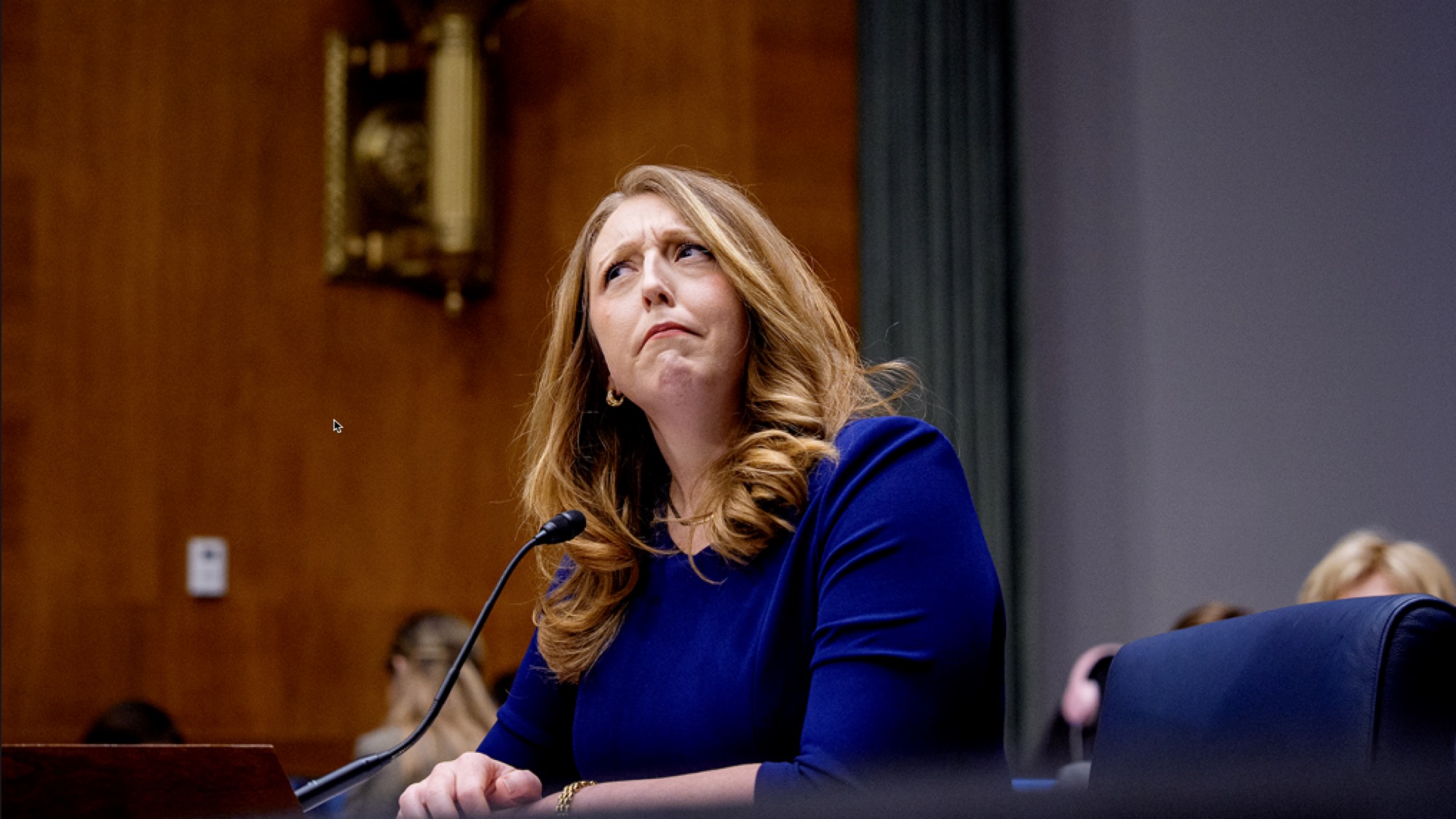
    The competition is fierce, but Casey Means “may be President Trump’s weirdest nomination so far,” said Chris Truax in The Hill. Appearing before a Senate committee last week, Trump’s pick for surgeon general was grilled on why she should be confirmed as America’s top doctor, even though “she’s not a doctor. Not a practicing one, anyway.” A graduate of Stanford’s medical school, she dropped out of her residency in 2018 to become a wellness influencer and entrepreneur, helping launch Health Secretary Robert F. Kennedy Jr.’s “Make America Healthy Again” movement. Means, 38, has written gushingly about tripping on hallucinogenic mushrooms—“ I felt myself as part of an infinite and unbroken series of cosmic nesting dolls”—and encouraged followers to try the illegal drug. She has made hundreds of thousands of dollars hawking dubious supplements, and encouraged people to optimize their health with a glucose- monitoring device sold by a company she co-founded. Means has also pushed vaccine skepticism, claiming that lifesaving shots are in fact harming children. If the Senate cares at all about the nation’s health, it will reject this “unsuited, unqualified, and unlicensed” quack.

    At her Senate hearing, Means “kept her most eccentric wellness beliefs largely in check,” said Tom Bartlett in The Atlantic. She didn’t praise psychedelics or endorse raw milk, “as she is normally wont to do.” She did not rail against tap water or conventionally grown food, and insisted that her past talk about the “horrifying health risks of hormonal birth control” referred only to the risks of clotting for a small subset of women. Means is still a crank, said The Wall Street Journal in an editorial. When pressed by senators, she “equivocated” on the disproven link between vaccines and autism, and “dodged” when asked if she’d encourage parents to get their children vaccinated against measles. The surgeon general is supposed to provide Americans with the best scientific advice on health and illness, something Means seems utterly incapable of doing.

    In her bid to win over skeptical lawmakers, Means spouted “all sorts of soothing things” about the need for choice and freedom in medicine, said Jonathan V. Last in The Bulwark. But the real goal of Kennedy, Means, and the MAHA crowd is not to provide people with more choices but to use “the power of the government to force different choices.” This “group of crazy” is dismantling our public health institutions and research centers, and
    demolishing trust in medicine. When they’re done, we’ll be presented with a choice on how to treat our ailments: with raw milk, ivermectin, or the supplements that have “made Means rich.”


    people

    O’Brien’s gallows humor

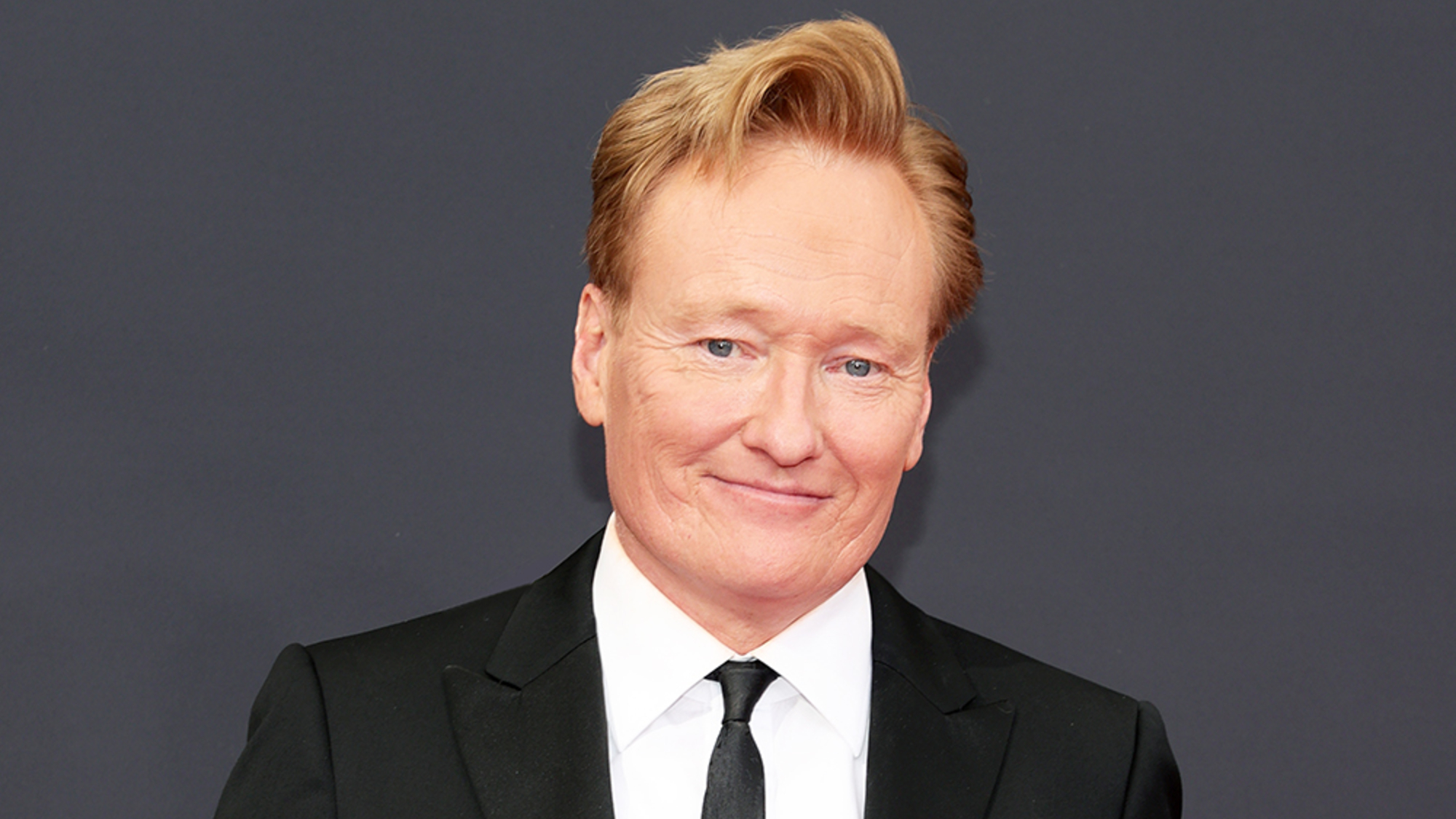
    Conan O’Brien is hardwired to mine life—and death—for comedy, said David Remnick in The New Yorker. He was in Austria in December 2024 when he got news that his 95-year-old father had died. “I got on a flight, got on another connecting flight, made it back to Boston,” says O’Brien, 62. “And there was a moment I was outside my family house, the house I grew up in in Brookline. And I got this lovely text from Will Arnett.” The comic actor, who co-hosts a podcast with actor Jason Bateman, sent sympathies and said they all were thinking of him. “And I just wrote back, ‘I blame Bateman’—whenever we’re together, we always just joke about Bateman—‘Jason Bateman killed my father.’ Which is insane.” Only three days later, O’Brien’s mother died at age 92 “in the same room that my father had passed in, which was really shocking. And I’ve laid out now that I have space for comedy still. So Will texted me and said, ‘If you want, I could have Bateman take care of your sister.’ And I immediately texted back, ‘3053 Beacon Street, Apartment 17F. Make it look like a robbery.’” This is just how comedians communicate, he explains. “I’m a whale. He’s a whale. We make these weird noises at each other. I know how much I love my parents, and I know what a lovely person Will Arnett is, and Jason Bateman. But it’s [our] way of doing business and connecting.”


    Saturday Wrap was written and edited by Theunis Bates, Chris Erikson, Bill Falk, Bruno Maddox, Scott Meslow, Zach Schonbrun, and Hallie Stiller.

    Image credits, from top: Getty (all).
     

    Recent editions

    • Evening Review

      Orbán’s final countdown

    • Morning Report

      Trump wants to pick Iran's new leader

    • Evening Review

      The future of the special relationship

    VIEW ALL
    TheWeek
    • About Us
    • Contact Future's experts
    • Terms and Conditions
    • Privacy Policy
    • Cookie Policy
    • Advertise With Us
    • FAQ
    Add as a preferred source on Google Add as a preferred source on Google

    The Week UK is part of Future plc, an international media group and leading digital publisher. Visit our corporate site.

    © Future Publishing Limited Quay House, The Ambury, Bath BA1 1UA. All rights reserved. England and Wales company registration number 2008885.