The Week The Week
flag of US
US
flag of UK
UK
https://cdn.mos.cms.futurecdn.net/flexiimages/jzblygzdxr1769609154.gif

SUBSCRIBE

Try 6 weeks free

Sign in
  • View Profile
  • Sign out
  • The Explainer
  • Talking Points
  • The Week Recommends
  • Podcasts
  • Newsletters
  • From the Magazine
  • The Week Junior
  • More
    • Politics
    • World News
    • Business
    • Health
    • Science
    • Food & Drink
    • Travel
    • Culture
    • History
    • Personal Finance
    • Puzzles
    • Photos
    • The Blend
    • All Categories
  • Newsletter sign up Newsletter
  • The Week’s Saturday Wrap
    Avatar with animals, a matcha challenger,
    and the riddle of consciousness

     
    FILM REVIEW

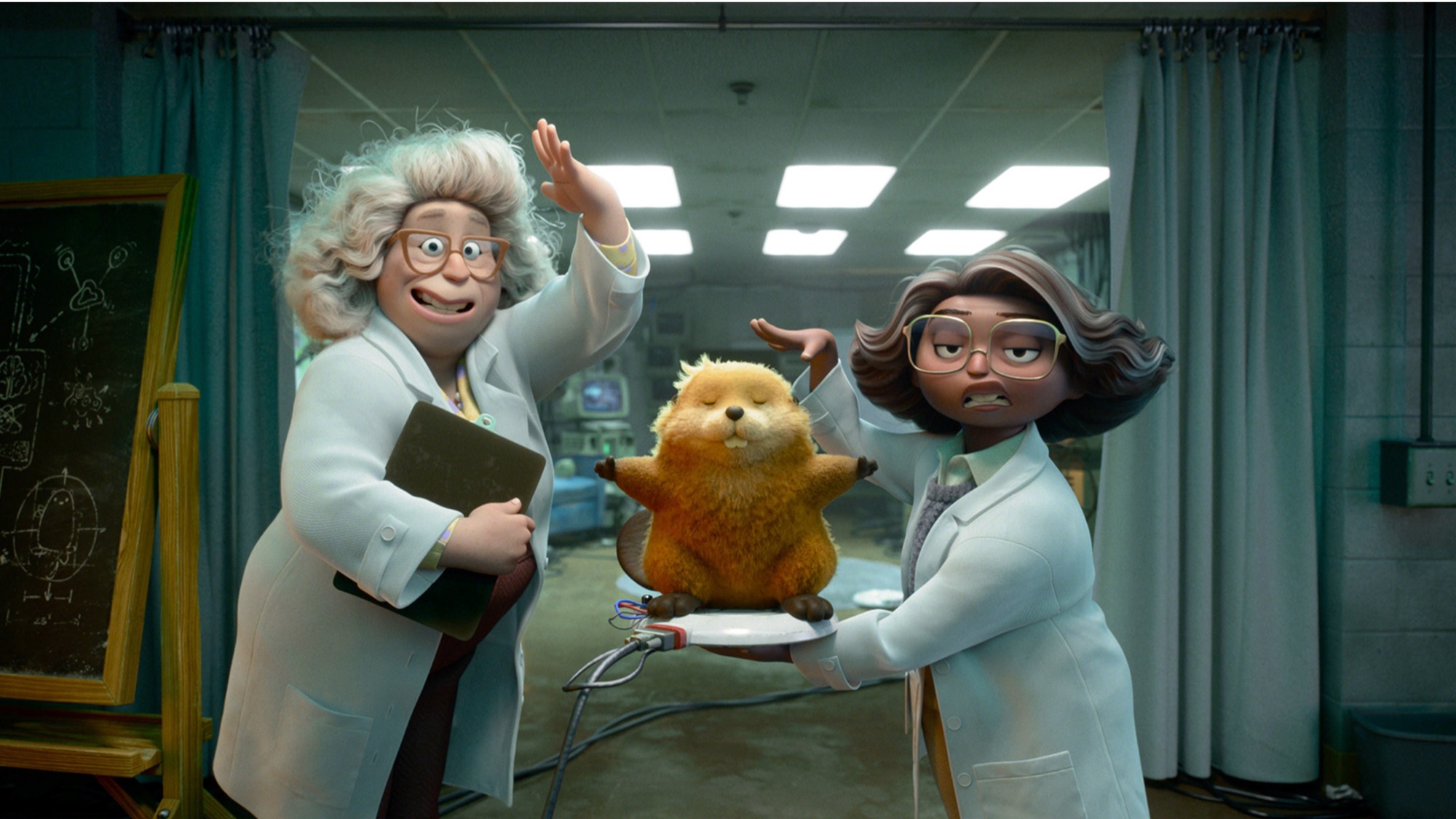
    Hoppers

    A teen uses technology to save a forest

    “Pixar returns to vintage form with Hoppers,” said David Rooney in The Hollywood Reporter. After last year’s boxoffice clunker Elio, the animation company has rebounded with this “clever, funny, and visually appealing” comedy that “zips along, driven by rambunctious energy.” Disney Channel star Piper Curda voices Mabel, a teen environmentalist trying to save the woods from demolition by using a “hopper,” an Avatar-like gizmo that lets her consciousness hop into a robotic beaver. From there, the story keeps “barreling forward.” Hoppers “is at its best when it’s most manic,” said Jesse Hassenger in The A.V. Club. Mabel befriends many of the animals that fled the glade and eventually inspires them to rise up against Jon Hamm’s Mayor Jerry, who wants to build a highway through the forest. The movie “gets better as it goes, with some truly inspired bits of animal-led mayhem and body-swapping nonsense.” At one point there’s a car chase that involves a flying shark. This is a “fun, modest little movie with enough zip and charm to keep kids engaged,” said Bilge Ebiri in NYMag.com, so I wouldn’t “want to criticize it too much.” Still, it pales in comparison to the masterpieces of Pixar’s early heyday, when the company redefined animation with the likes of Toy Story (1995) and Finding Nemo (2003). “Such are the perils” of modern Pixar: “Even the successes dim a little when viewed in the light of what once was.”


    tv review

    The Madison

    There are no Duttons beneath this corner of the Big Sky. Yes, the latest series from Taylor Sheridan shares the same Montana backdrop as Yellowstone and its spin-offs. But this story centers on a much different family. The Clyburns are contemporary New Yorkers who’ve relocated to Montana’s Madison River valley after a devastating loss. Kurt Russell and Michelle Pfeiffer bring star power as the central couple, with Russell’s character expected to maintain a presence primarily in flashbacks. This one looks like it will be about reinvention and healing, not land battles. Saddle up. 
    Saturday, March 14, Paramount+


    FOOD & DRINK

    Hojicha: The alt-matcha

    Matcha has developed a big U.S. following, but it’s far from the only Japanese green tea worth sipping, said Alaina Chou and Kate Kassin in Bon Appétit. Hojicha, too, is “easy to love.” The leaves, stems, and twigs used in the tea are roasted over charcoal, giving hojicha its signature warm brown color and “smoky, nutty” flavor. 

    Midori Spring Hoji Powder ($26)
    “Mild with a lightly nutty flavor,” this powder is “a great place to start if you’re hojicha-curious.” It blends well into water or milk.

    Kettl Fukka Hojicha Powder ($35)
    “An ideal hojicha for drinking as a latte,” this powder delivers “velvety smooth” mouthfeel. The tea has “a very gentle grassiness” that “plays beautifully with its nutty and subtly sweet undertones.”

    Ippodo Loose-Leaf Hojicha ($16)
    “A joy to drink,” tea made with this loose-leaf hojicha has “a toasty but clean flavor profile” with a burnt-caramel note that “reminds me of a roasted sweet potato.”


    BOOK OF THE WEEK

    A World Appears: A Journey Into Consciousness

    by Michael Pollan

    “Michael Pollan is upfront about what his latest book won’t do,” said Tiffany Ap in Bloomberg. A World Appears “doesn’t settle the age-old debate between those who believe subjective experience can be reduced to the electrochemical chatter of neurons and those who suspect something more ineffable is at work.” Even for the best-selling author of The Omnivore’s Dilemma and The Botany of Desire, the mystery of the subject is too difficult to crack. By his count, there are currently 106 competing theories of consciousness. Instead of using his book to make a case for any one of them, he takes us along on a quest for understanding that “pushes the reader to become more conscious”—more aware that it’s miraculous both that “a world appears” every time we wake from sleep and that no one yet has fully explained how or why.

    “A good chunk of A World Appears is devoted to a useful elucidation of the differences between sentience, feelings, thought, and the self,” said Laura Miller in Slate. Like humans, Pollan reminds us, plants have sentience, in that they sense the particulars of their surroundings and can respond accordingly. Moving on, he defines feelings as physical processes that produce mental experiences and defines thought as all the content that streams through our minds during our waking hours. As in his previous books, Pollan employs a travelogue approach to exploring these topics, conversing with a bevy of experts, including neuroscientists, philosophers, and artists of various kinds. Unfortunately, his chosen current subject “does not lend itself to this kind of journalism.” The nature of consciousness is just too elusive, and when he turns to the question of whether the self is an illusion, “things get especially vaporous.” We’ve taken a journey—“ one that effectively leaves us right where we started.”

    Other books have delivered “more lucid and arresting introductions to this subject,” said Charles Finch in The Atlantic. Still, “Pollan’s real genius— the word is not too strong—remains intact.” As he proved with his explorations of human nutrition and the potential therapeutic benefits of psychedelics, he possesses an “uncanny” ability to “scent the direction in which the culture is headed.” That talent shines through when this book pushes back against the notion that AI is anywhere close to replicating consciousness. Though Pollan hesitates to claim that a fundamental aspect of human capability and human experience remains beyond science’s reach, A World Appears closely maps out such a territory. By doing so, it “steals back some of the sensation of miraculousness that this era has largely outsourced to technology.”


    OBITUARY

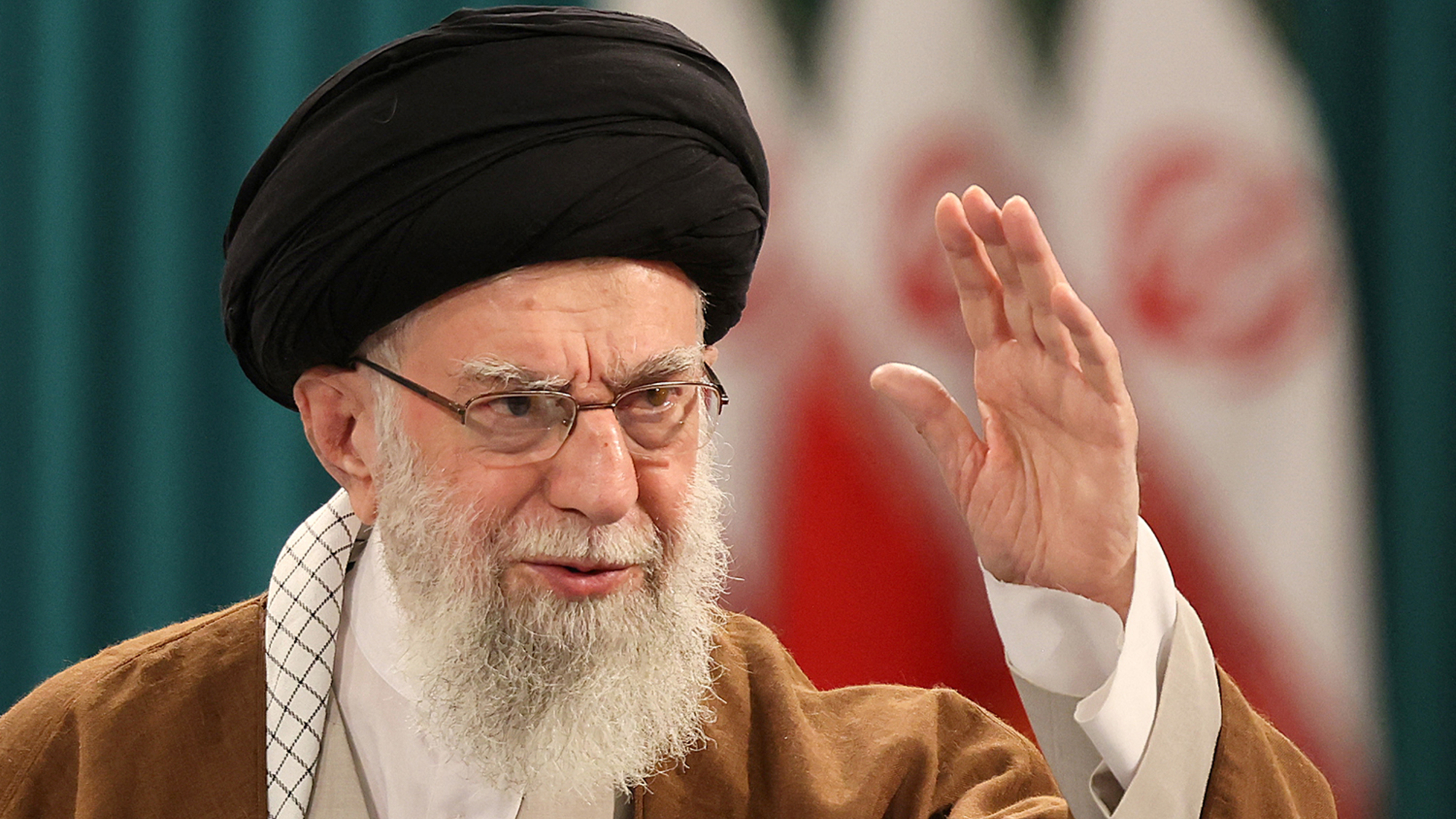
    Ali Khamenei

    The theocratic tyrant who made Iran a global menace

    When he first became Iran’s Supreme Leader, Ayatollah Ali Khamenei presented himself as humble. A mid-level Shiite cleric who lacked the popularity and charisma of his predecessor, Ruhollah Khomeini, he stepped into the post in 1989 calling himself “an individual with many faults and shortcomings, and truly a minor seminarian.” But as he settled into the dictatorial role he showed his mercilessness. Khamenei presided over decades of internal repression, as he blocked even mild attempts at reform, and external belligerence, as he transformed Iran into a state sponsor of terrorism. His regime supported the “Axis of Resistance” network of mostly Shiite militias and terrorist groups, such as Hezbollah in Lebanon, the Badr group in Iraq, the Houthis in Yemen, and Hamas in Gaza. In his speeches and rulings, he blamed any whiff of dissent or dysfunction at home on the U.S., which he called the “Great Satan,” or on Israel, the “Zionist regime.” To maintain control, he once admitted, “We need the United States as an enemy.”

    “Revolution was in his blood,” said Foreign Policy. “The grandson of clerics who supported a revolt against a previous dynasty,” Seyyed Ali Hosseini Khamenei wore the black turban signaling direct descent from the Prophet Muhammad. At 19, he fell under the sway of Khomeini, who was then a top cleric in Qom. Khomeini was a leader of opposition to the shah, Mohammad Reza Pahlavi, an authoritarian who wanted to modernize the country.
    Khamenei worked as Khomeini’s courier, spending several stints in prison for his activism. When Khomeini led the 1979 revolution and took 52 U.S. hostages, Khamenei was the one who created a propaganda film suggesting the captives “were being well looked after,” said The Times (U.K.). From then on, he was the supreme leader’s “trusted lieutenant.” After surviving a 1981 assassination attempt that paralyzed his right hand, Khamenei served as Iran’s president, brutally repressing dissent. When Khomeini died in 1989, he was chosen by a panel of senior clerics as successor.

    He consolidated power quickly, said The New York Times, turning the Islamic Revolutionary Guard Corps into “a powerful tool of repression.” When Iranians elected a reformist president, Mohammed Khatami, in 1997, Khamenei hamstrung him by jailing cabinet ministers and shuttering friendly newspapers. Regional instabilities were “cannily exploited.” When the 2003 U.S. invasion of Iraq created a power vacuum there, he armed Shiite militias and backed Shiite parties, “giving Iran significant clout in Iraqi politics.” His regime also pursued nuclear weapons, even though he’d issued a fatwa banning their use. He “adamantly refused to give up Iran’s uranium-enrichment program,” said The Washington Post, and repeated calls to annihilate Israel. Still, desperate for sanctions relief, he reluctantly endorsed President Obama’s 2015 deal limiting the nuclear program— though he “appeared to regret it” three years later, when President Trump pulled the U.S. out of the pact.

    Many Iranians “despised living under his firebrand form of theocratic governance,” said The Wall Street Journal, in which women could be jailed for failing to wear a hijab. Torture was common in prisons, and dozens of crimes brought the death penalty. Nationwide protests broke out repeatedly, in 2009, 2017, 2019, and 2022, and the regime responded with deadly force and mass arrests. Then came the event that changed everything, something that at first “appeared to be a victory”: the Oct. 7, 2023, massacre of Israelis by Hamas militants Iran had trained and armed. Israel responded by taking out Iran’s proxies one by one, and it humiliated Iran by assassinating the head of Hamas while he was in Tehran. Then last June, U.S.-Israeli air strikes crippled Iran’s nuclear program. And when sanctions and runaway inflation sent the Iranian rial plummeting to 1.4 million per dollar, hundreds of thousands of Iranians took to the streets again.

    The resulting crackdown “has been ruthless,” said The New Yorker, with some 30,000 protesters massacred. But Khamenei remained largely out of sight. In his final weeks, before he was killed on the first day of a joint U.S.-Israel attack, he remained so secluded that Iranians nicknamed him “Ali the Mouse.” Still, he continued to rail against the U.S. As American forces assembled in the Middle East, he vowed to fight back with his proxy forces. “If they start a war,” he said, “this time it will be a regional war.”



    Sunday Shortlist was written and edited by Susan Caskie, Ryan Devlin, Chris Erikson, Chris Mitchell, Matt Prigge, and Hallie Stiller.

    Image credits, from top: Disney; Paramount+; Getty; Getty
     

    Recent editions

    • Saturday Wrap

      Can Trump ‘strong-arm’ Maga support?

    • Evening Review

      Orbán’s final countdown

    • Morning Report

      Trump wants to pick Iran's new leader

    VIEW ALL
    TheWeek
    • About Us
    • Contact Future's experts
    • Terms and Conditions
    • Privacy Policy
    • Cookie Policy
    • Advertise With Us
    • FAQ
    Add as a preferred source on Google Add as a preferred source on Google

    The Week UK is part of Future plc, an international media group and leading digital publisher. Visit our corporate site.

    © Future Publishing Limited Quay House, The Ambury, Bath BA1 1UA. All rights reserved. England and Wales company registration number 2008885.