The Week The Week
flag of US
US
flag of UK
UK
https://cdn.mos.cms.futurecdn.net/flexiimages/jzblygzdxr1769609154.gif

SUBSCRIBE

Try 6 weeks free

Sign in
  • View Profile
  • Sign out
  • The Explainer
  • Talking Points
  • The Week Recommends
  • Podcasts
  • Newsletters
  • From the Magazine
  • The Week Junior
  • More
    • Politics
    • World News
    • Business
    • Health
    • Science
    • Food & Drink
    • Travel
    • Culture
    • History
    • Personal Finance
    • Puzzles
    • Photos
    • The Blend
    • All Categories
  • Newsletter sign up Newsletter
  • The Week’s Sunday Shortlist
    A sci-fi success, an appealing Spanish red,
    and a history of Christianity in America

     
    FILM REVIEW

    Project Hail Mary

    The universe’s future rests on a lone space traveler

    “Rise and shine, folks. You’ve got something to actually see here,” said David Fear in Rolling Stone. The new big-budget sci-fi drama starring Ryan Gosling succeeds well enough as a work of pop art that it’ll “make you feel you’ve been awakened from a long sleep in which you were forced to settle for cine-extravaganzas that forgot there’s supposed to be a human factor.” Gosling plays Ryland Grace, who awakes from an induced coma to learn he’s alone on a spacecraft, having long ago been tasked with determining why the sun and most other stars are dying. And as the ensuing story veers from life-and-death drama to sentimentality to absurdist humor, Gosling “manages to deftly bounce off everything the film throws at him.” When the screenplay’s unlikely astronaut encounters a spider- like alien, said Jacob Oller in AV Club, the film becomes “a schlubby buddy comedy dressed up in the finest hard sci-fi regalia that Amazon MGM could afford.” Flashback scenes reveal that Grace was teaching middle school before being tapped to apply his keen grasp of molecular biology to saving the universe. While the Earth-bound scenes are “funny most of the time,” they’re “cringe-inducing some of the time.” So you’ll be happier in space, where Gosling plays the self- effacing hero against “the best skittering critter the screen has seen in years.” A coda tacked onto the main story “flirts with cuteness,” said Nick  Schager in The Daily Beast. But by then the co-directors, who previously created The Lego Movie, “have earned more than enough goodwill.”


    tv review

    Bait

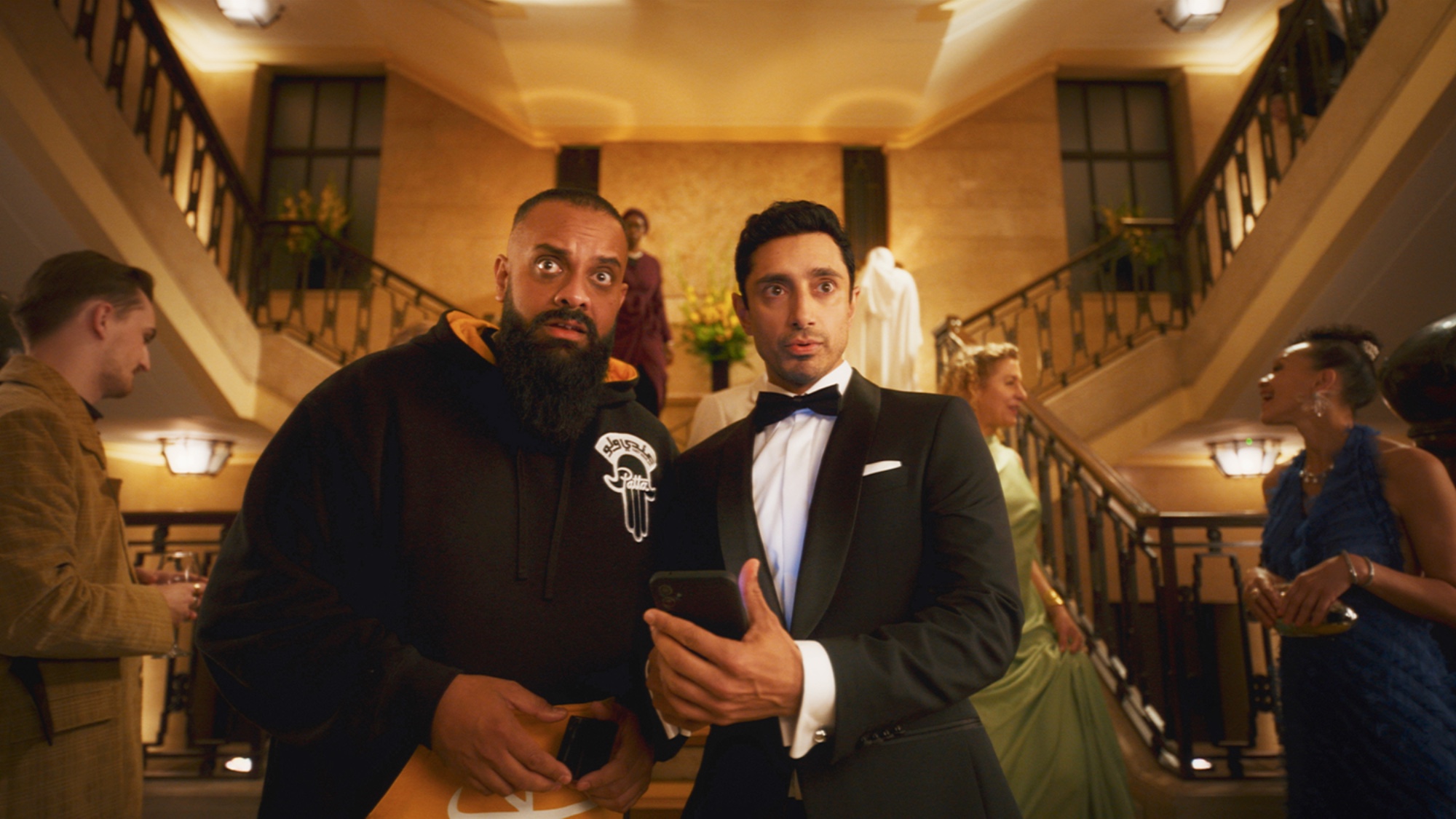
    Who’ll be the next James Bond? In this roaringly funny six-episode series, Riz Ahmed, the Oscar-nominated star of 2019’s Sound of Metal, plays a struggling British Pakistani actor whose humble life gets shaken and stirred when news breaks that he’s been chosen to audition for the role of Agent 007. For the next four days, he’s on the brink of making movie history as family, friends, and the world weigh in on whether he has what it takes.
    Wednesday, March 25, Prime


    FOOD & DRINK

    Garnacha: Spain’s other red

    In Spain, tempranillo gets top billing, but garnacha “has recently captured the attention of sommeliers and wine drinkers,” said Edward Deitch in Vinepair. Well into the previous decade, many of the Spanish wines produced with the chameleonic grape were “burdened by oak aging.” A new generation of winemakers has begun favoring concrete and terra-cotta containers, allowing the fruit itself to shine. 

    2024 Bodegas Frontonio ‘Micro cósmico’ ($18)
     “An altogether winning expression,” this light, fruity garnacha from the Valdejalón area of Aragón could pass for a young Beaujolais. 

    2023 Viña Zorzal Malayeto ($19)
    “Dominated by lovely red fruits” with “touches of mint, vanilla, and garrigue herbs,” this garnacha “shows the depth of the wines in the $20 range.” 

    2022 Bernabeleva ‘Navaher reros’ ($25)
    This  single- vineyard wine is “quite pinot-noir-like” with “beautiful red fruit” and hints of vanilla, mushroom, and herbs.


    BOOK OF THE WEEK

    Chosen Land: How Christianity Made America and Americans Remade Christianity

    by Matthew Avery Sutton

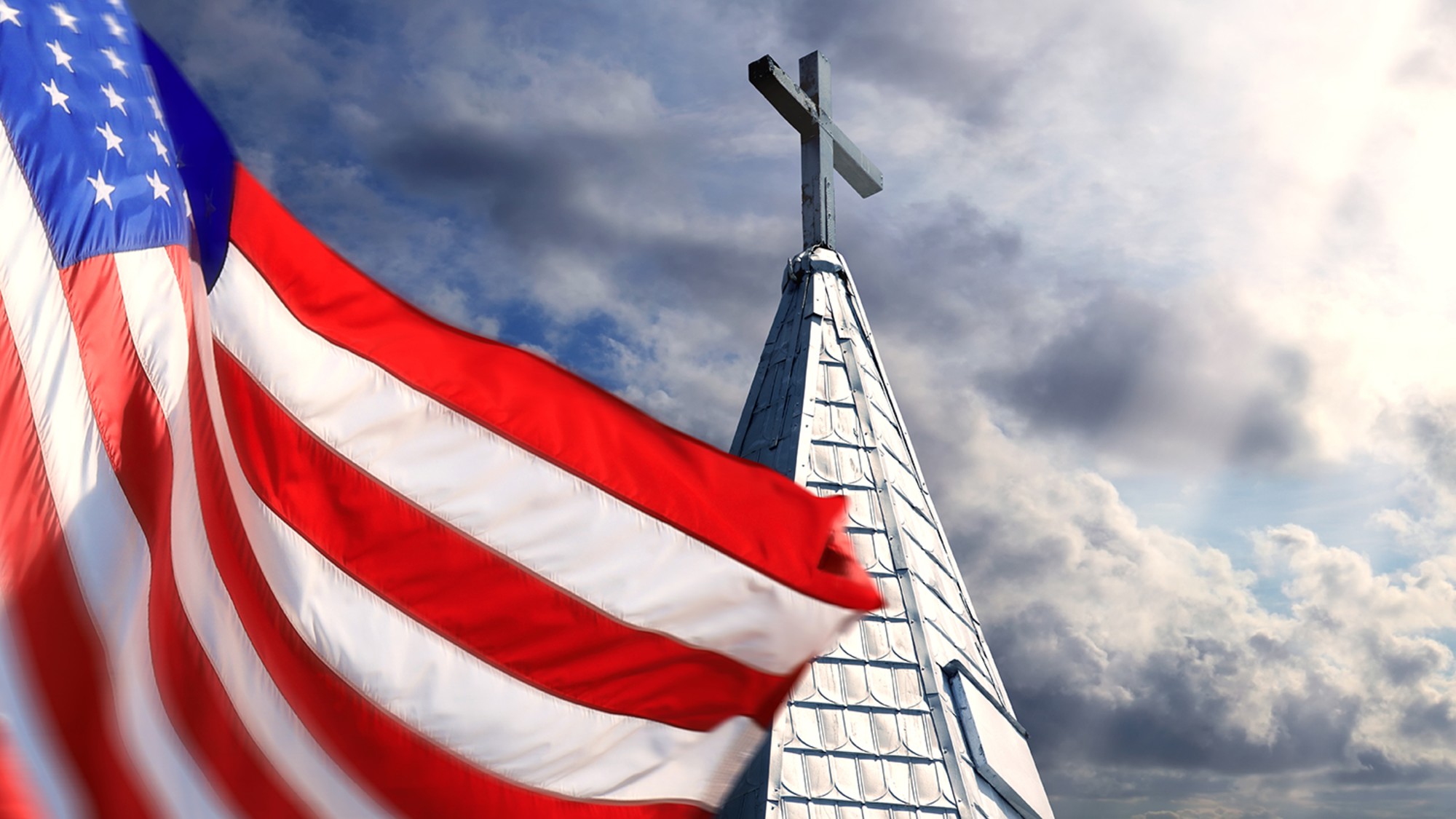
    As our country nears its 250th anniversary, “the time is right” for a sweeping new history of Christianity’s role in our national story, said Heath W. Carter in The Atlantic. Matthew Avery Sutton, a historian at Washington State University, begins his account with the arrival in the Americas of European explorers and missionaries more than 500 years ago, and his book “argues convincingly that the quest for Christian America is a perennial national obsession.” Though the U.S. often presents itself as a secular nation, Sutton points out that nearly two-thirds of U.S. citizens today identify as Christians. He also declares, “a bit too boldly,” that the history of American Christianity is the history of America and vice versa. Still, “there is no doubting Christianity’s centrality to U.S. history, for better and for worse.” Sutton, to his credit, is alert to both effects.

    First, he identifies four main streams of American Christianity, said Brenda Wineapple in The New York Times. In his taxonomy, “conservatives” are practicing Christians who want little from the state but to be left alone to worship. He uses the label “revivalists” to describe evangelical Christians, who by definition seek to spread their faith. Sutton’s “liberals” value religious pluralism while his “liberationists,” consisting largely of Black churchgoers, promote a form of Christianity that demands justice for the oppressed. But while he “celebrates the vitality of American Christianity,” the “nub” of his argument is that this vitality is a product of a largely nominal separation of church from state that empowered, in his words, an “unofficial,  Protestant- infused establishment.” That argument feels paranoid, and “diminishes the very real contribution of the First Amendment to the nation.”

    Though Sutton “tries to be fair to each of his subjects,” said Daniel K. Williams in Christianity Today, his sympathies are clearly with America’s marginalized, and the “revivalists” in his account “appear to be agents of oppression.” Because his focus is on the intersection of Christianity and political power, he also says little about the particulars of American Christian teachings and how they’ve impacted people on an individual basis. Still, Chosen Land is the first book since Sydney Ahlstrom’s 1,100-page A Religious History of the American People, published in 1972, to attempt such a comprehensive survey. Sutton’s “superbly written” work manages to cover “an enormously wide range of material” in half as many pages. Better yet, it’s so full of colorful storytelling that it’s “the type of popular work you can read on a plane or a bus.”


    OBITUARY

    Jürgen Habermas

    The philosopher who argued for public debate

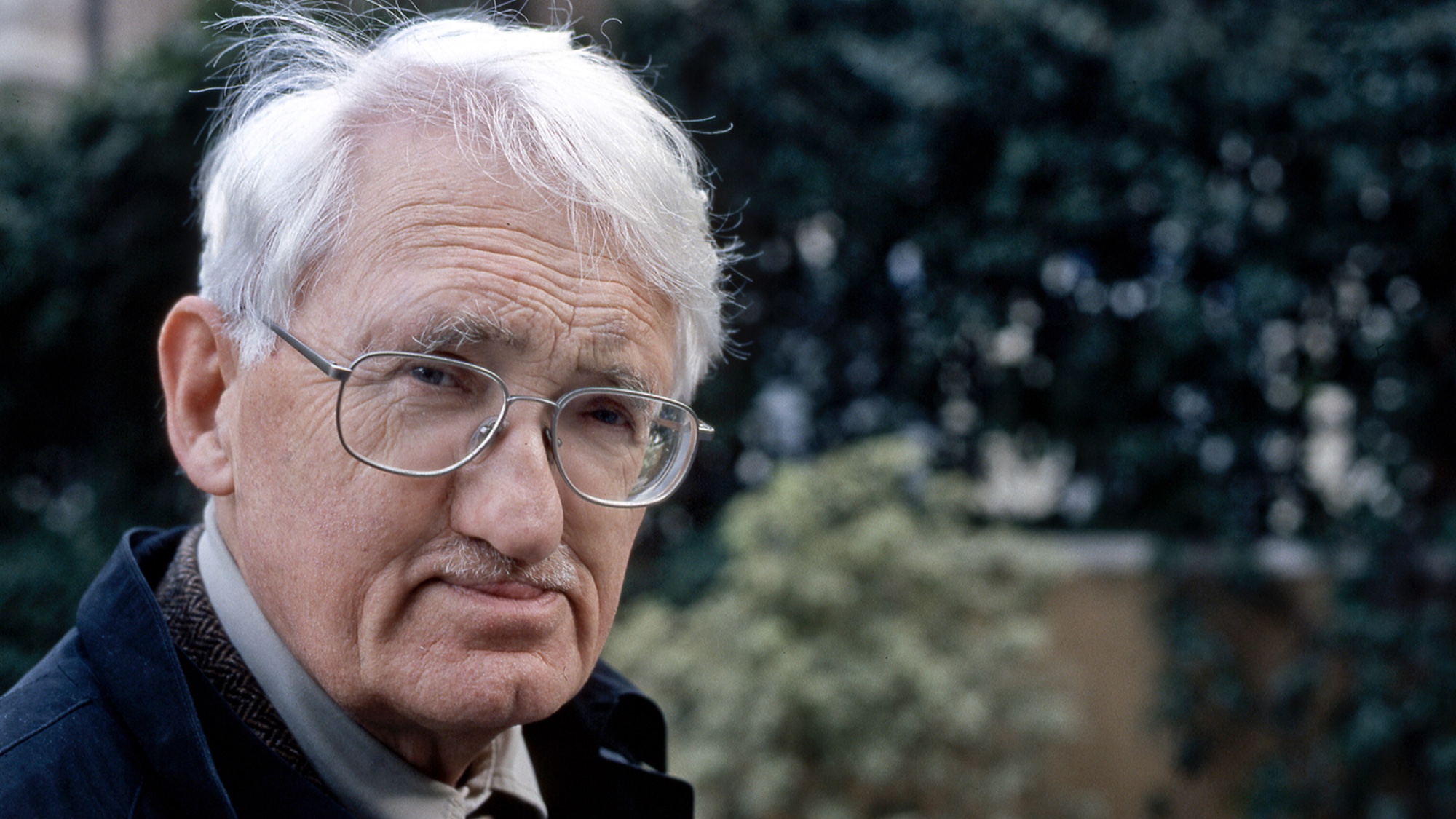
    Jürgen Habermas developed the concept of the “public sphere” in the 1960s and spent the next half- century dominating that space as one of Europe’s most influential intellectuals. The German philosopher believed that a healthy democracy could emerge only when citizens can form public opinion through free debate, separate from the dictates of the government. He feared that silence would lead Germans to downplay the Holocaust, but he was no pessimist. Rejecting postwar cynicism, he defended the Enlightenment, saying its ideals had not been proved wrong by the atrocities of World War II; it was, he said an “unfinished project.” This optimism attracted a wide audience, and he published over a dozen books, including his magnum opus, The Theory of Communicative Action. “Democracy,” he said, “depends on the belief of the people that there is some scope left for collectively shaping a challenging future.” 

    Born in Düsseldorf with a cleft palate, Habermas endured numerous surgeries as a child and never shook his speech impediment. The bullying he suffered “helped him to understand experiences of exclusion” and “instilled in him a deep sense of human interdependence,” said The Times (U.K.). He joined the Hitler Youth at 10 when his father joined the Nazi Party, and he deployed on the Western front in 1944. The Nuremberg trials and documentaries about concentration camps shook Habermas “out of his and his family’s complacency,” said The Guardian. He earned his Ph.D. in philosophy at the University of Bonn in 1954 and got a coveted position as assistant to Theodor Adorno of the legendary Frankfurt School. Within a decade, Habermas was leading the school. He delighted in intellectual battles, championing free- flowing communication among academic rivals, just as among voters. 

    Though his dense academic writing “was likened by at least one American intellectual to chewing glass,” said The New York Times, Habermas also wrote easy-to- follow essays for German newspapers, usually warning against  nationalism. Even after his 1994 retirement, he continued lecturing, frequently appearing at New York University and Northwestern. Like most Germans of his generation, he was staunchly pro- American, and in his last years he was disappointed that Americans had allowed the rise of an authoritarian in Donald Trump. “The most astonishing and as yet unexplained phenomenon of this creeping but deliberately pursued seizure of power,” he wrote last year, “is the pusillanimity of a largely unresisting civil society.”


    Sunday Shortlist was written and edited by Susan Caskie, Ryan Devlin, Chris Erikson, Chris Mitchell, Rebecca Nathanson, and Matt Prigge.

    Image credits, from top: Metro-Goldwyn-Mayer/Everett, Amazon MGM Studios, Getty, Alberto Cristofari
     

    Recent editions

    • Saturday Wrap

      ‘A man without a plan’

    • Evening Review

      Are Brits becoming less charitable?

    • Morning Report

      Israel says it acted alone in Iran gas field strike

    VIEW ALL
    TheWeek
    • About Us
    • Contact Future's experts
    • Terms and Conditions
    • Privacy Policy
    • Cookie Policy
    • Advertise With Us
    • FAQ
    Add as a preferred source on Google Add as a preferred source on Google

    The Week UK is part of Future plc, an international media group and leading digital publisher. Visit our corporate site.

    © Future Publishing Limited Quay House, The Ambury, Bath BA1 1UA. All rights reserved. England and Wales company registration number 2008885.