The Week The Week
flag of US
US
flag of UK
UK
https://cdn.mos.cms.futurecdn.net/flexiimages/jzblygzdxr1769609154.gif

SUBSCRIBE

Try 6 weeks free

Sign in
  • View Profile
  • Sign out
  • The Explainer
  • Talking Points
  • The Week Recommends
  • Podcasts
  • Newsletters
  • From the Magazine
  • The Week Junior
  • More
    • Politics
    • World News
    • Business
    • Health
    • Science
    • Food & Drink
    • Travel
    • Culture
    • History
    • Personal Finance
    • Puzzles
    • Photos
    • The Blend
    • All Categories
  • Newsletter sign up Newsletter
  • The Week Evening Review
    Donations decline, Senedd election, and war in the air

     
    TODAY’S BIG QUESTION

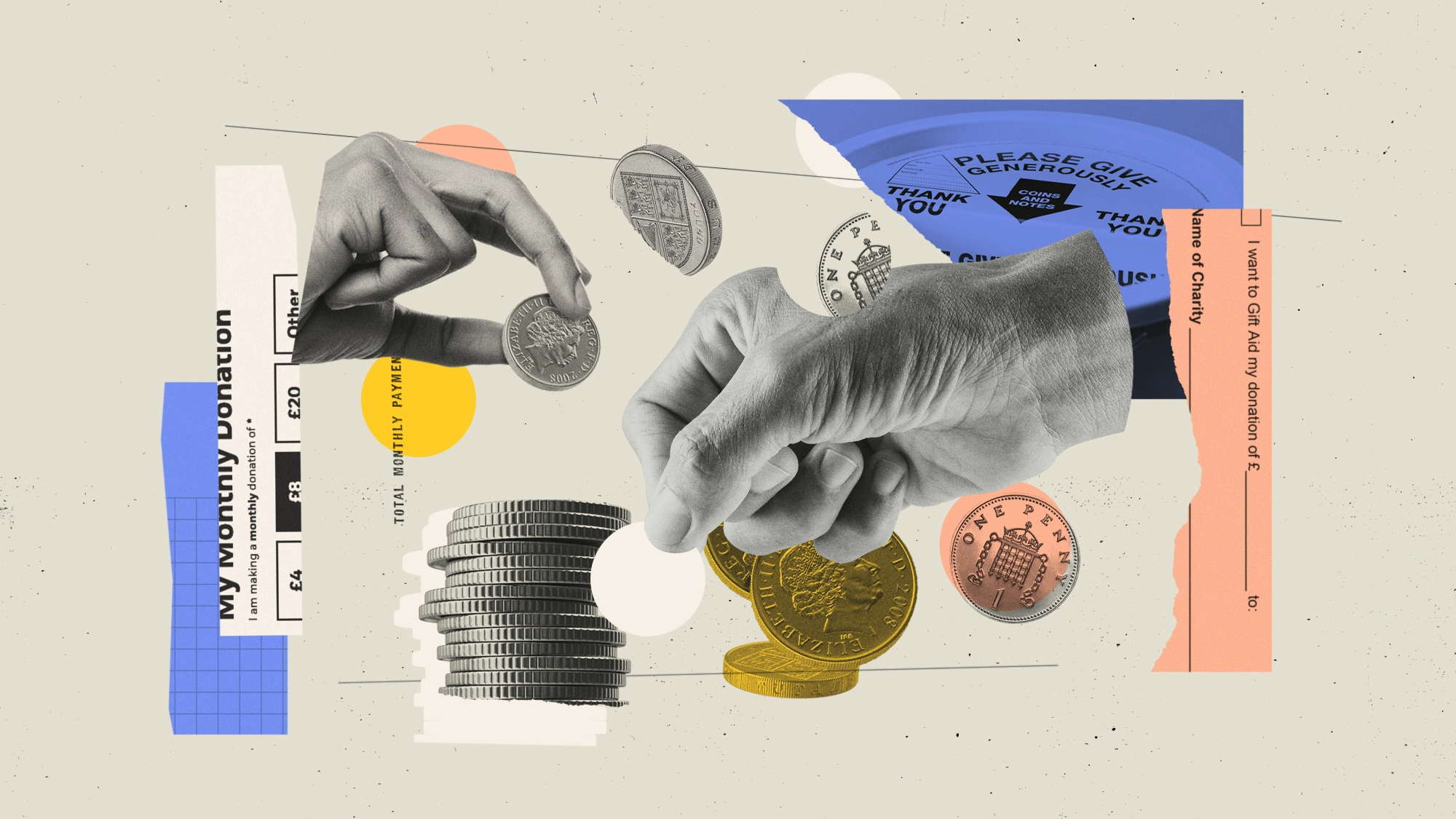
    Is the UK becoming less charitable?

    Even as people up and down the UK don red noses for Comic Relief today, the culture of giving appears to be waning.

    Just 55% of the population gave to charity last year, down from 69% a decade ago, according to a new report from the Charities Aid Foundation. There are now six million fewer charity donors, and support for overseas aid is also declining as the cost-of-living crisis bites. With consumer spending falling for the first time in five years, while inflation remains above the Bank of England’s target, Britain’s culture of giving is “increasingly fragile”, said the report.

    What did the commentators say?
    People unquestionably “feel less financially secure than they did 10 years ago”, said the foundation’s James Moore. But “focusing solely on the finances is an overly simple interpretation”. The second most common reason for not giving, after affordability, is trust. Almost 20% of non-donors say they do not trust charities to use their money wisely.

    The report authors are “right to highlight mounting scepticism and distrust”, said The Guardian. People who don’t trust charities are also less likely to be positive about their neighbourhoods, which suggests “an overlap with broader issues of low social engagement and morale”.

    The effects are being felt worldwide. In 2016, about 19% of donors supported disaster relief or overseas aid charities, but now only 11% do. A similar decline is evident in the government’s approach to overseas aid. Proportionately, the UK’s cuts to core international development spending are now deeper than those of the US, according to the Center for Global Development.

    “The conclusion is uncomfortable,” said Adrian Lovett on Devex: Britain is “retreating further” than America. For two decades, the UK “prided itself on punching above its weight in global health, girls’ education, and humanitarian response”. Today, “we look increasingly weak and isolated”.

    What next?
    Stronger oversight would help tackle charities’ “governance issues” that contribute to distrust, but “there is no simple administrative fix”, said The Guardian. An economic upturn could “deliver a boost”, but the sector “also needs to find new ways to appeal to people”.

    This “matters for the fabric of British society”, said Charities Aid Foundation chief executive Mark Greer. We need to “revive that culture of giving”, he told the newspaper. A thriving civil society makes the country “a better place to live”.


    THE EXPLAINER

    What’s happening with the Welsh elections?

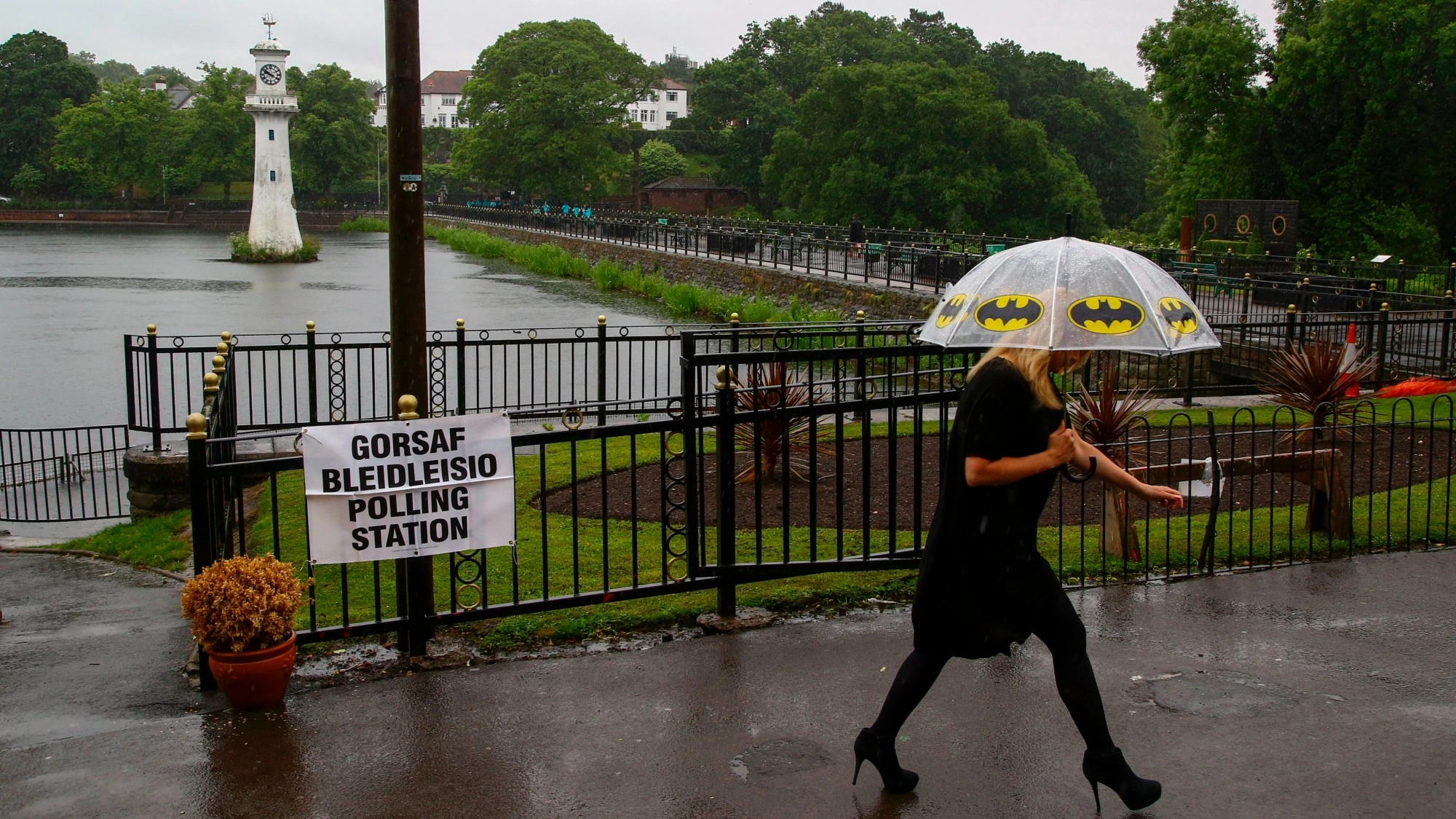
    Wales is going to the polls on 7 May in a hugely important Senedd election that brings not only the possibility of an end to Welsh Labour’s 27-year grip on devolved power but also a new voting system. Yet according to polling by YouGov/Cardiff University, 58% of Welsh voters don’t understand how the new Senedd voting system works.

    How is the voting work changing?
    Since 1999, the Senedd has been elected using the additional-member system also used in Scotland, in which voters cast ballots for both a constituency candidate and a party. A special formula was then applied to the party votes to select 20 additional members of the Senedd (MS).

    This year, the elections will be held under a closed list proportional system. Voters will cast one vote for a party rather than an individual. Each party will prepare a list of candidates for each constituency, and seats will be allocated based on party vote share. The number of members will increase from 60 to 96, and the number of constituencies will decrease from 40 to 16.

    What are the pros and cons?
    One of the advantages is the end of by-elections: if a seat becomes vacant, it will be filled by the next candidate on the party list. If the departing MS is an independent, the seat will stay vacant until the next election.

    The closed list system may “benefit emergent parties in Wales, to the detriment of more established parties, whose candidates are more likely to have a strong personal profile”, said the Institute for Government think tank. But it also “reduces voter choice” by taking away the ability to vote for an individual candidate.

    Who is expected to win?
    The election will be decided on three key issues, according to a Savanta poll for the BBC: the cost of living, health and social care services, and immigration. Younger voters also singled out a fourth issue: housing.

    Reform and Plaid Cymru are currently projected to be neck and neck, on 28 seats each, with Labour on 26. The Greens and the Conservatives are each projected to get 10% of the vote. The most common prediction is a Plaid minority government propped up by Labour, “blowing a hole in Labour’s status as the default governing party”, said Politico.


    Poll watch

    More than half (58%) of Americans think the war in Iran is a “bad use” of taxpayer dollars, according to a Strength in Numbers/Verasight survey of 1,530 adults. And 61% said they would oppose the military action if it caused gas prices to rise by $1 per gallon. Newly released figures show the national average cost of gas is now 95 cents more than a month ago. 


    Statistic of the day

    £14.3 billion: How much the UK government borrowed in February, according to latest official figures – almost double the £7.4 billion projected by the Office for Budget Responsibility.  The total increased to the second-highest for the month on record as the UK faced a surge in debt costs and repayments.


    In the Spotlight

    How the Iran war is affecting airspaces

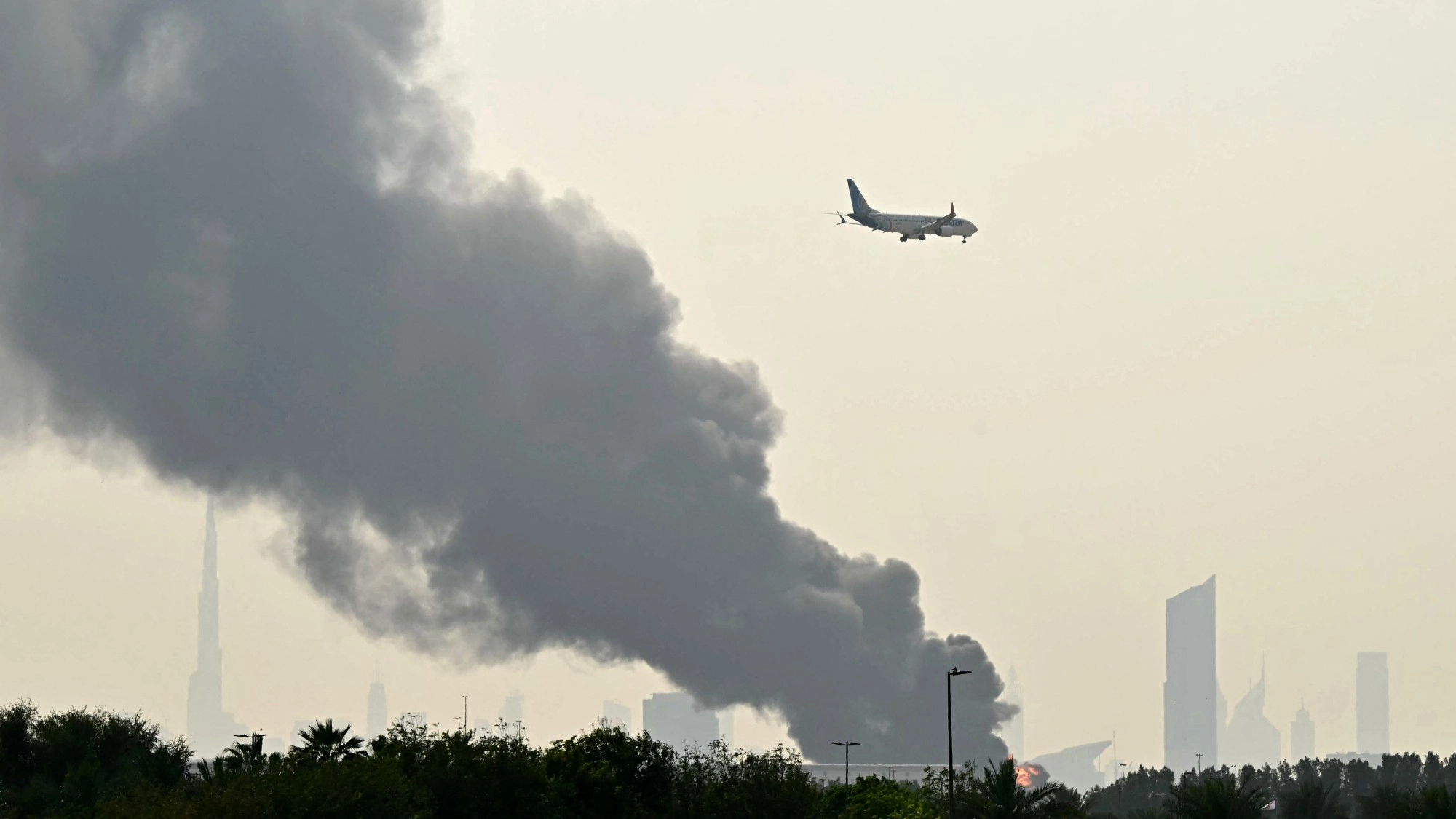
    Airlines are facing “their biggest test” since the pandemic as the Iran war escalates, said The New York Times. More than 52,000 flights to and from the Middle East have been cancelled – “more than half of all flights planned”. Tourism in the region has “effectively ground to a halt”, and the costs are “adding up”. 

    ‘Scrambling for alternatives’
    Air traffic controllers have been “shepherding passenger jets through safer but congested airspace”, said the BBC. On a standard day, each controller would be responsible for about six aircraft at a time, but in times of war, that can easily double.

    Airlines “have been scrambling to find alternatives” to routes through Iranian airspace, said The New York Times. Russia’s invasion of Ukraine has also taken a toll: the “Siberian corridor”, once a “relatively direct connection” between Europe and Asia, has become a “patchwork of workarounds”. Likewise, the airspace over the Gulf is now “largely devoid of commercial planes”. The Iran conflict is “further fragmenting a once efficient and finely tuned global aviation network”. For Emirates and other Gulf airlines that have “the highest profit margins in the industry”, continued disruption could mean “substantial” economic losses.

    As “established east-west routes are narrowing, the skies over Central Asia matter more”, said The Times of Central Asia. Countries such as Uzbekistan and Kazakhstan cannot match the “far larger networks” and “deeper fleets” of Gulf hubs, but they can provide “overflight planning, air traffic management, and route resilience”. Their “aviation systems clearly now carry far greater strategic and economic importance”. 

    Putting off passengers
    The war has “exposed the fragility of modern travel”, said Bloomberg. Airlines’ growth plans have been thrown into “disarray”. Diversions add many hours to flights, so planes must carry more fuel, “an expensive burden in light of the spike in energy costs”. With the Strait of Hormuz “effectively shut”, markets have been “driving up prices of crude and products like diesel and jet fuel”. 

    Carriers may have to “hike fares” and add surcharges to “cover the ballooning cost”. Safety concerns are also “likely to remain front of mind for many travellers”. Higher inflation could reduce demand to fly, even “spurring passengers to rethink long-haul trips”.


    Good day🤥

    … for integrity, which is much more widespread than people tend to believe, according to a study in the Journal of Social Psychology. In tests involving 7,300 people across 31 scenarios, such as being offered cash to lie, participants consistently overestimated others’ dishonest behaviour. Experts suggest this tendency may be because such acts are more attention-grabbing and memorable. 


    Bad day 🤦‍♂️

    … for secrecy, after a French sailor inadvertently revealed the location of France’s flagship aircraft carrier by recording a workout on his fitness app. The Charles de Gaulle ship had been deployed to the eastern Mediterranean amid growing global tensions when the unnamed seaman logged an on-deck jog on his smartwatch and uploaded it to his public account on Strava.


    picture of the day

    Star power

    Martial arts champion Chuck Norris squares off against Bruce Lee in his breakout role in 1972 blockbuster “The Way of the Dragon”. Norris’ family announced his death today at the age of 86, after he was hospitalised in Hawaii.

    Concord Productions Inc. / Golden Harvest Company / Sunset Boulevard / Corbis / Getty Images


    PUZZLES AND QUIZZES

    Quiz of The Week

    Have you been paying attention to The Week’s news? Try our weekly quiz, part of our puzzles section, which also includes sudoku and crosswords 

    Play here


    THE WEEK RECOMMENDS

    Properties of the week: houses with religious connections

    Cornwall: Cosawes Barton Cottage, Ponsanooth
    Impressive mini estate set in 12 acres between the cathedral city of Truro and Falmouth. Main suite, 3 further beds, 2 baths, kitchen, 3 receps, utility, 3 “5-Star Gold Award”-rated 3-bed letting cottages, 2-bed cottage, garden, outbuildings, parking. £2.65 million; Rohrs and Rowe.

    Shropshire: The Ridge, Moston
    A handsome former Methodist chapel, built in 1885 and beautifully converted into a house. 4 beds, 2 baths, kitchen, 2 receps, study/bed 5, utility, garden, garage. £775,000; Strutt & Parker.

    Berkshire: Burnham Abbey, Taplow
    A historic Grade I 13th century abbey (suitable for a range of uses, subject to consents). 3-bed cottage, 4-bed cottage, Grade II timber-framed barn, land and gardens of approx. 2.8 acres, parking. £2.5 million; Knight Frank.

    Kent: The Old Rectory, Luddenham
    A delightful Grade II, timber-framed 16th century former rectory, set in approx. 2 acres of natural gardens. Main suite, 3 further beds, family bath, kitchen/breakfast room, 2 receps, self-contained 1-bed flat, 1-bed cottage, triple garage, workshop, garden. £1.5 million; Strutt & Parker.

    See more


    QUOTE OF THE DAY

    “COWARDS, and we will REMEMBER!”

    Donald Trump lashes out at allies for refusing to send warships to help the US reopen the Strait of Hormuz, “a simple military manoeuvre”. Without the US, he wrote on Truth Social, “NATO IS A PAPER TIGER!” 


    instant opinion

    Today’s best commentary

    No one wants to say it, but I pity Fergie
    Simon Kelner in The i Paper
    In “the time-honoured sport of kicking someone when they’re down”, York councillors are to vote on stripping the “erstwhile Duchess of York” of her freedom of the city, writes Simon Kelner. “I know we live in an age of outrage and censoriousness” but Sarah Ferguson has already been “defenestrated, dispossessed, derided and disgraced”. I didn’t think “it was possible to feel even a modicum of pity” for her, but this “small-minded and meaningless retribution has done the trick”.

    JD Vance looks like the smallest man in America
    Holly Baxter in The Independent
    The usually “polished” US vice president “is floundering”, writes Holly Baxter. He’s “managed to be against”, then for, then silent, about the Iran war, “all within the span of a few days”, and the line he’s walking is “getting finer”. Should he “tie himself” to a “geriatric president who’s making himself more unpopular by the day”, or be “the adult in the room”? “Unfortunately for John David Vance, it seems only time will tell.”

    Tom Cruise and Brad Pitt Can Relax. AI Won’t Kill Movies
    Parmy Olson on Bloomberg
    A “highly realistic” AI video of “Tom Cruise and Brad Pitt in a bare-knuckle fight” has “fanned the flames of worry” in Hollywood, writes Parmy Olson. But AI won’t necessarily “destroy the art of filmmaking”. With a YouTube-like model, filmmakers could “become more like stakeholders, incentivizing them to care more about quality in a way that someone producing AI content for a flat fee might not”. Yes, “disruption hurts, but thoughtful gatekeepers can help it create more jobs than it destroys”.


    word of the day

    Gnome

    Diminutive mythical creature that has inspired countless lawn ornaments. The garden gnome has long been “persona non grata” at the Chelsea Flower Show, said The Times, but is “set to make a triumphant return” at this May’s event. The Royal Horticultural Society is waiving the ban on the figurines, for only the second time in the show’s 113-year history, because of King Charles’ “personal affection for them”. 


     Evening Review was written and edited by Harriet Marsden, Jamie Timson, Rebecca Messina, Will Barker, Irenie Forshaw, Chas Newkey-Burden, David Edwards,  Helen Brown and Kari Wilkin.

    Image credits, from top: illustration by Stephen Kelly / Getty Images / Shutterstock; Geoff Caddick / AFP / Getty Images; AFP / Getty Images; Concord Productions Inc. / Golden Harvest Company / Sunset Boulevard / Corbis / Getty Images; Strutt & Parker; Rohrs and Rowe; Strutt & Parker; Knight Frank

    Morning Report and Evening Review were named Newsletter of the Year at the Publisher Newsletter Awards 2025
     

    Recent editions

    • Morning Report

      Israel says it acted alone in Iran gas field strike

    • Evening Review

      How the Iran crisis will impact cost of living

    • Morning Report

      Iranian strike hits major Qatar gas hub

    VIEW ALL
    TheWeek
    • About Us
    • Contact Future's experts
    • Terms and Conditions
    • Privacy Policy
    • Cookie Policy
    • Advertise With Us
    • FAQ
    Add as a preferred source on Google Add as a preferred source on Google

    The Week UK is part of Future plc, an international media group and leading digital publisher. Visit our corporate site.

    © Future Publishing Limited Quay House, The Ambury, Bath BA1 1UA. All rights reserved. England and Wales company registration number 2008885.