The Week The Week
flag of US
US
flag of UK
UK
https://cdn.mos.cms.futurecdn.net/flexiimages/jzblygzdxr1769609154.gif

SUBSCRIBE

Try 6 weeks free

Sign in
  • View Profile
  • Sign out
  • The Explainer
  • Talking Points
  • The Week Recommends
  • Podcasts
  • Newsletters
  • From the Magazine
  • The Week Junior
  • More
    • Politics
    • World News
    • Business
    • Health
    • Science
    • Food & Drink
    • Travel
    • Culture
    • History
    • Personal Finance
    • Puzzles
    • Photos
    • The Blend
    • All Categories
  • Newsletter sign up Newsletter
  • The Week’s Sunday Shortlist
    A spoof that’s serious, a ‘Legally Blonde’ prequel, and JD Vance’s religious conversion

     
    FILM REVIEW

    Maddie’s Secret

    “The secret of Maddie’s Secret — or maybe it’s the central joke — is that the movie’s creator and star takes the whole thing seriously,” said Peter Debruge in Variety. In this “tricky, one-of-a-kind stunt,” comedian John Early sends up disease-of-the-week TV movies of the 1980s and ’90s while cross-dressing to play the title character, a woman with an eating disorder that’s reactivated by sudden fame. But the Search Party star “treads lightly here,” spoofing a movie genre while taking Maddie’s bulimia utterly seriously. The blend of high camp and deep sincerity works only because Early, while playing Maddie, “wins the audience over so thoroughly,” said Monica Castillo in The A.V. Club. Maddie is thrust into food-world stardom after her husband shoots a video clip that goes viral, but the pressure causes her to unravel. Some scenes in the movie are light and silly, including those pairing Maddie with a lesbian friend, played by Kate Berlant, who clearly loves her. Other sequences “take a deeply serious turn,” even landing Maddie in a hospital. By then, “Maddie’s Secret has, without any fundamental shift in tone, begun to feel ultra-real,” said Sam Bodrojan in IndieWire. “The film’s climax, which has Maddie confronting her mother about her childhood, is a genuine showstopper, one that can only really work with the trust Early and company have built up with the audience over the preceding hour and a half.” The result is “a film of real kindness” that’s also “one of the boldest American movies I have seen in years.”


    tv review

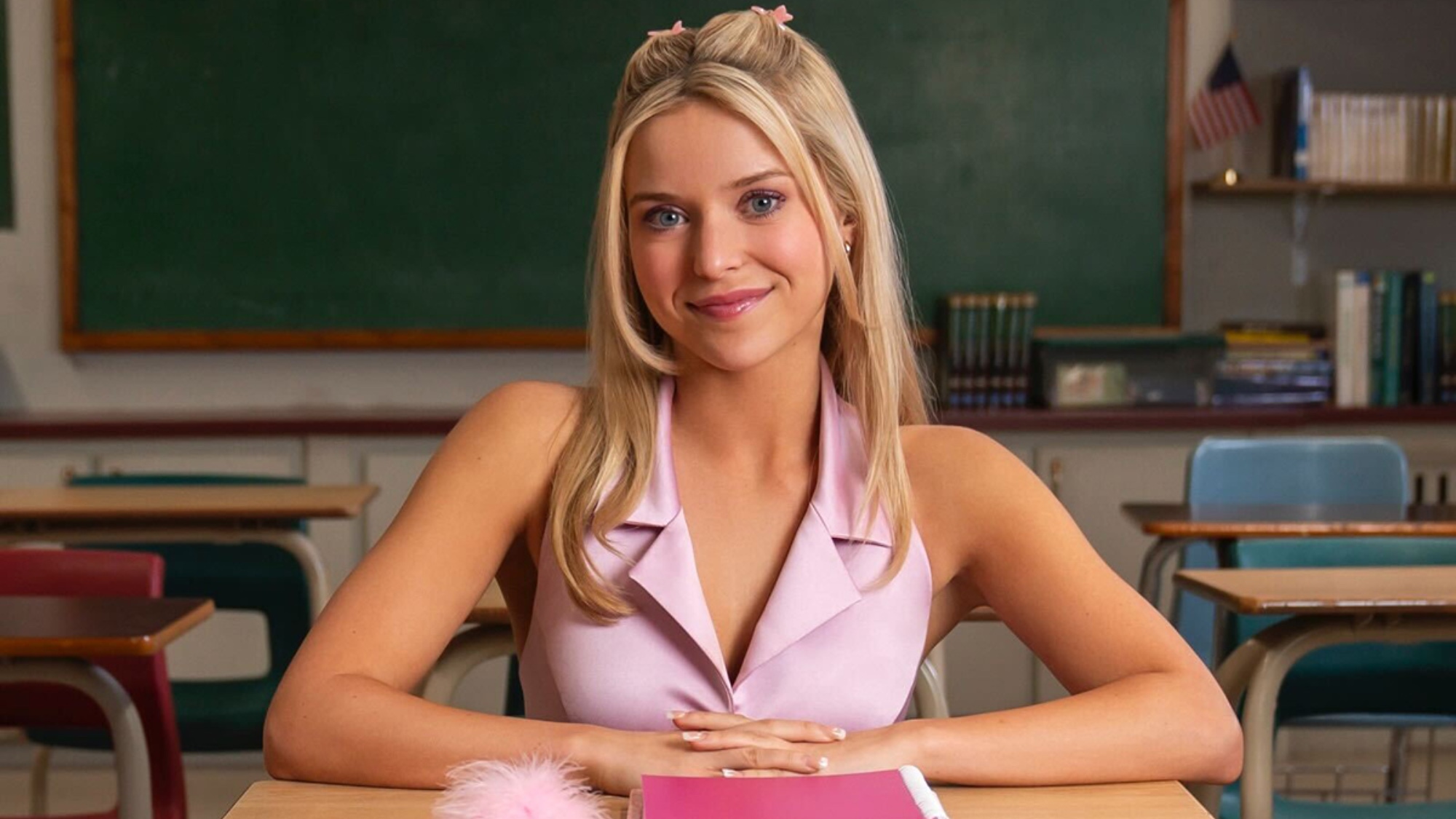
    Elle

    Does pink travel? This prequel to the 2001 comedy Legally Blonde catches Elle Woods, that movie’s improbable Harvard Law student, in a formative fish-out-of-water adventure. Ripped from her element in sunny Bel-Air, the bubbly blonde lands in grunge-era Seattle, where her head-to-toe pink Chanel aesthetic clashes with a sea of drab flannel and her cynical peers reject her sunny overtures. But Elle, as always, persists, proving that grit can hide in perky packages. Newcomer Lexi Minetree is an emerging star, stepping into a signature Reese Witherspoon role and making it her own. 
    Wednesday, July 1, Prime 


    FOOD & DRINK

    Taste Test: Chocolate ice cream

    We hate to report this, said Tess Koman in Serious Eats, but “not all supermarket chocolate ice creams even taste like chocolate.” We recently taste-tested 10 of them, missing a few key brands. But in a lineup that included Jeni’s, Turkey Hill, Tillamook, and Friendly’s, these were the clear winners.

    Häagen-Dazs
    Our top pick nails the assignment on all counts: texture, creaminess, and the “exact-correct” chocolate flavor. We liken the experience of eating a spoonful to “drinking a smooth glass of syrupy chocolate milk.”

    Breyer’s
    The first of our runners-up is “nicely creamy” but only manages a “middle-of-the-road” chocolate flavor. 

    Wegmans
    Remember that grade-school ice cream cup with the wooden tongue depressor? That’s what you get with Wegmans Chocolate Premium French Ice Cream. It’s malty. It’s smooth. And it has a “very gentle” flavor.


    BOOK OF THE WEEK

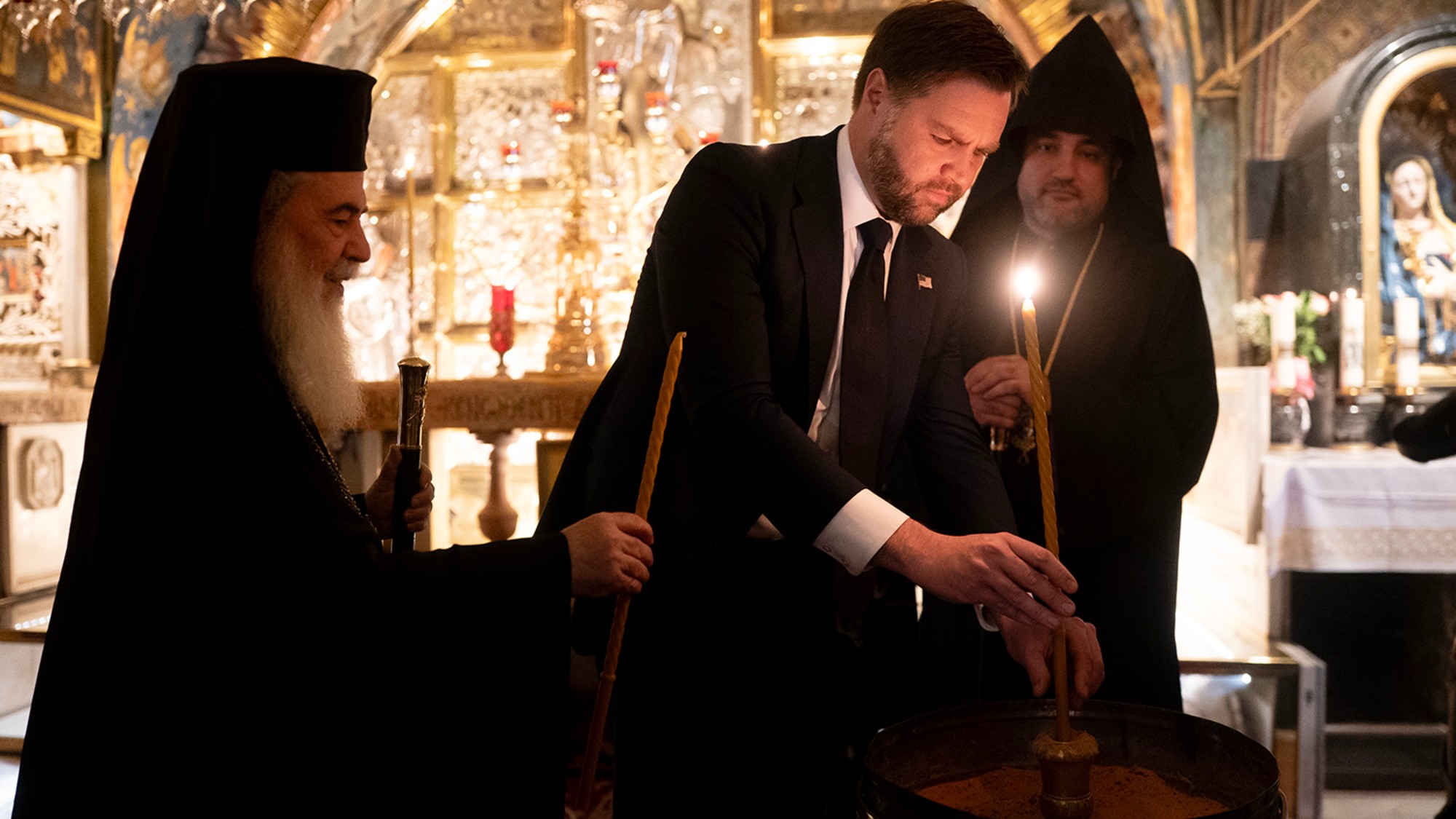
    Communion: Finding My Way Back to Faith

    by JD Vance

    “For its first 177 pages, JD Vance’s new book is a thoughtful read,” said Molly Olmstead in Slate. It begins roughly where Hillbilly Elegy, his breakthrough 2016 memoir, left off: with the 2005 death of the grandmother he called Mamaw. Vance, raised in the Pentecostal-evangelical tradition, had by then become, in his words, “an angry atheist.” In Communion, our vice president depicts his journey to converting to Catholicism in 2019 with real care. Then the account reaches the start of his political career, and “what happened here is clear”: He wrote that first part of this book before he decided in 2021 to run for a U.S. Senate seat. Vance suddenly begins trashing straw-men foes and weakly defending his flip-flop on Donald Trump, and it’s depressing because, until then, “you might have forgotten you were reading a book from the same Vance who supported Immigration and Customs Enforcement’s brutal crackdown in Minneapolis.”

    He talks early on about the importance of being humble in the face of life’s complexity, said Barton Swaim in The Wall Street Journal. But by the book’s second half, “he has cast humility aside,” suggesting, among other things, that the government should do more to make businesses fairer and kinder. At one point, he falsely accuses a conservative policy analyst of prioritizing corporate profits over family, and his “egregious” misreading of her argument “typifies the low regard he has for people who profess views he dislikes.” His arrogance is such a feature of the thinking, said Alexandra Petri in The Atlantic, that his new book reads like an account of “how he finally decided that Catholicism met his exacting standards.” He has famously counseled the pope to “be careful when he talks about matters of theology,” and here he complains that Pope Leo XIV’s emissaries weren’t specific enough when they directly shared concerns with him about the Trump administration’s inhumane treatment of migrants. “What did they take issue with, exactly?” he writes.

    Still, Vance’s book “offers a telling look into the movement he may try to reform,” said Christian Paz in Vox. “I found his faith journey moving,” and it tracks with that of many young men who, after becoming disillusioned by secular culture, find meaning in the millennia-old teachings and rituals of the Catholic Church. So far, though, he can’t square the cruel politics of the president he serves with the church’s teachings about how to turn faith into good works. Communion reads to me like a book by a man “who has a deeply anxious personality, carries serious real scars from his childhood, and doesn’t really know who he is even now,” said Michelle Cottle in The New York Times. Having found some answers in Catholicism, “he seems upset that he can’t find a way to map that onto the world.”


    OBITUARY

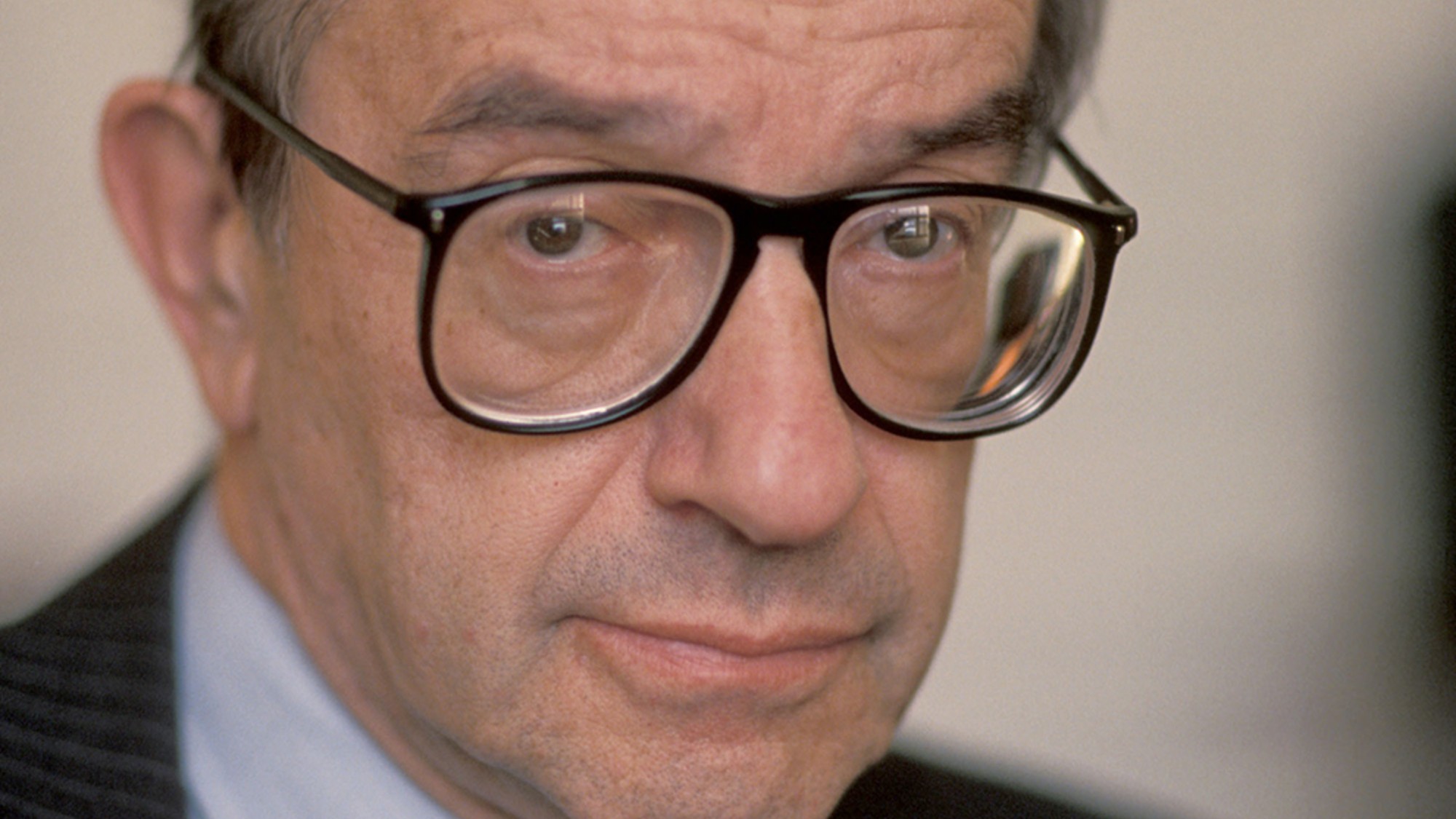
    Alan Greenspan

    The Fed chair who fueled the boom times

    For nearly 20 years, Alan Greenspan held unmatched power over the U.S. economy. Appointed chairman of the Federal Reserve in 1987, and maintaining the role under Republican and Democratic administrations, Greenspan oversaw an era of prosperity that made him an unlikely celebrity. At the height of his power, his name was known by 90% of Americans. Yet his status as the maestro of American monetary policy was complicated by the 2008 financial crisis, which many saw as an overdue reckoning caused by his policies. Greenspan himself expressed ambivalence about his rock-star status. “From my earliest days, I had viewed myself as an expert behind the scenes,” he said in 2007. “I’ve never been entirely comfortable being cast as the person who calls the shots.”

    Born in New York City as “the only child of parents who would soon divorce,” said The Washington Post, Greenspan was raised by his single mother. Gifted with a prodigious talent for numbers, he chose instead to pursue a career as a musician, attending Juilliard and playing clarinet in a jazz band. During breaks between sets, he didn’t drink or smoke with the other band members but read books about finance, and ultimately he decided to return to New York to study economics, earning a master’s degree from New York University. In his 20s, he identified as a libertarian and became an acolyte of the philosopher Ayn Rand, persuaded by her conviction that capitalism was both pragmatic and moral. He worked as an economic analyst for a think tank before launching his own economics consulting firm, and agreed in 1968 to serve as Richard Nixon’s coordinator on domestic policy. In subsequent years, Greenspan held numerous influential advisory positions, including chairman of the Council of Economic Advisers under Gerald Ford. In 1977, NYU awarded him a Ph.D. in economics based on his published research and papers on economic theory.

    Just two months after Ronald Reagan appointed him to “the job that would define his career” came Black Monday, said The Economist. It was the biggest stock market crash in history, bigger than the 1929 crash that spurred the Great Depression. Greenspan’s response, flooding the markets with money, fueled a rally credited with saving the economy. The experience affirmed his belief that confidence in America’s economic resilience — and policies that encouraged growth while minimizing government regulation — would be rewarded. Though much of his tenure was marked by falling unemployment, said NPR.org, Greenspan “broke with tradition” by keeping interest rates low — a gamble that paid off when inflation remained tame.

    In the boom years that followed, he “achieved a level of fame and influence rivaled only by U.S. presidents,” said The Wall Street Journal. His celebrity wedding to NBC News correspondent Andrea Mitchell was officiated by Justice Ruth Bader Ginsburg. Reappointed by George H.W. Bush, Bill Clinton, and George W. Bush, he maintained the Fed’s independence as he continued to promote his laissez-faire principles. Though Greenspan famously warned investors against “irrational exuberance” in 1996, prompting a brief global sell-off, his Wall Street–friendly policies were credited with ushering in an era of American prosperity. He retired from the Fed after five terms in 2006, his economic principles apparently vindicated.

    Yet Greenspan’s record was also defined by “the destructive consequences of forces that emerged on his watch,” said The New York Times. His belief that the market could be trusted to govern itself was challenged by the near collapse of the mortgage market in 2008, sparked by predatory lending practices enabled by deregulation. Testifying before a congressional panel, Greenspan admitted he’d “made a mistake” in assuming that banks and funds would act in the best interests of their shareholders. In the years after his retirement, he remained a fixture on the D.C. cocktail circuit, writing books and giving interviews defending his legacy. “Did we make mistakes? You bet we made mistakes,” he said. “But I thought our record was fairly good.”


    Sunday Shortlist was written and edited by Susan Caskie, Ryan Devlin, Chris Erikson, Scott Meslow, Chris Mitchell, and Matt Prigge.

    Image credits, from top: Magnolia Pictures/Everett, Amazon MGM Studios, Getty (2)
     

    Recent editions

    • Saturday Wrap

      Italy’s far-right ‘headache’

    • Evening Review

      The rise of remigration

    • Morning Report

      Iran asserts control over Hormuz with fresh strike

    VIEW ALL
    TheWeek
    • About Us
    • Contact Future's experts
    • Terms and Conditions
    • Privacy Policy
    • Cookie Policy
    • Advertise With Us
    • FAQ
    Add as a preferred source on Google Add as a preferred source on Google

    The Week UK is part of Future plc, an international media group and leading digital publisher. Visit our corporate site.

    © Future Publishing Limited Quay House, The Ambury, Bath BA1 1UA. All rights reserved. England and Wales company registration number 2008885.