Sign up to get Today’s Best Articles in your inbox
Join 350,000+ subscribers and keep yourself informed with a selection of
The Week’s most interesting, enlightening and entertaining stories - plus daily puzzles.
You are now subscribed
Your newsletter sign-up was successful
Want to add more newsletters?
An account already exists for this email address, please log in.
Alexei Navalny and Russia’s history of poisonings
‘Precise’ and ‘deniable’, the Kremlin’s use of poison to silence critics has become a ’geopolitical signature flourish’
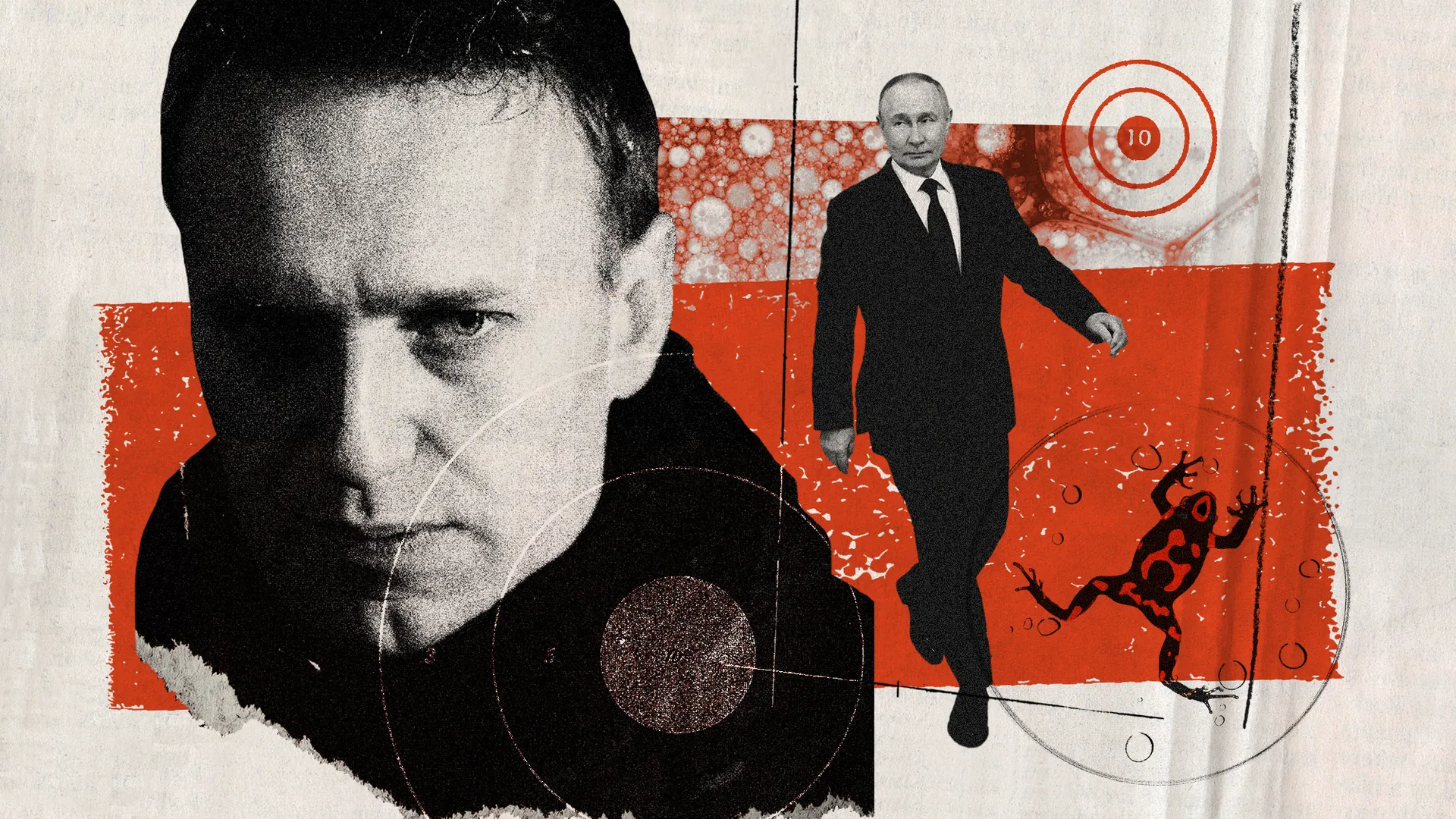
Moscow is calling it “necro-propaganda” but intelligence services and chemical weapons experts from five European countries are united in their verdict: Russian opposition leader Alexei Navalny was killed by a rare toxin found in some poison dart frogs.
Traces of epibatidine, a neurotoxin 200 times more potent than morphine, were found in samples taken from Navalny’s body after he died, two years ago, in a Siberian penal colony. Only the Russian government had “the means, the motive and the opportunity” to use such a poison on a prisoner, said Foreign Secretary Yvette Cooper.
“Precise, deniable” and “grimly familiar”, said NBC, the use of poison to eliminate enemies “has become less a medieval cliché” than Russia’s current “geopolitical signature flourish”.
The Week
Escape your echo chamber. Get the facts behind the news, plus analysis from multiple perspectives.
Join more than 350,000 subscribers and keep yourself informed with a selection of The Week’s most interesting, enlightening and entertaining stories - plus daily puzzles.
Join more than 350,000 subscribers and keep yourself informed with a selection of The Week’s most interesting, enlightening and entertaining stories - plus daily puzzles.
The Kremlin has long used rare poisons “to dispose of inconvenient people”, said The Independent. There are credible reports of a Soviet “poison programme” as far back as the 1920s. Poison was mainly used to eliminate internal opposition but, in 1978, the Western world was shocked by the London assassination of Bulgarian dissident Georgi Markov with a ricin-filled pellet, fired from the tip of an umbrella on Waterloo Bridge.
In recent years, Russian military and security services have been implicated in a growing number of high-profile poison attacks overseas. In 2004, Ukrainian presidential candidate Viktor Yuschenko, running against a Russian favourite, was left permanently disfigured by a dioxin attack. In 2006, Russian defector Alexander Litvinenko died after drinking a cup of tea laced with radioactive polonium-210 in a London hotel. And, in 2018, two Russian GRU agents were implicated in the novichok attack on former spy Sergei Skripal and his daughter in Salisbury.
Two years later, an attempt was made to kill Navalny with novichok during a flight to Moscow but he survived after his plane was diverted so he could be taken to hospital. This was, however, only a temporary reprieve for Vladimir Putin’s most vocal and effective critic.
Why is poison the Kremlin’s weapon of choice?
The advantage of toxins is “their deniability and terror”, said The Times. They send “a very clear message: ‘If you screw with us, terrible things will happen’”, a security source told the paper. Not only can the state kill but “it can do so without ever admitting it has done anything at all”.
Sign up to get Today’s Best Articles in your inbox
A free daily email with the day’s biggest news and analysis – and the best features from TheWeek.com
The effects of epibatidine, the toxin said to be used in Navalny’s fatal poisoning, are “devastating’, said Sky News. It will cause “paralysis, respiratory arrest and an agonising death”. If the Kremlin “did choose to use such an exotic substance to silence a critic, it demonstrates an unusual level of ruthlessness”.
Will there be any consequences for Russia?
A group of European ministers have reported the results of their lab tests on the Navalny samples to the Organisation for the Prohibition of Chemical Weapons. Russia claims “Western fabulists” are using a Russian citizen’s death to make “strident accusations” of assassination with “zero evidence”.
The “extraordinary announcement” about the frog poison at an international security conference in Munich was deliberately co-ordinated by the UK, France, Germany, Sweden and the Netherlands “to grab global headlines in much the same way as” Navalny's “actual death did”, said Sky News. “The intent was to make sure perpetrators cannot hide in the shadows.” Potential repercussions could include sanctions or even criminal prosecutions of individuals involved.
The hope is that this kind of “greater scrutiny“ will “deter the Kremlin” from poison attacks overseas. It is, “at the very least, evidence of a growing resolve amongst Nato allies” to stand up to Putin.
And, “in the short term, the main international consequence” will be “to make it impossible” for America’s European allies “to swallow any Trump peace plan for Ukraine that rewards Putin”, said The Independent. “Poison, it turns out, can be a boomerang.”