Sign up to get Today’s Best Articles in your inbox
Join 350,000+ subscribers and keep yourself informed with a selection of
The Week’s most interesting, enlightening and entertaining stories - plus daily puzzles.
You are now subscribed
Your newsletter sign-up was successful
Want to add more newsletters?
An account already exists for this email address, please log in.
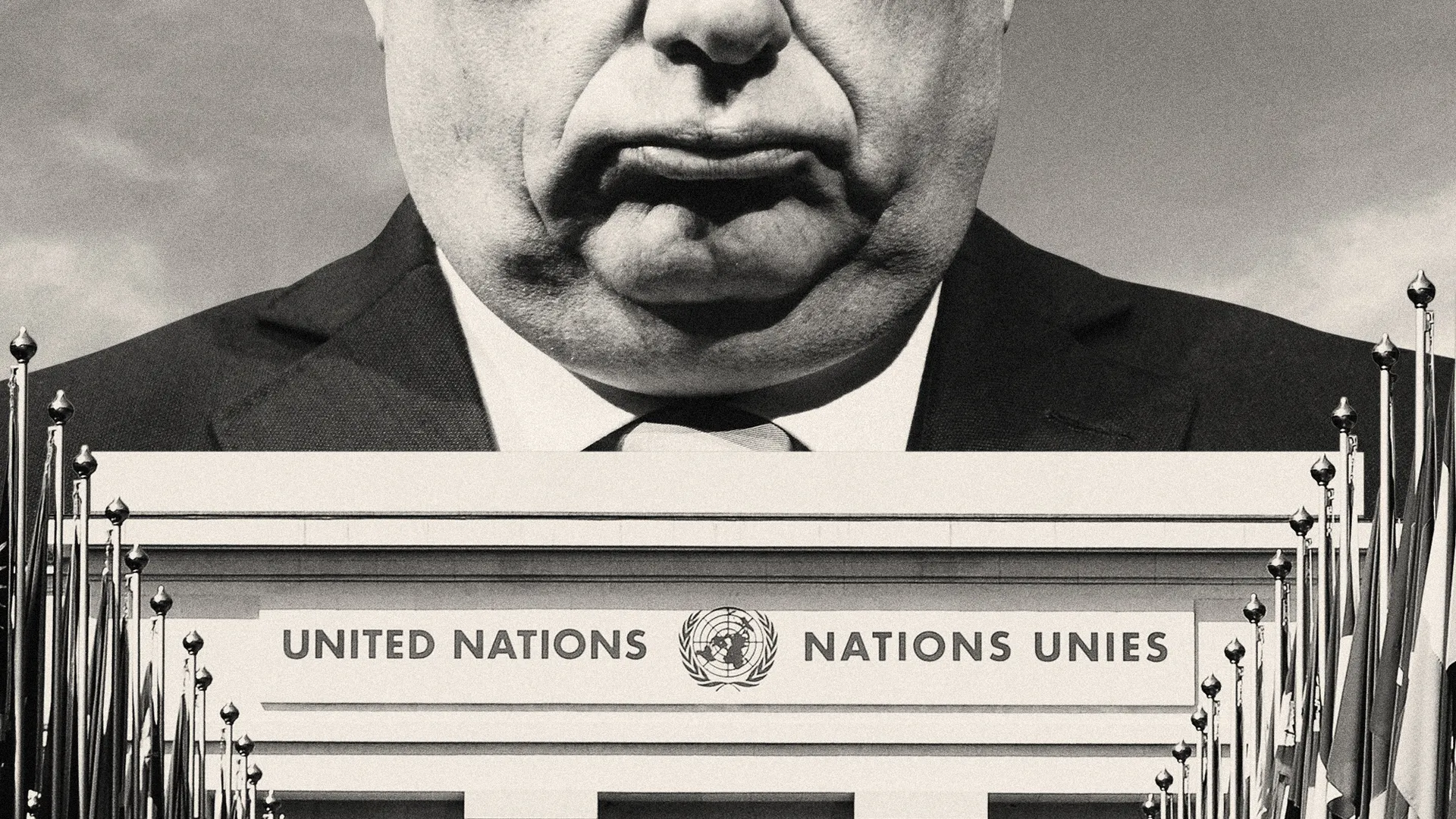
Is Viktor Orbán being primed for UN’s top job?
Hungary’s authoritarian former PM would be controversial choice as new secretary general
Viktor Orbán is being touted by the Trump administration as the next secretary general of the United Nations.
“You read that correctly,” said The Wall Street Journal in an editorial, reflecting that the appointment of Hungary’s former authoritarian populist prime minister to succeed António Guterres would be hugely controversial.
What did the commentators say?
Russia and China are “believed to be supportive” and “when the US, Russia and China all want the same thing at the UN Security Council, they usually get it”.
The Week
Escape your echo chamber. Get the facts behind the news, plus analysis from multiple perspectives.
Join more than 350,000 subscribers and keep yourself informed with a selection of The Week’s most interesting, enlightening and entertaining stories - plus daily puzzles.
Join more than 350,000 subscribers and keep yourself informed with a selection of The Week’s most interesting, enlightening and entertaining stories - plus daily puzzles.
There are “plenty of reasons” not to back Orbán, “such as that he would act as an apologist for Vladimir Putin and other dictators”. But he would be the “dream Maga-conservative candidate”, one State Department official told the WSJ, thanks to what the paper called “his moves against mass migration, liberal NGOs and Hungary’s left-leaning courts and press”.
It has been more common for “failed liberal politicians” to end up in roles at “intergovernmental networks and transnational bureaucracies”, said Philip Cunliffe on UnHerd. These appointments “allow politicians to retain the trappings of high office long after they have been rejected by their own country”.
Orbán won “five national elections, four with supermajorities” so “has a more impressive electoral track record than most liberals” who might be candidates for the top UN job.
But “it would be strange to think of a person less inclined toward the UN”, said Balkan Insight. He was “apparently encouraged by the Trump administration to enter the race”, said Josie Ensor in The Times, but some “UN watchers” think Orban’s name may be being used a “‘stalking horse’ to make the case for another, more pragmatic, contender: the British-educated Emirati diplomat Lana Nusseibeh”.
Sign up to get Today’s Best Articles in your inbox
A free daily email with the day’s biggest news and analysis – and the best features from TheWeek.com
“Momentum has quickly shifted” towards Nusseibeh, prompting “speculation that she may have been America’s first choice all along”. But her denial of accusations that the UAE is fuelling the civil war in Sudan by supporting the paramilitary Rapid Support Forces has caused criticism.
“With all five Security Council permanent members so tied to and dependent on the UAE, it will be no surprise if they eventually wave Nusseibeh through,” said Dino Mahtani on Middle East Eye. “But don’t expect her to act in the interest of the victims of wars, mass atrocities and genocides.”
What next?
Guterres’ second five-year term as UN secretary general ends on 31 December. There are seven candidates officially running to replace him, including Nusseibeh but not, yet, Orbán.
To save the UN “from the irrelevance in which it now wallows”, said former EU and US officials Alex Rondos and Mark Medish in The Guardian, its next leader “will require the concerted backing of the few powers that govern the security council”. War has become preferable to dialogue and diplomacy, but the UN can be a “problem-solver rather than a bystander, a credible forum rather than a costly talking shop, and the prime instrument for collective action”.
This won’t happen “unless the great powers want it to”. Appointing a new secretary general “is one of the few moments when they must agree on a qualified person and a timely agenda”.
Chas Newkey-Burden has been part of The Week Digital team for more than a decade and a journalist for 25 years, starting out on the irreverent football weekly 90 Minutes, before moving to lifestyle magazines Loaded and Attitude. He was a columnist for The Big Issue and landed a world exclusive with David Beckham that became the weekly magazine’s bestselling issue. He now writes regularly for The Guardian, The Telegraph, The Independent, Metro, FourFourTwo and the i news site. He is also the author of a number of non-fiction books.