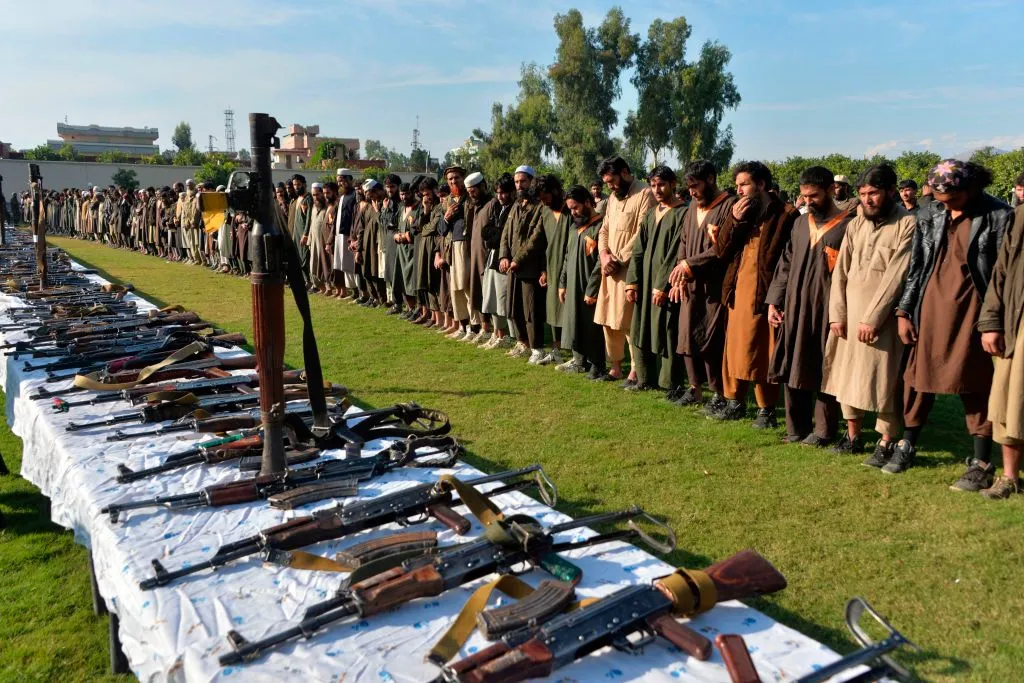
Attack on U.S. troops and Afghan civilians in Kabul puts spotlight on ISIS-K
The Islamic State's offshoot in Afghanistan, Islamic State Khorasan, claimed responsibility for Thursday's deadly attack in Kabul that killed at least 13 U.S. troops and dozens of Afghan civilians. While many people may not have been aware of the ISIS affiliate working out of Afghanistan, the U.S. government and its allies have been keeping a close eye on this terror group.
Islamic State Khorasan, also known as ISIS-K, takes its name from the Khorasan province, which stretched across much of modern-day Afghanistan and Iran during the Middle Ages. After the Islamic State swept through Syria and Iraq in 2014, ISIS-K was launched in Afghanistan. Its earliest members were Taliban fighters who were pushed out of Pakistan into Afghanistan, as well as disgruntled Afghan Taliban members who thought the Taliban was too moderate and shouldn't be pursuing peace talks with the United States.
ISIS-K and the Taliban are enemies with different interests. While the Taliban focuses primarily on Afghanistan and establishing its strict rule over the country, the more extremist ISIS-K wants to establish a global caliphate. Since January 2017, ISIS-K fighters have launched dozens of attacks in Afghanistan, the Center for International and Strategic Studies said, including assaults against schools for girls and maternity wards inside hospitals.
The Week
Escape your echo chamber. Get the facts behind the news, plus analysis from multiple perspectives.
Sign up for The Week's Free Newsletters
From our morning news briefing to a weekly Good News Newsletter, get the best of The Week delivered directly to your inbox.
Its ranks have been reduced in recent years due to clashes with U.S. and Afghan security forces and Taliban fighters, but it's believed there could still be thousands of ISIS-K members across Afghanistan. The U.S. government considers ISIS-K a threat to the United States and its allied interests in central Asia.
A free daily email with the biggest news stories of the day – and the best features from TheWeek.com
Catherine Garcia has worked as a senior writer at The Week since 2014. Her writing and reporting have appeared in Entertainment Weekly, The New York Times, Wirecutter, NBC News and "The Book of Jezebel," among others. She's a graduate of the University of Redlands and the Columbia University Graduate School of Journalism.
-
Could smaller cars bring down vehicle prices?Today’s Big Question Trump seems to think so, but experts aren’t so sure
-
2025’s most notable new albumsThe Week Recommends These were some of the finest releases of the past year
-
Trump aims to take down ‘global mothership’ of climate scienceIN THE SPOTLIGHT By moving to dismantle Colorado’s National Center for Atmospheric Research, the White House says it is targeting ‘climate alarmism’
-
US offers Ukraine NATO-like security pact, with caveatsSpeed Read The Trump administration has offered Ukraine security guarantees similar to those it would receive from NATO
-
Hong Kong court convicts democracy advocate LaiSpeed Read Former Hong Kong media mogul Jimmy Lai was convicted in a landmark national security trial
-
Australia weighs new gun laws after antisemitic attackSpeed Read A father and son opened fire on Jewish families at Sydney’s Bondi Beach, killing at least 15
-
How Bulgaria’s government fell amid mass protestsThe Explainer The country’s prime minister resigned as part of the fallout
-
Normalising relations with the Taliban in AfghanistanThe Explainer The regime is coming in from the diplomatic cold, as countries lose hope of armed opposition and seek cooperation on counterterrorism, counter-narcotics and deportation of immigrants
-
Benin thwarts coup attemptSpeed Read President Patrice Talon condemned an attempted coup that was foiled by the West African country’s army
-
Femicide: Italy’s newest crimeThe Explainer Landmark law to criminalise murder of a woman as an ‘act of hatred’ or ‘subjugation’ but critics say Italy is still deeply patriarchal
-
Brazil’s Bolsonaro behind bars after appeals run outSpeed Read He will serve 27 years in prison