Keith Olbermann tells Letterman the Golden Rule of Twitter he learned the hard way

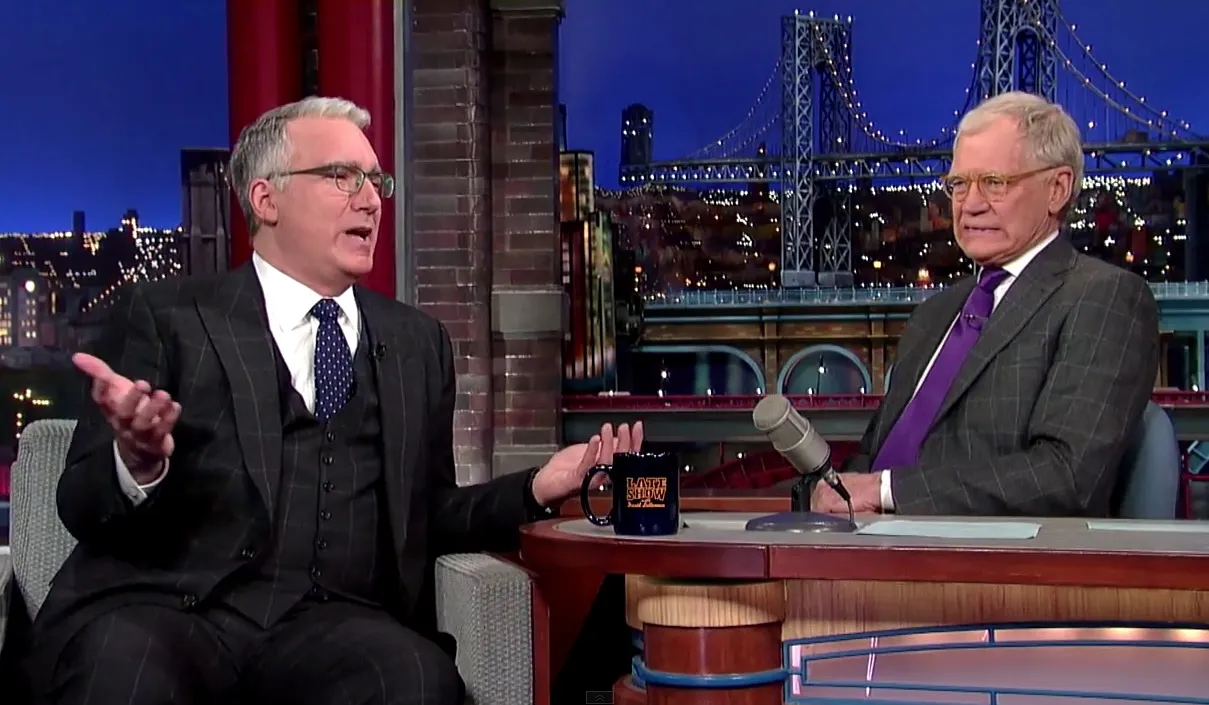
ESPN recently kicked Keith Olbermann off the air for a week — not a huge surprise to anyone who's followed Olbermann's career — but this time "I said 'thank you,'" Olbermann told David Letterman on Tuesday night's Late Show. He had retweeted a link to a story about pediatric cancer research with a snarky comment, he said, assuming the original tweet was an attack against him.
To understand why Olbermann did this, and why he thinks Twitter is "the first true sign that society is disintegrating," you have to understand how he views the microblogging service: "On Twitter, you don't think of anybody else as an actual human being, just as somebody you have to bury — or they're going to bury you. You subtract yourself from the human race, and just start going after people." In other words, he was an accident waiting to happen. But Olbermann has advice for fellow Twitter pugilists: "Don't read any tweet that has your own name in it." Not only will that keep you out of Twitter wars, "you will suddenly have an extra hour and a half to three hours a day." Or, just quit Twitter. —Peter Weber
The Week
Escape your echo chamber. Get the facts behind the news, plus analysis from multiple perspectives.

Sign up for The Week's Free Newsletters
From our morning news briefing to a weekly Good News Newsletter, get the best of The Week delivered directly to your inbox.
From our morning news briefing to a weekly Good News Newsletter, get the best of The Week delivered directly to your inbox.
