Jerry Seinfeld exposes the tricks of late-night TV on Late Night, wants no part

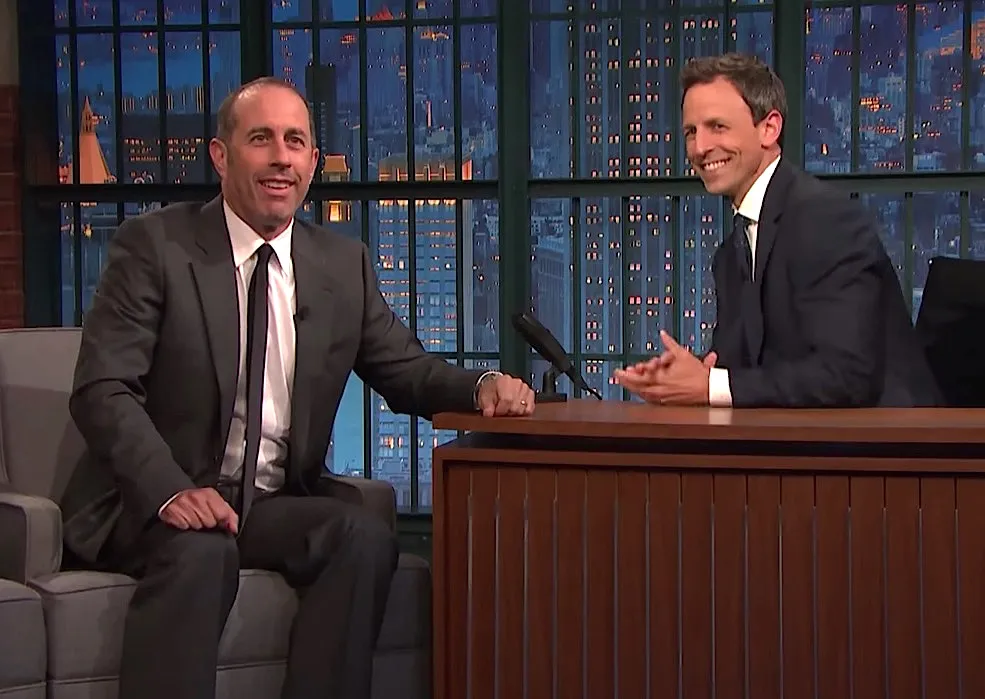
On Tuesday, Jerry Seinfeld made his first appearance on Late Night, and he told Seth Meyers he was there for only two reasons. "Dave's gone, Jay's gone, Johnny's dead — I'm auditioning other shows," he said, suggesting that Late Night could become his go-to late-night destination if everything went right. The second reason was less flattering: The Late Night producers hounded him until he agreed to come on.
But he refused to do a pre-interview. "Do you know what a pre-interview is?" Seinfeld asked the audience. "Here's how a talk show works." Before a guest comes on, the producers sit down and get a sense of what the guest wants to talk about, and what pre-arranged jokes the host can set up — like that story about the star's Mexican vacation. "It's all totally phony," Seinfeld explained, which is fine "if you're a new, young comic, or you're an actor or actress with nothing." But if Meyers wants to be a talk show host, "I think you should do the work," he added.
The Week
Escape your echo chamber. Get the facts behind the news, plus analysis from multiple perspectives.

Sign up for The Week's Free Newsletters
Join more than 350,000 subscribers and keep yourself informed with a selection of The Week’s most interesting, enlightening and entertaining stories - plus daily puzzles.
Join more than 350,000 subscribers and keep yourself informed with a selection of The Week’s most interesting, enlightening and entertaining stories - plus daily puzzles.

