American autos are getting better
There was a weird word that emerged from the Detroit Auto Show this week: "Innovation"
A free daily email with the biggest news stories of the day – and the best features from TheWeek.com
You are now subscribed
Your newsletter sign-up was successful
There was a weird word that emerged from the Detroit Auto Show this week: "Innovation."
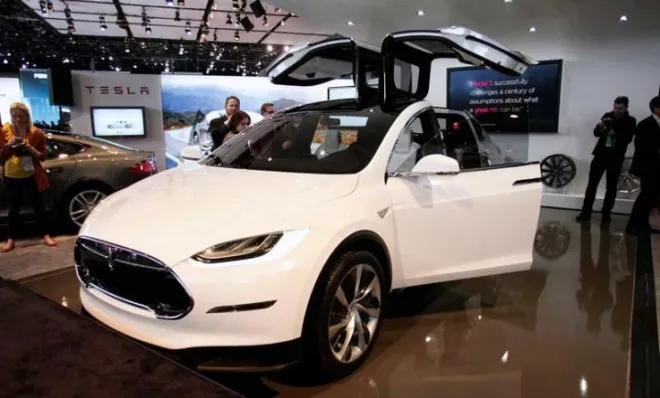
The roster of new American cars is packed with innovations this year, outshining the latest offers from Germany and Japan. Two cases in point: the Tesla Model X, which, though at prototype stage, would revolutionize the electric car market if it became popular, and the 2014 Corvette Stingray, which uses the latest in lightweight materials and has an expected fuel efficiency of more than 26 miles per gallon. Indeed, the entire show seemed to be a showcase for technological advancements that both reflects and advances the demand for more environmentally friend cars.
It also suggests that the money given to Detroit as part of the auto bailout — that's our money — was put to good use. American car companies are bringing innovations in battery life (a priority, you'll recall, of the first Obama stimulus), design, and reliability. There will be plenty of debate about the cars themselves, but the industry clearly did not simply take the government's money and sit on it. More examples: The significant advances in the efficiency of the engine of the Ford F-150 "Atlas" concept, as well as a new lighter-weight design; the F-150 is the country's best-selling auto right now. And Cadillac's special play for rich folks with California consciences: Their new ELR, a luxury hybrid.
Article continues belowThe Week
Escape your echo chamber. Get the facts behind the news, plus analysis from multiple perspectives.
Sign up for The Week's Free Newsletters
From our morning news briefing to a weekly Good News Newsletter, get the best of The Week delivered directly to your inbox.
Note: By 2025, car companies' fleets have to average more than 54 miles per gallon, so there's a way to go. But the American auto industry, using some of our money, is making significant strides in that direction.
A free daily email with the biggest news stories of the day – and the best features from TheWeek.com
Marc Ambinder is TheWeek.com's editor-at-large. He is the author, with D.B. Grady, of The Command and Deep State: Inside the Government Secrecy Industry. Marc is also a contributing editor for The Atlantic and GQ. Formerly, he served as White House correspondent for National Journal, chief political consultant for CBS News, and politics editor at The Atlantic. Marc is a 2001 graduate of Harvard. He is married to Michael Park, a corporate strategy consultant, and lives in Los Angeles.