Sign up to get Today’s Best Articles in your inbox
Join 350,000+ subscribers and keep yourself informed with a selection of
The Week’s most interesting, enlightening and entertaining stories - plus daily puzzles.
You are now subscribed
Your newsletter sign-up was successful
Want to add more newsletters?
An account already exists for this email address, please log in.
Venezuela’s Trump-shaped power vacuum
The American abduction of Venezuelan President Nicolás Maduro has thrust South America’s biggest oil-producing state into uncharted geopolitical waters
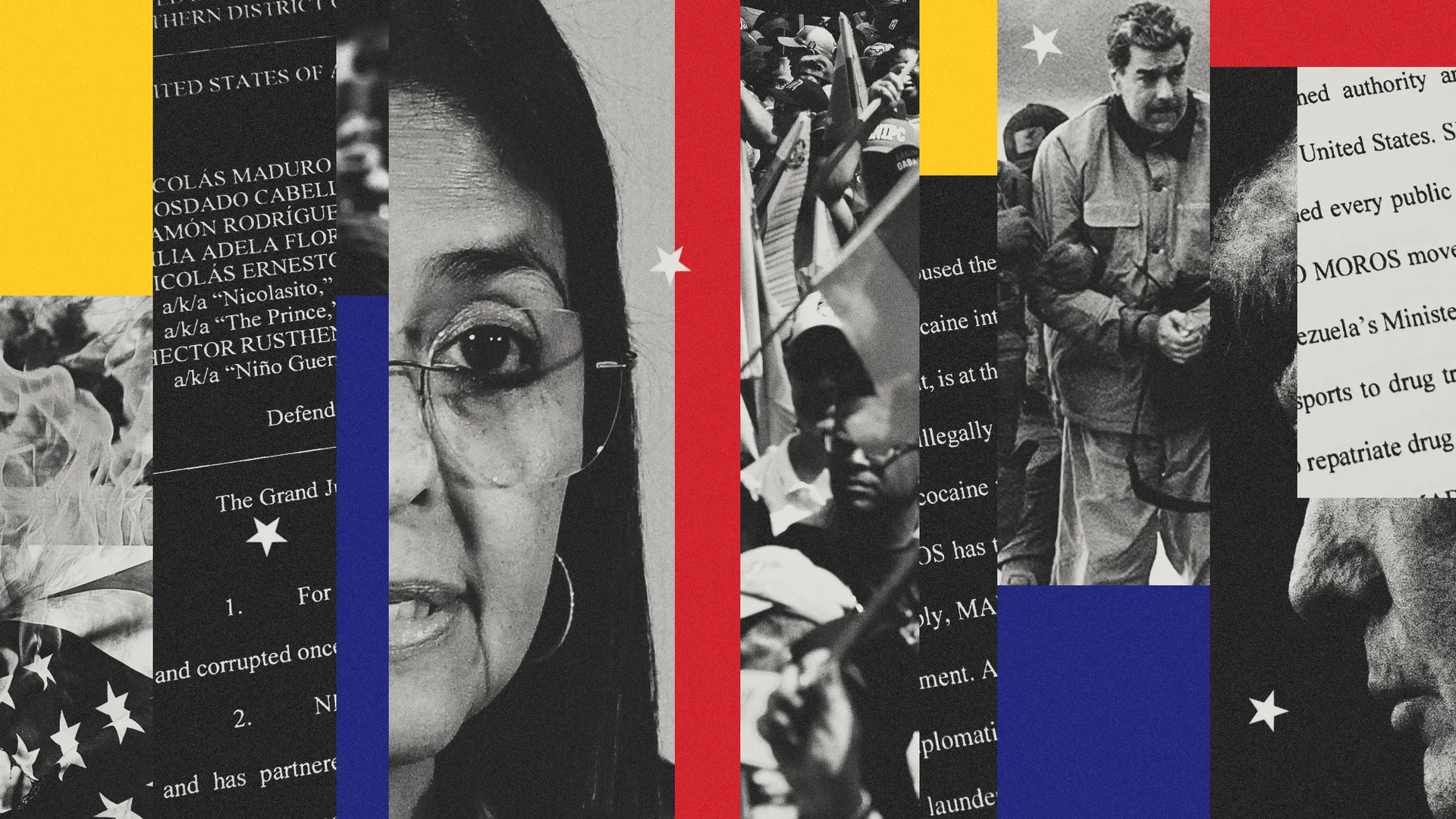
After months of saber-rattling and increasingly violent maritime operations, the Trump administration’s surprise invasion of Venezuela and seizure of President Nicolás Maduro have pushed both nations toward two very different types of national crises. As the U.S. grapples with the implications of MAGA’s renewed expansionist fervor, Venezuelans face an even more acute danger from the chaotic power vacuum created in Maduro’s wake. Newly installed Acting President Delcy Rodríguez has sent mixed messages about cooperating with the Trump government, while the White House floats similarly contradictory signals about its imperial aspirations for one of the world’s biggest petro-hubs.
Washington’s search for someone to ‘play by their rules’
The Trump administration had an “easy choice” selecting Rodríguez as its “acceptable candidate to replace” Maduro, said The New York Times. Internal debates identified the deposed leader’s second in command as someone who would “protect and champion future American energy investments in the country.” To that end, the White House will support Rodríguez’s presidency “based on her ability to play by their rules,” although it reserves the right to “take additional military action if she fails to respect America’s interests.”
As an “insider for Venezuela” with an “extensive hardline resume,” Rodríguez’s strengths from her government portfolio of “overseeing the oil industry and the regime’s intelligence agency,” as well as her “good relations with the military,” could be weakened domestically if she “appears to be aligning too closely with the U.S. government,” said NPR. Since assuming the presidency, Rodríguez has already begun offering “cooperation” with the Trump administration in a “change of tone” from her previous denunciation of the coup against Maduro as a “barbaric” act.
The Week
Escape your echo chamber. Get the facts behind the news, plus analysis from multiple perspectives.
Join more than 350,000 subscribers and keep yourself informed with a selection of The Week’s most interesting, enlightening and entertaining stories - plus daily puzzles.
Join more than 350,000 subscribers and keep yourself informed with a selection of The Week’s most interesting, enlightening and entertaining stories - plus daily puzzles.
Maduro’s kidnapping and rendition to the United States may have been a “startling tactical success,” The Washington Post said, but the “reality” of President Donald Trump’s stated goal to “run” Venezuela in the months to come “appears uncertain and stubbornly complex.” To wit, the president conspicuously refused to work with Venezuelan democratic opposition leader María Corina Machado in part because of her decision to “accept the Nobel Peace Prize,” which Trump had “openly coveted” last year, according to sources who spoke with the Post.
While the administration may be moving toward a more stable detente with Rodríguez, some within Trump’s own party are publicly unconvinced. Rodríguez may have “control of the military and security services,” said Sen. Tom Cotton (R-Ark.) on CNN’s “State Of The Union” this past weekend. ”We have to deal with that fact, but that does not make them a legitimate leader.”
Rubio and Miller take point
The nighttime capture of Maduro may have been part of the “realization of a longtime political goal” for Trump, but it was also a “personal victory” for Secretary of State Marco Rubio, one of the “primary architects” of the White House’s Venezuelan policy, said USA Today. Given his “personal history” as the son of Cuban immigrants and his “close ties to the Cuban and Venezuelan diasporas,” Rubio has landed a “direct role in shaping Venezuela’s future” for the administration.
With Rubio’s robust Cabinet portfolio and time constraints, however, the White House has also considered giving Stephen Miller, the president's chief anti-immigration adviser, a “more elevated role” in post-Maduro Venezuela, said the Post.
Sign up to get Today’s Best Articles in your inbox
A free daily email with the day’s biggest news and analysis – and the best features from TheWeek.com
Rafi Schwartz has worked as a politics writer at The Week since 2022, where he covers elections, Congress and the White House. He was previously a contributing writer with Mic focusing largely on politics, a senior writer with Splinter News, a staff writer for Fusion's news lab, and the managing editor of Heeb Magazine, a Jewish life and culture publication. Rafi's work has appeared in Rolling Stone, GOOD and The Forward, among others.