Sign up to get Today’s Best Articles in your inbox
Join 350,000+ subscribers and keep yourself informed with a selection of
The Week’s most interesting, enlightening and entertaining stories - plus daily puzzles.
You are now subscribed
Your newsletter sign-up was successful
Want to add more newsletters?
An account already exists for this email address, please log in.
Is the job market frozen or faltering?
Layoffs raise alarms while young workers eye law school
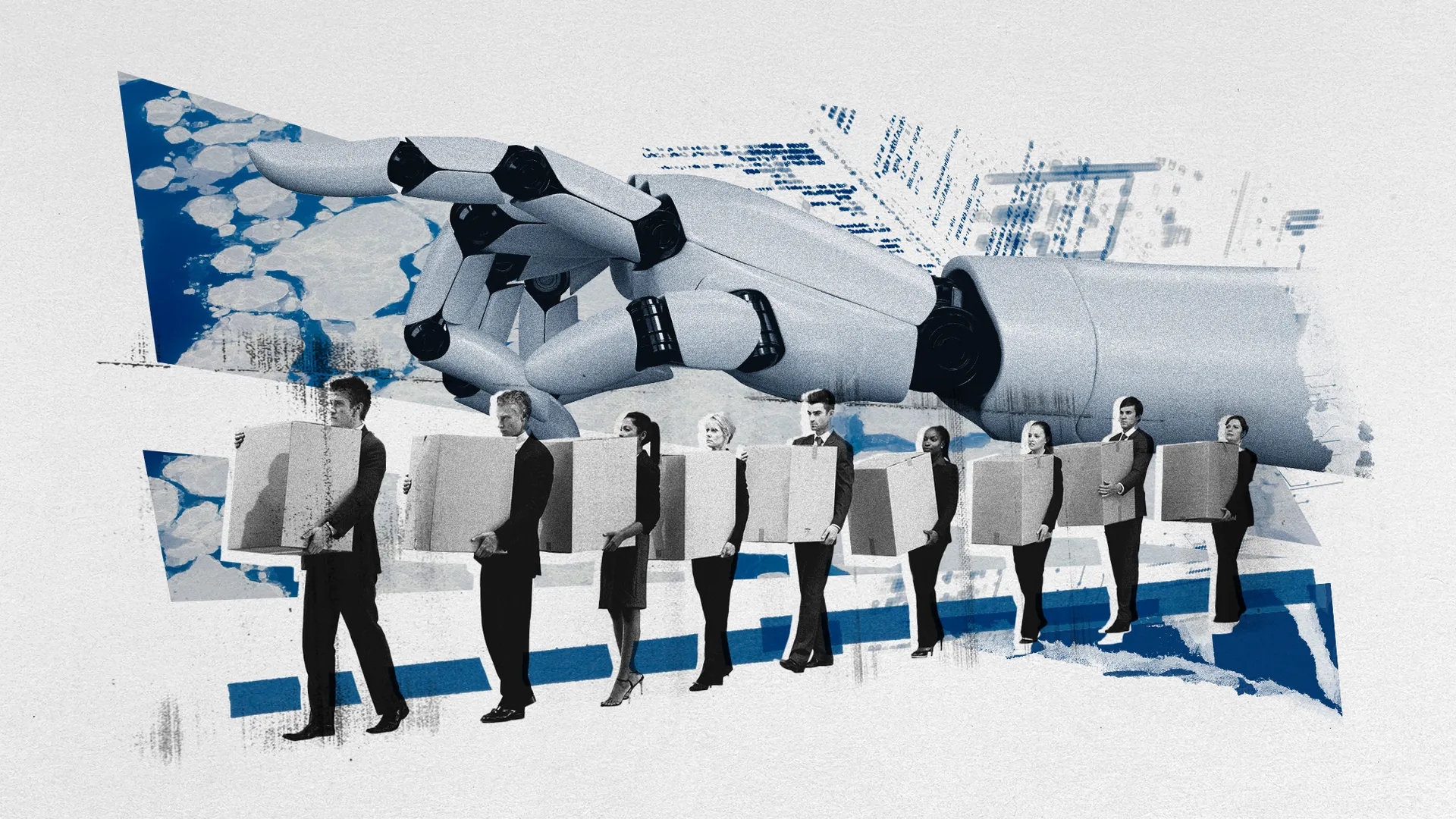
They call it the Great Freeze. That’s how some analysts describe the U.S. job market recently — a “low-hire, low-fire” environment where workers who have jobs are not losing them but finding a new job is difficult. But a thaw may be coming.
A “slew” of “large-scale layoffs” may be a sign that the labor market is “starting to tip over,” said Axios. Amazon announced it will slash 14,000 jobs, UPS said it was cutting 48,000 positions, and Paramount said it was laying off 1,000 workers. The unemployment rate had hovered around 4% for more than a year, but that “apparent stability” has concealed “change beneath the surface.” Now, companies appear ready to “take advantage of the potential of AI to transform work.” This could mean fewer jobs for humans.
The massive layoffs suggest the job market’s “current state of suspension has changed for the worse,” said MarketWatch. While companies are still comfortably profitable, they are waiting on the “dust to settle” from tariff negotiations, the government shutdown and the corporate adoption of AI. Amazon’s layoffs could be the tipping point. “We may see others join the fray,” said John Challenger, the CEO of career-services firm Challenger, Gray & Christmas.
The Week
Escape your echo chamber. Get the facts behind the news, plus analysis from multiple perspectives.
Join more than 350,000 subscribers and keep yourself informed with a selection of The Week’s most interesting, enlightening and entertaining stories - plus daily puzzles.
Join more than 350,000 subscribers and keep yourself informed with a selection of The Week’s most interesting, enlightening and entertaining stories - plus daily puzzles.
The job market “could get ugly,” Dan DeFrancesco said at Business Insider. “About 20 more Amazon-sized layoffs” would upend the labor market. That scenario is “not out of the realm of possibility” because “companies are known to follow the lead of their bigger peers.” Meta’s 2022 layoff of 11,000 workers led to a much larger wave of tech sector job cuts. American companies have recently been in a “holding pattern,” but if they start to let workers go without replacing them, the “somewhat resilient job market could start to show some real cracks.”
“The labor market is undeniably going through a transition,” Adam Hardy said at Money. Young workers are “canaries in the coal mine” since they are often the first to feel job market instability, and “young workers and recent college grads aren’t doing so well” at the moment. AI is often blamed, but there are other factors. Right now, there are “more graduates than there are jobs that require grads.” That’s a challenge that predates the rise of AI by “several years.”
What next?
The Federal Reserve cut interest rates by a quarter point this week to “shore up the softening job market,” said NPR. On top of private sector layoffs, the federal government has already cut about 100,000 jobs this year. American employment “may well be shrinking already,” Fed Governor Christopher Waller said earlier in October.
Bad news for the job market might be good news for graduate programs. “Applications are on the rise” at law schools and MBA programs, said Fortune, with law school applications up 3% over last year. Gen-Z job seekers are buying “more time to figure out what’s next” instead of “facing the bleak job market head-on.”
Sign up to get Today’s Best Articles in your inbox
A free daily email with the day’s biggest news and analysis – and the best features from TheWeek.com
Joel Mathis is a writer with 30 years of newspaper and online journalism experience. His work also regularly appears in National Geographic and The Kansas City Star. His awards include best online commentary at the Online News Association and (twice) at the City and Regional Magazine Association.