Sign up to get Today’s Best Articles in your inbox
Join 350,000+ subscribers and keep yourself informed with a selection of
The Week’s most interesting, enlightening and entertaining stories - plus daily puzzles.
You are now subscribed
Your newsletter sign-up was successful
Want to add more newsletters?
An account already exists for this email address, please log in.
Starbucks workers are planning their ‘biggest strike’ ever
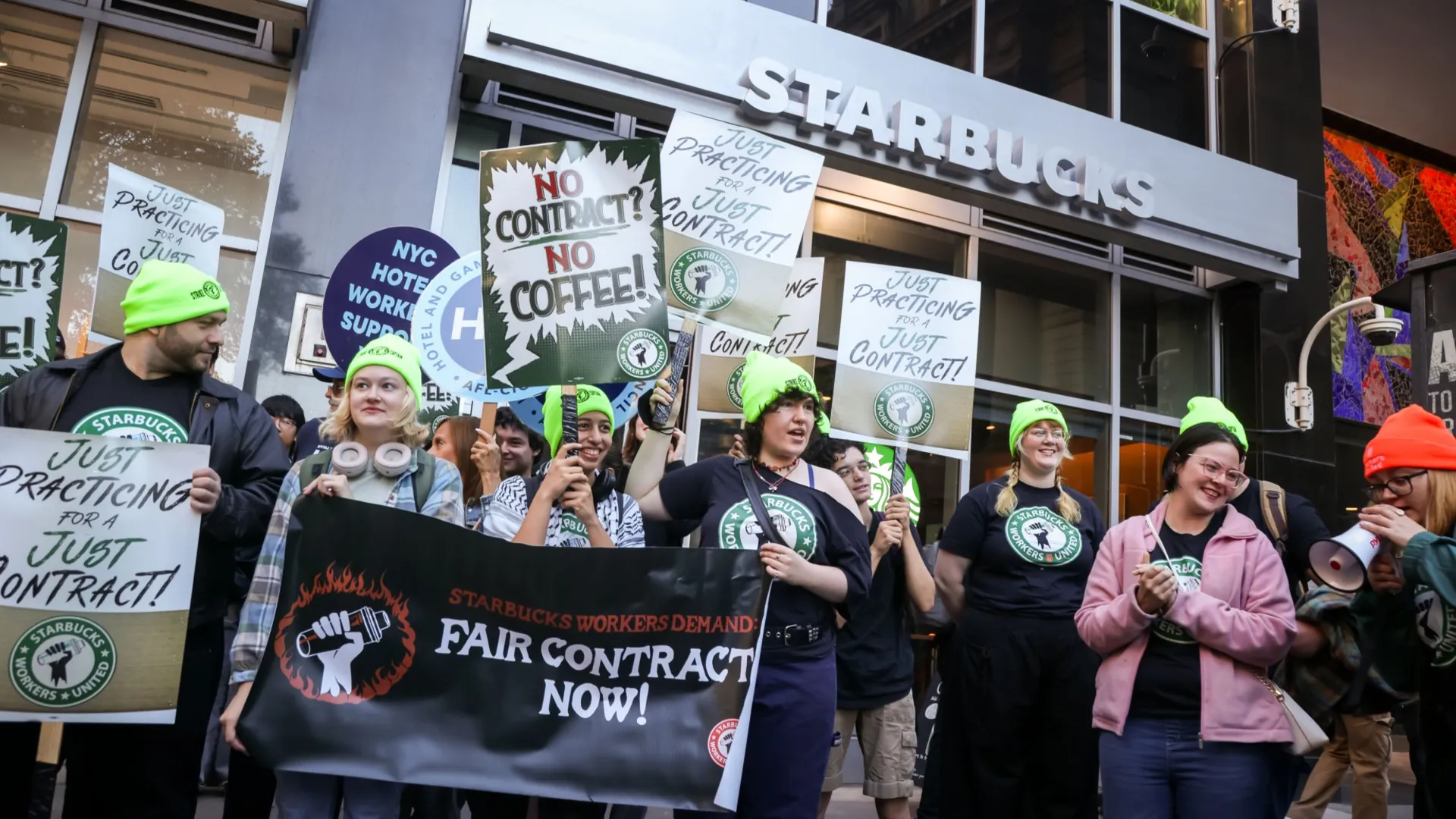
You may have to get your coffee somewhere else for a while, as a major union representing Starbucks’ employees has announced its members are prepared to walk off the job if they do not reach a new contract. The union represents only a fraction of Starbucks stores in the U.S., but the labor movement has been described as the company’s biggest yet — and it could have a significant impact on Starbucks as the holiday season approaches.
Why are Starbucks employees preparing to strike?
The employees are looking to “secure a contract after years of sporadic and unsuccessful talks,” said Bloomberg. If they do not secure a contract, the employees are set to strike in more than 25 cities across the U.S. starting Nov. 13. The walkout is being coordinated by Starbucks Workers United, which represents “employees at about 550 of the chain’s roughly 10,000 company-run U.S. stores.” Thousands of baristas voted to authorize the strike, with “92% voting in favor.”
The pro-strike vote “comes after six months of Starbucks refusing to offer new proposals to address workers’ demands for better staffing, higher pay and a resolution of hundreds of unfair labor practice charges,” said Starbucks Workers United in a press release. The unionized employees are “ready and willing to go on the biggest strike we’ve ever been on,” said Silvia Baldwin, a Philadelphia barista representing Starbucks Workers United in negotiations, to Bloomberg. If “Starbucks wants to avoid that, they can settle with us.”
The Week
Escape your echo chamber. Get the facts behind the news, plus analysis from multiple perspectives.
Join more than 350,000 subscribers and keep yourself informed with a selection of The Week’s most interesting, enlightening and entertaining stories - plus daily puzzles.
Join more than 350,000 subscribers and keep yourself informed with a selection of The Week’s most interesting, enlightening and entertaining stories - plus daily puzzles.
The striking employees are also “prepared to escalate if they don’t see new proposals and substantial progress toward finalizing a contract that addresses pay, hours and staffing," Starbucks Workers United said. The coffeehouse’s “failure to listen to and support their own baristas is moving them to take drastic action, which could include striking over unfair labor practices.”
What comes next?
The strike’s start date of Nov. 13 is the company’s “upcoming Red Cup Day, a major holiday promotional event,” said The Seattle Times. This event has previously been a “target of the union’s strikes. Last year, a strike took place across five days and shuttered around 60 stores.” Red Cup Day is typically “one of the company’s busiest days of the year,” said The Associated Press, and if the strike were to continue, it could have major implications for the holiday season.
The unionized employees have made additional pay demands a major sticking point, but Starbucks has denied that their wages are too low. The company offers a payment package “worth on average $30 per hour for hourly partners,” Starbucks said in a press release, though the union has disputed this. “We already give them the best job in retail. We have the lowest turnover in the industry — it’s below 50%,” said Starbucks CEO Brian Niccol to CBS News. “We also have the best benefits in the industry, and we actually have the best wages in the industry.”
But union members have fought back against this characterization. “Our fight is about actually making Starbucks jobs the best jobs in retail,” said Jasmine Leli, a Starbucks barista from Buffalo, New York, in a statement to CBS. “Right now, it's only the best job in retail for Brian Niccol.” A “fair union contract and the resolution of hundreds of unfair labor practice charges are essential to the company’s turnaround.”
Sign up to get Today’s Best Articles in your inbox
A free daily email with the day’s biggest news and analysis – and the best features from TheWeek.com
Justin Klawans has worked as a staff writer at The Week since 2022. He began his career covering local news before joining Newsweek as a breaking news reporter, where he wrote about politics, national and global affairs, business, crime, sports, film, television and other news. Justin has also freelanced for outlets including Collider and United Press International.