Xi may be moving China to economic system 'that doesn't exist anywhere in the world'
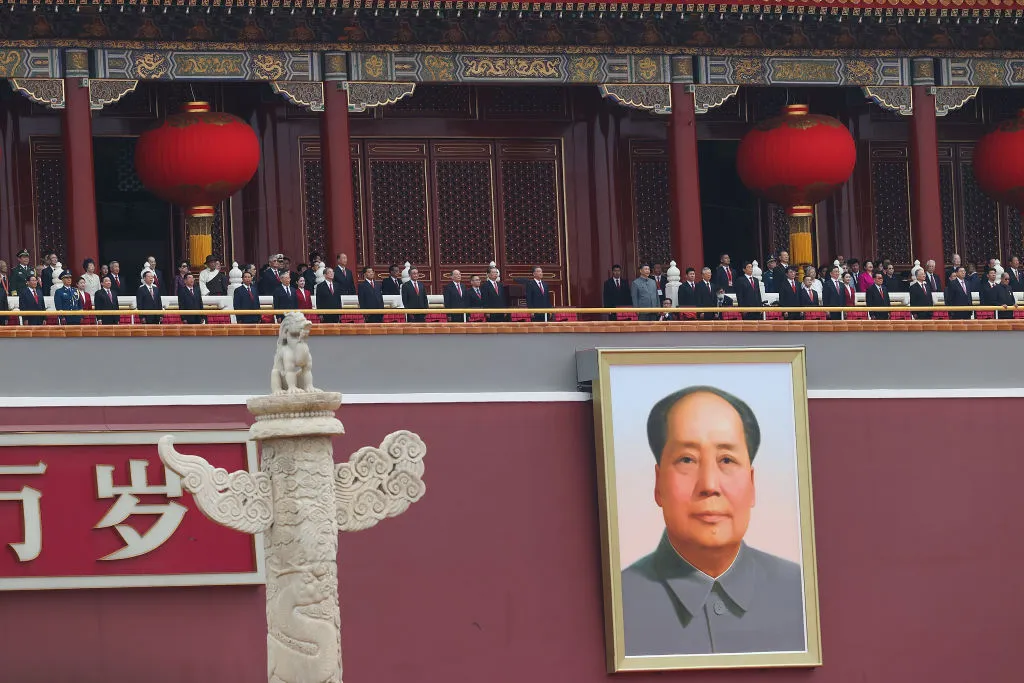
For a long time, analysts chalked Chinese President Xi Jinping's homages to Mao Zedong to "political stagecraft," but a Wall Street Journal examination of Xi's recent writings and speeches suggests they should be taking him much more seriously. It now appears Xi is "forcefully" trying to get China back to Mao's socialist vision, the Journal writes.
It's a strategy that involves much more aggressive state interference in what could someday be the world's largest economy. That marks a change from the past forty years, during which China's leaders have allowed more room for market forces to operate, spurring the growth of the private sector. Xi, though, has increasingly shown himself to be more ideologically-driven than his predecessors, and his rhetoric over the last few years provides a look at his determination to target larger companies and redistribute wealth among the population.
The Journal notes that Xi isn't trying to completely eradicate market forces (for instance, he reportedly wants to allow small-to-mid-size private business to continue to develop), but he wants the Chinese Communist Party to "steer flows of money" and curb the ability of entrepreneurs and investors to make profits to an even greater extent than it already does.
The Week
Escape your echo chamber. Get the facts behind the news, plus analysis from multiple perspectives.
Sign up for The Week's Free Newsletters
From our morning news briefing to a weekly Good News Newsletter, get the best of The Week delivered directly to your inbox.
"Xi does think he's moving to a new kind of system that doesn't exist anywhere in the world," Barry Naughton, a China economy expert at the University of California, San Diego, told the Journal. "I call it a government-steered economy." Read more at The Wall Street Journal.
A free daily email with the biggest news stories of the day – and the best features from TheWeek.com
Tim is a staff writer at The Week and has contributed to Bedford and Bowery and The New York Transatlantic. He is a graduate of Occidental College and NYU's journalism school. Tim enjoys writing about baseball, Europe, and extinct megafauna. He lives in New York City.
-
Animal Farm: has Andy Serkis made a pig’s ear of Orwell?Talking Point Animated adaptation of classic dystopian novella is light on political allegory and heavy on lowbrow gags
-
What new cryptocurrency regulations mean for investorsThe Explainer The Treasury and the Financial Conduct Authority aim to make the UK a more attractive and safer place for crypto assets
-
The Salt Path Scandal: an ‘excellent’ documentaryThe Week Recommends Sky film dives back into the literary controversy and reveals a ‘wealth of new details’
-
How will China’s $1 trillion trade surplus change the world economy?Today’s Big Question Europe may impose its own tariffs
-
Shein in Paris: has the fashion capital surrendered its soul?Talking Point Despite France’s ‘virtuous rhetoric’, the nation is ‘renting out its soul to Chinese algorithms’
-
US mints final penny after 232-year runSpeed Read Production of the one-cent coin has ended
-
Will latest Russian sanctions finally break Putin’s resolve?Today's Big Question New restrictions have been described as a ‘punch to the gut of Moscow’s war economy’
-
Warner Bros. explores sale amid Paramount bidsSpeed Read The media giant, home to HBO and DC Studios, has received interest from multiple buying parties
-
China’s rare earth controlsThe Explainer Beijing has shocked Washington with export restrictions on minerals used in most electronics
-
Gold tops $4K per ounce, signaling financial uneaseSpeed Read Investors are worried about President Donald Trump’s trade war
-
The struggles of Aston Martin: burning cash not rubberIn the Spotlight The car manufacturer, famous for its association with the James Bond franchise, is ‘running out of road’