Sign up to get Today’s Best Articles in your inbox
Join 350,000+ subscribers and keep yourself informed with a selection of
The Week’s most interesting, enlightening and entertaining stories - plus daily puzzles.
You are now subscribed
Your newsletter sign-up was successful
Want to add more newsletters?
An account already exists for this email address, please log in.
When the WHO director general privately 'lost patience' with China
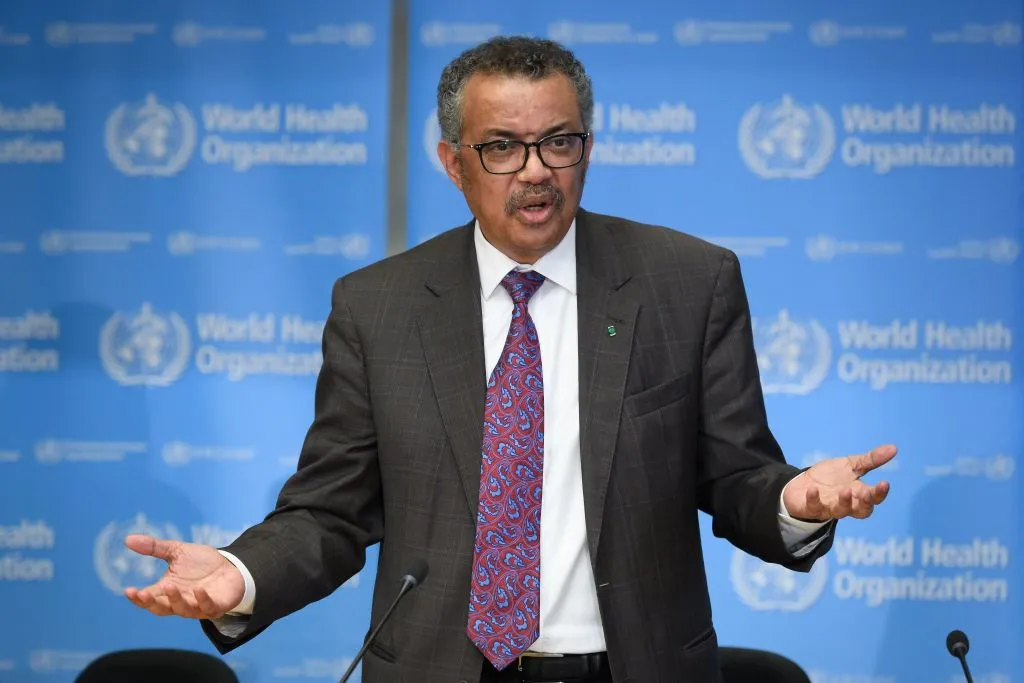
World Health Organization Director General Tedros Adhanom Ghebreyesus was perhaps not as soft on China during the pandemic as was previously thought, according to The Washington Post, per reporting from the upcoming novel Aftershocks: Pandemic Politics and the End of the Old International Order.
The book, written by Thomas Wright and Colin Kahl, details how Ghebreyesus "cautiously praised China in public while pressuring it in private," and in fact even "lost patience" with the country for attempting to influence COVID-19 origin probes, the Post reports.
When a WHO team in China reportedly twice dismissed the lab leak theory as "extremely unlikely" and "unworthy of further investigation," Ghebreyesus pushed back on the results, maintaining that the research was not "extensive enough" and lacked "timely and comprehensive data-sharing," writes the Post, per Wright and Kahl. The investigative team was reportedly "defensive" in their response, and mentioned "pressure from Chinese officials that led to a compromise."
The Week
Escape your echo chamber. Get the facts behind the news, plus analysis from multiple perspectives.
Join more than 350,000 subscribers and keep yourself informed with a selection of The Week’s most interesting, enlightening and entertaining stories - plus daily puzzles.
Join more than 350,000 subscribers and keep yourself informed with a selection of The Week’s most interesting, enlightening and entertaining stories - plus daily puzzles.
And since then, relations between the two entities have "nosedived." When the WHO team's official findings, released in March, repeated the lab leak theory to be extremely unlikely, Ghebreyesus told China's envoy in Geneva that he would tell the truth about the report "even if China did not like it," per Wright and Kahl.
But Ghebreyesus' soft public posture toward China was at odds with the stance taken by the administration of former President Donald Trump, who Wright claims "undermined" the lab leak theory by "taking it too far." "That U.S.-China rivalry really shaped everything else," he said. Read more at The Washington Post.
Sign up to get Today’s Best Articles in your inbox
A free daily email with the day’s biggest news and analysis – and the best features from TheWeek.com
Brigid Kennedy worked at The Week from 2021 to 2023 as a staff writer, junior editor and then story editor, with an interest in U.S. politics, the economy and the music industry.