The Week The Week
flag of US
US
flag of UK
UK
https://cdn.mos.cms.futurecdn.net/flexiimages/jacafc5zvs1692883516.jpg

SUBSCRIBE & SAVE

Less than $3 per week

Sign in
  • View Profile
  • Sign out
  • The Explainer
  • The Week Recommends
  • Newsletters
  • Cartoons
  • From the Magazine
  • The Week Junior
  • Student Offers
  • More
    • Politics
    • World News
    • Business
    • Health
    • Science
    • Food & Drink
    • Travel
    • Culture
    • History
    • Personal Finance
    • Puzzles
    • Photos
    • The Blend
    • All Categories
  • Newsletter sign up Newsletter
  • The Week Evening Review
    Peace talks, scabies, and Syria’s prisoner problem

     
    today’s Big Question

    Is Ukraine, US, Russia ‘trilat’ a step towards peace?

    Delegations from the US, Ukraine and Russia are meeting for trilateral talks for the first time since Moscow launched its full-scale invasion of Ukraine, buoying hopes of a peace deal.

    US envoy Steve Witkoff suggested that an agreement was within reach during the two-day summit in Abu Dhabi, after meeting Vladimir Putin last night. “I think we’ve got it down to one issue, and we have discussed iterations of that issue, and that means it’s solvable,” he said.

    Kremlin aide Yuri Ushakov said the preliminary talks with the US had been “substantive, constructive and very frank”. But Russia, which occupies about 20% of Ukraine, is still “pushing for full control of the country’s eastern Donbas region as part of a deal”, said The Times. Kyiv has warned that “ceding ground would embolden Moscow”.

    What did the commentators say?
    “It feels like we’ve been here before,” said Sally Lockwood on Sky News. And yet this summit does seem “different”. The speed at which all three sides agreed to meet means there is “a sense” that none of them “would have shown up without at least contemplating a compromise they might be willing to accept”.

    From Ukraine’s perspective, these talks are “a kind of crunch time”, said Sarah Rainsford, the BBC’s Eastern Europe correspondent. As Volodymyr Zelenskyy puts it, “it’s a chance to see whether Moscow is really serious about peace or just playing games”.

    Donald Trump and his colleagues “appear to believe Putin is ready and willing to agree to a ceasefire”, said Holly Ellyatt at CNBC. But Ukraine remains sceptical: it thinks “Russia’s manpower advantage on the battlefield” means it is “playing for time”. 

    For Putin, “deception is the default setting”, said The Hill’s Andrew Chakhoyan. “The first step to defeating Russian cognitive warfare is simple: stop playing by Russia’s dirty rules.” Putin lies “because his only path to victory runs through Washington’s self-deterrence and Europe’s indecisiveness. The greatest lie of all is that we have no choice but to accept it.”

    What next?
    Ukraine “faces its harshest winter of the war, with widespread power outages caused by Russian strikes on energy infrastructure”, said Modern Diplomacy. But while this adds “urgency to negotiations”, it also fuels “Ukrainian scepticism about Russia’s stated interest in peace”.

    Separate economic discussions between Moscow and Washington are also planned – and that’s where the US can really turn the screw.


    tHE eXPLAINER

    A real head scratcher: scabies is on the rise

    When you hear scabies, you may think of a “Victorian-era” disease, caused by “dirty conditions” and “bad housing”, said The i Paper. “If so, you’d be wrong”: it can affect anyone, irrespective of housing conditions and hygiene habits. And it’s suddenly on the rise.

    In the second week of January, GPs reported just under 900 cases of scabies across England: nearly 20% higher than the same period last year. And as doctors are only required to report cases of scabies in communal settings, like nursing homes, the total number of cases in England right now is undoubtedly much, much higher.

    What is scabies?
    Scabies is an itchy rash, caused by microscopic mites that burrow into your skin and lay eggs there. The telltale itchy bumps and raised lines with a dot at one end are an allergic reaction to the mites, their eggs and their faeces. While not serious, scabies can be very irritating, and can exacerbate conditions like eczema, or cause secondary bacterial and skin infections. Only 10 female scabies mites are needed to cause a significant outbreak, which can linger for months, if not treated correctly.

    Why is it spreading so quickly?
    While there is “no definitive reason”, the back-to-school rush in September can kick-start transmission, as can the Christmas season, where “close contact in shared spaces is common”, Donald Grant, a senior clinical adviser at The Independent Pharmacy, told Women’s Health.

    Other factors include the current “strain on NHS GP waiting lists” and “lack of guidance and redirection to pharmacies”, said Michael Marks, a professor at the London School of Hygiene & Tropical Medicine.

    How to prevent and treat it?
    The most common treatment is permethrin cream – often sold as Lyclear – which “paralyses and kills the mites”, Hanna Yusuf, a pharmacist at Chemist4U, told Cosmopolitan. The online pharmacy saw “year-on-year sales almost double” in January.

    In addition to applying the cream, you should wash your bedding, towels and clothing at 60C or higher, followed, if possible, by hot tumble drying. Clothing that can’t be washed “should be sealed in a plastic bag for at least 72 hours”, said the NHS, and you should vacuum mattresses, sofas and carpets. Do not share towels or bedding with anyone who has scabies.


    Poll watch

    Nearly half (49%) of Britons have had a “life-changing experience”. A YouGov poll of 4,893 adults found that people aged between 25 and 49 were the most likely to say they had experienced something that had a lasting impact on them, at 53%, while those aged 65 and over were the least, at 44%.


    Statistic of the day

    457: The number of Britons who died fighting in Afghanistan, after the US triggered Nato’s Article 5 following the 9/11 attacks. Donald Trump was “wrong to diminish the role of Nato troops” in the war, Keir Starmer’s spokesperson said today, after the US president provoked widespread outrage by saying they “weren’t on the front line”.


    In the Spotlight

    Syria’s Islamic State problem

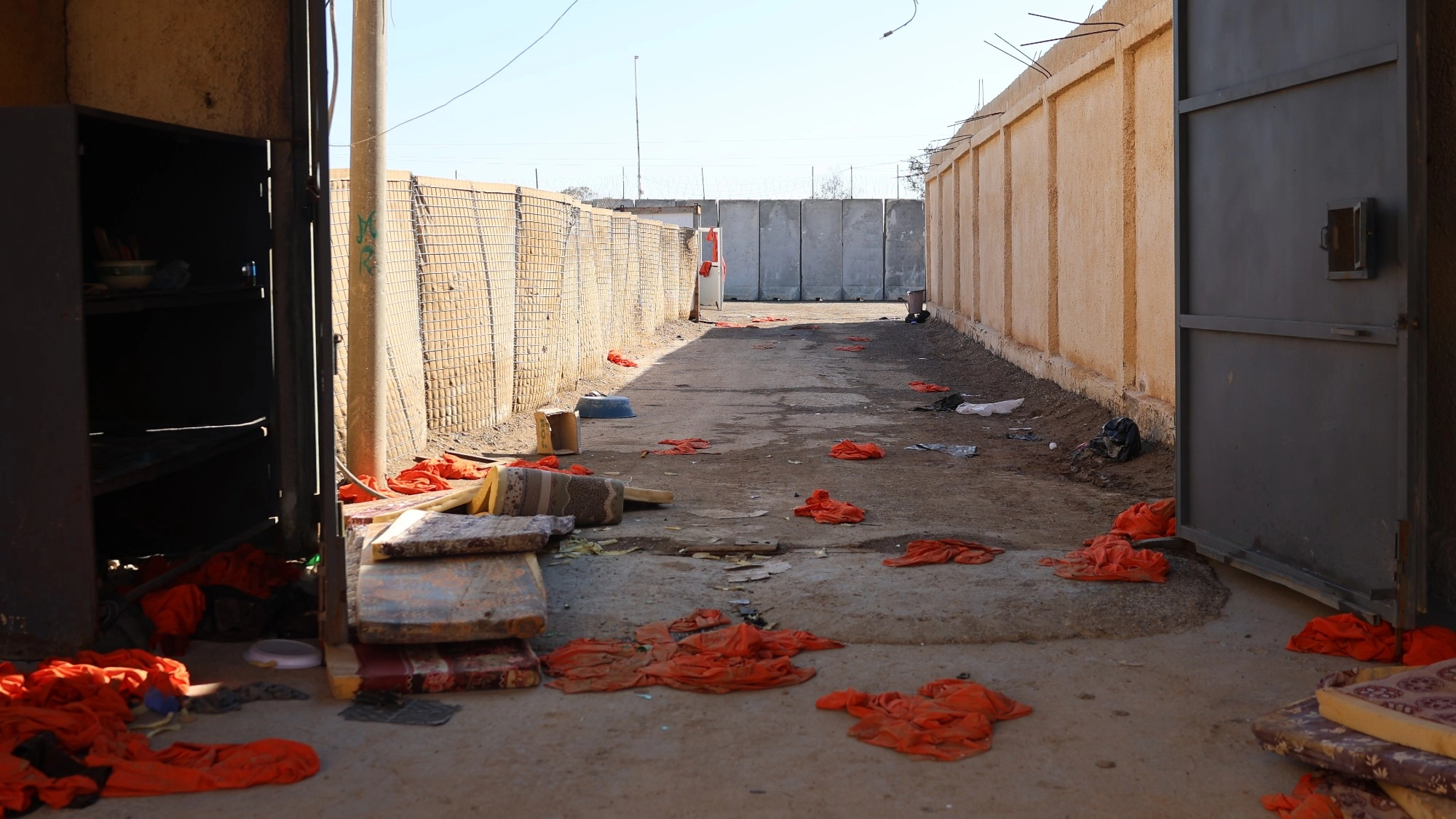
    Syria is home to the largest population of Islamic State prisoners in the world – but its fledgling government is struggling to contain the tens of thousands of militants and their relatives, including British-born Shamima Begum.

    The Syrian Democratic Forces (SDF), a Kurdish-dominated militia that runs many of the prisons in northeast Syria, had to abandon the notoriously volatile al-Hol camp this week. Syrian government forces moved in to secure the camp a day later, but dozens of prisoners had already escaped. The SDF also lost control of the al-Shaddadi camp, from which about 120 prisoners escaped. 

    ‘Unresolved security dilemma’
    IS members and their families have been held in more than two dozen camps and detention facilities in Syria since 2019, when a US-backed coalition of mostly SDF-led forces seized back the last of the territory the group had captured. Most in the camps haven’t been charged, and many foreign-born detainees have been stripped of their citizenship.

    US military commanders and analysts have “warned that the detainee population is an unresolved security dilemma” that threatens the stability of post-Assad Syria, said The Wall Street Journal. Islamic State has been targeting the camps with “propaganda and messages to stir unrest”, and it has active “sleeper cells” inside them. Routine searches have found weapons. And yet SDF guards are often “pulled away” from their duties “to deal with instability elsewhere”.

    In 2022, IS militants detonated a truck carrying explosives at the gate of the al-Sina’a prison, leading to a “week-long battle” against US and Kurdish forces. More than 500 died and, during the “chaos”, hundreds escaped. Little has been done to increase security at detention sites since.

    Prison control dispute
    A dispute between the SDF and the Syrian government is exacerbating the situation. After “weeks of deadly clashes”, the SDF agreed to merge fully into the Syrian military and “hand over control of security infrastructure”, including the prison camps, to the government, said The New York Times.

    The ensuing chaos around the al-Hol and al-Shaddadi camps merely “underscored the fragility of that deal”. The government is accusing the SDF of releasing IS detainees and “exploiting the security threat” for “political gains”.

    The US said it was moving to relocate detained IS fighters to a “secure location” in Iraq, “but the fate of the tens of thousands” of their family members “remained unclear”, said NPR.


    Good day🐦‍⬛

    … for British birdwatchers, as twitchers nationwide flock to take part in the world’s biggest garden wildlife survey. Hundreds of thousands of people are expected to join in the three-day Big Garden Birdwatch, which kicked off today and requires volunteers to count how many birds they can spot in an hour, to help the RSPB track population changes.


    Bad day 🐶

    ... for French bulldogs, which have been bumped off the top spot of Britain’s favourite breeds for the first time in the decade. Miniature dachshunds were the country’s most commonly bred pups last year, followed by cocker spaniels, with bulldogs slipping to third place, according to a report by Pets4Homes. 


    picture of the day

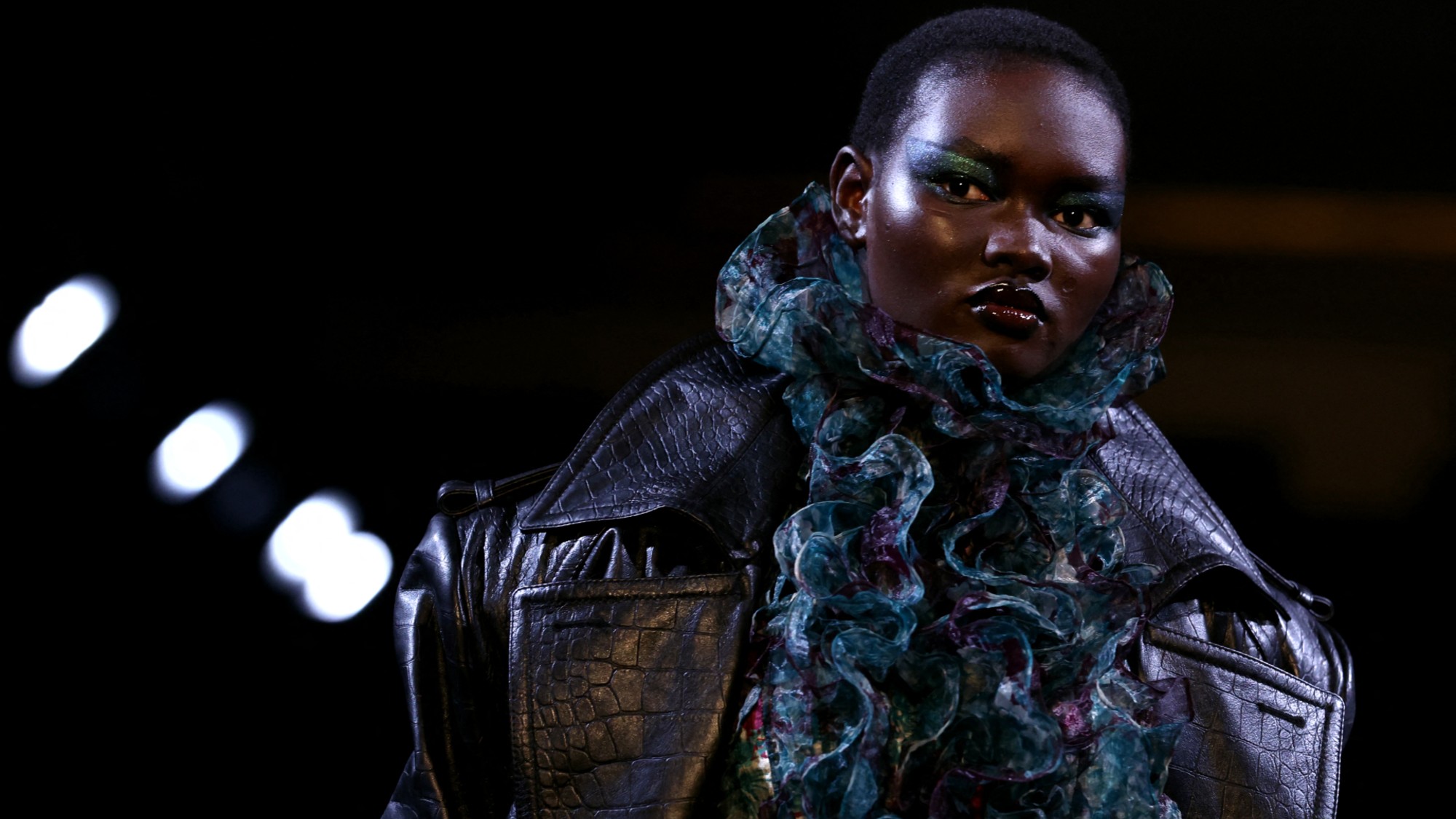
    In vogue

    A model shows off a creation by Juun.J during the 2026 fall/winter showcase of Paris Men’s Fashion Week. Trends on the runway included statement outerwear, sharp tailoring and weatherproof practicality.

    Alain Jocard / AFP / Getty Images


    PUZZLES AND QUIZZES

    Quiz of The Week

    Have you been paying attention to The Week’s news? Try our weekly quiz, part of our puzzles section, which also includes sudoku and crosswords 

    Play here


    THE WEEK RECOMMENDS

    Properties of the week: secluded houses in Scotland

    Argyll and Bute: Caolas, Isle of Coll
    A modern house in a spectacular coastal setting overlooking the Treshnish Islands and Mull, with direct beach access. 6 beds, 3 baths, open-plan kitchen/dining room, recep, garden, parking. OIEO £595,000; Knight Frank.

    Angus: Old Manse, Kirkton of Kingoldrum
    An attractive B-listed former manse dating to 1792; situated at the foot of Glenisla, close to the Cairngorms National Park. 5 beds, 2 baths, kitchen, 3 receps, studio, garden, parking. OIEO £480,000; Savills.

    Perth and Kinross: Tigh An Tuir, Strathtay
    A stately Victorian villa set in mature gardens and woodland of more than six acres. 6 beds, 4 baths, kitchen/breakfast room, 4 receps, 6-bed annexe, 1-bed stone cottage, studio, tennis court, garden, parking. OIEO £2.2m; Galbraith.

    Perth and Kinross: Blackwood Lodge, Rannoch
    A secluded house, on the south shore of Loch Rannoch, with 10m of loch frontage and riparian rights. 4 beds, family bath, kitchen/dining room, recep, 1-bed bothy, stables, paddocks, garden, parking. OIEO £650,000; Savills.

    See more


    QUOTE OF THE DAY

    “They’re children. They are not violent criminals. They are little kids.”

    Schools superintendent Zena Stenvik tells reporters that “our hearts are shattered” after five-year-old Liam Ramos became the fourth child in her Minneapolis district to be detained by Ice agents this month. Businesses across Minnesota are closed today in protest.


    instant opinion

    Today’s best commentary

    Am I a libertarian after all?
    Douglas Murray in The Spectator
    I’ve always viewed libertarians as “the bisexuals of politics”, writes Douglas Murray. “They want a bit of everything.” Yet “even I felt” a libertarian “twinge” when I heard that Home Secretary Shabana Mahmood wants to use AI to keep the “eyes of the state” on us “at all times”. Then I remembered the “incompetence and indolence of the state”. So “dream on”, Mahmood, because “the state is having a siesta”.

    If the assisted dying bill is killed off by the Lords, let that be the end for this unelected chamber
    Polly Toynbee in The Guardian
    A “small coterie of peers” is about to vote “against the will” of MPs and voters who support the right to die, writes Polly Toynbee. If they “block this, it should be their last gasp”. Their “behaviour illuminates everything grotesque about the upper house”. The “gleeful” plotters are a “reunion of the old Brexit gang”, replaying “the same dirty tricks”. There’s “strong support” for “an end to the Lords”: “expect the killing of this bill to stoke” it.

    Claudia Winkleman is what women want to be
    Pippa Bailey in The New Statesman
    “If anyone has emerged victorious” from “The Traitors”, it’s host Claudia Winkleman, writes Pippa Bailey. The show’s “High Priestess” understands both “how seriously to take it” and “when to break the tension with a joke”. The “most beloved woman on British television”, she’s “confident, drily funny, gloriously offbeat”, defying “expectations” that “women should be precise, inoffensive and agreeable”. And, “by extension”, she “gives other women permission to be so, too”.


    word of the day

    Hectocorn

    Start-up companies worth more than $100 billion, from the Greek prefix for “hundred” combined with the second part of “unicorn”. This is “shaping up to be the year of the ‘hectocorn’”, said The Guardian, as SpaceX, OpenAI and Anthropic reportedly prepare to go public and float on the stock market with potential valuations of $800 billion, $500 billion, and $350 billion respectively.


     Evening Review was written and edited by Harriet Marsden, Jamie Timson, Chas Newkey-Burden, Will Barker, Rebecca Messina, Irenie Forshaw, Natalie Holmes, Adrienne Wyper, Helen Brown, and Kari Wilkin.

    Image credits, from top: Illustration by Stephen Kelly / Getty Images; Olga Shefer / Getty Images; Bakr Al Kasem / Anadolu / Getty Images; Alain Jocard / AFP / Getty Images; Credits: Knight Frank; Savills; Galbraith; Savills
    Morning Report and Evening Review were named Newsletter of the Year at the Publisher Newsletter Awards 2025
     

    Recent editions

    • Evening Review

      Trump’s TACO moment on Greenland?

    • Morning Report

      Trump backs down on Greenland grab

    • Evening Review

      Washington debates ‘Abolish ICE’

    VIEW ALL
    TheWeek
    • About Us
    • Contact Future's experts
    • Terms and Conditions
    • Privacy Policy
    • Cookie Policy
    • Advertise With Us
    • FAQ
    Add as a preferred source on Google

    The Week is part of Future US Inc, an international media group and leading digital publisher. Visit our corporate site.

    © Future US, Inc. Full 7th Floor, 130 West 42nd Street, New York, NY 10036.