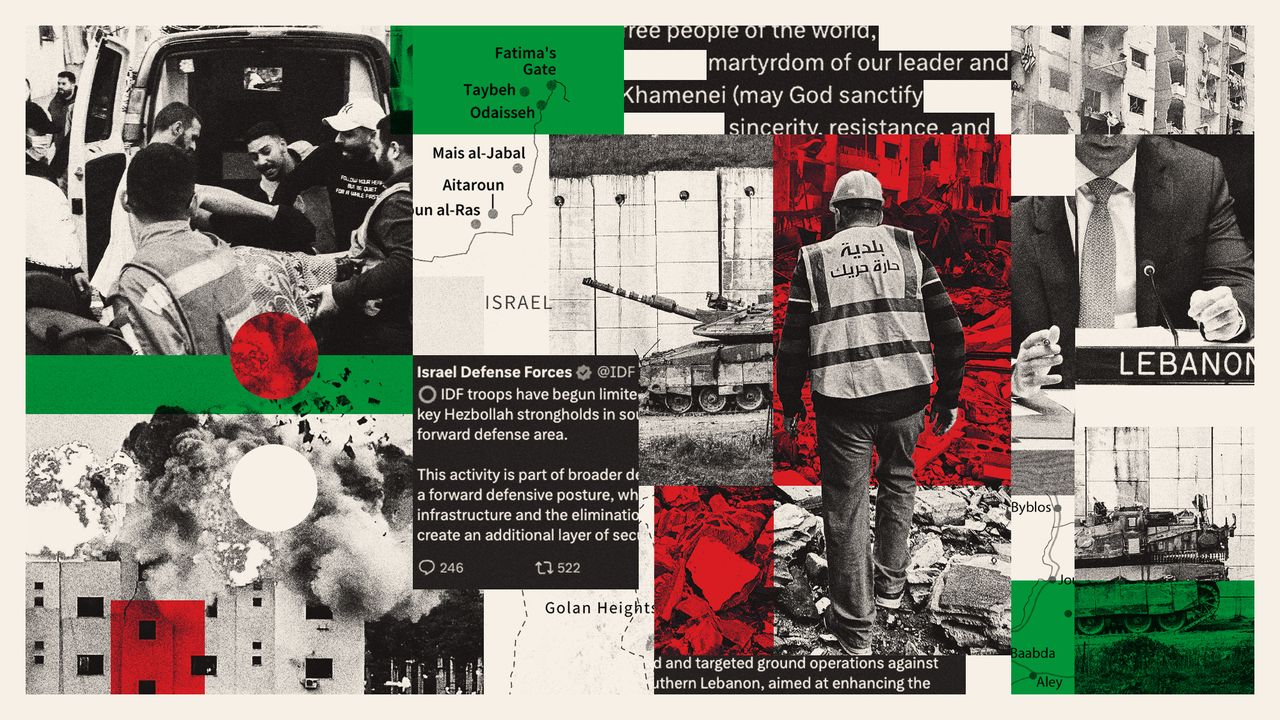
Israel has begun what it calls a “limited and targeted” ground operation in Lebanon, despite warnings from five key Western allies.
As tensions reignited between Tel Aviv and Iran-backed Hezbollah, the leaders of the UK, Canada, France, Germany and Italy said that Israeli troops on the ground “could lead to a protracted conflict” with “devastating humanitarian consequences”. An Israel Defense Forces spokesperson said the operation is designed to establish “forward defence, which includes destroying terrorist infrastructure and eliminating terrorists”.
What did the commentators say?
What is happening in Lebanon is “a war within a war”, said The New York Times’ Christina Goldbaum on “The Daily” podcast. This “second front” is “actually a much bigger war for Lebanon, and feels much more consequential for this country”. Israel is “really seizing on this moment” while all eyes are on Iran, and it’s “feeling emboldened by its partnership” with the US.
The “extended campaign” against Hezbollah is “likely to continue beyond the end of the war against Iran”, said James Shotter in the Financial Times. We are going to see a “major impact on the population” of Lebanon, Michael Young, from the Carnegie Middle East Center, told Time. Between 850,000 and one million civilians have already been displaced in the Hezbollah-controlled south since the latest conflict began. Israel wants to “ensure that that area becomes uninhabitable”.
It is the “price” international communities must pay for their “silence”, said Laure Stephan in Le Monde. Ever since the signing of the “theoretical truce” in late 2024, which didn’t actually stop Israeli attacks, world leaders have been “implicitly accepting the rule of force over international law”. This “lopsided ceasefire”, which “Israel never respected”, is the “root of today’s war”.
The US-backed Lebanese government has made “unprecedented efforts” to uproot Hezbollah but achieved little tangible progress. In fact, “Hezbollah’s refusal to disarm has weakened the authorities”.
What next?
The French government has drafted a proposal to end the conflict in Lebanon. The framework could “de-escalate the war, prevent a prolonged Israeli occupation of southern Lebanon” and “increase international pressure to disarm Hezbollah and open the door to a historic peace deal”, said Barak Ravid on Axios. The Lebanese government has reportedly “accepted the plan as a basis for peace talks”, which are expected to take place in Paris.
|