The Week The Week
flag of US
US
flag of UK
UK
https://cdn.mos.cms.futurecdn.net/flexiimages/jacafc5zvs1692883516.jpg

SUBSCRIBE & SAVE

Less than $3 per week

Sign in
  • View Profile
  • Sign out
  • The Explainer
  • The Week Recommends
  • Newsletters
  • Cartoons
  • From the Magazine
  • The Week Junior
  • Student Offers
  • More
    • Politics
    • World News
    • Business
    • Health
    • Science
    • Food & Drink
    • Travel
    • Culture
    • History
    • Personal Finance
    • Puzzles
    • Photos
    • The Blend
    • All Categories
  • Newsletter sign up Newsletter
  • The Week Evening Review
    A blow to Opec, ‘pop-up’ terror group, and World Cup worries

     
    TODAY’s BIG QUESTION

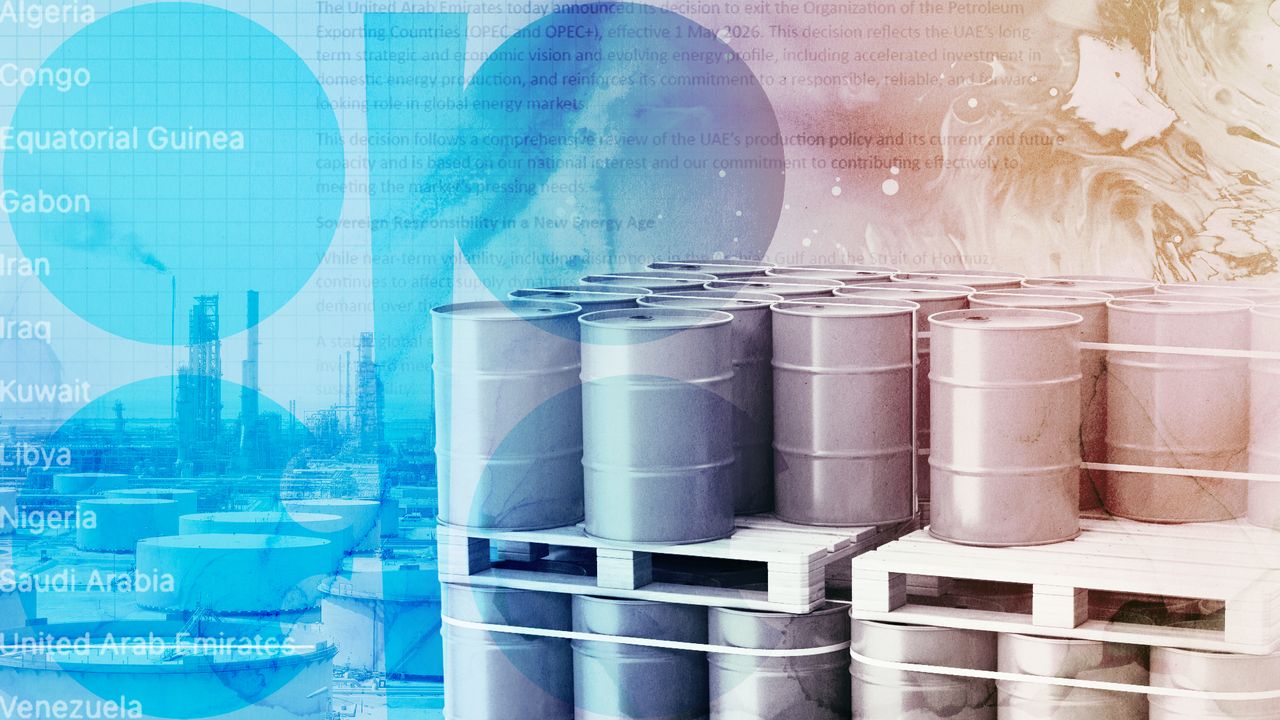
    Is UAE departure the death blow for Opec?

    The UAE has said that its decision to quit the Organisation of the Petroleum Exporting Countries and the broader Opec+ alliance next month reflects its “long-term economic vision” and desire to speed up investment in energy production.

    The UAE has repeatedly been accused of exceeding Opec production quotas. But tensions with Saudi Arabia, Opec’s de facto leader, have been greatly exacerbated by the Iran war, as the UAE criticises its Gulf neighbours over their response to Iranian attacks in the region. 

    What did the commentators say?
    Opec’s ability to influence oil prices will be “clearly weakened” by the departure of its third-biggest oil producer, said former International Energy Agency official Neil Atkinson. The UAE “will attempt to sell as much oil as they can to as many people as possible”, which “will run up against any attempts” by Opec to “keep prices high”.

    Iran’s stranglehold on the Strait of Hormuz is a “further blow to Opec’s ability to control the market”, said the Financial Times. “It completely dilutes Opec’s market power and puts Iran in control of the vast majority of Opec’s exports,” said senior commodities analyst Joel Hancock.

    “Opec has always been a tenuous and fractious alliance”, said Damien Phillips in The Spectator. The cartel is “beset by chronic quota cheating” and “endless disputes over baseline production levels”, which often lead to “full-blown price wars”. The UAE understands that “energy security and abundance” is now a global priority. In a world of “drill, baby, drill”, “price-fixing relics like Opec are being left behind”. Opec members “can see that the end is nigh”.

    What next?
    Kazakhstan and Iraq are the Opec members thought to be most likely to “start creeping toward the door”, said MarketWatch. Both have excess crude-production capacity that could “incentivise them to leave”. And Kazakhstan, like the UAE, has been “chafing” under Opec’s production quotas.

    The UAE is now “splashing cash on production infrastructure”, in a bid to increase production from the current 3.6 million barrels a day to 5 million by 2027, said The Economist. But any increase in exports depends on when the Strait of Hormuz reopens.


    THE EXPLAINER

    Who are HAYI, the Iran-linked ‘pop-up’ terror group?

    A mysterious new pro-Iran terror group has been linked to a series of recent attacks on Jewish communities in the UK and Europe, including yesterday’s stabbing of two Jewish men in London’s Golders Green area.
    The only “catch” with that theory, said CNN, “is that the group may be a mirage”.

    Who are they?
    On 9 March, a group calling itself Harakat Ashab al-Yamin al-Islamia – Arabic for “The Islamic Movement of the Companions of the Right(eous)” – posted on encrypted messaging app Telegram that “military operations” against US and Israeli interests worldwide had begun.

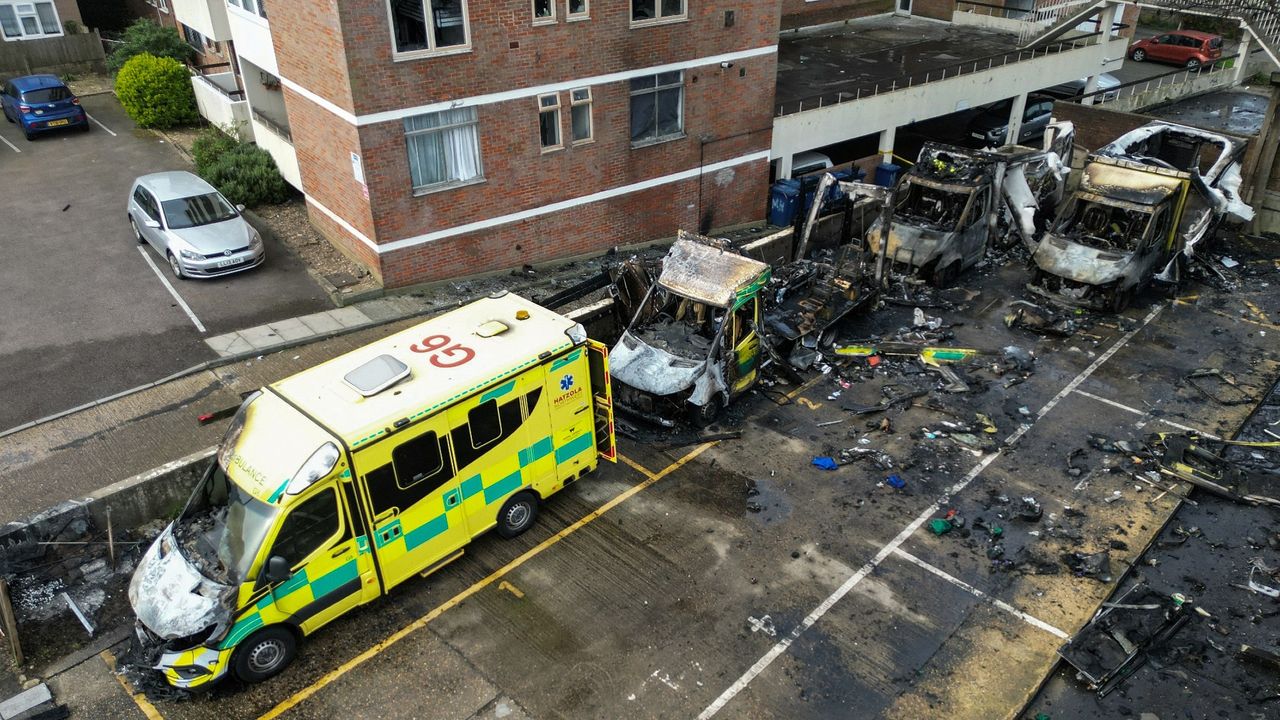
    Two weeks later, a Telegram channel claiming to represent the group made an unsubstantiated claim of responsibility for an arson attack on four Jewish ambulances in Golders Green. It then posted videos of four arson attacks in Belgium, Greece and the Netherlands, and threatened a further attack against the Bank of America building in Paris, before the channel was deleted. 

    Are they real?
    An examination of the group’s digital footprint by the International Centre for Counter-Terrorism found “no known references, neither online nor offline, to HAYI prior to 9 March”.This raises the question “whether HAYI is a genuine terrorist group or merely serves as a facade for Iranian hybrid operations that enable plausible deniability”, the think tank said.

    “This group is an Iranian creation,” Homeland Security Today analyst Phillip Smyth told The i Paper. “The scope of their actions, branding, and Iran’s own messages all demonstrate a clear link.”

    How does that work?
    UK security officials have previously warned of a “rise in ‘gig-economy’ Iranian spies offered cash for operations across Europe”, and have been “actively investigating Iran’s use of social media platforms” to create “sleeper cells with the potential to carry out violent attacks”, said The i Paper.

    The spate of arson attacks since the start of the Iran war, said CNN, are “similar in nature to Russia’s so-called hybrid operations in Europe”, in which people have been recruited online “to carry out sabotage attacks”, often “without full knowledge of who the operations serve”.


    QUOTE OF THE DAY

    “It’s the biggest national emergency since Covid.”

    Jonathan Hall KC, the government-appointed Independent Reviewer of Terrorism Legislation, calls for urgent action by Keir Starmer to tackle the “massive” problem of antisemitism in the UK. It’s “not simply enough to offer thoughts and prayers”, Hall told Times Radio.


    Poll watch

    One in 10 Britons skip meals as a result of the cost-of-living crisis, according to the Which? consumer insight tracker. In the latest monthly survey of 2,000 adults, 85% said they’re worried about food prices, and 43% are buying cheaper products in a bid to stretch household budgets.


    IN THE SPOTLIGHT

    Fifa struggling to generate World Cup demand

    When the 2026 FIFA World Cup kicks off in June, it may be missing something important: fans. Faced with political unrest, high transportation costs and other big problems, host cities across the US fear the predicted economic bump from the tournament will be a bust.

    Football fans flying in from overseas were expected to provide a major cash injection, as they typically “spend four times as much as domestic travellers”, said Forbes. But it’s “unclear if foreign visitors will come in the numbers necessary to drive the promised economic boost”.

    ‘Stress test’
    The 11 US cities hosting World Cup games are dealing with everything from “labour strife and high ticket prices to geopolitical turmoil and culture-war politics fanned by President Donald Trump”, said Politico. The event is turning into a “nationwide stress test for the governmental institutions charged with pulling it off”. Many were hoping the World Cup would provide a “triumphal turn in the international spotlight”. Instead, it’s becoming a “case study in the local hazards of staging a spectacle at a moment of global disruption”.

    The cooling enthusiasm among fans is largely due to “ticket prices, inflation fears and anti-American sentiment”, said the Financial Times. Many hotels are already adjusting their expectations: room rates for game days in “Atlanta, Dallas, Miami, Philadelphia and San Francisco have dropped about a third from their peak earlier this year”.

    ‘Heightened anxiety’
    The White House’s “‘America First’ agenda and rhetoric have also fuelled widespread perceptions that the country is unwelcoming”, said The Athletic. A growing number of would-be international visitors are now rethinking their plans.

    The Trump administration’s immigration agenda has created “heightened anxiety about travel and attendance for both fans and teams”, said Politico. Many are put off by the potential presence of immigration officers in and around stadiums. Trepidation over attending the games in the US “could be sufficient motivation” for global fans to “hold off until 2030, when the tournament will take place in Spain, Portugal and Morocco”, said the Financial Times.


    Good day 🗣️

    … for regional languages, as the BBC prepares to launch a “Learn Cornish” podcast. Hosted by Bude-born Radio 1 DJ Danni Diston and fluent Cornish speaker Sarah Buck, the weekly show, which debuts on BBC Sounds tomorrow, will teach common phrases and explore the history and culture of Cornwall.


    Bad day 💰

    … for budgeting, as US defence sources suggest the cost of the Iran war is almost twice as much as the Pentagon’s latest official estimate of $25 billion. Three sources told CNN that after factoring in replacements for destroyed military assets and repairs to damaged US bases in the Middle East, the total was between $40 billion and $50 billion.


    PICTURE OF THE DAY

    Blind faith

    A man marches off a plinth, his face obscured by a billowing flag, in an artwork confirmed to be the latest Banksy. The sculpture appeared overnight in Westminster’s Waterloo Place, with the elusive artist’s signature inscribed on its base.

    Martin Pope / Getty Images


    Puzzles

    Chain Word

    Try The Week’s new daily word challenge in our puzzles and quizzes section

    Play here


    THE WEEK RECOMMENDS

    The best paddleboarding spots in the UK

    As the weather warms, stretches of water across Britain are attracting people “wielding their paddles like modern-day Argonauts”, said The Economist. Research suggests that 4.5 million Britons have tried stand-up paddleboarding, and people of all abilities now flock to rivers, lakes, canals and the coast to soak up the sun on their boards. As summer approaches, here are some of the best spots to explore by paddleboard.

    Bala Lake, Snowdonia
    Bala Lake, also known as Llyn Tegid, is Wales’ largest natural lake, and “boasts the most inviting, clear water for paddling”, said Portia Jones on Wales Online. There are plenty of opportunities for sailing, canoeing and wild swimming too. Bala Watersports offers paddleboards to rent (you’ll need a permit from the lake warden’s centre). 

    Kingsbridge, Devon
    The five-mile stretch of Salcombe Estuary and its surrounding rivers is “beautiful”, said Abigail Butcher in The Telegraph. Most of the routes are suitable for “complete novices”, while expert paddlers can sign up for the “SUP the Creek” race in October – an annual event that includes a variety of challenges.

    Isle of Wight
    The Isle of Wight has many options for fresh- and salt-water paddling fans, said Lisa Joyner and Rosie Stagg in Country Living. Compton Bay, tucked away on the west coast, is one of the island’s “best-kept secrets”, with its “seaside promenades” and “sandy beaches”. Just along the coast is Freshwater Bay, a “magnet” for paddleboarders that is also popular year round for swimming, walks and boating.


    Statistic of the day

    0: The number of hereditary peers in the House of Lords, for the first time in the chamber’s 700-year history. As the latest parliamentary session came to an end yesterday, Lords Speaker Lord Forsyth of Drumlean paid tribute to the departing hereditary peers, a handful of whom will continue to sit as life peers under the newly reformed system.


    instant opinion

    Today’s best commentary

    We must talk about threats to contain them
    Edward Lucas in The Times
    “Speaking publicly about security goes against the grain” for “spooks”, writes security expert Edward Lucas. But we’re left with a “fragmented” understanding of the state-sponsored threats facing us – from bombings, sabotage and cyberattacks to “influence peddling in universities”. We “feel uneasy”, and “sense that danger is lurking” and that no one “has a grip on it”. Our security agencies need to “initiate an honest national conversation” while ensuring Britain is a “vigilant, determined” country that defends its freedom “fiercely”.

    The magnificence of Melania Trump
    Kara Kennedy in The Telegraph
    “Mrs Trump has been criticised for her preference to stay out of sight and out of mind,” says Kara Kennedy. But “there is a profound dignity in her refusal to play the modern first lady game”. She “goes out to bat for” her husband, but “she doesn’t care whether you like her” or “if you think she’s doing a bad job”. She’s raising “a middle finger to the prying eyes of a public that has never deserved her”.

    Labour is facing wipeout in its final stronghold. Why? It’s housing, housing, housing
    Aditya Chakrabortty in The Guardian
    Polls are predicting Labour’s worst election results “in 50 years” in London, writes Aditya Chakrabortty. The Greens may “win the mayoralities of Lewisham and Hackney”, plus control of “a number of inner-city councils”. To present this “as the work of Magic Zack Polanski” is “to miss a much more interesting truth”: his party’s campaign centres on housing. Labour’s “an easy target” while it bosses “local authorities, City Hall and Westminster, and still claims it can’t do all that much about the housing crisis”.


    word of the day

    Swearing

    A fineable offence in one in five council areas in England and Wales, according to new research by the Campaign for Freedom in Everyday Life. The group is calling for a rollback of “busybody” orders imposed by authorities nationwide that prohibit activities including picking fruit, feeding birds and stroking ponies. 


    Evening Review was written and edited by Rebecca Messina, Jamie Timson, Harriet Marsden, Elliott Goat, Justin Klawans, Will Barker, Irenie Forshaw, David Edwards, Helen Brown and Kari Wilkin, with illustrations from Stephen P. Kelly.

    Image credits, from top: illustration by Stephen P. Kelly / Getty Images / Shutterstock; Henry Nicholls / AFP /Getty Images; illustration by Stephen P. Kelly / Getty Images; Martin Pope / Getty Images; Oli Scarff / AFP / Getty Images

    Morning Report and Evening Review were named Newsletter of the Year at the Publisher Newsletter Awards 2025
     

    Recent editions

    • Evening Review

      FIFA is floundering

    • Morning Report

      The king's speech

    • Evening Review

      Japan pivots from pacifism

    VIEW ALL
    TheWeek
    • About Us
    • Contact Future's experts
    • Terms and Conditions
    • Privacy Policy
    • Cookie Policy
    • Advertise With Us
    • FAQ
    Add as a preferred source on Google Add as a preferred source on Google

    The Week is part of Future US Inc, an international media group and leading digital publisher. Visit our corporate site.

    © Future US, Inc. Full 7th Floor, 130 West 42nd Street, New York, NY 10036.