The Week The Week
flag of US
US
flag of UK
UK
https://cdn.mos.cms.futurecdn.net/flexiimages/jacafc5zvs1692883516.jpg

SUBSCRIBE & SAVE

Less than $3 per week

Sign in
  • View Profile
  • Sign out
  • The Explainer
  • The Week Recommends
  • Newsletters
  • Cartoons
  • From the Magazine
  • The Week Junior
  • Student Offers
  • More
    • Politics
    • World News
    • Business
    • Health
    • Science
    • Food & Drink
    • Travel
    • Culture
    • History
    • Personal Finance
    • Puzzles
    • Photos
    • The Blend
    • All Categories
  • Newsletter sign up Newsletter
  • The Week Evening Review
    Labour’s drubbing, flight price hikes, and tourism on ice

     
    TODAY’S BIG QUESTION

    Love Labour’s lost: where does the party go from here?

    Keir Starmer has declared he is “not going to walk away and plunge the country into chaos”.

    But although votes are still being counted, Labour has lost multiple seats to Reform UK and votes to the Green Party in the local elections. The SNP is likely to be the largest party in Scotland, while Labour has already admitted it is not going to form the next government in Wales. Amid rumours of leadership challenges from former deputy prime minister Angela Rayner, Health Secretary Wes Streeting and Mayor of Greater Manchester Andy Burnham, the results could prove the tipping point for the embattled PM.

    What did the commentators say?
    “Kingmaker” Ed Miliband has reportedly privately suggested to Starmer that he should set out a “timeline for his departure”, said Steven Swinford in The Times. Both Rayner and Streeting are thought to have the support of the 81 Labour MPs needed to “trigger a contest”, while Burnham has also “emerged as the preferred candidate of powerbrokers on Labour’s soft left”.

    Changing party leader may appear an “obvious conclusion”, said Adam Boulton in The i Paper. “Obvious but wrong.” Inexperienced Labour MPs have “supped full on the bloodshed” of five axed Conservative leaders before the 2024 general election. But “such a butcher’s bill did not ultimately improve the Tories’ fortunes”. Labour has a “poor leader”, but without Starmer “things could always get worse”.

    Starmer’s days are “numbered”, said Simon Walters in The Independent. But “how is any replacement going to make things better for Labour?” Starmer is “decent and honest”, and made the right calls over Iran and “standing up to Donald Trump”. Until someone raises “convincing solutions” to current issues, those “indulging in a petty blame game” in Westminster “should be careful what they wish for”.

    What next?
    Those on Labour’s right are “confident” the local election results prove the party must do more to “neutralise” Reform, said Ethan Croft in The New Statesman. Those on the left of the party, however, think losses to the Greens are “precisely the consequence of pursuing that brand of politics”.

    Over the next few days, expect everyone on the Labour left and right to use the results to “validate what they already believed”, and to “argue for policies and strategies they were already advocating for the party’s future”.


    The Explainer

    Why the sun is setting on the cheap flights era

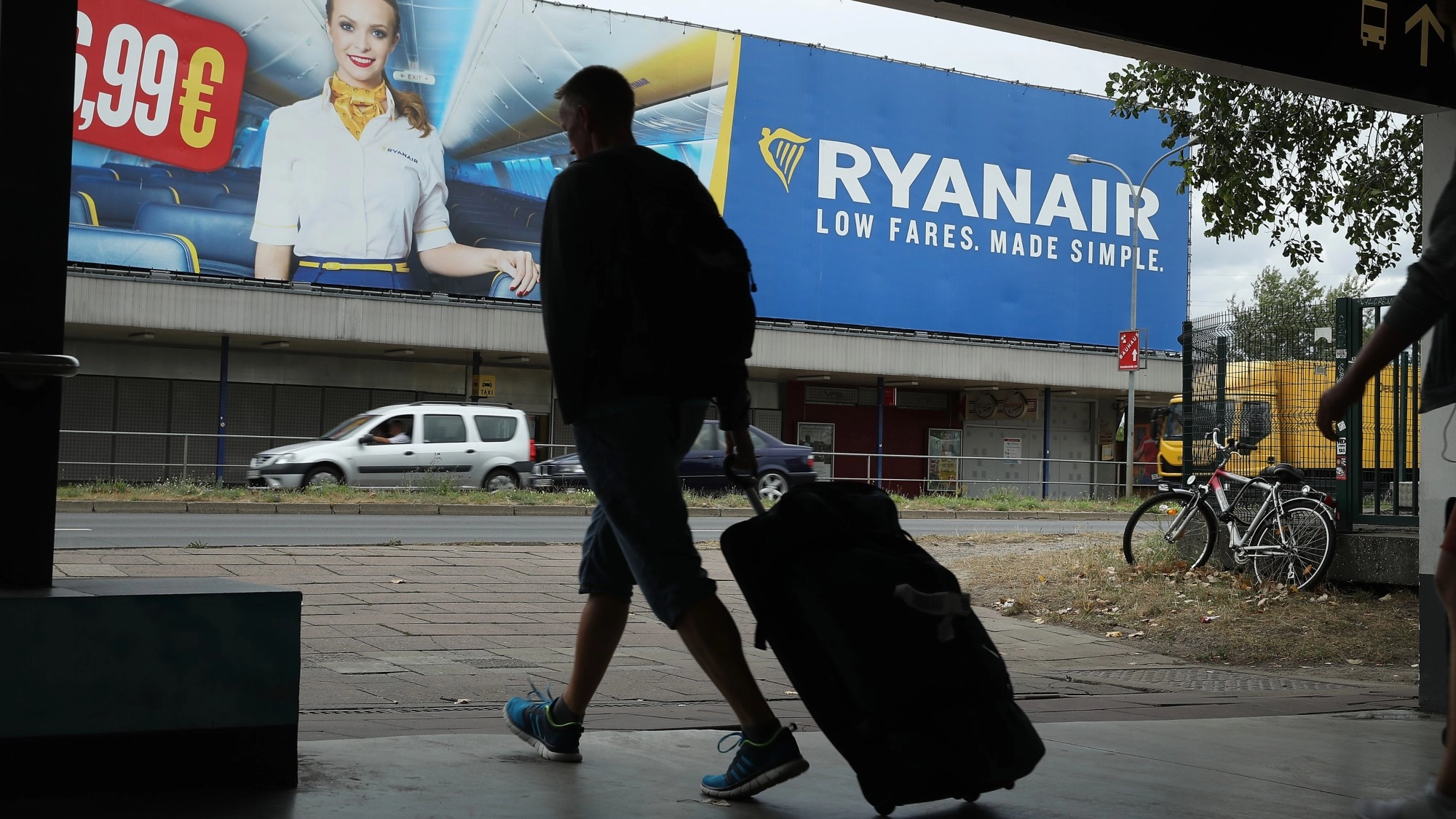
    Airlines cut 13,000 flights globally in May as jet fuel prices soared due to the conflict in the Middle East. These “spiralling” fuel costs could “spell the end of budget flights”, said travel editor Cathy Adams in The Times. Have we seen “the last of the £9.99 flight to Spain”?

    Why are prices up?
    Airfares have risen 24% year on year, according to the consultancy group Teneo. The price of jet fuel, usually the second-largest element of airlines’ costs after crew, has risen about 101% year on year.

    These hikes are passed on to travellers. Prices on some routes, such as London to Hong Kong and Singapore, have tripled since the start of 2026. Carriers including Air France-KLM, Virgin Atlantic and Emirates are all adding fuel surcharges. Other airlines are warning of price rises once their current hedge arrangement – which allows them to buy fuel at a fixed price – expires.

    Are higher prices here to stay?
    For the time being. Even once the Strait of Hormuz is reopened, it will take a “minimum of three months for lower fuel costs to work their way through the supply chain”, Bryan Terry, managing director at Alton Aviation Consultancy, told Adams.

    “Even then, airlines will try to hold higher fares in place as long as they can to recoup the costs and losses they’ve absorbed since the conflict began.” Passengers should “start thinking of elevated airfares as the new normal for the foreseeable future”.

    Aircraft manufacturers like Boeing and Airbus are also struggling with production delays and engine shortages, which means fewer available seats. Major carriers have signed “historic contracts” with pilot unions and ground crews over the past two years; some of the cost of wage increases is passed on to passengers. EU climate laws also mean prices will be 13 to 14 times higher in 2030 than in 2019, claimed Airlines for Europe.

    How can I find cheaper flights?
    In the “near term”, there are “bargains to be had” as airlines “battle to fill their planes” for a summer season during which travellers are “nervous to commit”, said Adams. The “very thin silver lining” is that as airfares go up, the cost of extras such as baggage “typically goes down”. But “book sooner rather than later”.


    Poll watch

    More than half (53%) of women say their pain has been ignored or dismissed by doctors, rising to 74% among Black and Asian women, according to Nurofen’s latest annual Gender Pain Gap report. A OnePoll survey of 5,000 UK adults found that 74% of women who experienced pain dismissal turned to AI chatbots or other unverified sources for health information and advice.


    Statistic of the day

    109,866: The number of deaths that economic inequality adds to Europe’s annual toll of fatalities from extreme heat or cold, according to new estimates. Lowering inequality across the continent to the level of central Switzerland, the least deprived region, would result in up to 59,000 fewer temperature-related deaths, a study in the Nature Health journal found.


    In the Spotlight

    The problem with Antarctic tourism

    The experience of visiting Antarctica is “unique and not replicable anywhere else on the planet”, Claire Christian, from the environmental group Antarctic and Southern Ocean Coalition, told The Associated Press. It makes “a huge impression on people”.

    But the deadly outbreak of hantavirus aboard the MV Hondius cruise ship has highlighted the perils of tourism in Antarctica. Three decades ago, only 8,000 people a year set foot on the icy continent. Last year, that had risen to 80,000, with another 36,000 seeing it from ships docked in the bays. This “unchecked tourism growth” risks “undermining the very environment that draws visitors”, said two academics from the University of Tasmania on The Conversation.

    Irreversible melting
    When the first tourists set foot on Antarctica in January 1966, their mission was to “inspire people to become stewards for the planet, by exposing them to one of its most awe-inspiring places”, said The Independent. But some think the trip, with 57 guests, was a “mistake”.

    Now, “tourism to the bottom of the world is soaring”, said AP, partly driven by fears that the frozen landscapes may be “irreversibly melting away because of climate change”. Between 2002 and 2020, nearly 150 billion tonnes of ice disappeared each year, according to Nasa.

    Visitor numbers are “still small”, but they’re “growing so fast that scientists and environmentalists are sounding alarms”. The University of Tasmania academics estimated that the number could triple or quadruple by 2033.

    ‘Loved to death’
    Experts warn that more visitors will increase the risk of contamination and damage to the continent. Tourists threaten ecosystems by compacting soils, squashing fragile vegetation and introducing non-native microbes and plant species. They can also disturb breeding colonies of birds and seals.

    The answer to Antarctica avoiding being “loved to death” may “lie in economics”, said AP. Some suggest a rule requiring visitors to pay a tourism tax, or a “cap-and-trade system” to limit the number of visitor permits for a fixed period.

    Visitors are currently told to avoid touching the ground with anything but their feet. Some crews and passengers use vacuums, disinfectants and brushes to keep shoes and equipment free of bugs, seeds and microbe-carrying dirt.


    Good day⚽

    … for English footballers, with Premier League clubs reaching the men’s final of all three major European competitions in the same season for the first time. Following Arsenal’s progression to the Champions League final by beating Atlético Madrid on Tuesday, Aston Villa last night overturned a one-goal deficit with a 4-0 victory over Nottingham Forest to secure a spot in the Europa League final, while Crystal Palace beat Shakhtar Donetsk to reach the Conference League final.


    Bad day 🕺

    … for American partygoers, after a Mexico City nightclub went viral for upping its cover charge to $300 for US citizens, while Latin Americans get in for $14 and everyone else pays $20. “This is a response to a year of insults directed at us – as a country – by the United States,” said Federico Crespo, owner of the confusingly named Japan nightclub, in a post on Instagram.


    picture of the day

    Back to nature

    Costumed locals join in the Hal-an-Tow pageant to celebrate Flora Day in the Cornish town of Helston. The annual festival marks the arrival of spring and is one of the UK’s oldest surviving customs, dating back to medieval times.

    Jory Mundy / Getty Images


    PUZZLES AND QUIZZES

    Quiz of The Week

    Have you been paying attention to The Week’s news? Try our weekly quiz, part of our puzzles section, which also includes sudoku and crosswords 

    Play here


    THE WEEK RECOMMENDS

    Properties of the week: remarkable conversions

    London: Lothbury, City of London EC2
    A flat in this spectacular Grade II* Venetian gothic revival former bank, designed by George Somers Clarke in the 1860s. Located opposite the Bank of England, it features the original wooden panelling in the living room. 1 bed, family bath, kitchen, recep. £835,000; Frank Harris

    Isle of Wight: Golden Hill Fort, Freshwater
    An impressive terraced house set within a distinctive hexagonal Grade I former Victorian fortress. 3 beds, 2 baths, kitchen/dining room, recep, roof garden, parking. £275,000; Spence Willard

    Gwynedd: Bryn Canaid, Uwchmynydd
    A charming longhouse, with a crogloft, beautifully renovated and extended. Located in an Area of Outstanding Natural Beauty close to Mynydd Mawr. 2 beds, family bath, kitchen/dining room, recep, garden, parking. £475,000; Inigo

    Suffolk: Wiston Mill, Nayland
    A fine converted 18th-19th-century water mill on the River Stour, with many original workings still present. 6 beds, 3 baths, kitchen, 4 receps, 2-bed cottage, outbuildings, garden, parking; 24 acres. £1.95m; David Burr

    See more


    QUOTE OF THE DAY

    “He is an institutional pillar as essential to the national fabric as a cup of tea.”

    Prince Harry pays tribute to David Attenborough, who turns 100 today. The veteran naturalist shows us “the world through a uniquely spectacular lens”, the Duke of Sussex wrote for Time magazine, but “Attenborough is more than a broadcaster; he is a secular saint”.


    instant opinion

    Today’s best commentary

    How to Feel About Hantavirus
    Caitlin Rivers in The New York Times
    Despite “unsettling parallels to the early days of Covid-19”, the risks from the hantavirus outbreak “are quite different”, writes epidemiologist Caitlin Rivers. Person-to-person transmission of this virus requires “sustained exposure”, so an epidemic is “unlikely”. But “viruses are wily”, and an infection “in someone with no obvious connection to the MV Hondius” cruise ship would be “concerning”. Viral evolution and a new strain would be “another wild card”. These “scenarios” are “remote”, but “the public should expect clear communication” and “transparency”.

    Reversing Brexit is the next big political fight
    Hugo Gye in The i Paper
    “Britain’s politicians have long been scared of Brexit”, even though public support for rejoining the EU is high, writes Hugo Gye. “For Labour to go into the next election with a strident pro-EU position would neatly highlight the contrast” between it and Reform UK. But the “EU of 2016 is gone” and “negotiations to re-enter would be prolonged and potentially bitter”. For Keir Starmer to “embrace a full reversal of Brexit” could look “dangerously retrograde”.

    Drill baby brill: Why the UK must develop its North Sea oil fields
    Brandon Lewis in City A.M.
    “Moments of crisis have a clarifying power”, writes Brandon Lewis, and the war in Iran has exposed Britain’s “fundamental vulnerability” around energy. This country is “far too dependent on a volatile international market”. The “pragmatic and obvious solution” is the North Sea, which “holds proven reserves of billions of barrels of oil and gas, just waiting to be extracted”. The government prefers “green solutions” for “our energy future”, but “the two do not have to be mutually exclusive”.


    word of the day

    Dai

    An Italian interjection meaning “come on!” or “let’s go!” After scoring a hit with the 2010 Fifa World Cup anthem “Waka Waka (This Time for Africa)”, Colombian singer Shakira looks set for another win with “Dai Dai”, the official track for this summer’s men’s tournament. A teaser clip posted on her Instagram yesterday has netted more than two million likes, ahead of the song’s release next Thursday.


     Evening Review was written and edited by Harriet Marsden, Jamie Timson, Irenie Forshaw, Rebecca Messina, Chas Newkey-Burden, Will Barker, Natalie Holmes, David Edwards and Kari Wilkin, with illustrations by Stephen P. Kelly.

    Image credits, from top: Carl Court / Getty Images; Sean Gallup / Getty Images; Illustration by Stephen P. Kelly / Getty Images; Jory Mundy / Getty Images; David Burr; Inigo; Spence Willard; Frank Harris

    Morning Report and Evening Review were named Newsletter of the Year at the Publisher Newsletter Awards 2025
     

    Recent editions

    • Evening Review

      Rising U.S.-Canada tensions

    • Morning Report

      Mixed signals on Iran peace proposal

    • Evening Review

      Could hantavirus be a threat?

    VIEW ALL
    TheWeek
    • About Us
    • Contact Future's experts
    • Terms and Conditions
    • Privacy Policy
    • Cookie Policy
    • Advertise With Us
    • FAQ
    Add as a preferred source on Google Add as a preferred source on Google

    The Week is part of Future US Inc, an international media group and leading digital publisher. Visit our corporate site.

    © Future US, Inc. Full 7th Floor, 130 West 42nd Street, New York, NY 10036.