The Week The Week
flag of US
US
flag of UK
UK
https://cdn.mos.cms.futurecdn.net/flexiimages/jacafc5zvs1692883516.jpg

SUBSCRIBE & SAVE

Less than $3 per week

Sign in
  • View Profile
  • Sign out
  • The Explainer
  • The Week Recommends
  • Newsletters
  • Cartoons
  • From the Magazine
  • The Week Junior
  • Student Offers
  • More
    • Politics
    • World News
    • Business
    • Health
    • Science
    • Food & Drink
    • Travel
    • Culture
    • History
    • Personal Finance
    • Puzzles
    • Photos
    • The Blend
    • All Categories
  • Newsletter sign up Newsletter
  • The Week Evening Review
    Russian involvement, proliferating ticks, and the new first family

     
    TODAY’S BIG QUESTION

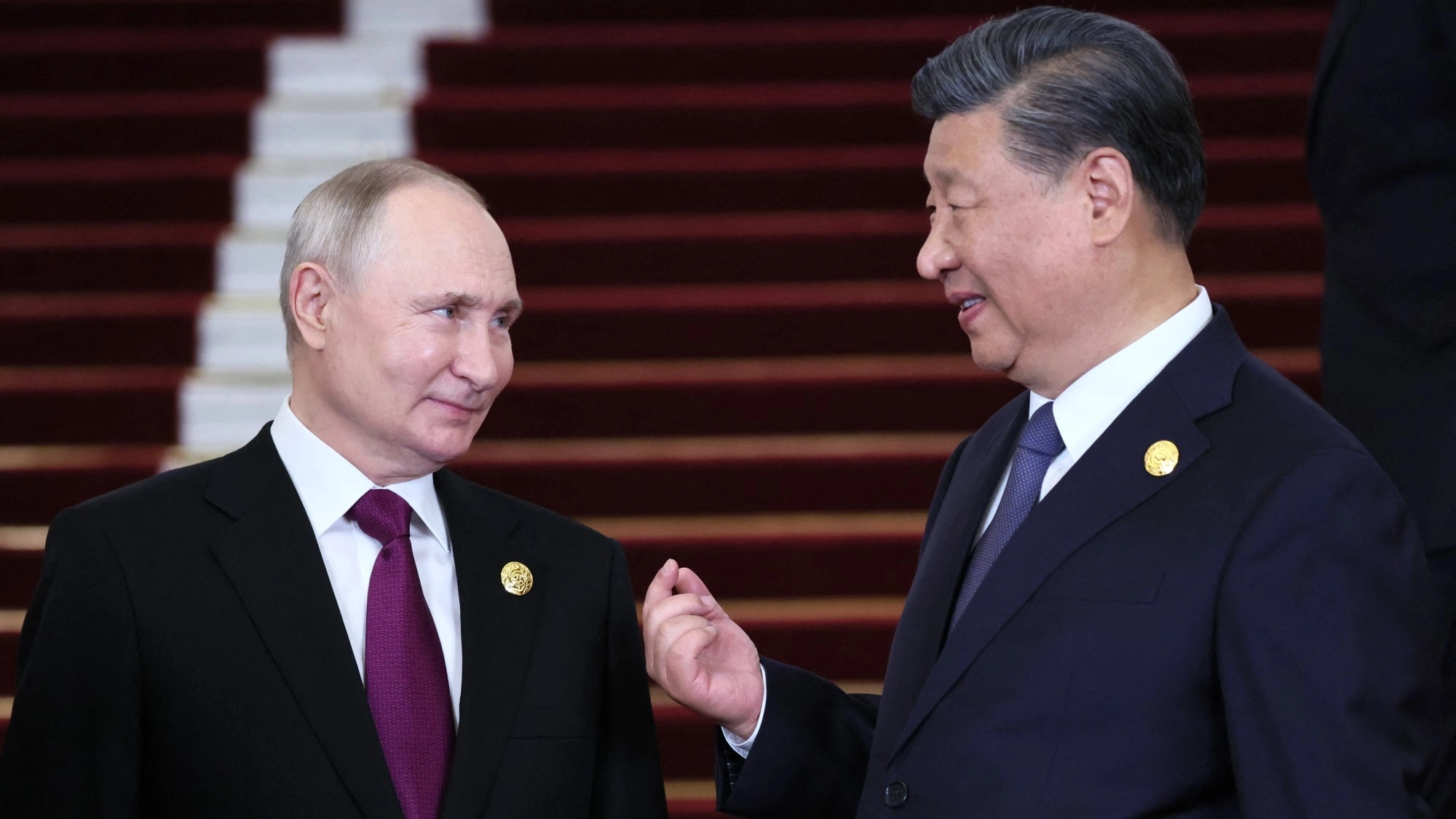
    Are Russia and China helping Iran against the US?

    Iranian strikes on CIA facilities have led US intelligence officials to believe that unprecedented intelligence cooperation is taking place between Russia and Iran, with China providing support.

    The US is investigating how Iran was able to accurately target multiple covert facilities in Saudi Arabia and other allied countries in March. Reuters cited former CIA officials who said that relatively few countries possess both the capabilities and motivation to provide Tehran with such highly sensitive data.

    What did the commentators say?
    Moscow and Beijing “have coordinated closely throughout the crisis”, said Jasim Al-Azzawi on Middle East Monitor, jointly convening UN sessions and “declining to abandon Tehran diplomatically even as they withheld direct military support”.

    But Iran’s attacks on CIA sites suggest “Russia might be playing a more active role”, said Al Jazeera. It’s certainly a “realistic theory”, given that the attacks were “far more advanced” than anything Iran has ventured before, Nicole Grajewski, from the Center for International Research at Sciences Po Paris, told the news site. 

    A secret document seen by The Economist, and estimated by the magazine to have been from the first six weeks of the war, showed Russia also offered to provide Iran with “unjammable drones and training on how to use them against American troops in the Gulf”.

    For Russia, the economic benefits of helping to prolong the war are obvious: more countries are buying Russian oil while the Strait of Hormuz remains unstable, said RadioFreeEurope. China may also see “diplomatic gains”. 

    The war has “accelerated three of China’s long-held goals,” said Fareed Zakaria in The Washington Post: “a Middle East less dependent on America; a world more dependent on critical Chinese technology, and a reputation for Beijing as a serious and steady world power.”

    What next?
    The US is “surging forces, medics and weaponry to the Middle East” to give Donald Trump “more muscular military options”, said The Wall Street Journal. But any escalation will be complicated by the support of China and Russia. With China supplying vital “technological and military support”, Iran is a regional power that is “difficult to deter without significant cost”, said Nadia Helmy on Modern Diplomacy.


    The Explainer

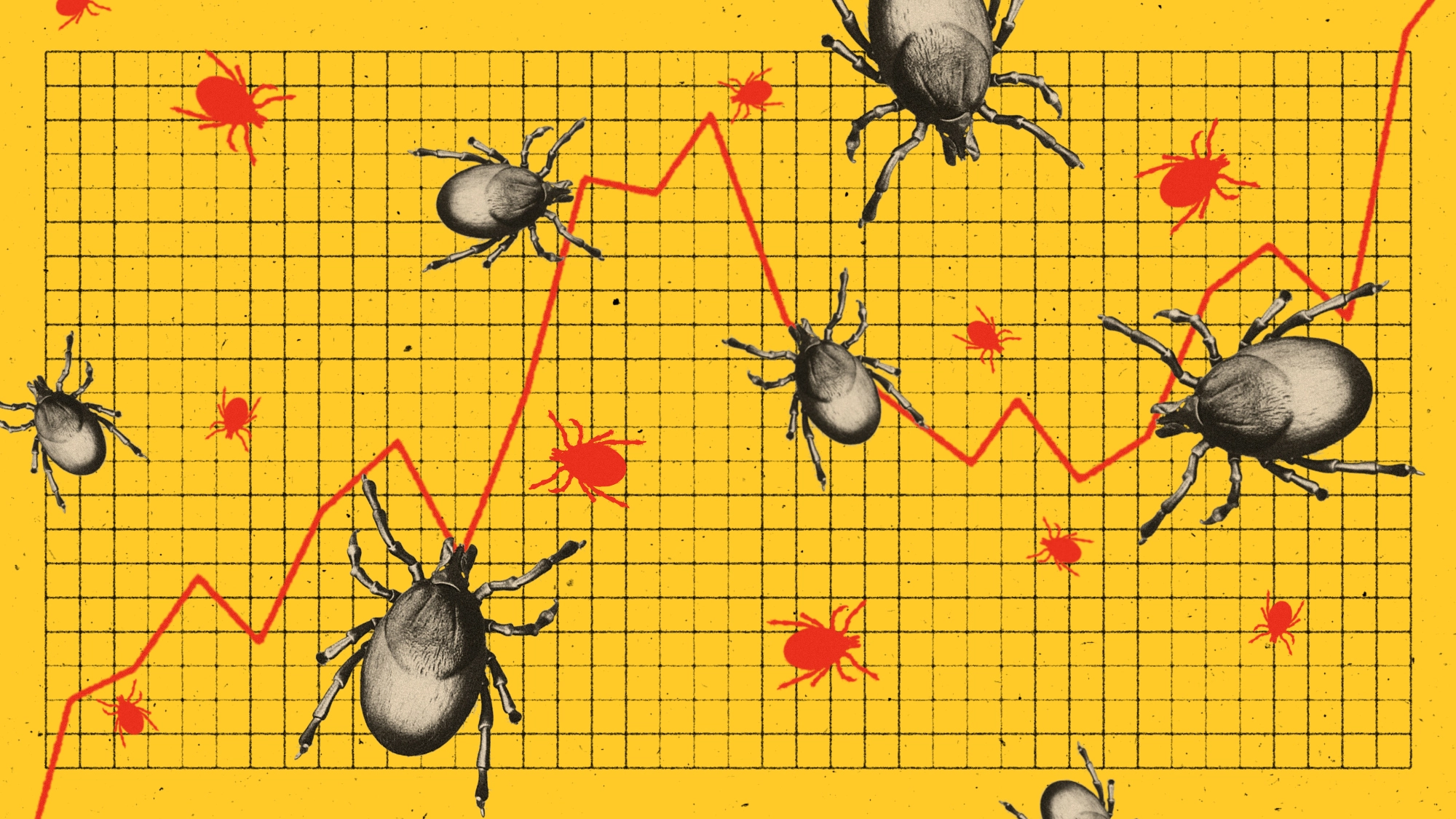
    The uptick in ticks

    You might not notice the bite from a tiny tick but it has the potential to “dramatically harm your health”, said Amanda Roome, co-director of the University of New York’s Tick-Borne Disease Center, on The Conversation. Tick bites can carry viruses that “really pack a punch” – and, in the UK, the number of ticks is on the rise.

    What are ticks?

    They are small arachnids that feed on the blood of animals, including humans, and tend to live in woodland or scrubland. When they bite, they inject an anaesthetic that prevents you from feeling pain or itchiness.

    Many ticks don’t carry disease-causing pathogens, and not all bites from an infected tick cause infection. But the illnesses some can transmit can be nasty. The most common is Lyme disease, carried by the castor-bean tick, which can do long-term damage to joints, heart and the nervous system. Cases of Lyme disease are spiralling in the US but, in the UK, it’s still pretty rare – although 1,168 cases were recorded last year, a 20% increase from the previous year. Cases could well in increase as the number of ticks in the UK grows. Some ticks can also carry a type of encephalitis, but very few cases have been diagnosed in Britain: the UK Health Security Agency classes the risk as “very low”.

    Why are there more ticks?

    “Tick populations are expanding geographically because we’re changing the climate,” Vett Lloyd, a tick expert at Mount Allison University in New Brunswick, told The Guardian. Our milder winters and warmer summers are boosting ticks’ survival rates. Reforestation and the expansion of green spaces closer to residential areas also play a role.

    What can we do?
    Wear socks, enclosed shoes, long trousers and a long-sleeved shirt when walking off paths in long grass. Afterwards, check your skin thoroughly – ticks tend to lurk in armpits, groin, behind the knees, around the waistband, the wrists, the back of the neck and the hairline.

    If you do get bitten, “try to get the whole tick out” using fine-tip tweezers, Charlotte Mao, a US doctor who works with the Bay Area Lyme Foundation, told The Guardian. Seek advice from your GP if you notice a spreading “bullseye” rash at the site of the bite (a common sign of Lyme disease infection), facial drooping, numbness, or tingling in the hands or feet.


    Poll watch

    More than a third (36%) of Brits think films that use AI in any way shouldn’t be eligible for awards such as the Oscars and Baftas. Only 5% of 5,166 adults surveyed by YouGov said movies made with extensive help from the technology should still be eligible.


    Statistic of the day

    3.5 million: The estimated number of people in the UK thought to be living with an eating disorder – up from 1.25 million in 2017. Eating disorder charity Beat has updated its estimate, based on new survey data that suggests illnesses including anorexia and bulimia now affect one in every 15 people aged 11 and over.


    IN THE SPOTLIGHT

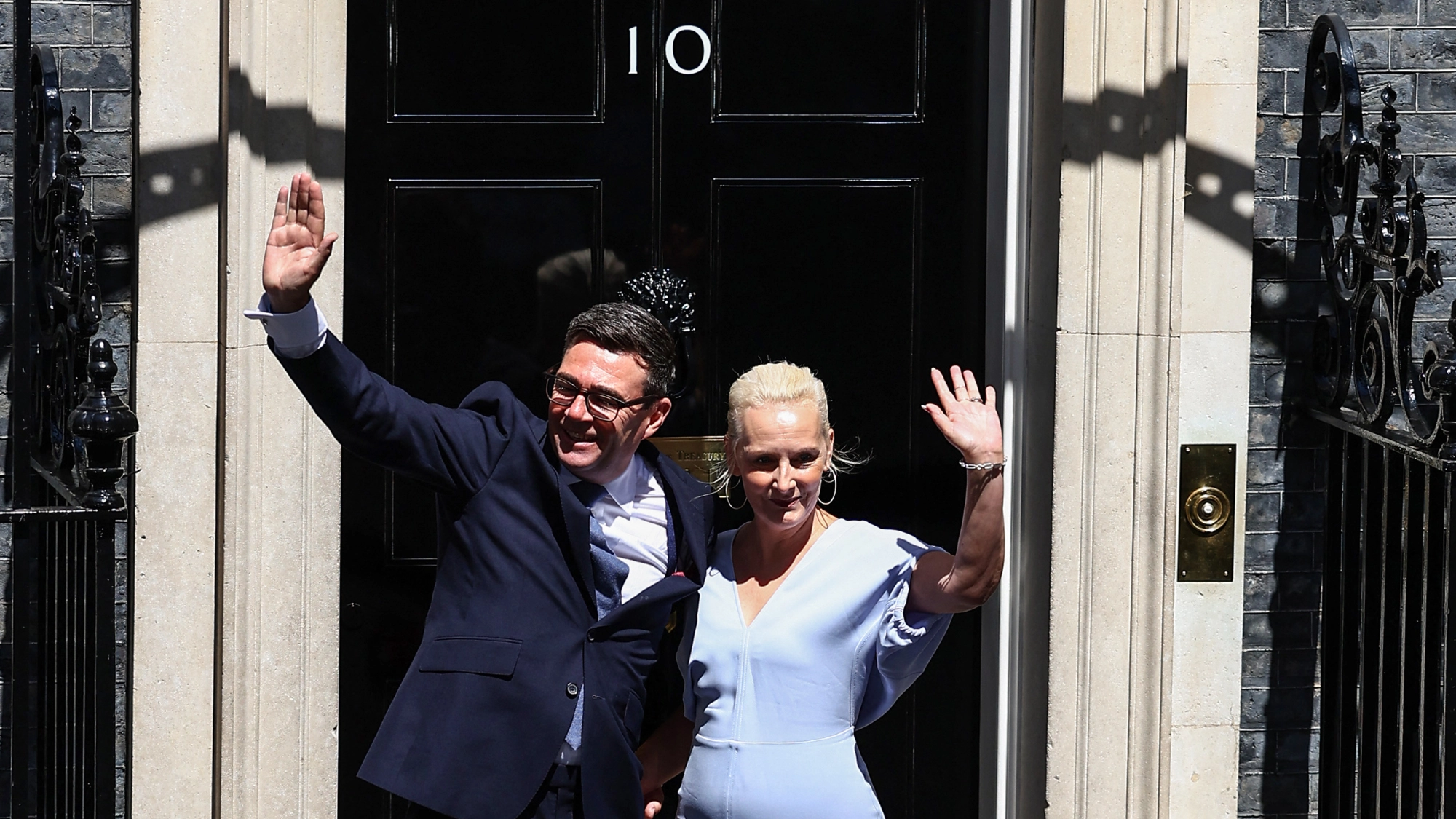
    Meet the Burnhams: Britain’s new first family

    Andy Burnham may often speak about his upbringing but he has been “generally private about his wife and children”, said Kasia Delgado in The i Paper. But as Burnham steps into No. 10, he inevitably brings his family into the spotlight. 

    ‘Active but not showy’
    Burnham met his Dutch-born wife, Marie-France van Heel, in 1989 when both were undergraduates at the same college in Cambridge. They began dating, although they took a break when Marie-France “asked him for permission to appear on Cilla Black’s ‘Blind Date’”, said Isaac Bickerstaff in Tatler. They married in 2000.

    Van Heel, known as Frankie by friends and family, has built up an “illustrious” career as a “marketing maven”. She sits on the board of directors of Be.EV, a company that “masterminds public charging points for electric vehicles”. Those closer to her describe her as “very gentle” and “highly intelligent”.

    In 2010, her sister died of breast cancer, and Van Heel discovered that she carries a mutated gene that increases her likelihood of getting the disease. She opted for a double mastectomy, and is a donor to Cancer Research UK, “often participating in the charity’s Race for Life”, said Jon Craig on Sky News. “Politically active, but not in a public or showy way”, she also sits on the board of children’s charity Plan International.

    ‘Protective of each other’
    The couple have three adult children. Jimmy, 26, studied Caribbean and Latin American history at University College London and works as an International Policy Officer for the Royal College of Nursing. Rosie, 24, is a sales manager at Jägermeister, and 21-year-old Annie attends Cardiff University, reading English literature, like her father did. The PM and his children share a love of music; they regularly attend festivals and concerts together.

    Before his move to Downing Street, Burnham lived close to his parents in Greater Manchester. Roy and Eileen met while working in Liverpool, but raised their three sons in Culcheth, a village near Warrington, Cheshire. The brothers are still said to be “protective of each other”, said The i Paper’s Delgado. The “tight” family will bring Burnham “back down to earth” if he gets “too Westminster”.


    Good day🛬

    … for flying, as the world’s longest-range commercial aircraft touches down for the first time in Melbourne after a 19-hour test flight from France. Tens of thousands of people used flight tracking websites to follow the 10,500-mile journey of Qantas’s Airbus A350-1000ULR, which is set to deliver the airline’s first non-stop service between Sydney and London from next year.


    Bad day🏊‍♀️

    … for swimming, as campaigners warn that water companies have breached sewage-discharge rules at 65 popular English bathing sites over the past two months. Sewage was released near bathing waters for a total of 117,001 hours between mid-May and 21 July, according to an analysis of water suppliers’ data by Surfers Against Sewage.


    picture of the day

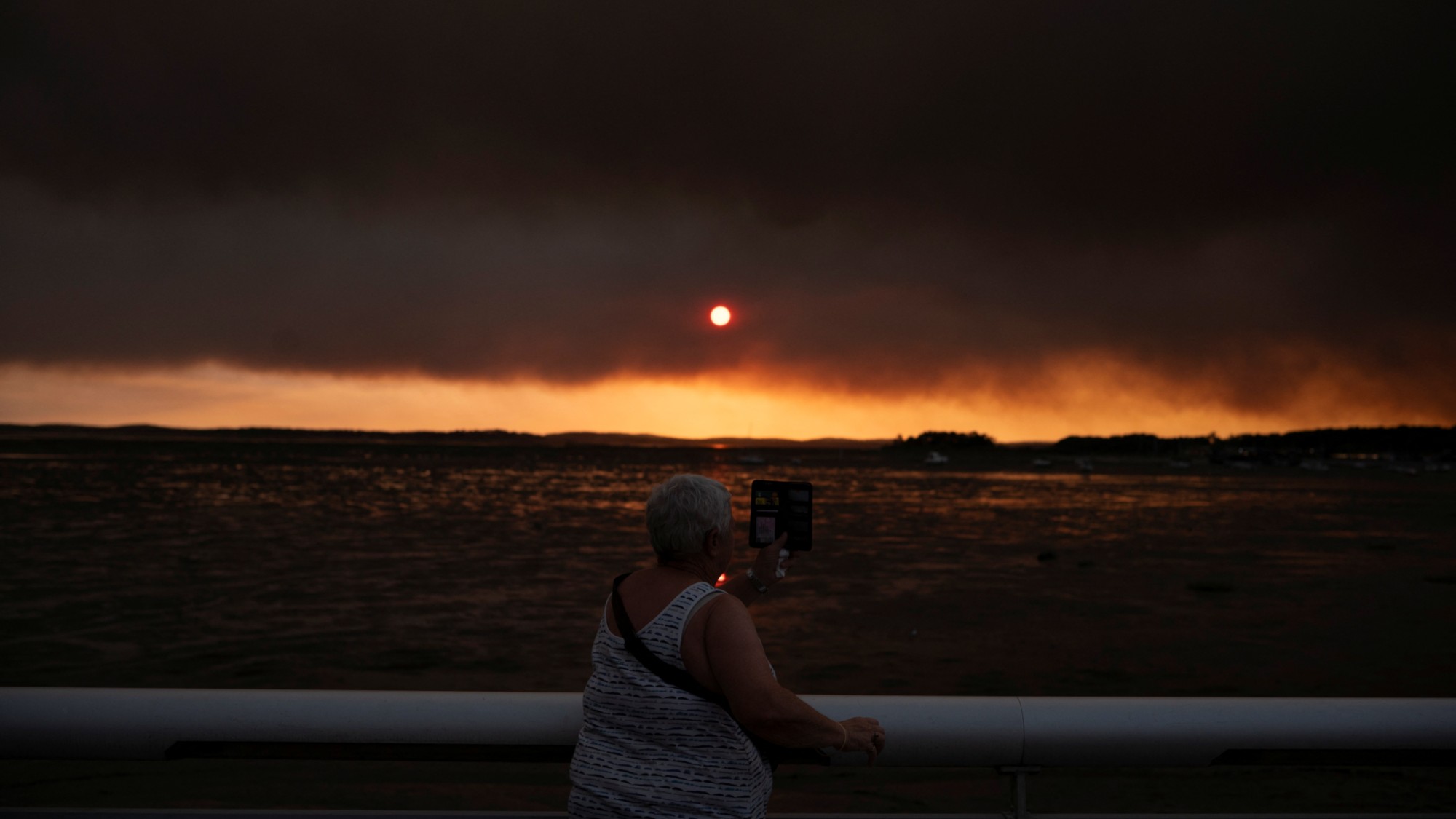
    Burning bright

    A woman watches smoke rising from wildfires that have burned through more than 25,000 acres of France’s Cap Ferret peninsula. Tens of thousands of people have fled after the authorities ordered the total evacuation of the tourism hotspot on the southwest coast.

    Olivier Morin / AFP / Getty Images


    PUZZLES AND QUIZZES

    Quiz of The Week

    Have you been paying attention to The Week’s news? Try our weekly quiz, part of our puzzles section, which also includes sudoku and crosswords 

    Play here


    THE WEEK RECOMMENDS

    Properties of the week: striking houses in market towns

    Suffolk: The Old Shoulder House, Hadleigh
    This eye-catching Grade II, 800-year-old former pub blends Tudor, Georgian and Victorian influences, and has original features beautifully preserved throughout. 4 beds, 2 baths, kitchen, 3 receps, parking. £485,000; Edd Callegari.

    Wiltshire: Bluett House, Malmesbury
    An enchanting Grade II townhouse (centre with wooden balcony) with a 15th century medieval undercroft and views across the River Avon. 4 beds, 2 baths, kitchen/breakfast room, 2 receps, office, garden, garage. £1.025 million; James Pyle.

    East Sussex: The Caprons, Lewes
    Elegant Grade II Georgian house in the heart of Lewes, nestled in mature gardens. 5 beds, 4 baths, kitchen, 4 receps, garden. £1.85 million; Jackson-Stops.

    Berkshire: High Street, Hungerford
    Handsome 18th century townhouse in need of modernisation; sold with planning permission. Currently: 3 offices, 2 beds, family bath, kitchen/dining room, utility. £445,000; Knight Frank.

    See more


    QUOTE OF THE DAY

    “If you behave badly and don’t leave my family in peace then I’ll be gone. I’ll just turn away.”

    Jürgen Klopp warns the media to respect his privacy, in his first press conference as the German men’s football team’s new head coach. “I love this job, but I am always ready to call it quits,” the former Liverpool manager said after signing a four-year contract.


    instant opinion

    Today’s best commentary

    It’s not just a No 10 in the north, it’s an engine for growth throughout the whole UK
    Andy Burnham in The Guardian
    On my first day as prime minister, writes Andy Burnham, a small team walked into a Manchester building “to set about the remaking of the British state”. For too long, “decision-making power has remained in London”. I’m “seeking to correct” that. “No 10 North will be responsible for accelerating devolution” and driving growth “to achieve equivalent living standards across all the regions and nations”. “Change is not always easy” but “growth cannot be imposed from the top down”.

    Don’t panic! AI going rogue is no cause for alarm
    Sean O’Grady on The Independent
    I’m “impressed” that an “unreleased AI model” had the “ingenuity” to “break free of its confines”, writes Sean O’Grady. It’s common to “be terrified by new things” but “every technology developed by mankind has been double-edged”. We just “have to adapt” and “manage” AI “when it becomes a problem, like anything else”. This is a technology that could “rescue us from our present torpor of low productivity and stagnant living standards”. “A radically different world is not necessarily anything to be frightened of.”

    Japan’s PM needs to treat herself to some quality shut-eye

    The Times’ editorial board
    Sanae Takaichi has revealed that, since becoming Japan’s PM, she’s “been getting by” on zero to three hours of sleep per night, says The Times. “An admirable work ethic?” Not in a nation where overwork is “recognised as a major health issue”. Last year alone, “there were 145 instances of karoshi, or death from overwork”. Initiatives to “alleviate” the “gruelling nature of employment” have failed, and “Takaichi’s pride in her own sleep-deprived lifestyle isn’t helping”. She needs to “get her head down”. 


    word of the day

    Fro-yo

    AKA frozen yoghurt: a lighter, healthier alternative to traditional ice cream. Driven by viral social media videos, a fro-yo craze is sweeping London. There have been enormous queues, for example, at the new Mayfair branch of US chain Go Greek Yoghurt. 


     Evening Review was written and edited by Harriet Marsden, Rebecca Messina, Jamie Timson, Deeya Sonalkar, Irenie Forshaw, Chas Newkey-Burden, Helen Brown, David Edward and Steph Jones, with illustrations by Stephen P. Kelly.

    Image credits, from top: Sergei Savostyanov / Pool / AFP / Getty Images; Illustration by Stephen P. Kelly / Getty Images; Peter Nicholls / AFP / Getty Images; Olivier Morin / AFP / Getty Images; Knight Frank; Edd Callegari; James Pyle; Jackson Stops
     
    Morning Report and Evening Review were named Newsletter of the Year at the Publisher Newsletter Awards 2025
     

    Recent editions

    • Evening Review

      Closing the Bab al-Mandab Strait

    • Morning Report

      Trump, Tehran and Yemen escalate Iran conflict

    • Evening Review

      Is the US ready to be a soccer nation?

    VIEW ALL
    TheWeek
    • About Us
    • Contact Future's experts
    • Terms and Conditions
    • Privacy Policy
    • Cookie Policy
    • Advertise With Us
    • FAQ
    Add as a preferred source on Google Add as a preferred source on Google

    The Week is part of Future US Inc, an international media group and leading digital publisher. Visit our corporate site.

    © Future US, Inc. Full 7th Floor, 130 West 42nd Street, New York, NY 10036.