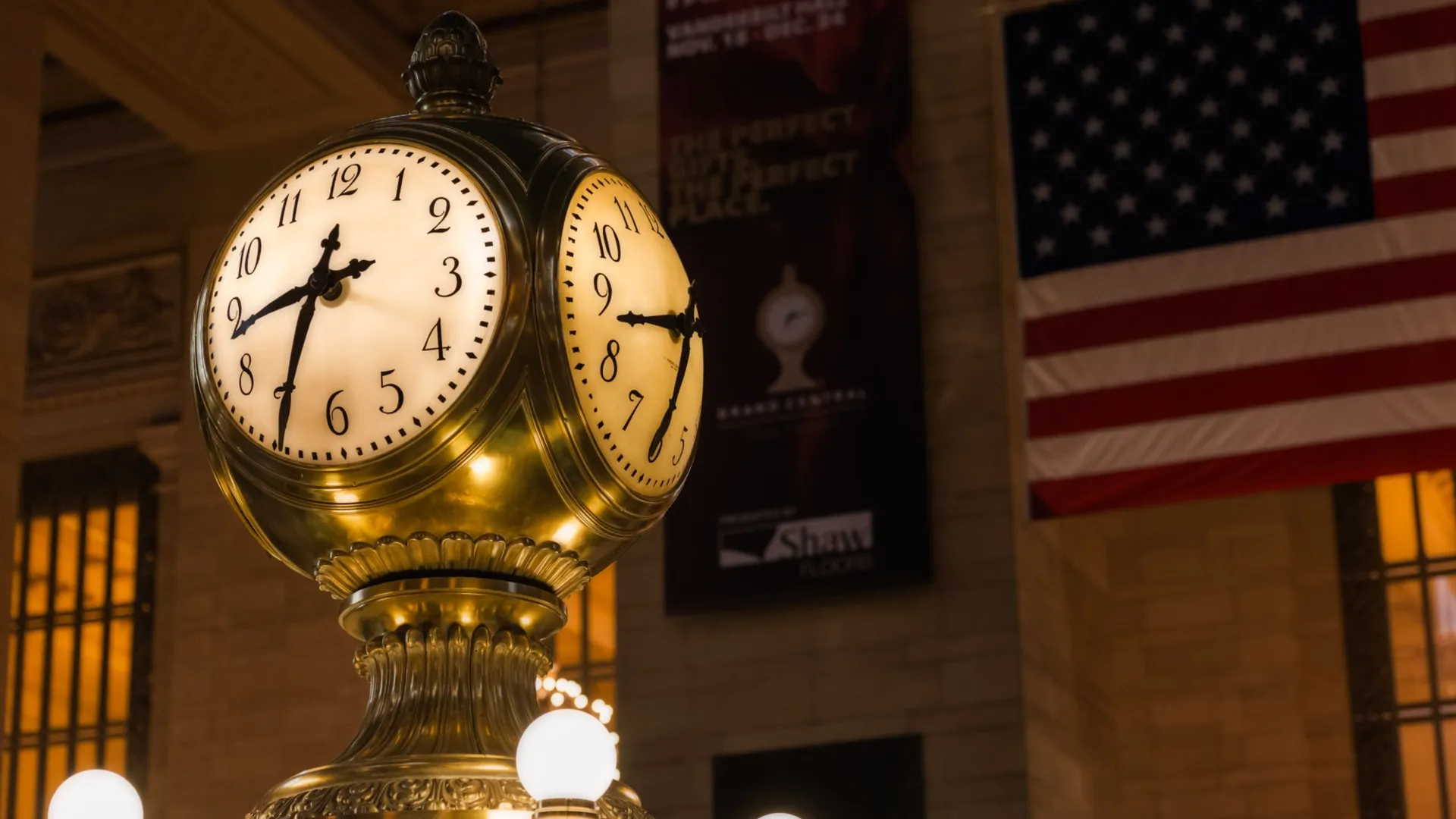
Spring forward, fall back — that old rule of thumb for resetting clocks at the start and end of daylight saving time may soon be a relic of the past, as the House of Representatives last week overwhelmingly supported a bill to make the time change permanent. And President Donald Trump has expressed his support. After all, people like later sunlight hours. But keeping the clock on summer hours could have negative ramifications.
‘Hidden consequences’
Americans are “tired of the biannual time change,” and making daylight saving time permanent is a “commonsense reform that will improve everyday life for millions,” bill sponsor Rep. Vern Buchanan (R-Fla.) said in a statement, per The Hill. But there would be “hidden consequences” to year-round daylight saving, said Axios. Under the reset, the sun “won't rise until 8 a.m. or 9 a.m. in the winter,” leaving “millions of children” and commuters to start their days “in the dark.”
There would probably be health consequences also. Morning sunlight is “key to maintaining our circadian rhythms” and “overall health,” said The Washington Post. “Circadian misalignment” can cause lost sleep, which in turn is connected to “obesity, Type 2 diabetes, cardiovascular disease, mood disorders” and other health challenges. Americans would be “misaligned all year long,” said Beth Malow, of Vanderbilt University, to the outlet.
The change would disrupt the daily prayer practices of Orthodox Jews, said NPR. Some prayers can “only be said communally” and are often performed “every morning before heading out for work or school.” Some Muslim “prayers and religious observances” would also be affected, said Axios.
Airlines “could take up to two years” to adjust their “complex scheduling” to permanent daylight saving, said CBS News. Trucking and railroad companies that are “also timetable dependent” would face challenges as well.
A healthier alternative
Congress authorized permanent daylight saving in 1973 to save energy during the oil crisis. The project was “abandoned prematurely” amid concerns about “children and criticisms from the construction and agricultural industries,” said The Independent.
Permanent standard time might be a healthier alternative, said Yahoo News. Stanford University researchers determined that sticking to the regular clock all year would result in “300,000 fewer strokes and 2.6 million fewer people with obesity.” People need “more morning light and less evening light” to have a balanced day, said Jamie Zeitzer, of Stanford University, to the outlet. |