The Week The Week
flag of US
US
flag of UK
UK
https://cdn.mos.cms.futurecdn.net/flexiimages/jacafc5zvs1692883516.jpg

SUBSCRIBE & SAVE

Less than $3 per week

Sign in
  • View Profile
  • Sign out
  • The Explainer
  • The Week Recommends
  • Newsletters
  • Cartoons
  • From the Magazine
  • The Week Junior
  • Student Offers
  • More
    • Politics
    • World News
    • Business
    • Health
    • Science
    • Food & Drink
    • Travel
    • Culture
    • History
    • Personal Finance
    • Puzzles
    • Photos
    • The Blend
    • All Categories
  • Newsletter sign up Newsletter
  • The Week Evening Review
    Farage’s ploy, a British-Caribbean carnival, and Iranians under fire

     
    TODAY’S BIG QUESTION

    Was Nigel Farage’s by-election ploy a success?

    “What was the point of it?” said the BBC’s Joe Pike. Nigel Farage has won the Clacton by-election, taking 63% of the vote, while comedy candidate Count Binface trailed in second on 27% and all the main Westminster parties boycotted the poll, dismissing it as a stunt. Given that it was Farage who triggered the by-election, and the result was “entirely predictable”, did the Reform UK leader get what he wanted?

    What did the commentators say?
    This by-election revealed that “savvy” Farage can be “guilty of missteps”, said Jonny Ball on UnHerd. His victory “will feel pyrrhic, and particularly hollow”. He clearly “wanted a narrative of him taking on all-comers on his own terms”, said James Ball in The New World. But he “ended up in a low-stakes fight for his political survival against a comedically oversized bin”.

    Farage “hoped to cock a snook at an establishment” he thinks is trying to bring him down with allegations about financial contributions, said polling guru John Curtice in The Times. But his decision to resign and trigger the by-election was followed by an immediate fall in support for his party. Reform’s national vote share in the polls is down to 24%, from a high of 32% last September. 

    And this time last year, Farage “had the highest approval of the main party leaders”, pollster Luke Tryl of More in Common told the BBC. This month, “he fell to his worst score since the general election”. That suggests “an erosion in his base”.

    But Farage won “more votes than he did in the 2024 general election”, said Ross Clark in The Spectator, despite “the turnout collapsing”. Clacton “wasn’t a proper contest” but “I would be wary of anyone claiming that Farage has been weakened by it”.

    What next?
    The result won’t stop the police investigation into Reform’s donations said the BBC’s Pike, nor the parliamentary investigation into the £5 million Farage received from crypto-billionaire Christopher Harborne. Both “could take many months to conclude”. If Farage is found to have breached parliamentary rules, the sanctions “could lead to a second by-election”, in which all the main parties will “actually take part”. 


    The Explainer

    Notting Hill Carnival at 60: a UK-Caribbean celebration

    “From humble origins”, Notting Hill Carnival has grown to become a huge “cultural landmark” in the heart of London, said The Voice. And this year marks the 60th anniversary of what is now a “massive celebration” of Caribbean culture. 

    What is it?
    The second largest carnival in the world, taking place over the late August bank holiday weekend. Millions turn up to enjoy the costumes, dance to the steelpan, calypso, soca, reggae and dancehall music, and sample all manner of food, from Guyanese pepper pot to Trinidadian roti.

    What’s the history?
    Many Caribbean carnivals trace their roots back to “rebellion against enslavement”, said Secret London. Enslaved people would don costumes and cover themselves with “paint, mud or oil, as an act of defiance against their oppressors”. 

    The “shocking” origins of Notting Hill Carnival lie in the “brutal, racially motivated murder” of Antiguan carpenter Kelso Cochrane in 1959, said Sky History. The 32-year-old was stabbed in nearby Paddington, where racial tensions were turning “febrile” after the arrival of the Windrush generation. Trinidadian-born journalist Claudia Jones organised an indoor carnival to “push back against the racism the community faced since the 1958 race riots”, and “celebrate Caribbean culture”. It moved outdoors in 1966, and became what is now known as Notting Hill Carnival.

    What’s happening this year?
    For its 60th anniversary, community leaders have “clubbed together to kick the party off”, said The Standard. A “host of talks and panels”, and dedicated walks through west London, will offer the opportunity to “learn about what the carnival really means”.

    Its future remains uncertain, however. Policing challenges, the use of facial recognition, and a debate over the location have all plagued the event in recent years. But what is “not up for debate”, said The Times, is the carnival’s “underlying importance” to the community. Its preservation is seen as one of the most “vital” ways to emphasise Caribbean and British-Caribbean identity.


    Poll watch

    Nearly one in five (18.5%) owners of an electric car have been left stranded in the past year because their vehicle’s battery ran out, according to the survey of nearly 2,000 motorists by the charging network Be.EV. Just under half (43%) of the EV owners polled said they’d buy an electric car again.


    Statistic of the day

    £11,000: The cost of university tuition fees by 2030, according to The i Paper’s analysis of official inflation forecasts. Students starting a four-year course this autumn could see their fees go up by more than £800 in their final year, leaving some to graduate with a total student loan debt of nearly £100,000 plus interest.


    IN THE SPOTLIGHT

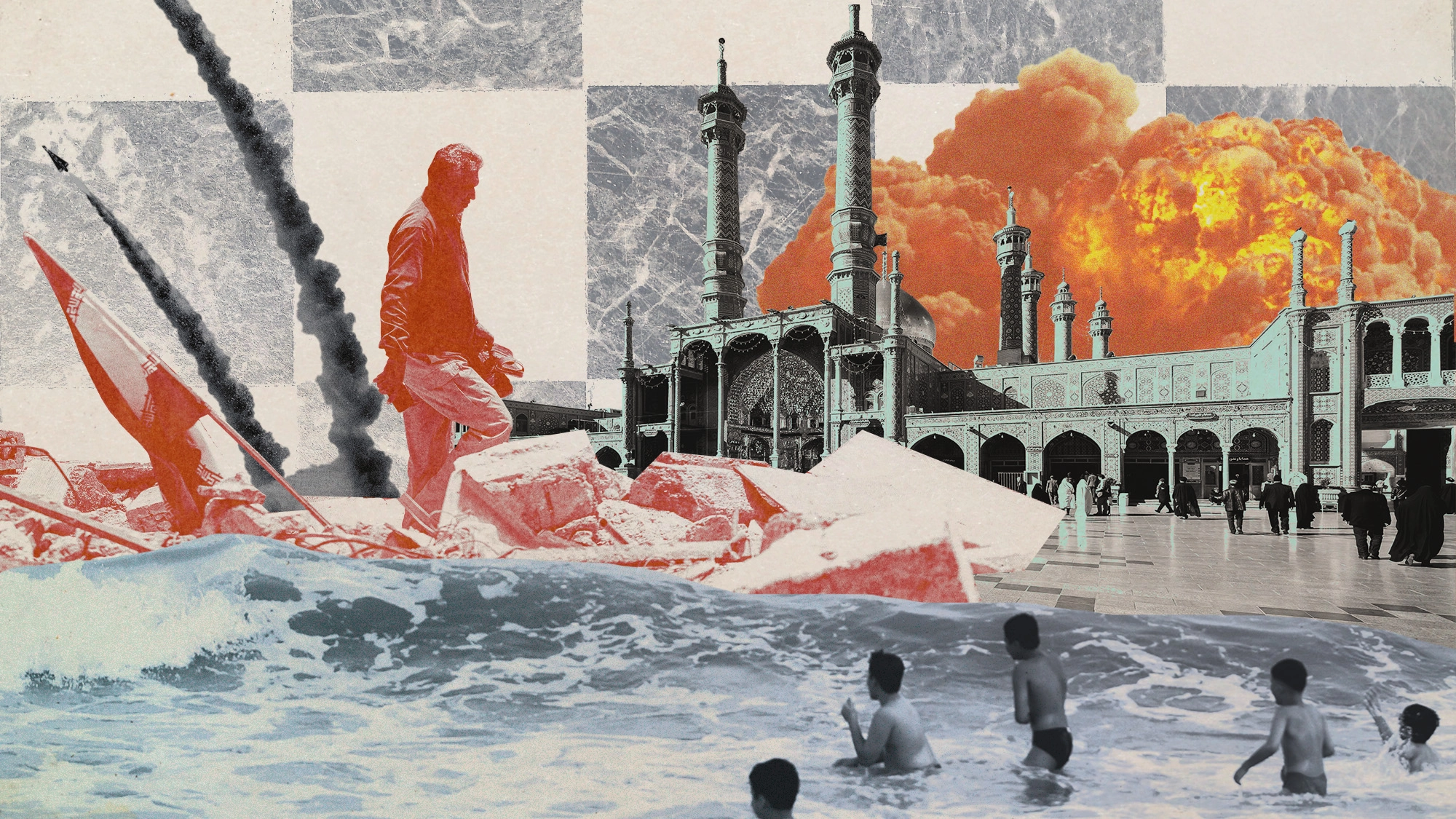
    How are Iranian people affected by the war?

    With inflation on the rise, fuel rationing and continued threats of air strikes, the vast majority of the Iranian population continue to be pawns in a war with no end in sight.

    Speaking openly about politics in Iran still “carries obvious risks”, said Nawal Al-Maghafi in The Guardian. But there is “no single narrative of the war”, with some believing it has “strengthened national unity”, and others saying it has only “deepened repression”.

    ‘Abandoned by the West’
    Iran has sustained billions of dollars’ worth of damage from US attacks, said Maziar Motamedi in Al Jazeera. And this adds to “decades-old economic structural issues”, continually “strained by years of Western sanctions and local mismanagement”. Inflation has risen to “nearly 90%” in the last month, with food inflation “hitting 134%”.

    Many Iranians feel “abandoned” by the West, said Roxana Saberi and Fatemeh Jamalpour in The Times. They believe the US and others have “largely stood by during the recent executions and the January massacre”. The “inaction” of the international community hits hard, the head of a survivor charity told the paper. “If these Western countries have democracy, how come they don’t care to see that the Iranian people are suffering?” The regime’s brutal crackdown since January has left Iranians with “widespread trauma” that “spans generations and classes”. 

    ‘Fervour’ and ‘fear’
    There is still a “fervour” among those who support the regime, said Krishnan Guru-Murthy on Channel 4. Many are still eager to “express their love of country and their hatred of the enemy”.

    For others, the “greatest fear” is that “the war will end with the Islamic Republic still in power”, said Kelly J. Shannon on the Atlantic Council. However the conflict ends, the “remnants of the regime” will probably become “further entrenched and even more oppressive”.

    Both Washington and Tehran invoke the interests of the Iranian people, said Mahmoud Rasouli on the European Consortium for Political Research, but they never allow these interests to “directly determine the direction of the conflict”. And there’s the paradox: the Iranian people are “central” to the language used around the war, but “peripheral” in the “decision-making processes that shape their future”.


    Good day🪽

    … for bird-watchers, after the first white storks hatched in Cornwall were successfully released into the wild. The 21 birds, raised on a Bodmin Moor rewilding estate, are currently “a little bit clumsy” in the air, said Yan Swiderski, founder of the Cornwall Stork Project. But “they do look majestic”.


    Bad day🐗

    … for beach-goers, with scavenging wild boars an increasing hazard on Côte d’Azur sands. Owners of campsites, beach restaurants and holiday homes are struggling to ward off the animals, who have taken to knocking over bins in search of snacks, as their population grows exponentially across France.


    picture of the day

    Magma days

    Mount Etna continues to spew lava and ash in Catania, Sicily. Europe’s highest and most active volcano has been erupting from several vents since 6 August, causing the disruption and cancellation of hundreds of flights, in what experts say is its longest stretch of continuous activity since the 1970s. 

    Salvatore Allegra / AP Photo


    PUZZLES AND QUIZZES

    Quiz of The Week

    Have you been paying attention to The Week’s news? Try our weekly quiz, part of our puzzles section, which also includes sudoku and crosswords 

    Play here


    THE WEEK RECOMMENDS

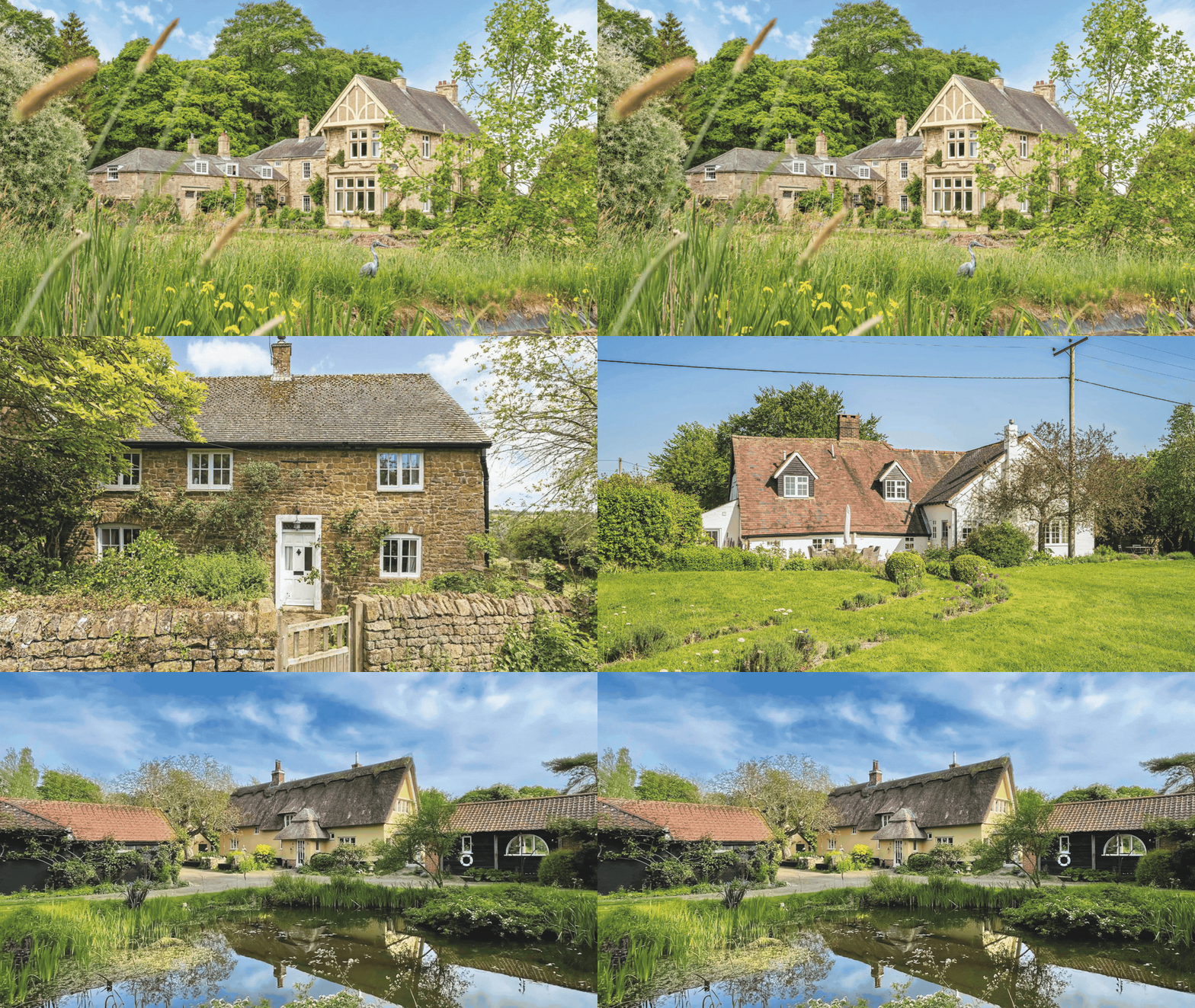
    Properties of the week: country houses suitable for commuters

    Northumberland: Loughbrow House, Hexham
    An impressive Victorian country house set in mature gardens, less than 30 minutes’ drive from Newcastle. 7 beds, 5 baths, kitchen-diner, 4 receps, 3-bed self-contained cottage, 2-bed self-contained annexe, garden, garage. OIEO £2.1 million; Galbraith.

    Oxfordshire: Honeysuckle Cottage, Shenington
    Charming period cottage with far-reaching rural views. The cities of Coventry and Oxford are within easy reach. 2 beds, family bath, kitchen, 2 receps, garden, off-street parking. £600,000; Savills.

    West Sussex: Old Well Cottage, West Harting
    A fine Grade II house within the South Downs National Park, close to Portsmouth and 4.5 miles from Petersfield, with easy railway access to London. 4 beds, 3 baths, kitchen/breakfast room, 3 receps, heated pool, garden, parking. £2 million; Savills.

    Norfolk: Walnut Shade, Suton
    This delightful Grade II medieval former hall house is set within approx. 2.5 acres, and is close to Norwich and Cambridge. 5 beds, 3 baths, kitchen, 3 receps, study, garden, outbuildings, garage, parking. £995,000; Sowerbys.

    See more


    QUOTE OF THE DAY

    “This is not in my contract.”

    GB News’ Christopher Hope realises he’s stranded on a Ferris wheel while broadcasting live from “Farage Fest” in Clacton. The Reform UK leader was celebrating his by-election victory when the fairground attraction came to an abrupt stop. “I’m stuck now, Patrick,” Hope told the TV show’s host.


    instant opinion

    Today’s best commentary

    The Taliban are vile. Democracies must still engage with them
    The Economist’s editorial board
    There’s “a grim stability” in Taliban-controlled Afghanistan, says The Economist. “Music is banned. The vice-and-virtue police dish out beatings to sinners”, and women are “barred from” much of public life. Western isolation tactics and sanctions have “achieved almost nothing”. We must face the “hard” truth that “if the West does not engage with” the regime, “other powers will”. Many “decent governments recognise” rulers “they despise”; it’s time to hold our “collective noses and talk to the Taliban”.

    Why being good at your job can be bad for your career
    Rhymer Rigby in The Times
    There are many “drawbacks to being competent” at work, writes Rhymer Rigby, including “not getting promoted” and “ending up doing everything”. Competency makes you “invisible”: “you create no friction”, so your manager rarely sees you; you “become a high-performing part of the furniture”. The competent have to learn to “be less agreeable” and even “strategically incompetent” at times. And, if that doesn’t work, they should threaten to leave, “which often focuses others’ minds wonderfully on just how much they do”.

    Ukrainian cathedrals, Gaza’s archives, Iranian squares – modern war is systematically erasing human history
    Simon Jenkins in The Guardian
    Vladimir Putin’s mission “to eliminate Ukraine’s historical identity” has meant “the destruction of 545” magnificent buildings, writes Simon Jenkins. “Donald Trump’s egoistic bomb-fest” has damaged Iran’s palaces and squares and, in the Middle East, “the ancient city of Gaza is now largely rubble”. It seems “victory today” lies “in destroying an enemy’s identity and morale as much as in killing its people”. But “one of humanity’s deepest obligations is to its past” and “that past” should know “no national boundaries”.


    word of the day

    Hōjicha

    A roasted Japanese green tea, with a nutty, smoky flavour. Since demand for bright-green matcha skyrocketed, sending prices surging and straining supply, some are looking elsewhere for their “tea-based fix”, said The Independent. The “muted brown” hōjicha might not be as aesthetically pleasing, but it’s less caffeinated, less “grassy-tasting”, and “easier to drink”.


     Evening Review was written and edited by Harriet Marsden, Jamie Timson, Rebekah Evans, Chas Newkey-Burden, Will Barker, Helen Brown, David Edwards and Adrienne Wyper, with illustrations by Julia Wytrazek.

    Image credits, from top: Illustration by Julia Wytrazek / Getty Images; Alishia Abodunde / Getty Images; Illustration by Julia Wytrazek / Getty Images; Salvatore Allegra / AP Photo; Galbraith; Savills; Savills; Sowerbys

    Morning Report and Evening Review were named Newsletter of the Year at the Publisher Newsletter Awards 2025
     

    Recent editions

    • Evening Review

      Trump attacks the oil industry

    • Morning Report

      ICE’s shocking new tool

    • Evening Review

      The crisis in Afghanistan

    VIEW ALL
    TheWeek
    • About Us
    • Contact Future's experts
    • Terms and Conditions
    • Privacy Policy
    • Cookie Policy
    • Advertise With Us
    • FAQ
    Add as a preferred source on Google Add as a preferred source on Google

    The Week is part of Future US Inc, an international media group and leading digital publisher. Visit our corporate site.

    © Future US, Inc. Full 7th Floor, 130 West 42nd Street, New York, NY 10036.