The Week The Week
flag of US
US
flag of UK
UK
https://cdn.mos.cms.futurecdn.net/flexiimages/jacafc5zvs1692883516.jpg

SUBSCRIBE & SAVE

Less than $3 per week

Sign in
  • View Profile
  • Sign out
  • The Explainer
  • The Week Recommends
  • Newsletters
  • Cartoons
  • From the Magazine
  • The Week Junior
  • Student Offers
  • More
    • Politics
    • World News
    • Business
    • Health
    • Science
    • Food & Drink
    • Travel
    • Culture
    • History
    • Personal Finance
    • Puzzles
    • Photos
    • The Blend
    • All Categories
  • Newsletter sign up Newsletter
  • WeekDay AM: 10 Things you need to know this morning
    Election U-turn, Ukraine advances, and Britons’ sinking financial mood

     
    today’s politics story

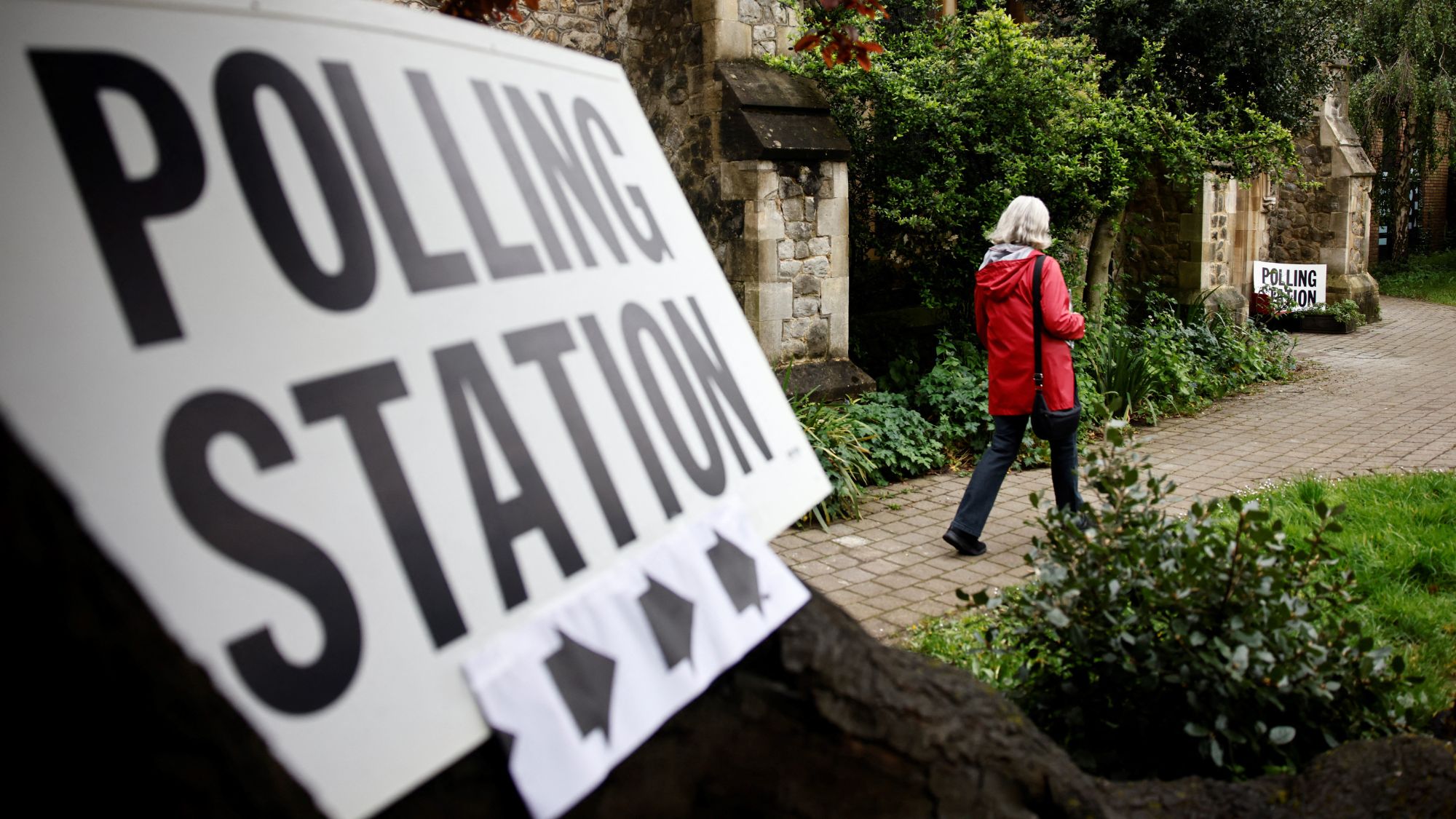
    Starmer faces backlash after council election U-turn

    What happened
    Keir Starmer is under renewed pressure after scrapping plans to defer local elections in 30 council areas, a reversal prompted by warnings that the move would be unlawful. The proposal, affecting more than 4.5 million voters, had been intended to ease the strain on authorities undergoing sweeping structural changes. However, ministers retreated following “new legal advice” amid a court challenge brought by Reform UK. The government has also agreed to cover the party’s legal costs.

    Who said what
    “We took this Labour government to court and won,” said Nigel Farage. Meanwhile, councils voiced their frustration over the disruption. Norfolk’s leader accused the government of “wasting everyone’s time”, while Suffolk warned that authorities were suffering “whiplash” following the shifting decisions.

    “Restoring the democratic right of four million people is the correct decision,” said The Independent’s editorial board, “but it cannot erase the impression of a flailing government lacking both consistency and some of the most basic political instincts.” The U-turn could end up being a “gift for Reform”, said Kiran Stacey and Ben Quinn in The Guardian, as it “gives Nigel Farage a chance to capitalise on Labour’s unpopularity”.

    What next?
    The elections will proceed as scheduled. However, to stop this happening again, “ministers should be stripped of their legal powers to cancel local elections without a full vote in Parliament”, said The Telegraph in its lead article.


    today’s international story

    Ukraine in fastest advance for two-and-a-half years

    What happened
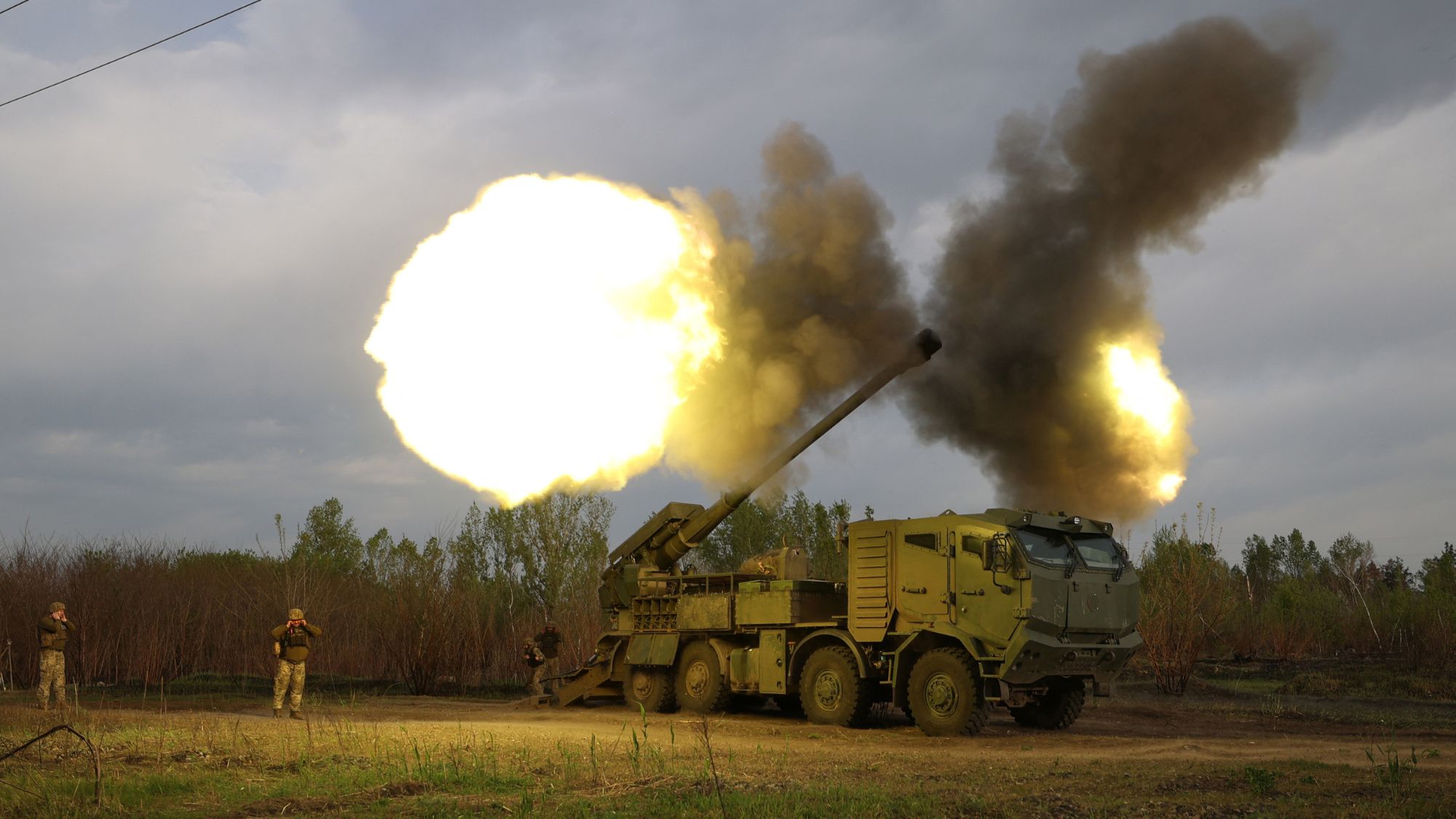
    Ukrainian forces regained 201 square kilometres of territory between Wednesday and Sunday last week, capitalising on a reported shutdown of Starlink access used by Russian troops. According to AFP analysis of data from the Institute for the Study of War, the gains are roughly comparable to Russia’s advances during the whole of December and represent Kyiv’s most rapid progress since its June 2023 counter-offensive.

    Who said what
    “These Ukrainian counter-attacks are likely leveraging the recent block on Russian forces’ access to Starlink, which Russian milbloggers (military bloggers) have claimed is causing communications and command and control issues on the battlefield”, said the Institute for the Study of War.

    The recaptured land is “concentrated mainly around 80 kilometres east of the city of Zaporizhzhia”, said France 24, “an area where Russian troops have made significant progress since the summer of 2025”.

    What next?
    Russia still controls about 19.5% of Ukraine, up from 18.6% a year ago. Crimea and parts of the Donbas remain under long-standing Russian occupation.


    Today’s economy story

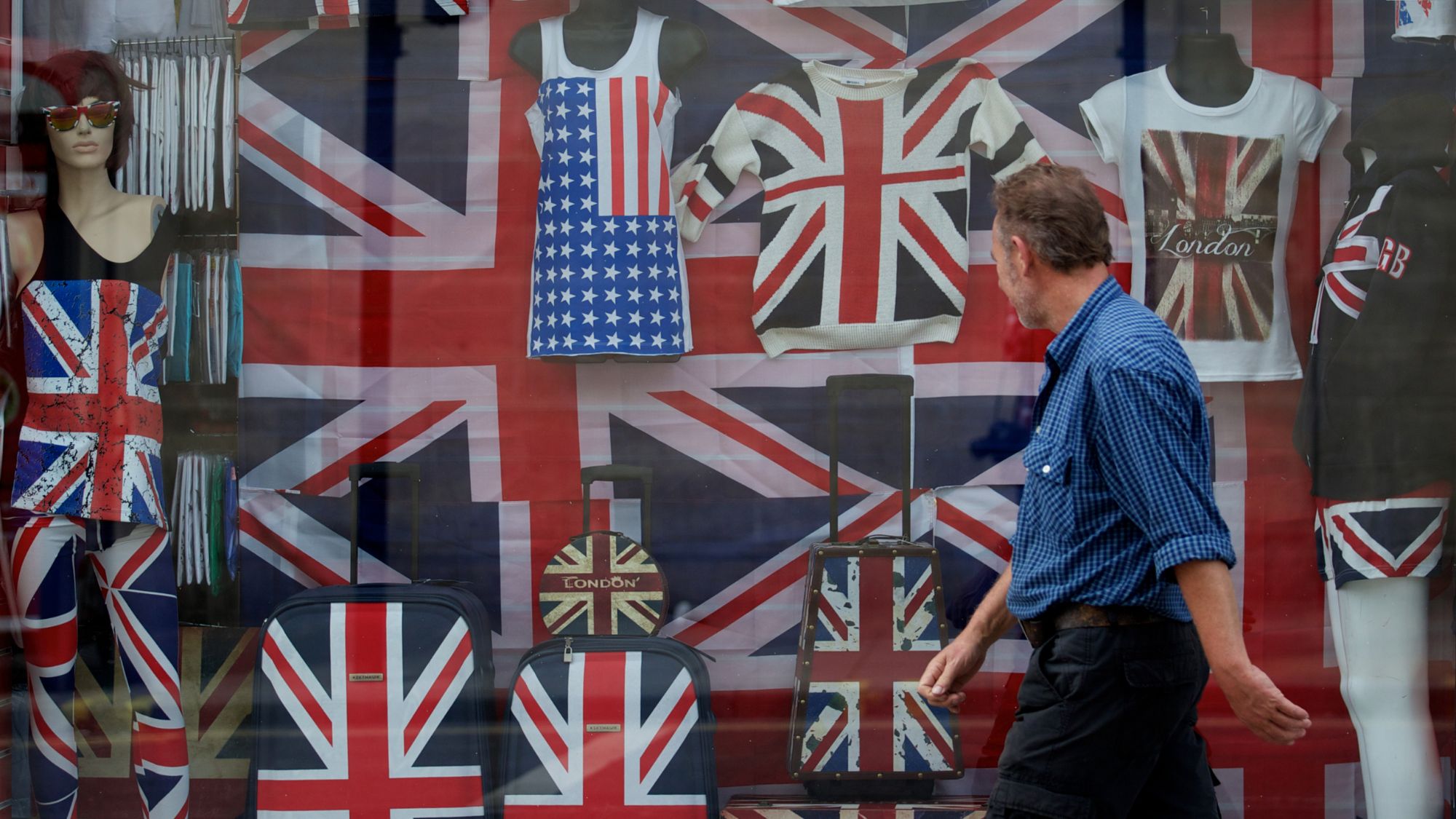
    Britons’ financial mood dives as personal debt increases

    What happened
    Consumer confidence in the UK is at its lowest level in two years, according to new research by S&P Global. Households are accumulating debt at the fastest rate since last July, with 18 to 24-year-olds recording the steepest rate of increase, while all regions of the UK recorded drops in the level of savings.

    Who said what
    Like the weather so far this year, the mood about finances is “dismal”, said S&P. Households are “increasingly worried about debt” and there is a “rising need for credit” that’s meeting a steep decline in the availability of loans, said S&P economist Maryam Baluch.

    The UK Consumer Sentiment Index survey posted a reading of 44.8 in February – up slightly from January, but still “among the weakest figures over the past two years”, said The Guardian. Anything below 50 “suggests a deterioration” in confidence.

    What next?
    The UK’s latest official figures on employment and wages, for the final three months of last year, will be released today. Unemployment is expected to remain at 5.1%, while the annual growth in average earnings is expected to have slowed to 4.2%.


    It’s not all bad

    Handing your toddler a whisk or potato masher could help boost their brain development, research suggests. A study from Arizona State University found that children aged two to nearly four spent longer engaging with unfamiliar household items than their usual toys. Researcher Delaney Witmer said novel objects encouraged attentional shifts and exploration, supporting learning and cognitive development through more imaginative play.


    under the radar

    How roadkill is a surprising boon for scientific research

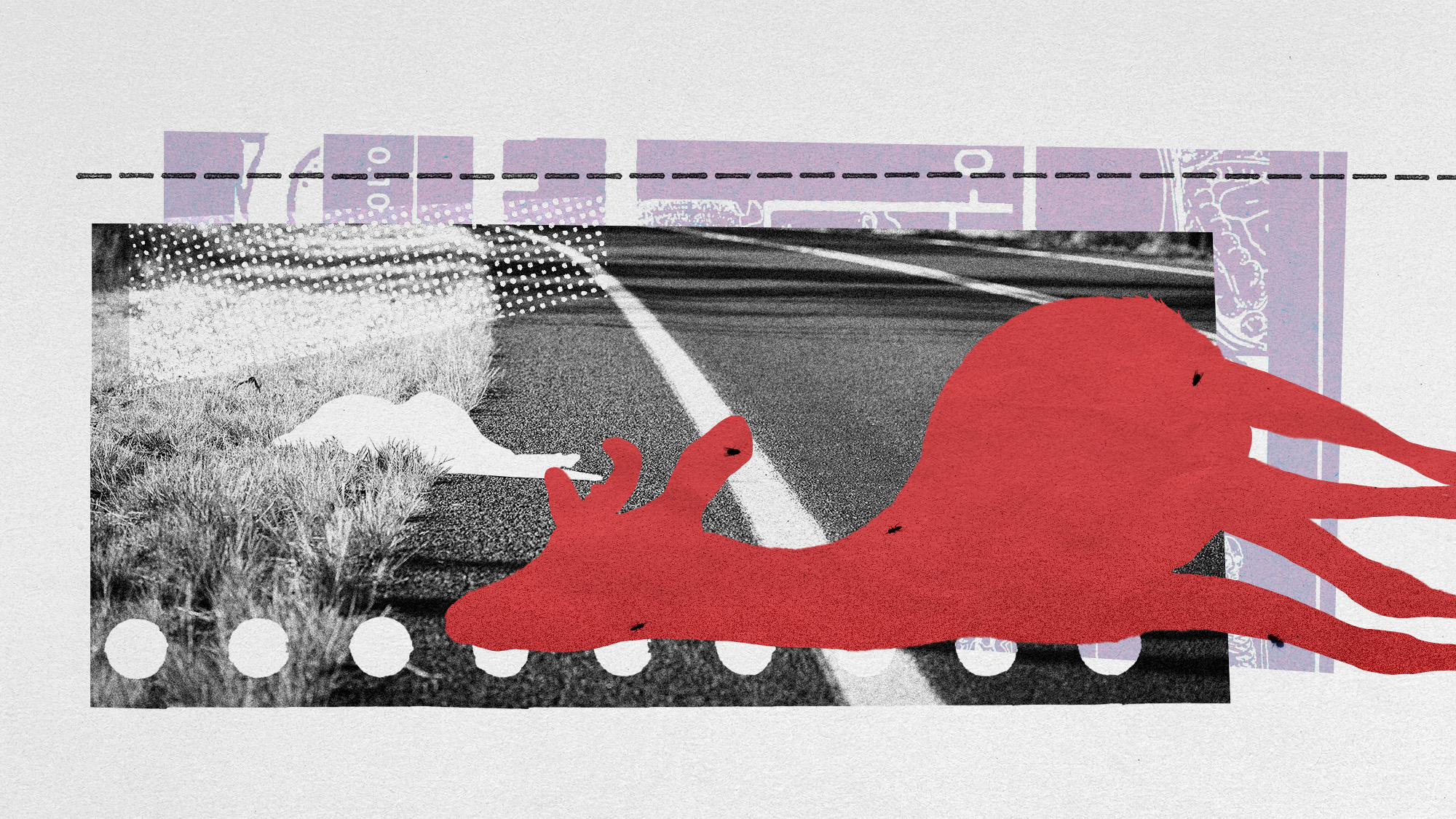
    It may be time to hit the road in pursuit of scientific research. Millions of animals are struck and killed by vehicles every year. These accidents have even pushed some species towards extinction. While roadkill is never pleasant, such loss of animal life could provide an opportunity to conduct scientific research more ethically.

    Roadkill could be a “valuable source of animals for study that does not require and could even replace the use of live wildlife”, said a study published in the journal Biology Letters. Researchers identified approximately 117 different uses for roadkill across various scientific projects. “We found examples of successfully using roadkill to map species distributions, monitor disease and environmental pollution, study diets, track invasive species, supply museum collections and even discover species previously unknown to science,” said Dr Christa Beckmann of RMIT University in Melbourne, the lead author of the study.

    A big advantage of using roadkill for research is that it is “highly ethical”, according to the study, and could be used as an alternative to invasive sampling methods. “If you want to take a genetic sample, you don’t need to trap live animals or handle them, both of which can cause stress,” said Beckmann.

    In a car-centric society, roadkill is an unfortunate side-effect. Some species are even being “driven towards extinction because of traffic”, according to Scientific American. “Vehicles continue to be overlooked environmental forces that are likely to decimate more and more animal populations.” Despite this, said Beckmann, “using these losses wisely could help drive scientific discovery and conservation forward, rather than letting valuable information decompose by the roadside”.


    on this day

    17 February 2008

    Kosovo declared its independence from Serbia on the eve of the 10th anniversary of the start of the Kosovo War. This week Albin Kurti was elected as Kosovo’s new prime minister after more than a year of political deadlock in the nation. Setting out his agenda, Kurti said “we have faced constant attacks and threats from Serbia” while indicating that he would seek to achieve a “normalisation of relations” with Belgrade.


    Today’s newspapers

    ‘Elections anger’

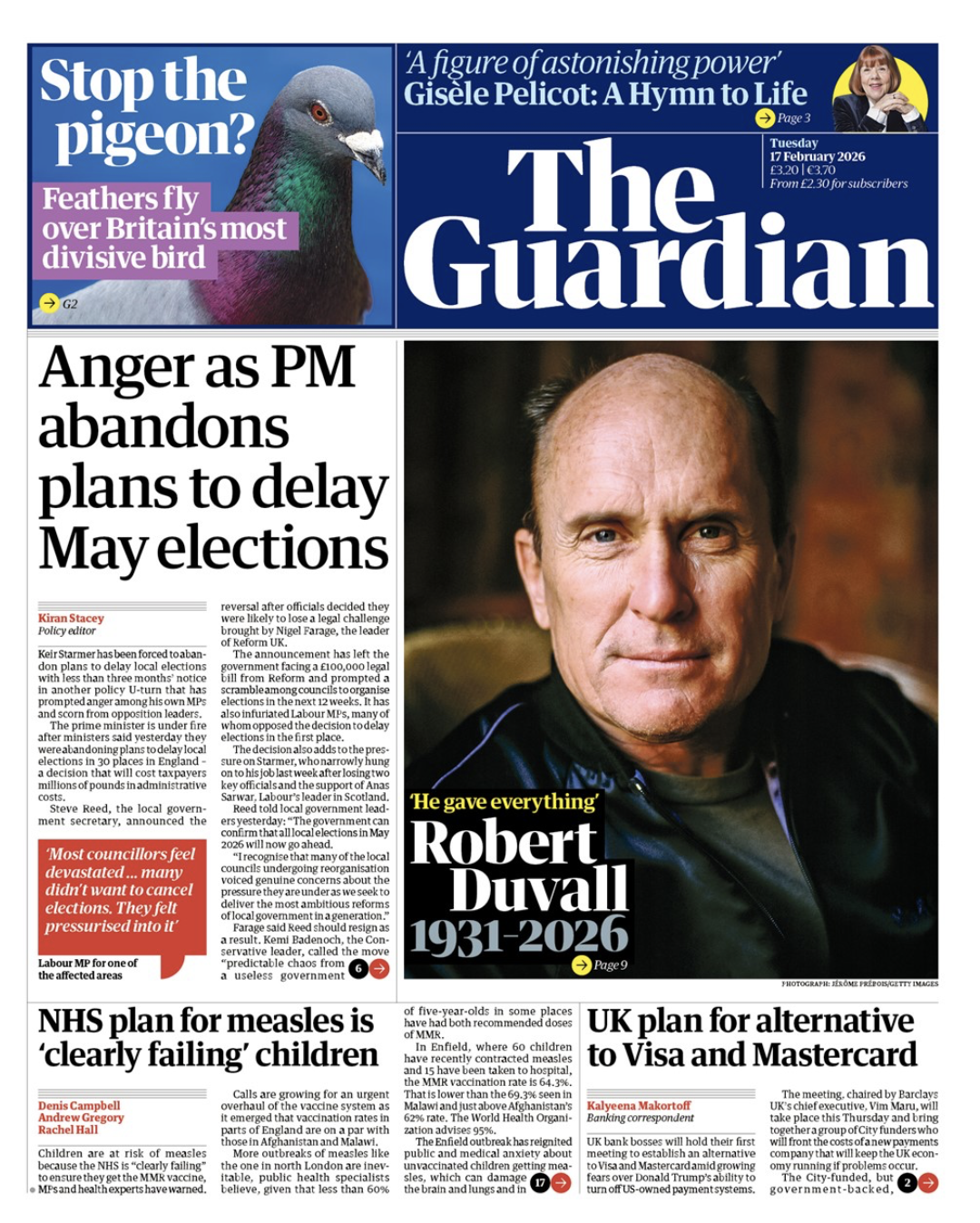
    “Anger as PM abandons plans to delay May elections”, says The Guardian. The government dropped plans to delay 30 council elections following a legal challenge from Reform UK. “Starmer forced to face wrath of voters”, says the Daily Mail. “Starmer U-turns on cancelled elections”, says The Telegraph. “Robert Duval dies at 95”, the Daily Star reports. A grieving mother has called for immediate action on social media reforms to “save our next generation”, says The Mirror. “China greets lunar new year”, says the Financial Times. Meanwhile, The Times reports on “Iranian war games”.

    See the newspaper front pages


    tall tale

    Code of conduct

    An audit partner at KPMG Australia has been fined more than £5000 for using AI tools to “cheat on an internal training course about using AI”, said the Financial Times. More than two dozen of its staff have been caught using AI tools for internal exams over this financial year, according to the company, although this is also an industry-wide issue. The individual in question was forced to retake the test.


    Morning Report was written and edited by Arion McNicoll, Harriet Marsden, Will Barker, Devika Rao, Ross Couzens and Chas Newkey-Burden, with illustrations by Julia Wytrazek.

    Image credits, from top: Benjamin Cremel / AFP / Getty Images; Anatolii Stepanov / AFP / Getty Images; Andrew Cowie / AFP / Getty Images; Illustration by Julia Wytrazek / Getty Images.

    Morning Report and Evening Review were named Newsletter of the Year at the Publisher Newsletter Awards 2025
     

    Recent editions

    • Saturday Wrap

      Bezos shreds the news

    • Evening Review

      Democrats make partisan lemonade

    • Morning Report

      Trump torches America’s climate change policy

    VIEW ALL
    TheWeek
    • About Us
    • Contact Future's experts
    • Terms and Conditions
    • Privacy Policy
    • Cookie Policy
    • Advertise With Us
    • FAQ
    Add as a preferred source on Google

    The Week is part of Future US Inc, an international media group and leading digital publisher. Visit our corporate site.

    © Future US, Inc. Full 7th Floor, 130 West 42nd Street, New York, NY 10036.