The Week The Week
flag of US
US
flag of UK
UK
https://cdn.mos.cms.futurecdn.net/flexiimages/jacafc5zvs1692883516.jpg

SUBSCRIBE & SAVE

Less than $3 per week

Sign in
  • View Profile
  • Sign out
  • The Explainer
  • The Week Recommends
  • Newsletters
  • Cartoons
  • From the Magazine
  • The Week Junior
  • Student Offers
  • More
    • Politics
    • World News
    • Business
    • Health
    • Science
    • Food & Drink
    • Travel
    • Culture
    • History
    • Personal Finance
    • Puzzles
    • Photos
    • The Blend
    • All Categories
  • Newsletter sign up Newsletter
  • WeekDay AM: 10 Things you need to know this morning
    Trump’s ‘big wave’, France’s nuclear shield, and North Korea’s football comeback

     
    today’s middle east story

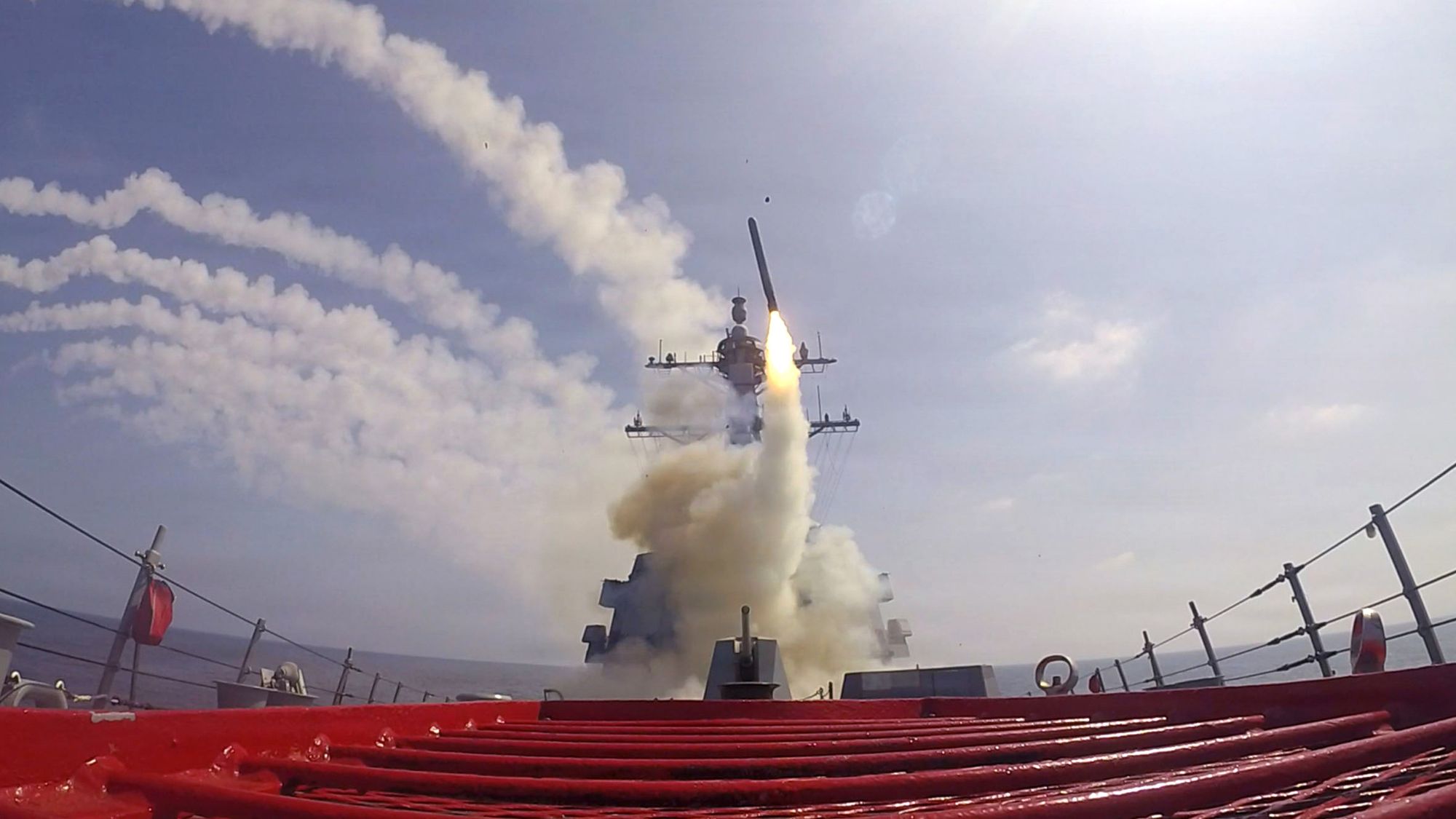
    Trump warns ‘big wave’ of strikes on Iran still to come

    What happened
    Donald Trump escalated his rhetoric yesterday, warning Tehran that the most severe phase of US military campaign has yet to begin.

    The burgeoning confrontation is spreading across the Middle East. Hezbollah launched rockets from Lebanon into Israel, prompting Israeli retaliation near Beirut. Qatar reported the downing of two Iranian Su-24 aircraft. Shipping through the Strait of Hormuz has largely been halted, disrupting a key artery for global energy supplies. And the Pentagon confirmed that six US service members had been killed in Iranian counter-attacks.

    Who said what
    “We haven’t even started hitting them hard,” Trump told CNN. “The big wave hasn’t even happened. The big one is coming soon.” In remarks made to the New York Post, he added: “I don’t have the yips with respect to boots on the ground.”

    Iran made “elaborate preparations” for the death of Ayatollah Ali Khamenei, said David Blair in The Telegraph. Its “autopilot regime will fire off missiles until the bitter end”, but the question is “how long can the system survive this crisis?”

    Yet with America’s “unwise excursion” into Iran now threatening to engulf the wider Middle East, “nothing can spare the president from the worst decision he has ever made”, said Sean O’Grady in The Independent. “Operation Epic Fury will go down as an epic fail.”

    What next?
    Oil and gas markets remain volatile as casualties mount across Iran, Israel and neighbouring states. Iranian officials insist that the country “has prepared itself for a long war”.


    today’s europe story

    Macron expands France’s nuclear shield

    What happened
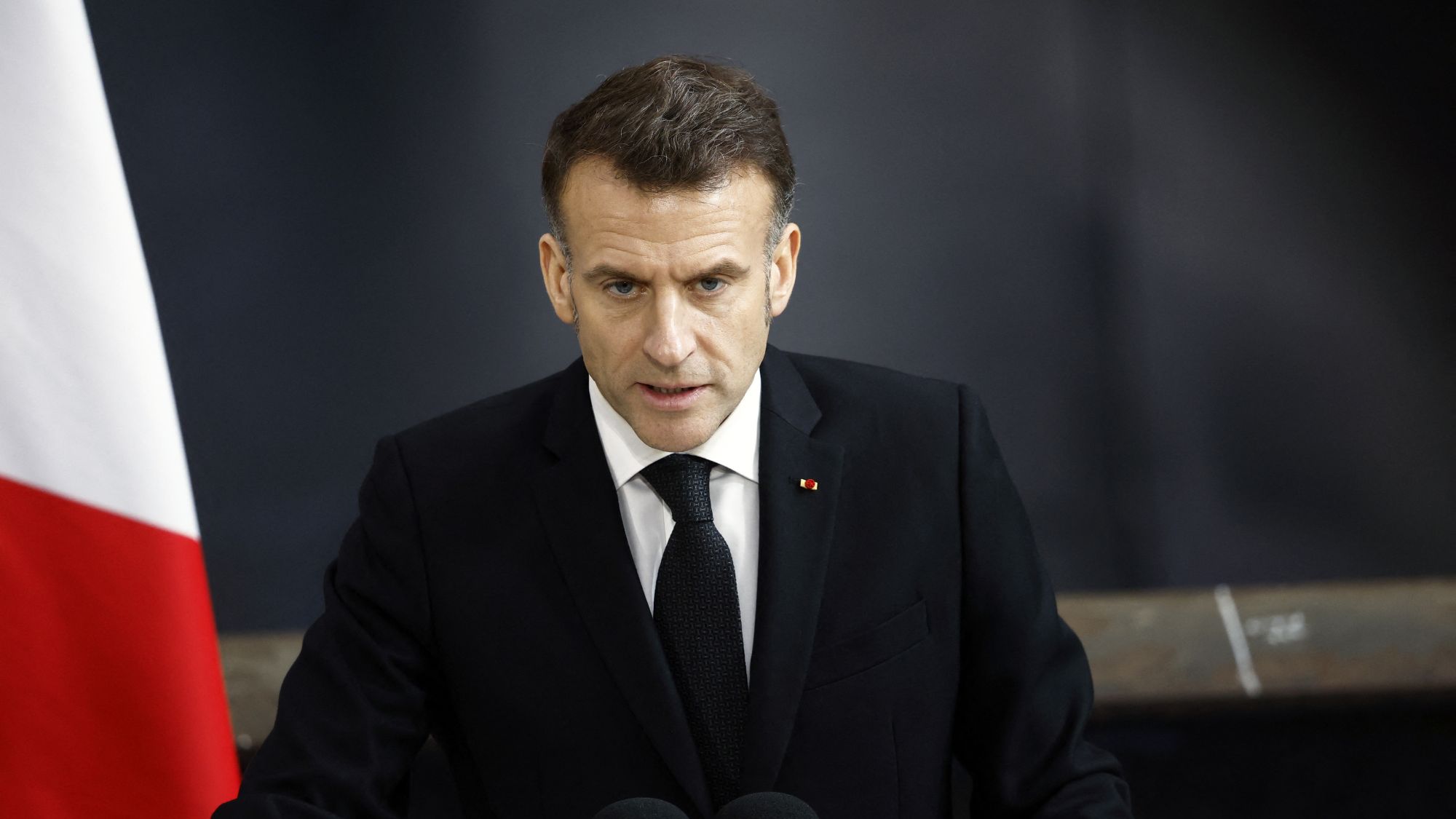
    Emmanuel Macron has announced a significant overhaul of France’s nuclear strategy, pledging to enlarge the country’s arsenal and extend its protective umbrella over eight European allies. Speaking at the Île Longue naval base in Brittany, he said a new ballistic missile submarine, to be named The Invincible, would enter service in 2036.

    France will also deepen cooperation with the UK, Germany, Poland, the Netherlands, Belgium, Greece, Sweden and Denmark under what Macron termed an “advanced deterrence” framework.

    Who said what
    “The next 50 years will be an era of nuclear weapons,” said Macron, with the French president warning that any aggressor would face “an unsustainable price to be paid”.

    Until now there has been a “deliberate vagueness” about what France regards as its “vital interests”, an attack on which would trigger a nuclear response, said Hugh Schofield on the BBC. Macron’s announcement yesterday has given those interests “further shape” as the country aligns its military future with that of the rest of Europe.

    What next?
    While France retains sole authority over any launch decision, officials describe the shift as the most consequential adjustment to its nuclear doctrine in decades, intended to reinforce Europe’s security without supplanting Nato’s deterrent.


    Today’s art story

    Rijksmuseum reveals painting to be a Rembrandt

    What happened
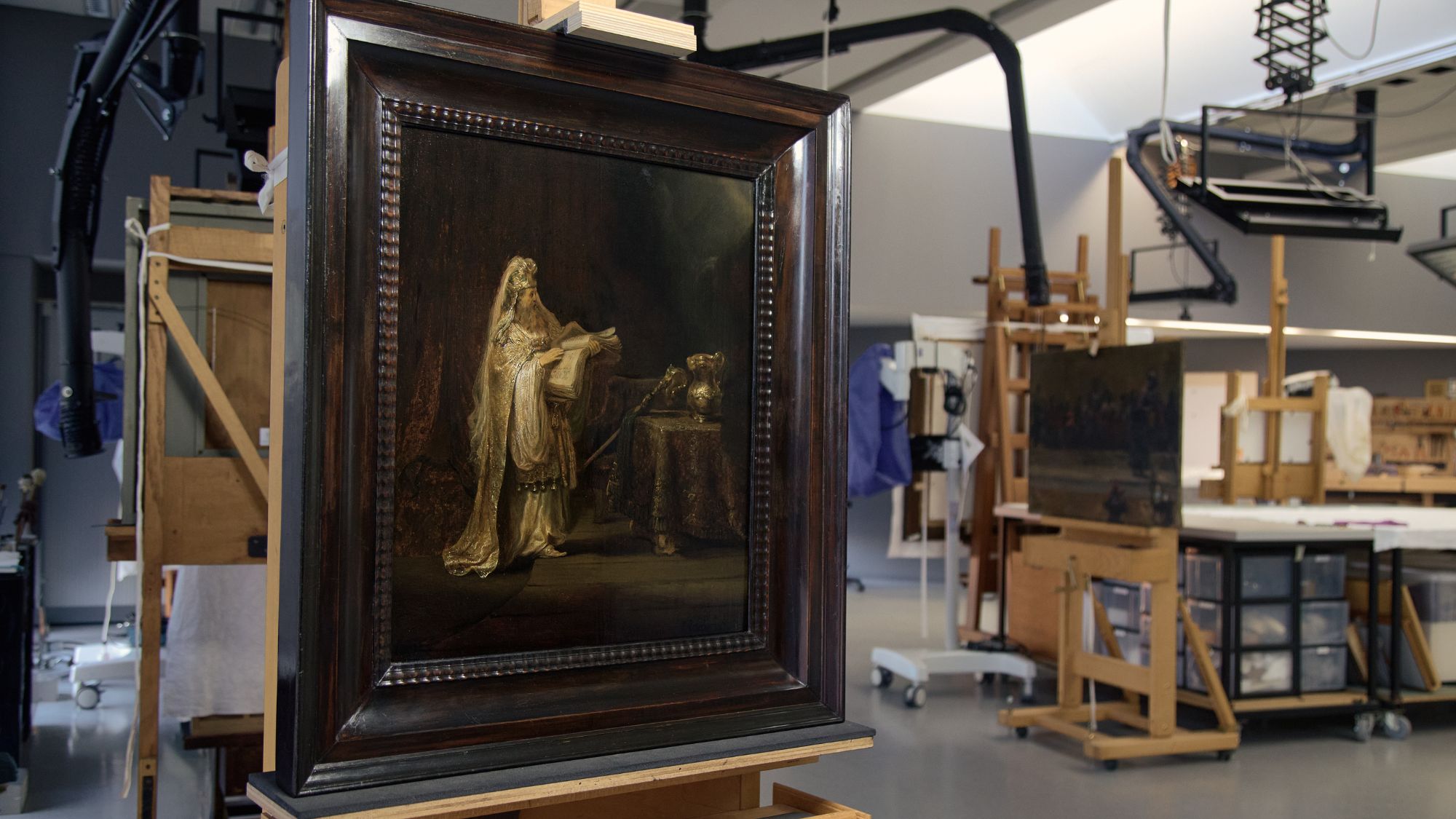
    A long-lost Rembrandt painting has been discovered after lying in a private collection for decades, having been rejected by art curators in 1960. It took researchers at the Rijksmuseum two years to examine the “Vision of Zacharias in the Temple” (1633): now, the painting is worth tens of millions.

    Who said what
    Researchers matched its paint pigments to works by Rembrandt from the same period, said The Guardian. “Macro X-ray fluorescence scans showed typical changes in composition” and analysis of the wooden panel dated the painting to 1633.

    The owners, who wish to remain anonymous, came in “making jokes” that the painting could be a Rembrandt due to the size of the signature, said Jonathan Bikker, a curator of 17th-century Dutch paintings at the Rijksmuseum. However, “it was also a surprise for them that it was a real Rembrandt” as it was de-attributed “as soon as the father had bought it”.

    “It’s wonderful that people can now learn more about the young Rembrandt,” said Rijksmuseum director Taco Dibbits. “It is a beautiful example of the unique way Rembrandt depicts stories.”

    What next?
    The work will go on long-term display at the Dutch national museum on Wednesday.


    It’s not all bad

    Scientists at Stanford University say they have cured type 1 diabetes in mice using a dual transplant of insulin-producing islet cells and blood stem cells. The approach created a hybrid immune system that prevented rejection and halted the autoimmune attack. Treated mice required no insulin or immune-suppressing drugs for six months. Researchers called the results “very exciting”, but cautioned that further work was needed before trials in humans can begin.


    under the radar

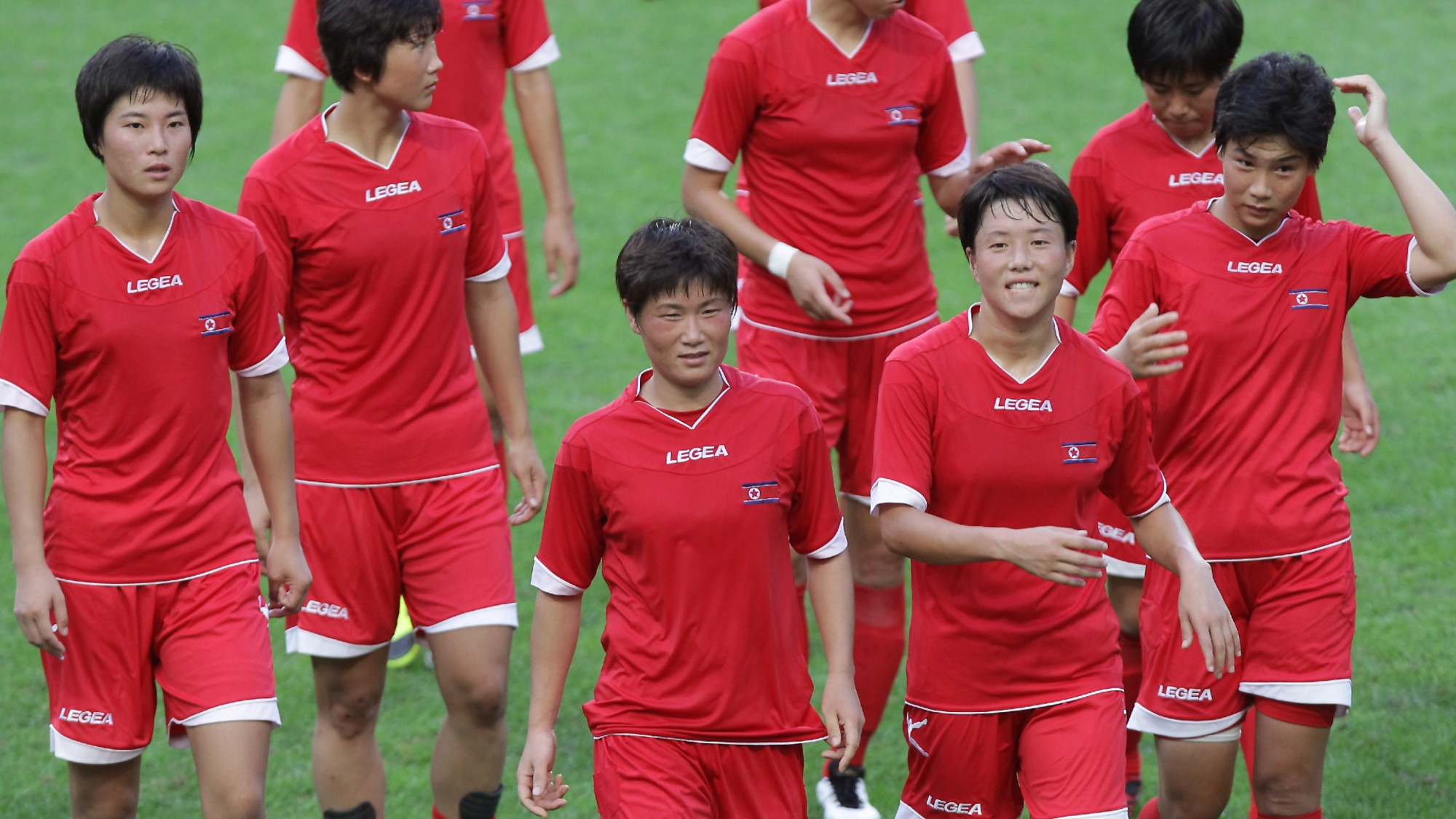
    North Korea’s women eye football comeback

    North Korea, one of the world’s most secretive and patriarchal countries, dominates in a surprising arena: women’s football.

    The hermit kingdom became a powerhouse after the regime invested heavily in the women’s game as a tool of soft power and propaganda. The youth team still excels internationally, but, after losing the Asian Cup final to Australia in 2010, the senior team “all but disappeared from global competition”, said The Guardian.

    Now, the Eastern Azaleas are back in the tournament, having won their opening match in the 2026 event against Uzbekistan in Sydney 3-0 earlier today. Invigorated by a “new generation of youth World Cup winners”, they are “hoping to return to the summit of Asian football”.

    At Fifa’s annual congress in 1986, the Norwegian delegate “demanded the creation of a World Cup for women”, said The Guardian. North Korean officials, so the story goes, were “inspired”. They returned to Pyongyang with a plan to use women’s football as a “tool to reassert their collapsing power on the world stage”.

    Between the 1990s and 2010s, North Korea had one of the world’s best women’s football teams, winning three Asian Cup titles and more trophies across the continent. But in 2011 a major doping scandal “put the brakes on this success”. North Korea was banned from the 2015 World Cup, then failed to qualify for the Asian Cup in 2018 and the World Cup in 2019.

    It remains to be seen whether North Korea can qualify for the senior women’s World Cup in Brazil next year. But, according to The Guardian, this year’s Asian Cup will be “the best glimpse yet of whether this old, unlikely superpower of women’s football is rumbling back to life”.


    on this day

    3 March 2013

    A two-year-old girl in the US became the first child born with HIV to be cured. This month researchers found that a single pill treatment to suppress HIV proved as effective as existing therapies of up to 11 tablets daily.


    Today’s newspapers

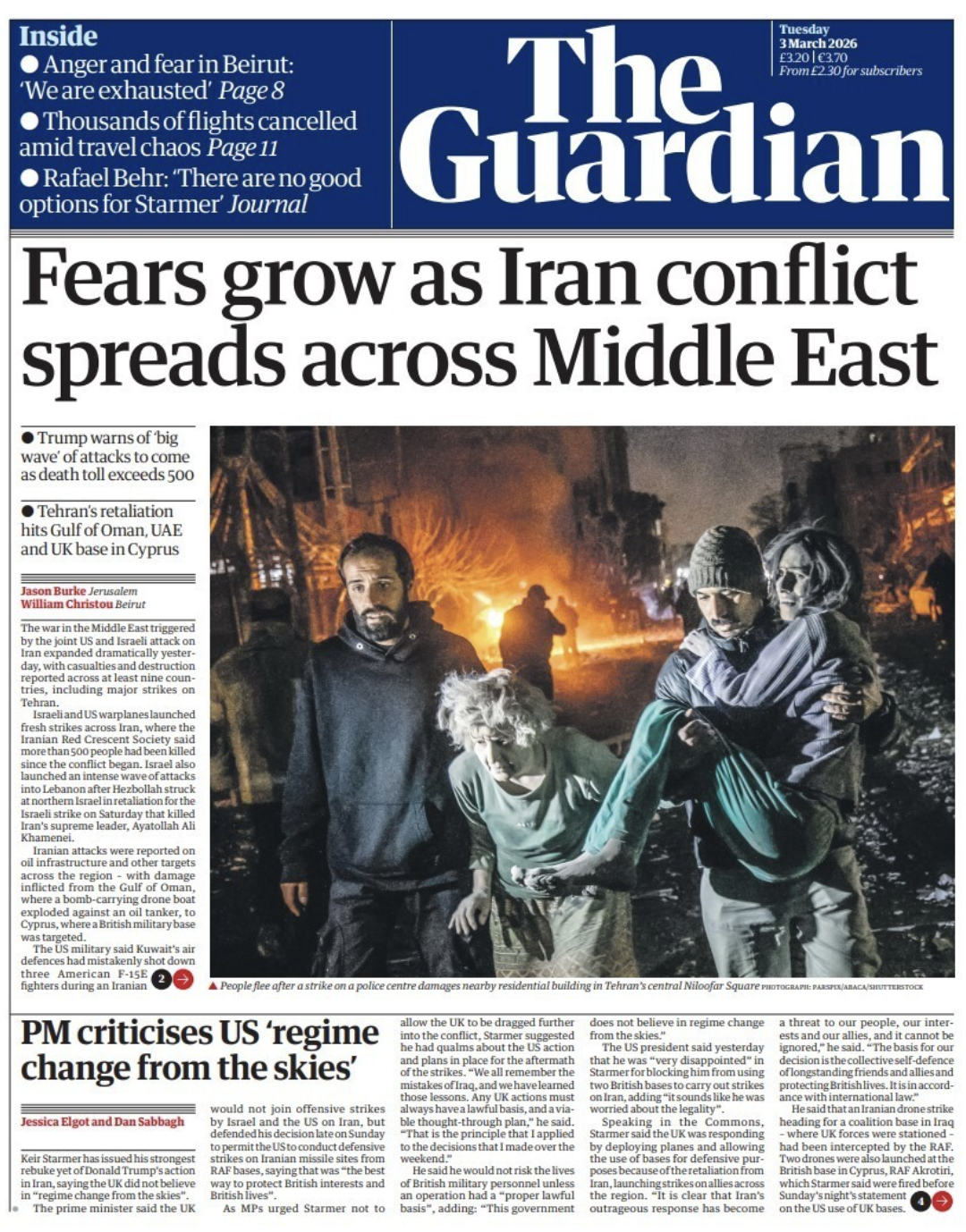
    ‘Fears grow’

    “Fears grow as Iran conflict spreads across Middle East”, says The Guardian. “Iran turns fire on global energy supply”, says the Financial Times. “Operation epic chaos”, says Metro. Donald Trump is “very disappointed” in Keir Starmer, says The Telegraph. The PM has “risked aggravating the White House” with his suggestion that the attack on Iran was illegal and set to unravel, says the Daily Mail. “Inaction this day”, says The Sun, reporting Starmer has “ruled out retaliation” after a “blitz” on an RAF base in Cyprus.

    See the newspaper front pages


    tall tale

    Ale be damned

    A Leeds pub that was branded as “irresponsible” for selling 25p pints has started giving them away for free, said the BBC. Whitelock’s had “revived” the Double Diamond pale ale at a “retro price” in a four-day scheme. Despite there being no minimum price for alcohol in England, the local council deemed the pub to be in breach of its licence conditions. In response, publican Edward Mason was advised by lawyers that free pints were “completely legal”, and he continued to “thank customers at the historic boozer for their loyalty”.


    Morning Report was written and edited by Arion McNicoll, Will Barker, Harriet Marsden, Ross Couzens and Chas Newkey-Burden.

    Image credits, from top: US Navy / Getty Images; Yoan Valat / Pool / AFP / Getty Images; Pierre Crom / Getty Images; Chung Sung-Jun / Getty Images.

    Morning Report and Evening Review were named Newsletter of the Year at the Publisher Newsletter Awards 2025
     

    Recent editions

    • Morning Report

      Iran war spreads across Middle East

    • Sunday Shortlist

      Love and leather

    • Saturday Wrap

      Trump’s Iran ambitions

    VIEW ALL
    TheWeek
    • About Us
    • Contact Future's experts
    • Terms and Conditions
    • Privacy Policy
    • Cookie Policy
    • Advertise With Us
    • FAQ
    Add as a preferred source on Google

    The Week is part of Future US Inc, an international media group and leading digital publisher. Visit our corporate site.

    © Future US, Inc. Full 7th Floor, 130 West 42nd Street, New York, NY 10036.