The Week The Week
flag of US
US
flag of UK
UK
https://cdn.mos.cms.futurecdn.net/flexiimages/jacafc5zvs1692883516.jpg

SUBSCRIBE & SAVE

Less than $3 per week

Sign in
  • View Profile
  • Sign out
  • The Explainer
  • The Week Recommends
  • Newsletters
  • Cartoons
  • From the Magazine
  • The Week Junior
  • Student Offers
  • More
    • Politics
    • World News
    • Business
    • Health
    • Science
    • Food & Drink
    • Travel
    • Culture
    • History
    • Personal Finance
    • Puzzles
    • Photos
    • The Blend
    • All Categories
  • Newsletter sign up Newsletter
  • WeekDay AM: 10 Things you need to know this morning
    Air strikes in northern Iran, repatriation flights, and rising childhood obesity

     
    today’s international story

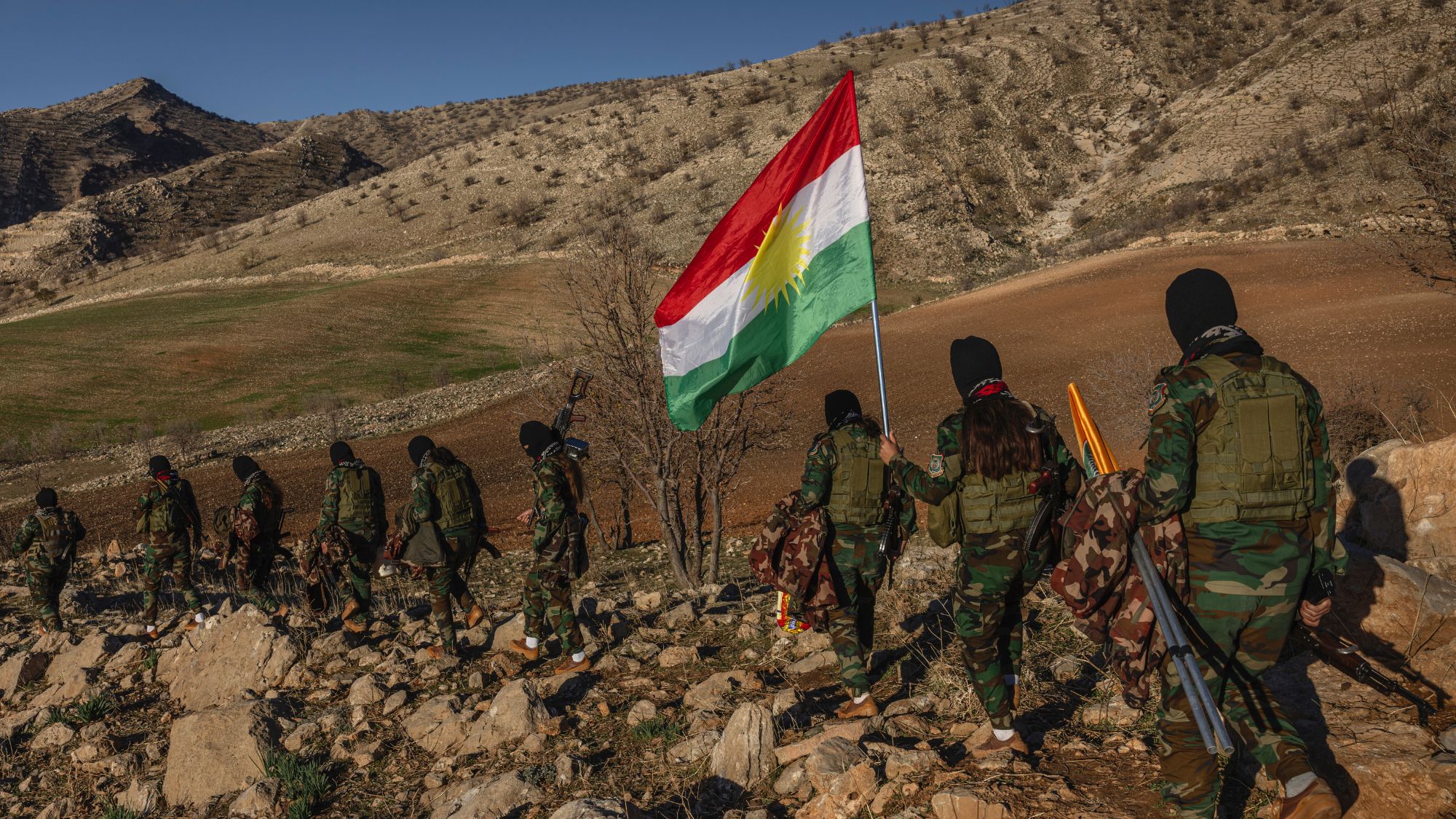
    Strikes hit Iran’s north ahead of possible Kurdish push

    What happened
    Intense air attacks have struck numerous military positions, frontier posts and police stations in Iran near the Iraqi border, laying the groundwork for a potential new front in the ongoing US-Israel-Iran war.

    A US official told reporters that Washington was prepared to provide air support if Kurdish peshmerga forces crossed the border from northern Iraq. And while Axios and Fox News reported that an incursion may have already begun, there was no official confirmation of fighters entering Iranian territory or details on numbers or locations.

    Who said what
    US Defence Secretary Pete Hegseth said the country’s military was “not arming an insurgency inside Iran”, although he suggested that other branches of the government could potentially be involved. However, White House press secretary Karoline Leavitt dismissed suggestions that Washington had agreed to supply Kurdish forces, describing such reports as “completely false and should not be written”.

    Yet the CIA has certainly been “working to arm Kurdish forces with the aim of fomenting a popular uprising in Iran”, according to CNN, citing a senior Kurdistan Regional Government official. Other unnamed Kurdish officials told the Associated Press that Iranian Kurdish dissident groups based in Iraq were preparing for a possible military operation across the border in Iran, and that the US had asked Iraqi Kurdish leaders to back them in that effort.

    What next?
    It is “not yet clear” whether a Kurdish offensive has taken place, said The Telegraph. If confirmed, the advance would mean that the conflict is “set to enter a dramatic new phase”, said Arash Azizi in The Atlantic.


    today’s evacuation story

    UK launches Gulf repatriation flights

    What happened
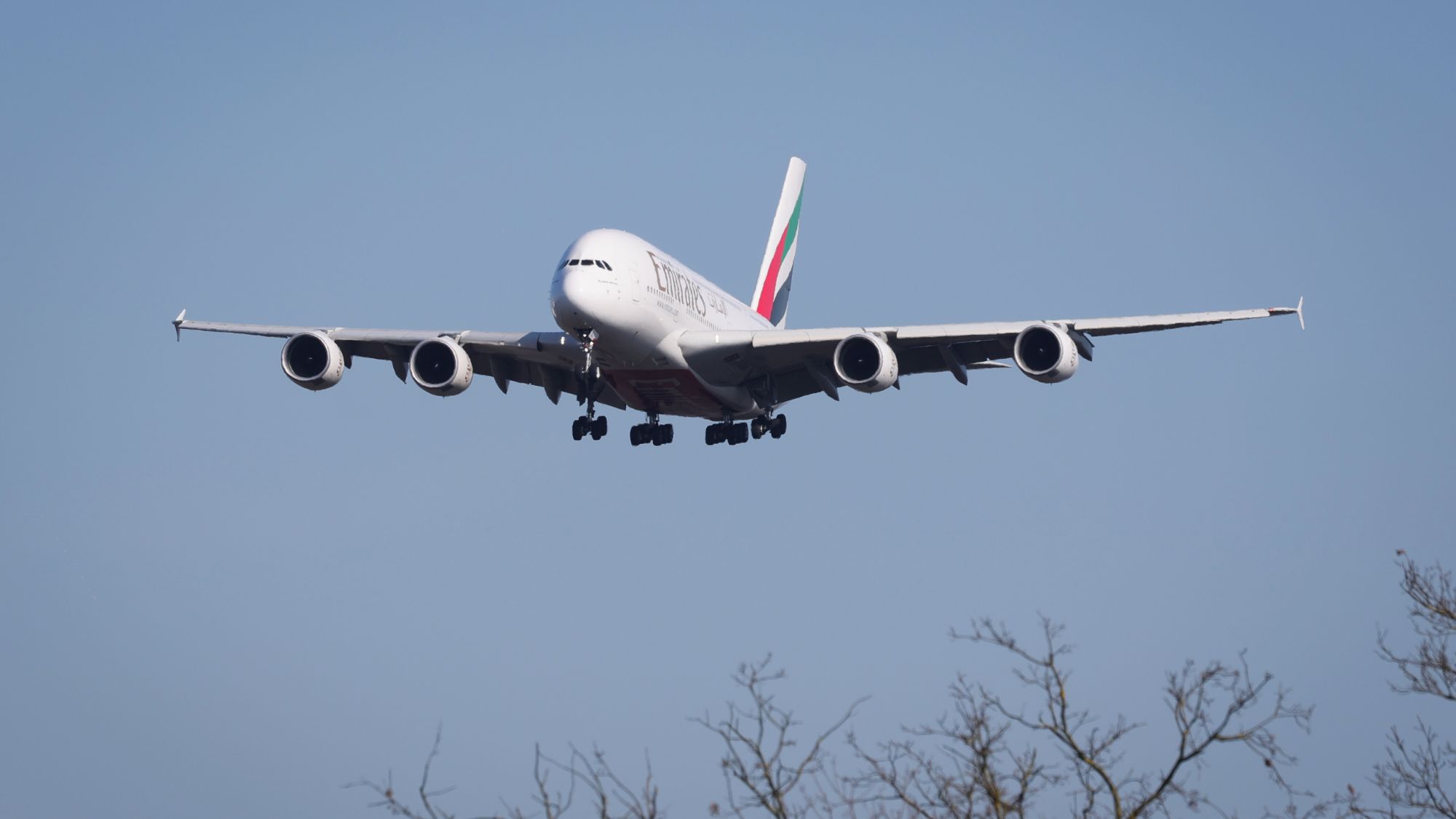
    The UK government has begun chartering flights from Oman to bring home British nationals caught up in the escalating conflict between Iran, the US and Israel. One aircraft departed Muscat yesterday, with further departures planned in the coming days.

    Since the war broke out on Saturday, “more than 130,000 Britons have registered their interest with the UK government in being helped to leave the region” – including 112,000 in the United Arab Emirates – said Ella Kipling on the BBC. Regional airspace closures following missile and drone attacks have grounded or diverted the bulk of commercial services, leaving travellers stranded across the Persian Gulf. Passengers offered seats on the government flights must cover the cost.

    Who said what
    The Foreign Office said it would “continue to work with airlines to find more routes for people to return home”, and is urging people to avoid non-essential trips to the UAE, Bahrain, Kuwait and Qatar.

    Stranded traveller Poppy Cleary said: “I registered, I paid the £350 and then I never heard back.” She said she had not been informed that she had missed out.

    What next?
    Officials say more flights will follow, although demand currently exceeds capacity.


    Today’s health story

    Call for action over rising childhood obesity

    What happened
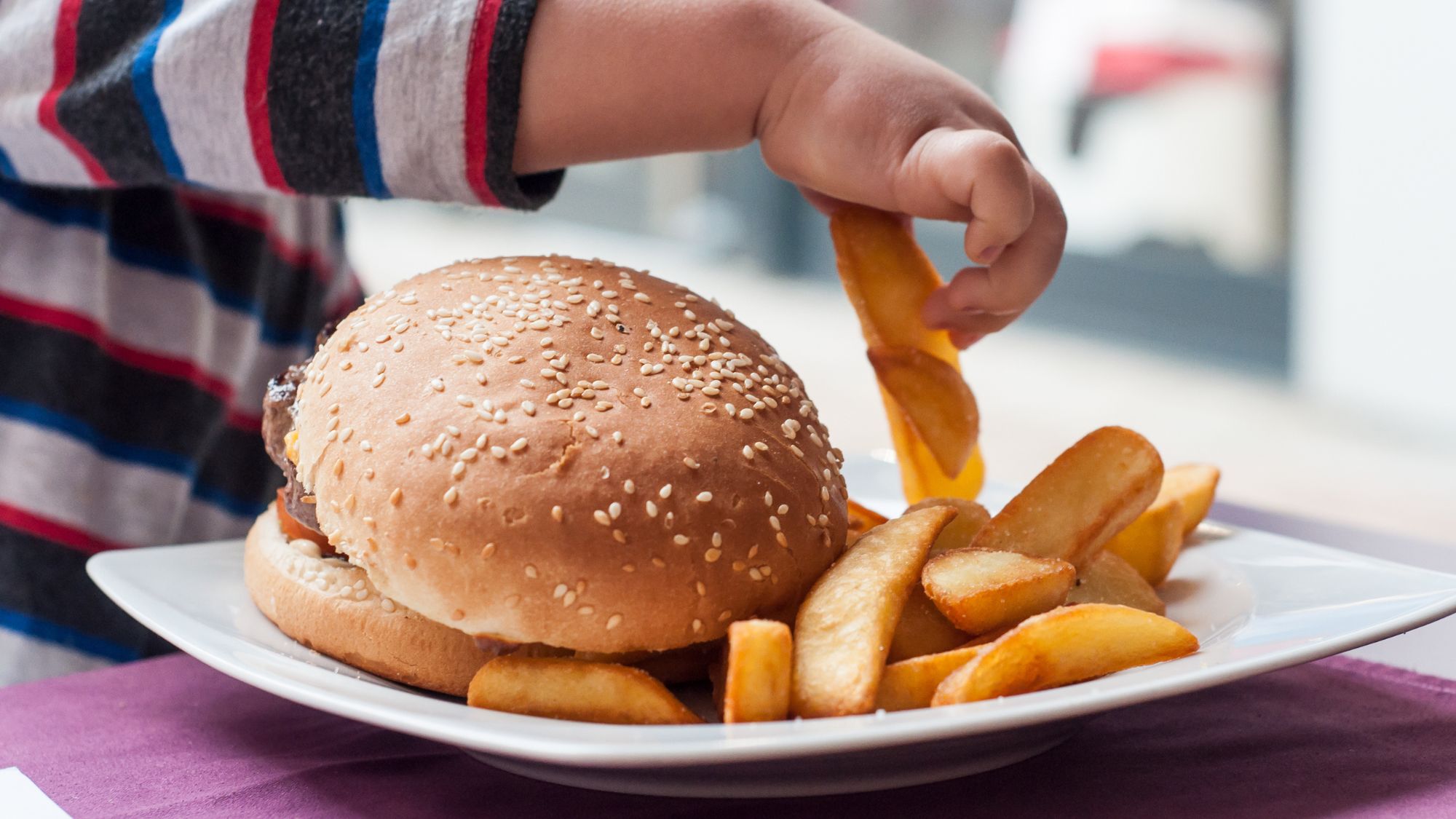
    More than 225 million children could be obese by 2040 unless drastic steps are taken globally, an international report has warned. Last year about 180 million children around the world were classed as obese, but new data from the World Obesity Federation suggests that within the next 14 years, about 227 million of all five- to 19-year-olds will fall into that health category.

    Who said what
    It’s wrong to “condemn a generation to obesity and the chronic and potentially fatal non-communicable diseases that often go with it”, said World Obesity Federation chief executive Johanna Ralston.

    Experts have welcomed the report, noted The Guardian. Dr Kremlin Wickramasinghe, regional adviser for nutrition, physical activity and obesity at the World Health Organization, Europe, said childhood obesity was a “failure of environments”. Childhood obesity is “not inevitable”, said Katharine Jenner, executive director of the Obesity Health Alliance.

    What next?
    The report is demanding changes, and warns: “Without urgent action, rising obesity rates will place a growing strain on health systems, communities and future generations.” Wickramasinghe has called for mandatory, rather than voluntary, marketing restrictions or front-of-pack labelling.


    It’s not all bad

    A sweeping cloud of Saharan dust is set to colour skies across the UK this week, turning sunsets and sunrises vivid shades of gold, amber and burnt orange. Warm southerly winds are carrying the fine desert sand thousands of miles from north Africa, creating dramatic evening displays that could coincide with the year’s warmest day so far. But forecasters warn that the spectacle may come with a slight downside: light rain could leave a thin layer of dusty residue on cars and windows.


    under the radar

    The rise of Asian scam states

    Prosecutors in Taiwan indicted 62 people on Wednesday for their alleged links to the Prince Group, a multinational network that is accused of running a vast system of scam centres out of Cambodia.

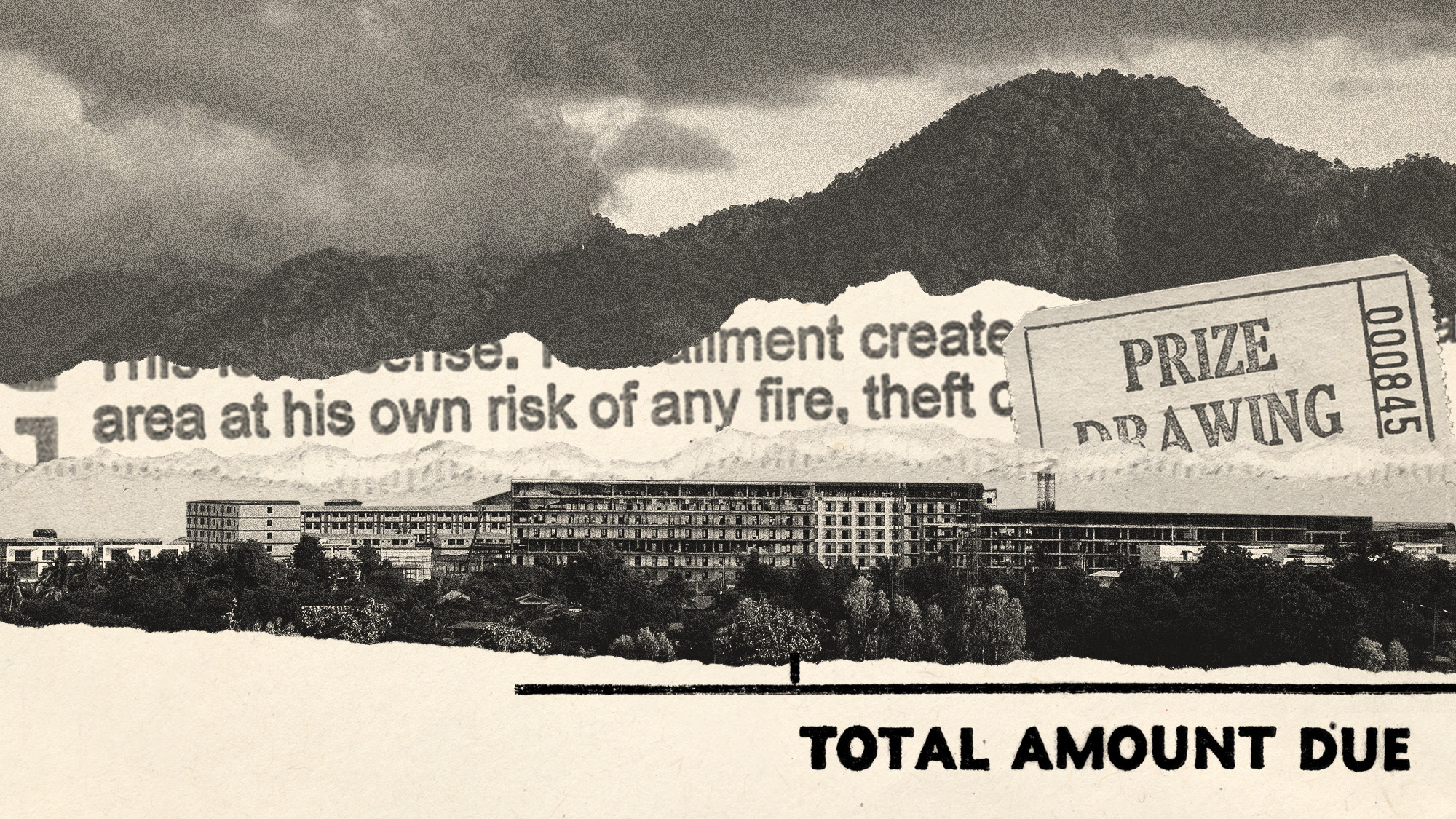
    Scam centres across Southeast Asia have become so powerful and entrenched that they are now developing into “scam states”.

    Scam states are similar to narco states, which are countries where the entire government and economy become profoundly corrupted and controlled by the illegal drug trade.

    A “scam state” is a country where an “illicit industry has dug its tentacles deep into legitimate institutions, reshaping the economy, corrupting governments and establishing state reliance on an illegal network”, said The Guardian. They’re growing in number because the “multi-billion-dollar global scam industry” has become “so monolithic”.

    After beginning as small online fraud rings, scamming has transformed into a sprawling, industrial-scale criminal economy in parts of Southeast Asia, an illicit industry that has penetrated local financial systems and institutions to a degree that rivals some of the world’s most entrenched illegal trades.

    The US and UK have launched joint efforts – like the Scam Center Strike Force – to take on the illegal networks and the infrastructure supporting them, but dismantling scam states is a complex task.

    Analysts warn that without targeting the leadership and financial core of these networks, law enforcement may merely displace the problem rather than eliminate it. The rise of scam states highlights a new frontier of organised crime – one that intertwines digital innovation, exploitation and corruption on a vast scale.


    on this day

    5 March 2013

    Then vice-president Nicolás Maduro assumed the Venezuelan presidency after the death of Hugo Chávez. This week the detained leader’s defence lawyer claimed that the US was blocking the Venezuelan government from paying for his legal representation in the drug trafficking case that he faces in New York.


    Today’s newspapers

    ‘Spy probe’

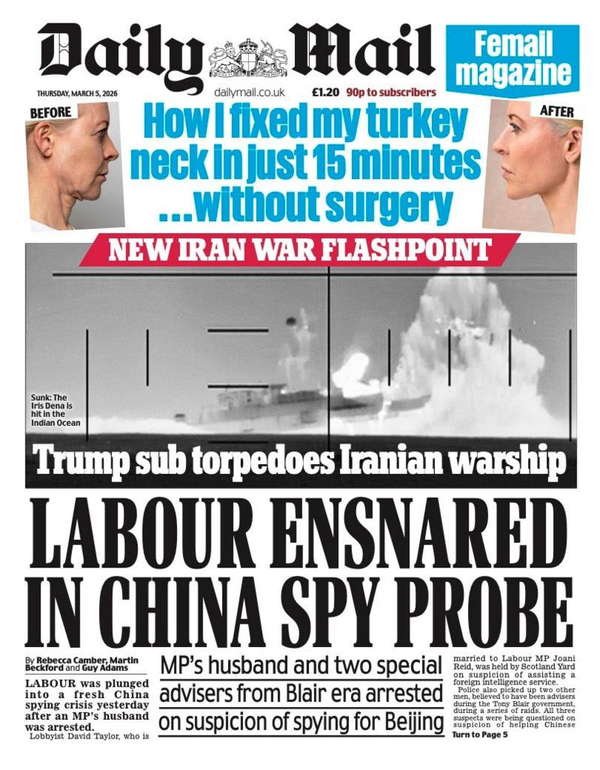
    “Labour ensnared in China spy probe”, says the Daily Mail. “I’ve never suspected my husband”, says Joani Reid says in The Mirror. “US broadens war on Iran to high seas”, says the Financial Times. “At least 87 dead as US sinks Iranian ship near Sri Lanka”, The Guardian reports. “Trump’s war goes global”, Metro says. “Miliband led revolt to Trump’s Iran war”, says The Telegraph. “Allies round on ‘weak’ UK”, The Times says. “Weak, weak, weak,” says the Daily Express.

    See the newspaper front pages


    tall tale

    Par for the cork

    The appearance of a sinkhole on a Manchester golf course led to the discovery of a long forgotten wine cellar containing dozens of bottles. Initially assumed to be a broken drain on the 13th green – part of the course that is aptly named “the Cellars” – the vault was linked to a 12th-century country house that was demolished more than 100 years ago. Members of the Davyhulme Golf Club said the bottles might be put on display in the clubhouse “for safekeeping”.


    Morning Report was written and edited by Arion McNicoll, Will Barker, Ross Couzens and Chas Newkey-Burden, with illustrations by Julia Wytrazek.

    Image credits, from top: Jonas Gratzer / LightRocket / Getty Images; Andreas Rentz / Getty Images; Neydtstock / Getty Images; Illustration by Julia Wytrazek / Getty Images.

    Morning Report and Evening Review were named Newsletter of the Year at the Publisher Newsletter Awards 2025
     

    Recent editions

    • Morning Report

      Talarico victory tees up Texas-sized Senate fight

    • Evening Review

      Can Trump explain his war with Iran?

    • Morning Report

      Trump floats lengthy Iran war

    VIEW ALL
    TheWeek
    • About Us
    • Contact Future's experts
    • Terms and Conditions
    • Privacy Policy
    • Cookie Policy
    • Advertise With Us
    • FAQ
    Add as a preferred source on Google

    The Week is part of Future US Inc, an international media group and leading digital publisher. Visit our corporate site.

    © Future US, Inc. Full 7th Floor, 130 West 42nd Street, New York, NY 10036.