The Week The Week
flag of US
US
flag of UK
UK
https://cdn.mos.cms.futurecdn.net/flexiimages/jacafc5zvs1692883516.jpg

SUBSCRIBE & SAVE

Less than $3 per week

Sign in
  • View Profile
  • Sign out
  • The Explainer
  • The Week Recommends
  • Newsletters
  • Cartoons
  • From the Magazine
  • The Week Junior
  • Student Offers
  • More
    • Politics
    • World News
    • Business
    • Health
    • Science
    • Food & Drink
    • Travel
    • Culture
    • History
    • Personal Finance
    • Puzzles
    • Photos
    • The Blend
    • All Categories
  • Newsletter sign up Newsletter
  • WeekDay AM: 10 Things you need to know this morning
    Artemis II heads home, Trump’s deadline looms, and Wireless stands by Ye booking

     
    today’s space story

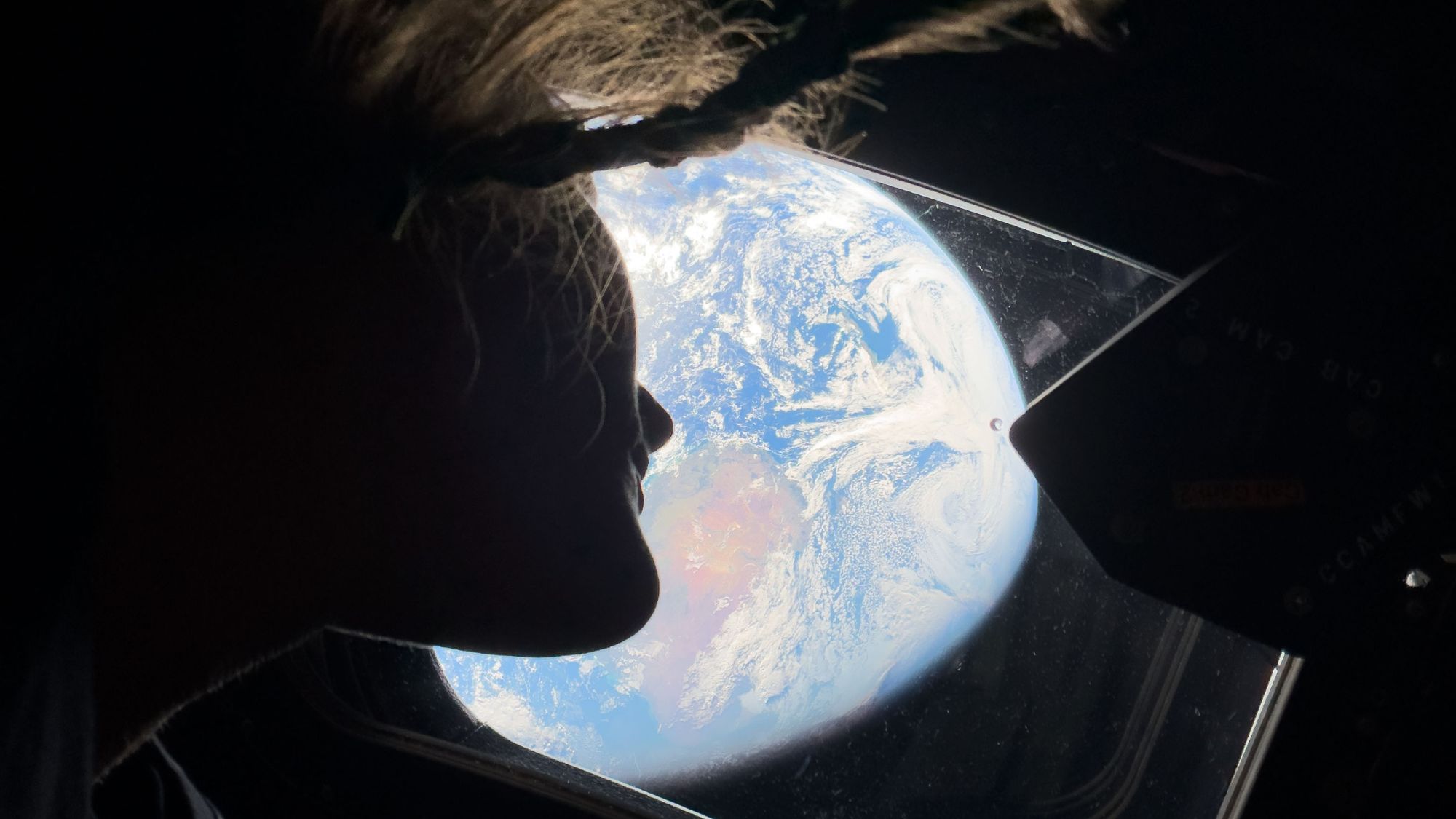
    Artemis II crew begin journey home

    What happened
    The Artemis II crew are now heading back to Earth after briefly moving out of contact yesterday when their space capsule travelled behind the Moon. Earlier, they exceeded the previous human distance record set by Apollo 13, travelling beyond 248,655 miles from Earth. 

    Who said what
    Nasa described the communications gap as routine and planned, noting similar periods occurred during earlier lunar missions. The agency said the blackout provided a rare opportunity for uninterrupted operations as the crew conducted observations and systems checks during the flyby phase.

    As the astronauts passed the Apollo 13 distance record, they proposed naming a crater on the Moon’s surface for Carroll, the wife of the mission’s commander, Reid Wiseman, who died of cancer in 2020. The “crew embraced as Houston held a moment of silence with Mr. Weisman’s family”, said the New York Times. The moment “left everyone in tears”, said Elisha Sauers on Mashable.

    What next? 
    The mission will continue with detailed observation of the lunar surface as they come back to Earth. The astronauts are also expected to witness a solar eclipse, offering further scientific data during their return journey.


    today’s international story

    Trump threatens to ‘decimate’ Iran if deal fails

    What happened
    Donald Trump has intensified his warning to Iran, setting tonight as the cutoff for an agreement to reopen the Strait of Hormuz. Speaking in Washington, he outlined a potential campaign targeting bridges and energy facilities if negotiations collapse. The comments came as Iran presented a fresh proposal, which was conveyed via Pakistan, though key details remain undisclosed and early responses from US officials have been negative. 

    Who said what
    “We have a plan… where every bridge in Iran will be decimated by 12 o’clock tomorrow night”, Trump said, adding reconstruction could take a century. He also said that “we have an active, willing participant on the other side” and called a ceasefire framework a “significant step” but “not good enough.” Iranian officials warned reprisals would be broader and more severe if civilian sites were attacked.

    What next?
    A ceasefire “remains unlikely while both Iran and the US believe they are winning”, said Adrian Blomfield in The Telegraph. The “greatest enemy of peacemaking is over-optimism” and at present, “neither Washington nor Tehran has an incentive to compromise”.


    Today’s music story

    Wireless stands by Kanye West booking amid backlash

    What happened
    Organisers of London’s Wireless festival have defended plans for Kanye West to headline, despite mounting criticism over his past antisemitic remarks. The artist, now legally known as Ye, has drawn condemnation for statements praising Adolf Hitler and for advertising a swastika T-shirt for sale on his website. Political leaders and community groups have urged authorities to block his appearance, while several corporate sponsors have withdrawn support from the event in protest.

    Who said what
    Festival Republic chief Melvin Benn said West “is intended to come in and perform”, insisting organisers are “not giving him a platform to extol opinion… only to perform the songs”. Keir Starmer called the booking “deeply concerning”, while minister Bridget Phillipson described the artist’s past comments as “completely unacceptable and absolutely disgusting”. 

    The Wireless festival’s backing for Kanye West “is all about money”, said Dan Hancox in The Guardian. “Don’t pretend it’s about the art”. It is “not even as if his music is any good any more”.

    What next?
    Government officials are reviewing whether West should be permitted entry to the UK. Ye has apologised previously, citing mental health struggles, but critics say the festival is not the place to test rehabilitation.


    It’s not all bad

    The hatching of two bald eagle chicks in California has sparked a global wave of joy, with thousands tuning in to a livestream that has become one of the most watched of its kind. Viewers say following the birds has brought humour, comfort and a sense of connection to nature, especially during difficult times. The online community has also rallied to raise $1.6 million (£1.2 million) to protect the eagles’ habitat, turning a local wildlife moment into a broader story of hope and collective action.


    under the radar

    There’s a radioactive time bomb in the Pacific Ocean

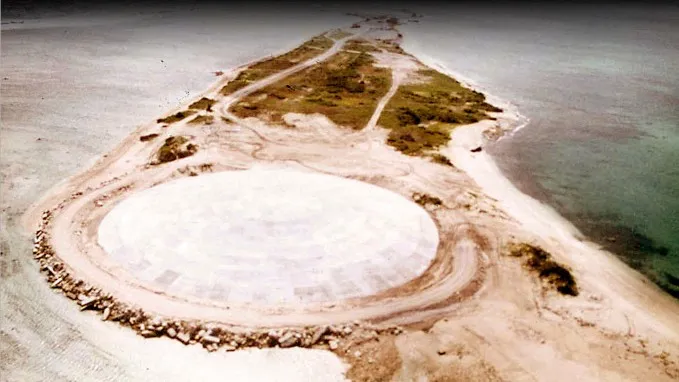
    The concrete cap of a tomb encasing radioactive fallout now has cracks, and what’s beneath can rise from the dead. The US military, in 1958, conducted a nuclear test on Runit Island in the Marshall Islands with an 18-kiloton bomb called Cactus. The resulting blast left behind an almost 33-foot (10-metre) deep crater, which later became a dumping ground for the debris from a myriad of nuclear tests from the 1940s to 50s. In 1977, the Runit Dome was created to contain that radioactive waste. But the dome’s deterioration could contaminate the ocean and displace hundreds of people.

    The Runit Dome contains more than 120,000 tons of contaminated material from nuclear testing, including lethal quantities of plutonium. The isotope plutonium-239 is a “radioactive element used in nuclear weapons that remains dangerous for more than 24,000 years,” said the Australian Broadcasting Corporation (ABC).

    Merely coming into contact with the radioactive element can kill you. Concrete, unfortunately, does not endure that long. “There are already cracks in it in less than 50 years,” Arjun Makhijani, a nuclear engineer and president of the Institute for Energy and Environmental Research, said to the ABC.

    The ocean has been “steadily encroaching on the dome over the years,” and “residents fear nuclear contamination if the site were to collapse,” said The Cool Down. The problem is expected to worsen over time without climate change mitigation. “Legacies of nuclear testing and military land requisitions by a foreign power have displaced hundreds of Marshallese for generations,” Paula Gaviria Betancur, the UN Special Rapporteur, said in 2024, and the “adverse effects of climate change threaten to displace thousands more.”


    on this day

    7 April 1994

    The Rwandan Genocide began, with the Presidential Guard killing moderate politicians and public figures in Kigali, including Prime Minister Agathe Uwilingiyimana. This week, Congo’s army announced a disarmament push against a militia linked to the Rwandan genocide, in order to broker peace with Rwanda.


    Today’s newspapers

    ‘£3bn strike’

    With the six-day resident doctors’ strike due to begin, the Daily Mail says it will “cost hospitals £3bn”. Medics are “holding patients hostage”, says the Daily Express. The Independent warns that the new walk-out could be “the most disruptive strike yet” causing “weeks of chaos”. Trump has warned he could “wipe out Iran tonight”, says The Telegraph, but Tehran has threatened “crushing reprisals”. Astronauts have paid tribute to “Mother Earth”, says The Times.

    See the newspaper front pages


    tall tale

    Fin the fast lane

    A goldfish named Blub has set an official Guinness World Record for the greatest distance covered in a motion-sensing vehicle by a goldfish in one minute. Appearing on Italian TV show “Lo Show Dei Record” Blub traveled 12.28 metres (40 ft 3.46 in) in just 60 seconds. “How am I going to explain to Blub now that he has a world record title?” joked the vehicle’s inventor Thomas de Wolf to Guinness.


    Morning Report was written and edited by Arion McNicoll, Will Barker, Devika Rao, Ross Couzens, and Chas Newkey-Burden.

    Image credits, from top: Nasa / Getty Images; Celal Gunes / Anadolu / Getty Images; Hector Retamal / AFP / Getty Images; Giff Johnson / US Defence Nuclear Agency / AFP / Getty Images.

    Morning Report and Evening Review were named Newsletter of the Year at the Publisher Newsletter Awards 2025
     

    Recent editions

    • Morning Report

      Trump’s Easter profanity

    • Evening Review

      Trump loses his grip on oil

    • Morning Report

      Bondi benched

    VIEW ALL
    TheWeek
    • About Us
    • Contact Future's experts
    • Terms and Conditions
    • Privacy Policy
    • Cookie Policy
    • Advertise With Us
    • FAQ
    Add as a preferred source on Google Add as a preferred source on Google

    The Week is part of Future US Inc, an international media group and leading digital publisher. Visit our corporate site.

    © Future US, Inc. Full 7th Floor, 130 West 42nd Street, New York, NY 10036.