The Week The Week
flag of US
US
flag of UK
UK
https://cdn.mos.cms.futurecdn.net/flexiimages/jacafc5zvs1692883516.jpg

SUBSCRIBE & SAVE

Less than $3 per week

Sign in
  • View Profile
  • Sign out
  • The Explainer
  • The Week Recommends
  • Newsletters
  • Cartoons
  • From the Magazine
  • The Week Junior
  • Student Offers
  • More
    • Politics
    • World News
    • Business
    • Health
    • Science
    • Food & Drink
    • Travel
    • Culture
    • History
    • Personal Finance
    • Puzzles
    • Photos
    • The Blend
    • All Categories
  • Newsletter sign up Newsletter
  • WeekDay AM: 10 Things you need to know this morning
    Starmer escapes probe, the King backs Nato, and the real-life ‘giant kraken’

     
    today’s politics story

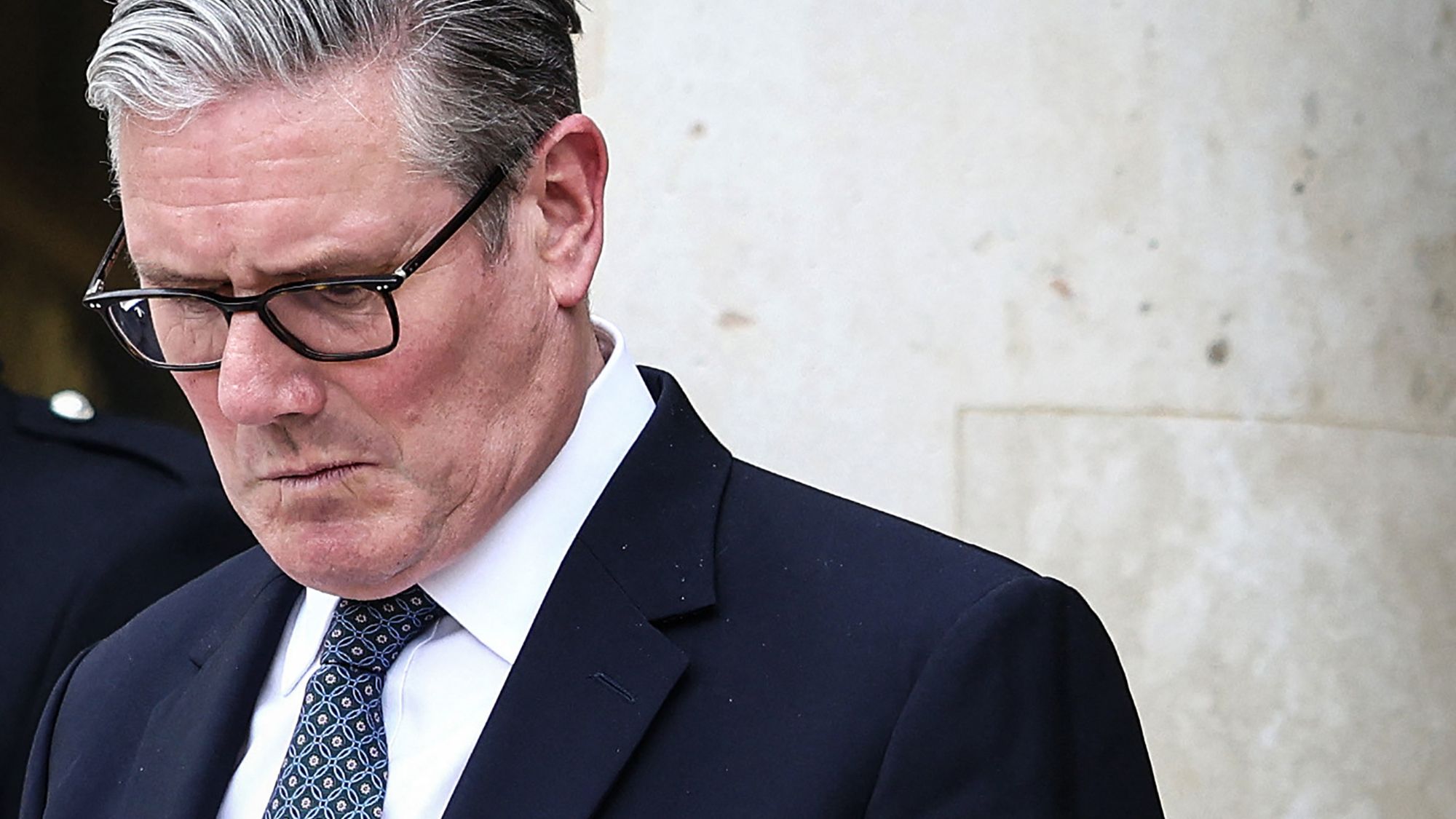
    Starmer heads off Labour revolt over Mandelson probe

    What happened
    MPs have voted down an attempt to launch an inquiry into whether Keir Starmer gave inaccurate statements to Parliament over the appointment of Peter Mandelson as ambassador to Washington. The proposal, brought forward by the Conservatives, was defeated by 335 votes to 223. Despite unease among some Labour backbenchers, most supported the government after a co-ordinated effort by Downing Street to secure backing. However, 14 Labour MPs broke ranks to back the investigation, while others were absent.

    Who said what
    Conservative leader Kemi Badenoch said the rules were “very clear” and that the prime minister’s account of what had happened “was not correct”. Senior minister Darren Jones called her comments “ranting incoherence”. Labour MP Emma Lewell warned that the handling of the vote risked appearing like “a cover-up”.

    In politics, “leaders always make mistakes”, said The Telegraph’s editorial board. “Owning up to them is essential. Trying to cover them up is invariably disastrous.”

    What next?
    For now, the prime minister has “evaded a privileges committee grilling” on the Mandelson affair, but it is “no victory to force your own backbenchers to support you”, said The Times’s editorial board. “Hiding behind the whip stores up trouble for Keir Starmer.”

    In a leaked recording, Britain’s new ambassador to Washington Christian Turner said Starmer was now “on the ropes” and that Labour could “remove” him after next month’s local elections, according to reports.


    today’s international story

    King urges US to stand firm on Nato and Ukraine

    What happened
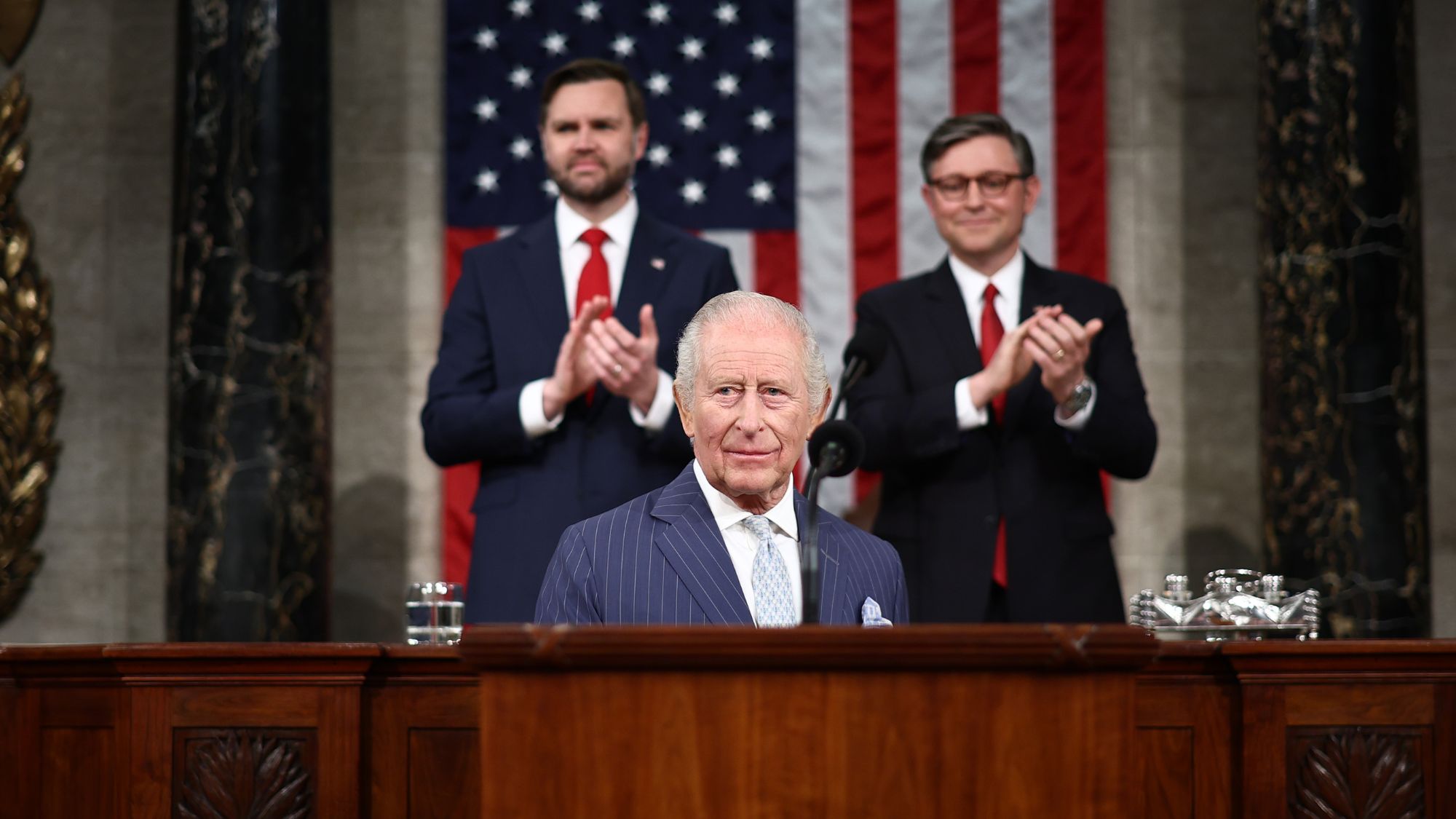
    King Charles highlighted the importance of Nato and the continued backing of Ukraine in a speech to the US Congress, placing defence cooperation at the centre of the UK-US alliance. Speaking during a state visit marking 250 years of American independence, he warned that the world had become “more volatile and more dangerous”, and that joint security efforts remained essential.

    Who said what
    The King called for “unyielding resolve” in support of “Ukraine and her most courageous people” to achieve a lasting peace. He said US leadership lay at the “heart of Nato”, safeguarding both continents.

    The King “sprinkled well-crafted jokes” in among his “carefully chosen references” to the US and Britain’s shared history, said The New York Times, and received “standing ovations and laughter across both sides of the aisle”.

    “Simply put, the King nailed it,” said Republican Senator Lindsey Graham.

    What next?
    Behind the “jovial address” were comments “laced with plenty of shade”, said Politico. His “trademark British understatement” was “strong on subtext”. This was a speech that “will be read as a veiled plea to Donald Trump to return to the US’s traditional European alliances and restore his country’s role as a defender of liberal values”, said The Guardian.


    Today’s energy story

    UAE to quit oil cartel Opec amid Gulf crisis

    What happened
    The United Arab Emirates has announced that it will leave the Opec and Opec+ groups of major oil-producing nations next month after nearly 60 years of membership. Emirati officials had long floated the possibility of quitting the cartel, blaming its quotas for unfairly curtailing its oil exports. And it has recently criticised fellow Arab and Gulf states for not doing enough to protect it from Iranian attacks.

    Who said what
    The decision reflects the UAE’s “long-term economic vision” and desire to increase investment in its energy production sector, said a statement published by the state news agency.

    This is “the beginning of the end of Opec”, Saul Kavonic, head of energy research at MST Financial, told the BBC. “With the UAE leaving, Opec loses about 15% of its capacity.” Saudi Arabia, the group’s de facto leader, will “struggle to keep the rest of Opec together”. This is “a fundamental geopolitical reshaping of the Middle East and oil markets”.

    What next?
    The World Bank has warned that the war in the Middle East will cause energy prices to rise by about a quarter on average this year.


    It’s not all bad

    Amid the destruction of war, Iran has reported a rare conservation success: a rise in its critically endangered Asiatic cheetah population. Officials recorded 21 new adults and six cubs this year, up from just 17 known cats in 2025. Found only in Iran, the cheetah remains under threat, but its fragile rebound has offered a source of national pride – and hope for the species’ future.


    under the radar

    Not just folklore: the real-life prehistoric ‘giant kraken’

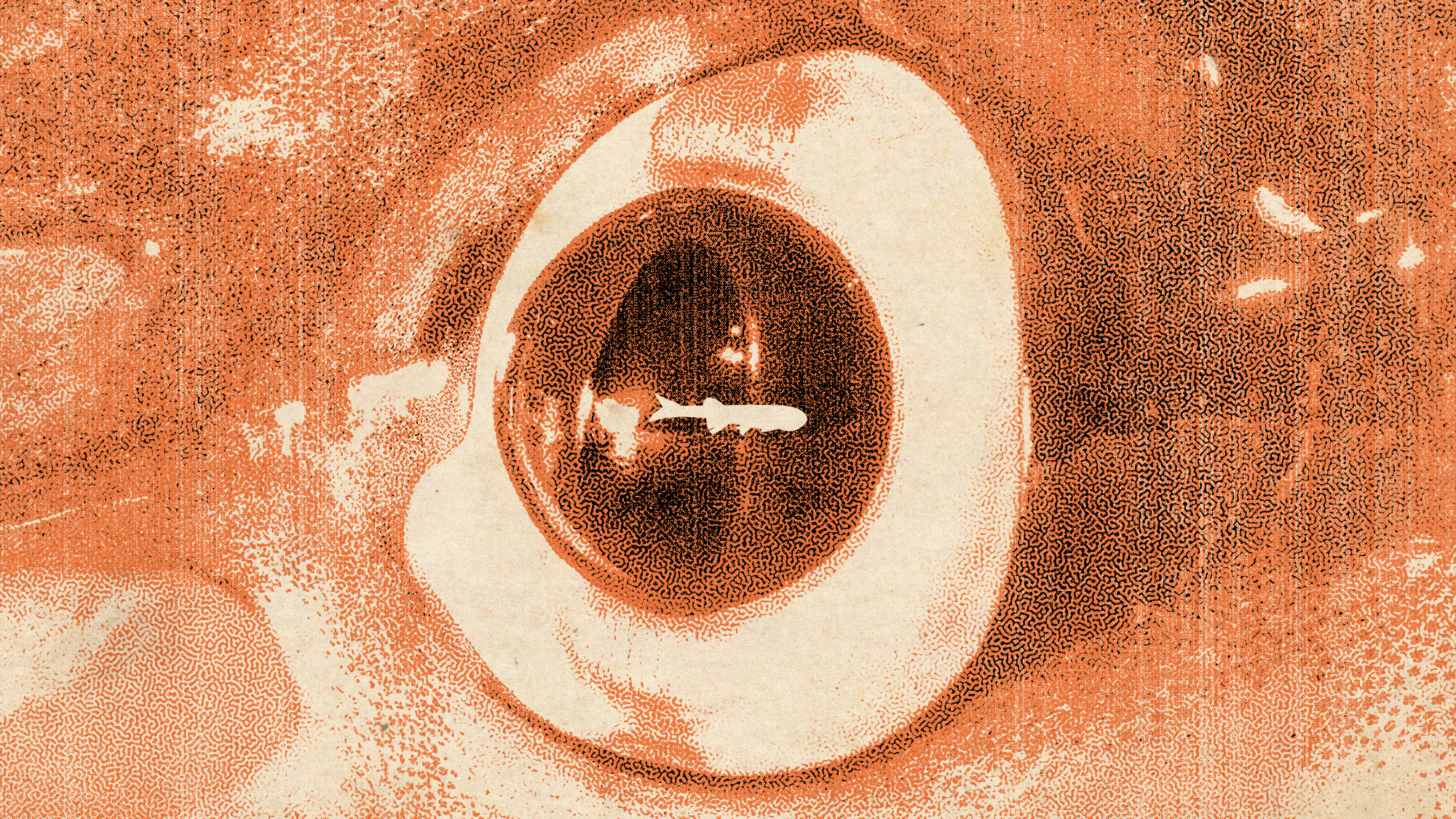
    The giant kraken, a mythical marine beast, may not be entirely fictional. New evidence suggests that octopuses up to 62 feet long likely roamed the waters of ancient Earth, ripping and devouring any prey in their path.

    These gigantic octopuses might have been formidable predators of the ocean approximately 100 million years ago, according to a study published in the journal Science. “With their large bodies, long arms, powerful jaws and advanced behavior, they represent what could be described as a real Cretaceous Kraken,” Professor Yasuhiro Iba, a paleontologist at Hokkaido University in Japan and the lead author of the study, told Reuters. The invertebrates would have “rivalled” and “possibly even preyed upon apex predators such as mosasaurs and plesiosaurs”, said The Guardian.

    Although octopuses are some of Earth’s oldest animals, they are difficult to study from the past because they lack hard external shells and have very few fossils. So the researchers examined the fossilised beaks of the animals, revealing two extinct species: Nanaimoteuthis jeletzkyi and Nanaimoteuthis haggarti. The beaks and jaws were also used to deduce the size of the creatures – between 23 and 62 feet – as well as their feeding habits.

    However, there may be some inaccuracies in the findings because the researchers used “error-prone” methods in estimating the size of the octopuses, Dr René Hoffmann, a paleontologist focusing on fossil cephalopods at the Ruhr University Bochum in Germany, told Live Science.

    Despite this, the results provide valuable new information about the ancient animals. “It’s a big old planet,” Dr Neil Landman, a paleontologist at the American Museum of Natural History in New York, told The Associated Press. “So we have lots to look at to piece together the marine ecosystem through time.”


    on this day

    29 April 1991

    A tropical cyclone struck Bangladesh, killing an estimated 140,000 people. The country has since invested heavily in weather forecasting, early warning systems and evacuation procedures. In recent years it has been hit by several extremely powerful cyclones, but the death tolls have been far lower.


    Today’s newspapers

    ‘Diplomatic masterclass’

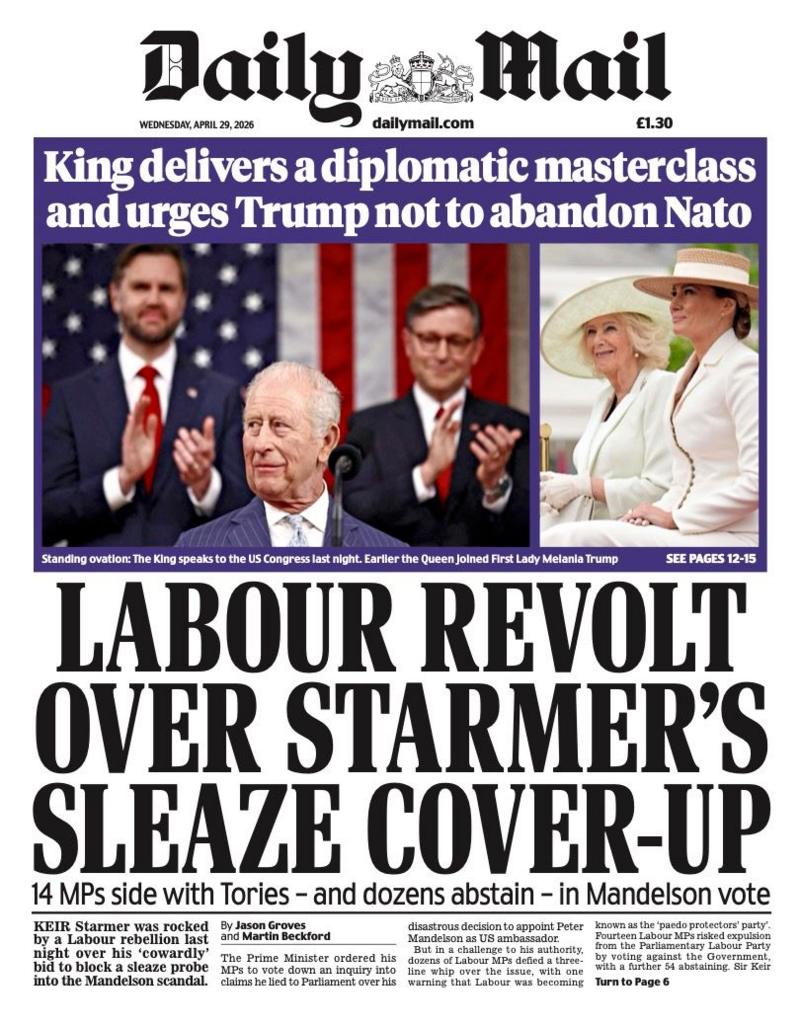
    King Charles’ speech to Congress was a “diplomatic masterclass”, says the Daily Mail but an “oblique reference” to “victims of some ills” is unlikely to be accepted by victims of Jeffrey Epstein, says The i Paper. According to leaked comments from the UK ambassador to the US in the Financial Times, America’s only special relationship is “probably Israel”. “Blatant profiteering” is The Mirror’s verdict, as it reports that BP’s profits came “on the back of Iran turmoil and spiralling costs”.

    See the newspaper front pages


    tall tale

    Grave remarks

    An American widow created a hologram of her late husband to speak at his wake, stunning mourners. Pam Cronrath, from Washington state, spent “at least 10 to 15 times” her $2,000 budget to create a “super wake” for husband of 60 years Bill, including a life-size avatar that appeared on screen to address his family and friends. “People were aghast,” she said. “Some genuinely couldn’t understand how it was happening.”


    Morning Report was written and edited by Arion McNicoll, Harriet Marsden, Will Barker, Devika Rao, Ross Couzens and Chas Newkey-Burden, with illustrations by Julia Wytrazek.

    Image credits, from top: Tom Nicholson / Pool / AFP / Getty Images; Henry Nicholls / Pool / Getty Images; Thomas Kronsteiner / Getty Images; Illustration by Julia Wytrazek / Getty Images.

    Morning Report and Evening Review were named Newsletter of the Year at the Publisher Newsletter Awards 2025
     

    Recent editions

    • Morning Report

      Trump mulls Iran’s latest offer

    • Evening Review

      Trump spins the WHCA attack

    • Morning Report

      Seeking a motive for press gala attack

    VIEW ALL
    TheWeek
    • About Us
    • Contact Future's experts
    • Terms and Conditions
    • Privacy Policy
    • Cookie Policy
    • Advertise With Us
    • FAQ
    Add as a preferred source on Google Add as a preferred source on Google

    The Week is part of Future US Inc, an international media group and leading digital publisher. Visit our corporate site.

    © Future US, Inc. Full 7th Floor, 130 West 42nd Street, New York, NY 10036.