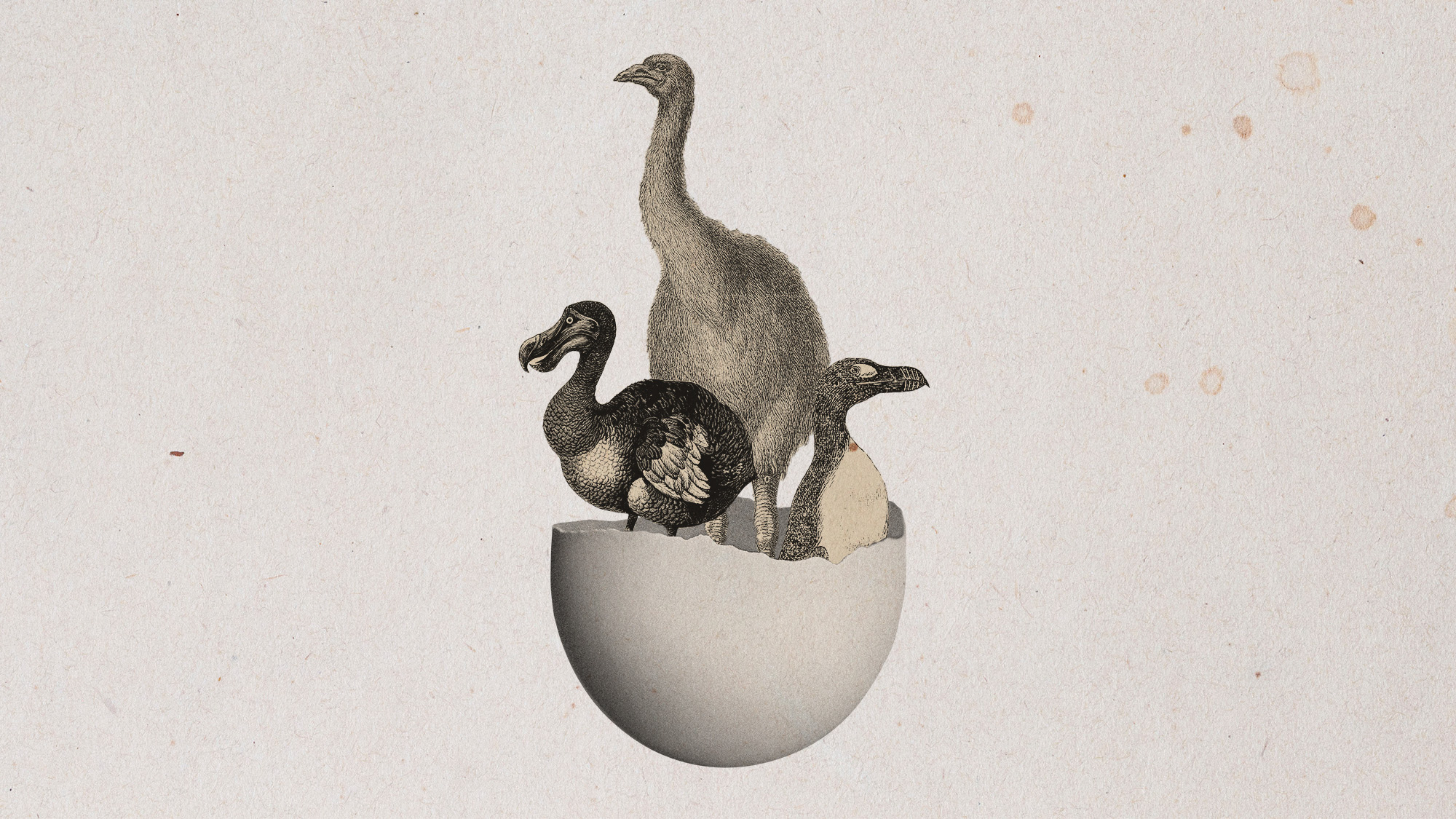
Colossal Biosciences, a Texas-based biotech company known for its de-extinction agenda and previous claims about genetically engineering dire wolves, has successfully hatched 26 chicks from artificial eggs. The firm now hopes to use the technology to bring back extinct birds, including the dodo and the giant moa. But sceptics say de-extinction is not possible and that the company may be overstating its claims.
Eggs are a biological wonder. They are the “largest single cell of any species” and a “self-contained engine of incubation, doing away with the need for a living womb to keep a growing organism safe”, said Time. Because of eggs’ unique properties, artificially engineering them is a difficult task. However, Colossal Biosciences said in a release that it had managed to 3D-print artificial eggs with a “semi-permeable, silicone-based membrane housed inside a rigid hexagonal support cup”.
But “producing a chick from an artificial vessel is not necessarily new”, Dr Nicola Hemmings, who studies bird reproductive biology at the University of Sheffield, told CBS News. In the past scientists have “used cruder technology to create transparent eggshells that hatched chicks from plastic films or sacks”.
Colossal Biosciences previously claimed that it had revived the extinct dire wolf and hoped to resurrect species like the woolly mammoth and the Tasmanian tiger. The company has also suggested that its technology could support conservation efforts, but included “no data or peer-reviewed scientific publications” in its release about the hatching chicks, “making it difficult to independently assess the claim”, said Nic Rawlence, an associate professor in ancient DNA at the University of Otago in New Zealand, on The Conversation. “If the technology lives up to the hype, it won’t be a silver bullet or panacea to stopping species declines, but it might just help.” |