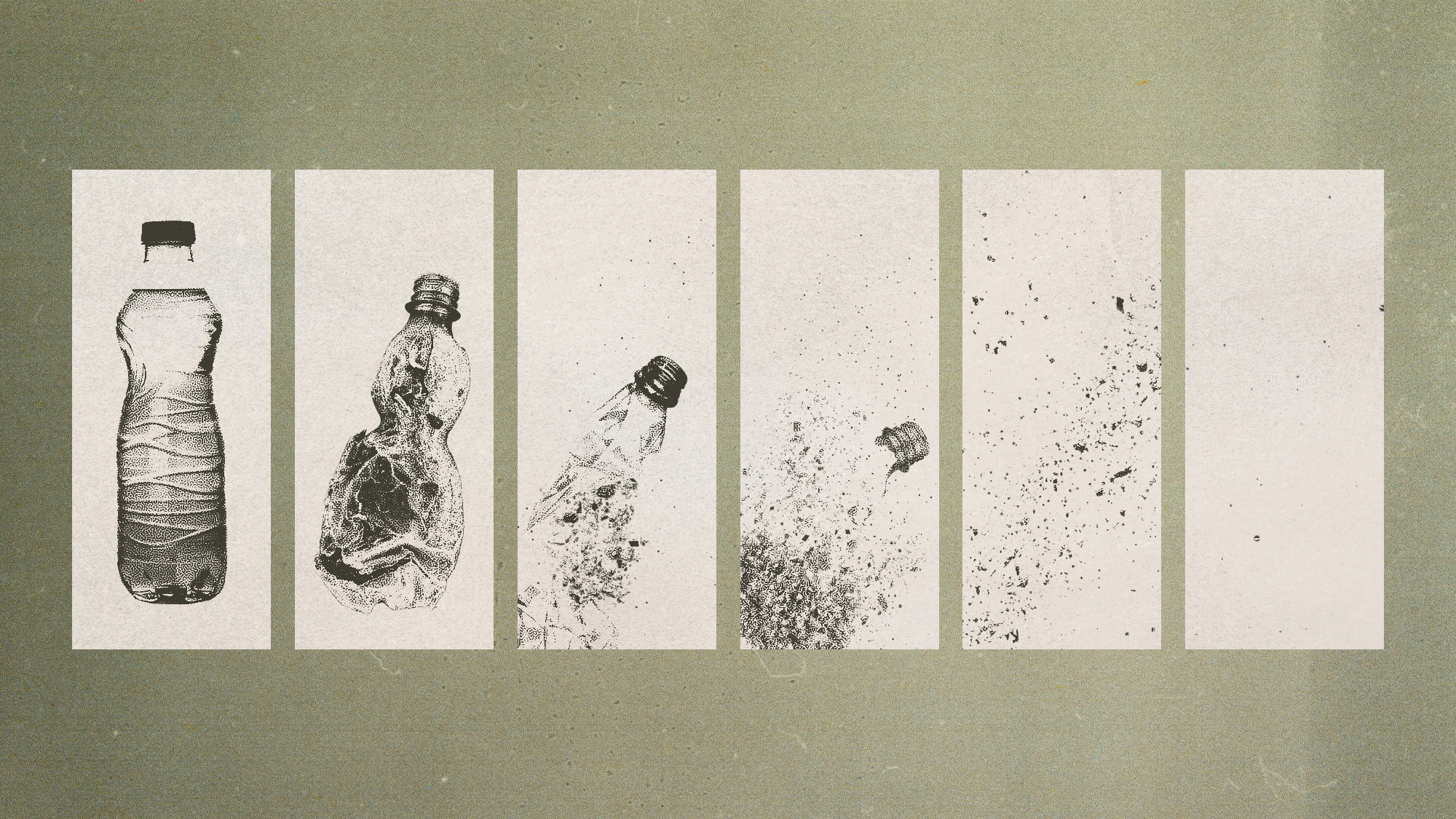
Plastic products could soon have a built-in self-destruct feature. Scientists have found a way to incorporate bacteria into plastic that can completely break it down after activation. If this technique can be widely applied, it would greatly reduce the amount of plastic pollution in the environment.
The researchers have created a plastic that is capable of degrading quickly without producing microplastics, according to a study published in the journal ACS Applied Polymer Materials. The key is using microbes. Living plastics “contain dormant microbes capable of degrading the surrounding polymer”, said a release about the study. Previous living plastic designs “often depended on a single enzyme, which limited how efficiently the material could be broken down”. However, in the new study, scientists engineered the bacteria “Bacillus subtilis to produce two polymer-degrading enzymes that work together”.
The two enzymes team up to break down the plastic. The first enzyme “cuts the long polymer chains at random points, reducing them into shorter sections”, while the second enzyme “works from the ends of those fragments, breaking them down further into their individual monomer building blocks”, added the release.
With the embedded microbes and the enzymes, “plastics could effectively ‘come alive’ and self-destruct on command, turning durability from a problem into a programmable feature”, Zhuojun Dai, a corresponding author on the paper, said in the release.
While the researchers only incorporated the bacterial spores into one type of plastic, they eventually hope to “develop a method that activates them in water, where a significant share of plastic pollution accumulates”, according to the release. The same strategy “could be adapted for other materials, including plastics widely used in disposable products”. |