The Week The Week
flag of US
US
flag of UK
UK
https://cdn.mos.cms.futurecdn.net/flexiimages/jacafc5zvs1692883516.jpg

SUBSCRIBE & SAVE

Less than $3 per week

Sign in
  • View Profile
  • Sign out
  • The Explainer
  • The Week Recommends
  • Newsletters
  • Cartoons
  • From the Magazine
  • The Week Junior
  • Student Offers
  • More
    • Politics
    • World News
    • Business
    • Health
    • Science
    • Food & Drink
    • Travel
    • Culture
    • History
    • Personal Finance
    • Puzzles
    • Photos
    • The Blend
    • All Categories
  • Newsletter sign up Newsletter
  • Brand Logo
    Primary drama, Canada tariff reprieve and TPS terminations

     
    TODAY’S ELECTIONS story

    GOP voters reject Florida’s Mills, several Trump picks

    What happened
    Primaries yesterday in Florida, Wyoming and Alaska delivered another surprise win for democratic socialists, another loss for a House incumbent and a mixed bag for candidates endorsed by President Donald Trump. His pick for Florida governor, Rep. Byron Donalds, won the Republican primary and will face Democrat David Jolly, a former Republican. But in Wyoming’s GOP gubernatorial contest, Trump-backed Megan Degenfelder lost to state Sen. Eric Barlow. 

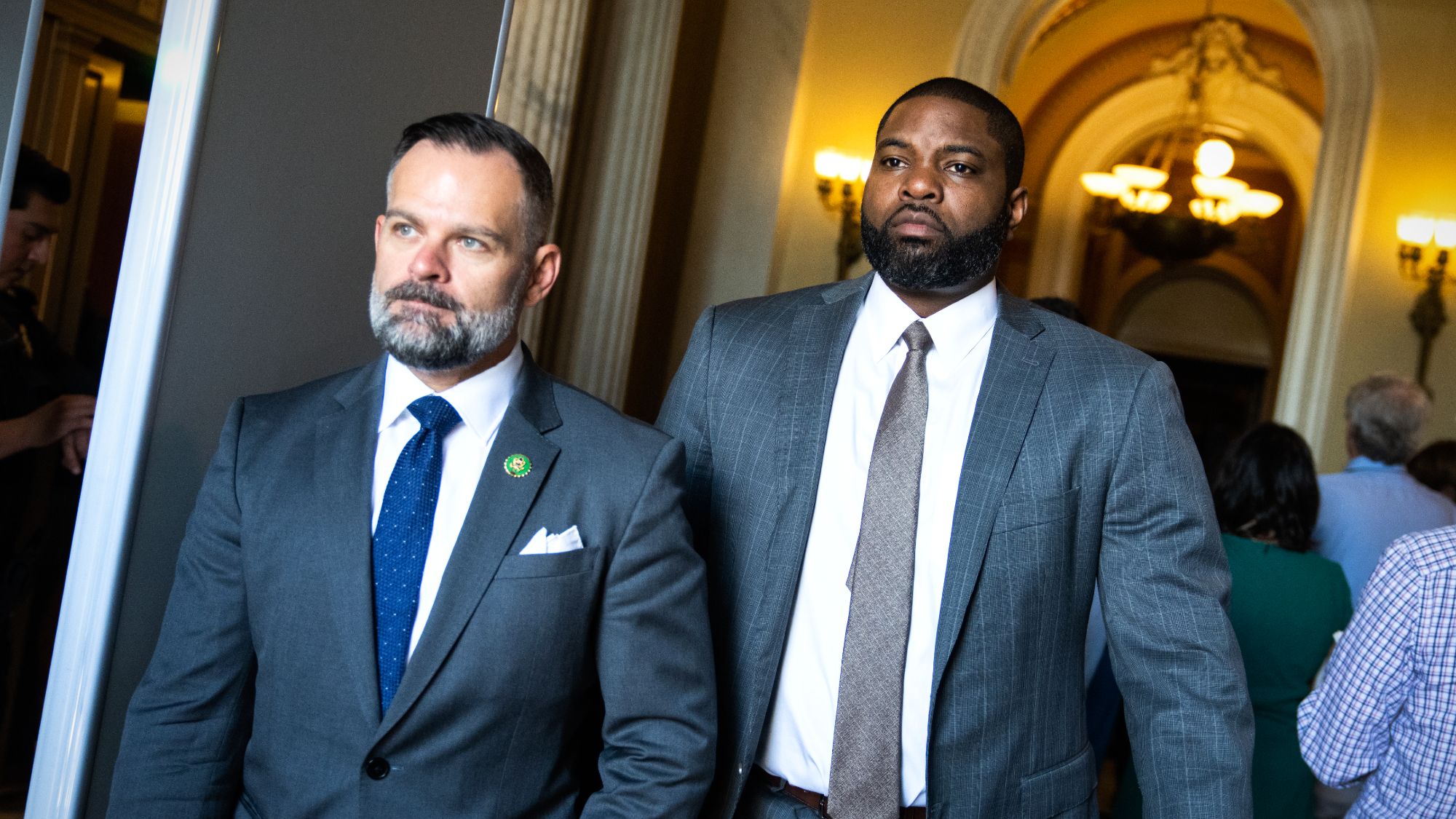
    Trump’s candidate to replace Donalds, Catalina Lauf, was defeated by conservative talk radio station owner Jim Schwartzel in a crowded GOP primary. And Rep. Cory Mills (R-Fla.) (pictured above left, with Donalds), who previously had Trump’s backing, “became the fourth House Republican to lose his primary this year,” Semafor said, “solving a problem for colleagues who wanted him and his scandals” gone.

    On the Democratic side, Florida state Rep. Angie Nixon, a new member of the Democratic Socialists of America, beat the better-funded Alexander Vindman to face Sen. Ashley Moody (R) in November. Nixon’s win was a “stunner,” CNN said. But the “progressive insurgency fell short in two other closely watched” Florida races, as Reps. Debbie Wasserman Schultz and Rep. Jared Moskowitz prevailed in newly drawn districts.

    Who said what
    Yesterday’s results were the “latest indication that Trump’s endorsement — the most coveted asset in Republican campaigns — is no guarantee of victory,” CNN said. They were also another “lesson in why not to write national narratives out of every race,” Semafor said. 

    What next?
    “Very few” of yesterday’s contested seats “will be competitive in November,” Semafor said. In an exception, former Rep. Mary Peltola (D) and Sen. Dan Sullivan (R) will face each other — and likely another Dan Sullivan — in Alaska’s four-way ranked-choice Senate election. 


    TODAY’S GLOBAL TRADE story

    Trump pauses 50% Canadian tariffs for 3 days

    What happened
    President Donald Trump last night announced a three-day pause of 50% tariffs he had threatened to impose on $20 billion of Canadian imports. “Canada and the U.S.A., subject to the finalization of documents, have a DEAL!” he said on social media, about 90 minutes before the midnight deadline. Canadian Prime Minister Mark Carney said the two sides had made “substantial progress,” but there’s “important work still to be done.” 

    Who said what
    Trump’s tariffs “would have risked escalation into a trade war between the North American neighbors,” The Wall Street Journal said. But the “political impact would likely have been bigger than the economic one,” The Associated Press said. “Canada had threatened to retaliate” with “levies of its own,” and Trump would be “taking a risk by imposing a hefty new tariff” on consumer goods ahead of midterm elections, with U.S. voters “already frustrated with the high cost of living.” 

    What next?
    Trump has “previously announced deals with other countries, only to have them fall through,” The New York Times said. But the U.S. and Canada both have “reason to step back from the brink,” the AP said. Long-term government borrowing costs “hit their highest in decades” yesterday, Reuters said, as “Trump’s policies — from tariffs to war — upend the global order.”


    TODAY’S IMMIGRATION Story

    Ethiopians in US lose TPS status after court ruling

    What happened
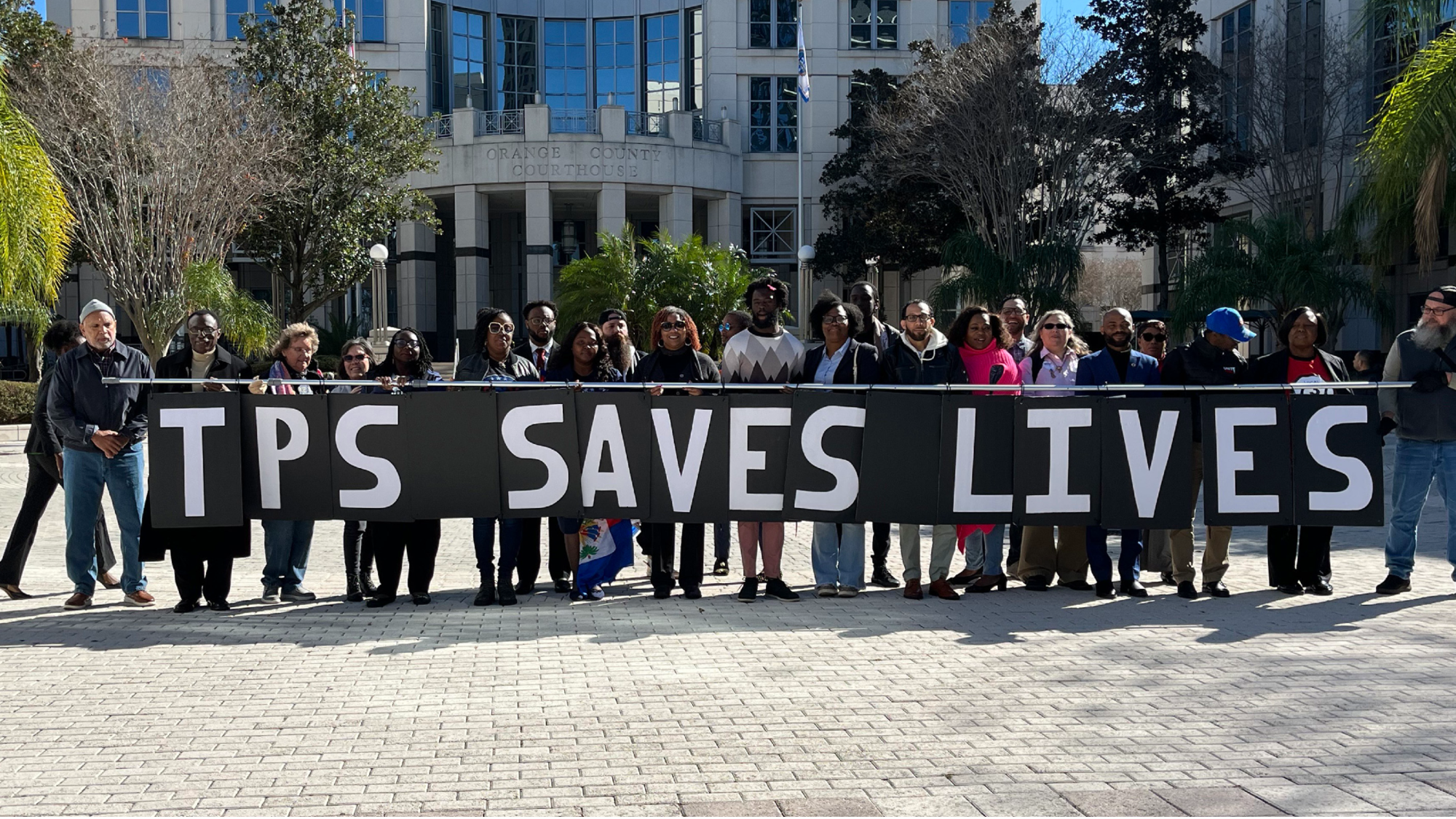
    A federal judge in Boston yesterday lifted his order blocking the Trump administration from ending Temporary Protected Status for about 5,000 Ethiopians living in the U.S. The Supreme Court in June “curtailed the ability of judges” to review the administration’s efforts to “end TPS designations ⁠for 13 countries,” Reuters said, and U.S. District Judge Brian Murphy’s new order “lifted the last judicial block.” 

    Who said what
    “All TPS terminations are in effect!” Homeland Security Department General Counsel James Percival said on social media yesterday. “The crisis in Ethiopia is still ongoing,” said Diana Konaté at African Communities Together, one of the plaintiffs, “and this decision puts the lives of thousands” of TPS holders “at severe risk.” 

    Between Haitians, Somalis, Venezuelans and other groups, Trump’s DHS has moved to end TPS “for an estimated million-plus” people, “straining industries” like home care, nursing care and construction, Axios said. TPS expiration dates are also “looming for thousands of others,” including “some 170,000 people from El Salvador and 101,000 from Ukraine.”

    What next?
    Murphy ruled that the Supreme Court had rendered most of the plaintiffs’ objections moot, but he allowed them to “continue to litigate over whether ⁠DHS’s action ​was motivated by racial or national origin animus,” Reuters said.


    It’s not all bad

    Global hunger rates fell for a third consecutive year, to 7.8% last year from 8.6% in 2022, the United Nations said in its annual State of Food Security and Nutrition report. Steady progress has been made across Asia, especially in India, due to rising agricultural productivity. While hunger remains severe in parts of Africa, the downward global trend marks significant progress since 1970, when almost 35% of people outside Europe and North America were undernourished.


    Under the radar

    Moroccans are wary of a new French telemarketing law

    France has taken a major step to crack down on telemarketers. That may make French people happy, but at least one country across the Mediterranean Sea is concerned about the move. Morocco worries that the new law, which bans unsolicited cold calls, could have a negative impact on its job market.

    Under the law, French companies are no longer “allowed to advertise goods and services through such calls unless consumers previously gave their consent or if the calls are about a preexisting contract,” said The New York Times. While many countries have attempted to enact no-contact lists for telemarketers, France’s law represents a new, much more proactive approach. Violators will be subject to fines of up to $86,000.

    At least 97% of French people “are annoyed by telemarketing calls,” according to a 2025 report from France’s National Assembly, while 72% say they are contacted by telemarketers “at least once a week.” Moroccans view the issue differently.

    A former French protectorate, Morocco “represents a major market for telemarketing companies” contacting French customers, said the Times. Moroccan officials “indicated that between 40,000 and 50,000 jobs could be at risk of disappearing” because of the new law, according to Moroccan newspaper Le Matin. Morocco’s call center business “makes 80% of its revenue from phoning French customers,” said Semafor.

    Moroccan officials are currently “rolling out a plan to ease the impact of the French law and support the sector,” said Moroccan news outlet Hespress. The plan starts by “encouraging companies to expand into new markets in Europe.”


    On this day

    August 19, 2004

    Google went public, selling its shares at a lower-than-expected $85 through an unconventional auction process. The IPO valued the company, then a fledgling online search brand, at about $23 billion, though its shares closed the day up 18%. Google is now one of the world’s most valuable companies.


    TODAY’S newspaperS

    ‘Yields soar’

    “Treasury yields soar to highest since ’07,” The Wall Street Journal says on Wednesday’s front page. “U.S. debt is set to hit $40 trillion this week,” The Washington Post says. “Can tax boom from AI era fix U.S. debt?” says The New York Times. “Poll: Trump approval rating at its lowest,” says the Arizona Republic. “Trump dials up pressure on allies,” says USA Today. “ABC alleges retaliation in lawsuit against FCC,” says the Los Angeles Times. “Minnesota sues Texas for stalled extradition” of “federal agent charged in Metro Surge shooting,” The Minnesota Star Tribune says. “ICE pitches insurance to help shield local officers making arrests,” says The Philadelphia Inquirer.

    ► See the newspaper front pages


    Tall tale

    Wrong kind of splash

    A farm in England that operates a Titanic-themed slide is pushing back against critics who find the attraction distasteful and disrespectful to the 1,500 people who died in the 1912 disaster. After early backlash, Graveley Farm changed the ride’s name. But “we then got considerably more people telling us not to give in to the woke brigade, so we changed it back,” a farm spokesperson told The Sun. Besides, “there are no survivors, or children of survivors, alive today.”


    Morning Report was written and edited by Nadia Croes, Catherine Garcia, Scott Hocker, Anya Jaremko-Greenwold, Justin Klawans, Rafi Schwartz, Peter Weber and Kari Wilkin, with illustrations by Stephen Kelly and Julia Wytrazek.

    Image credits, from top: Tom Williams / CQ-Roll Call Inc. via Getty Images; Cole Burston / AFP via Getty Images; Natalia Jaramillo / Orlando Sentinel / Tribune News Service / Getty Images; Illustration by Julia Wytrazek / Getty Images
     

    Recent editions

    • Evening Review

      Will Paramount leave Hollywood?

    • Morning Report

      Big Bend’s border barrier reprieve

    • Evening Review

      Is the K-shaped economy over?

    VIEW ALL
    TheWeek
    • About Us
    • Contact Future's experts
    • Terms and Conditions
    • Privacy Policy
    • Cookie Policy
    • Advertise With Us
    • FAQ
    Add as a preferred source on Google Add as a preferred source on Google

    The Week is part of Future US Inc, an international media group and leading digital publisher. Visit our corporate site.

    © Future US, Inc. Full 7th Floor, 130 West 42nd Street, New York, NY 10036.