The Week The Week
flag of US
US
flag of UK
UK
https://cdn.mos.cms.futurecdn.net/flexiimages/jacafc5zvs1692883516.jpg

SUBSCRIBE & SAVE

Less than $3 per week

Sign in
  • View Profile
  • Sign out
  • The Explainer
  • The Week Recommends
  • Newsletters
  • Cartoons
  • From the Magazine
  • The Week Junior
  • Student Offers
  • More
    • Politics
    • World News
    • Business
    • Health
    • Science
    • Food & Drink
    • Travel
    • Culture
    • History
    • Personal Finance
    • Puzzles
    • Photos
    • The Blend
    • All Categories
  • Newsletter sign up Newsletter
  • The Week Evening Review
    A narrowing wealth gap, a military deployment debacle, and an attack on ‘Russia’s Amazon’

     
    in the spotlight

    The K-shaped economy might be over 

    Economists have argued the U.S. is experiencing a K-shaped economy in which the rich get richer while working Americans increasingly fall behind. Now, the Trump administration is pushing back. Treasury Secretary Scott Bessent is “sick of hearing about this,” he said on CNBC this month, insisting that lower-wage workers are seeing improvements under GOP policies.

    Is the gap narrowing?
    The U.S. wealth gap “appears to be narrowing,” said David Goldman and Rachel Siegel at CNN. Wages and spending for the rich outpace “growth in paychecks and expenses for the poor” in a K-shaped economy, but one June report found the gap in spending growth between high- and low-wage earners is the “narrowest it has been in three years.” 

    The K-shaped economy was “increasingly reliant” on the spending of wealthy Americans on goods and services, said Axios. That made the U.S. economy vulnerable to a “wealth shock” if the rich were forced to curtail their spending due to a falling stock market or another crisis. But “lower- and middle-income Americans are catching up” and putting U.S. consumer spending on a “more resilient footing.” One indicator: After-tax wages among lower-income workers “rose 5.2% in July from the same period a year ago.”

    But there are skeptics. The K-shaped economy “remains firmly intact,” said Mark Zandi, of Moody Analytics, in a LinkedIn post last month. Households with incomes above $200,000 are “powering overall spending,” with the top 20% of earners accounting for an “astonishing nearly 60% of personal outlays.” Spending by the bottom 80% of the country, meanwhile, remains “unchanged after inflation.” 

    ‘Slightly softer prongs’
    It’s “tempting to conclude that the K-shaped recovery is behind us,” said Anthony Chan at The People’s Economist. The U.S. does seem to be “making progress,” but more evidence is necessary to determine that the trends have changed. “We may need more than one calendar quarter of good news to fully eliminate the K-shaped-economy designation.”

    For now, the U.S. economy might best be described as K-shaped but with “slightly softer prongs,” said Juliana Kaplan at Business Insider. Lower earners are “seeing slightly more stability” even if higher earners are still propelling consumer spending. 


    QUOTE OF THE DAY

    ‘I think targeted assassinations should be carried out in Gaza, taking down 30 to 40 every night, not just those who pose an immediate threat.’

    Israeli Minister of National Security Itamar Ben-Gvir on former hostage Rom Braslavski’s podcast criticizing the recent drawdown of strikes on Gaza. There are “people there who are not worthy of life,” he added.


    the explainer

    USS Abraham Lincoln: lengthy deployment and dire conditions

    The USS Abraham Lincoln has been at sea for over 260 days, marking a record deployment for a modern aircraft carrier. There have also been allegations of grim conditions aboard the 5,600-person vessel. Things on the ship reportedly got so bad that multiple sailors have attempted to jump overboard. But the Defense Department is denying these reports, even as it moves to replace the ship.

    What are conditions like?
    Widespread reports describe “deteriorating living conditions and worsening mental health,” said CNN. They indicate a dearth of basic supplies and food on the ship, which has been deployed since November 2025, starting on a path for the South China Sea before being rerouted to the Middle East at the outbreak of the Iran war. 

    The USS Abraham Lincoln has seen “water contamination, plumbing issues, deck safety concerns, and disruptions in the mail system, which have caused many care packages en route to the ship to be lost in transit for months,” said Sen. Richard Blumenthal (D-Conn.) in a letter. And these issues, particularly those regarding mental health, are corroborated by family members of the ship’s sailors, who met with officials in a “combative face-to-face confrontation” during which they “expressed concerns directly to Navy leaders about the well-being and safety of their loved ones,” said MS NOW. At least two sailors tried to jump overboard in suicide attempts, according to military news outlets the Military Times and Stars and Stripes.

    What’s the Pentagon doing?
    The Pentagon has denied all accusations of poor conditions on the USS Abraham Lincoln. Accounts of problems are “completely misrepresented,” said Defense Secretary Pete Hegseth to reporters. And the White House is standing behind the Pentagon’s assessment. 

    The military plans to “replace the USS Abraham Lincoln with the USS George Washington as part of a scheduled Middle East deployment,” said The Wall Street Journal. However, President Donald Trump believes the replacement is unnecessary. It was “not nearly long enough,” he said to reporters of the ship’s stationing.


    Statistic of the day

    29%: The percentage of foreign PhD graduates in physics leaving the U.S. after earning their degrees in 2025 — nearly doubling from 16% the previous year, according to the American Institute of Physics. The findings highlight concerns of a “brain drain” of scientific talent under the second Trump administration, said the AIP.


    today’s big question

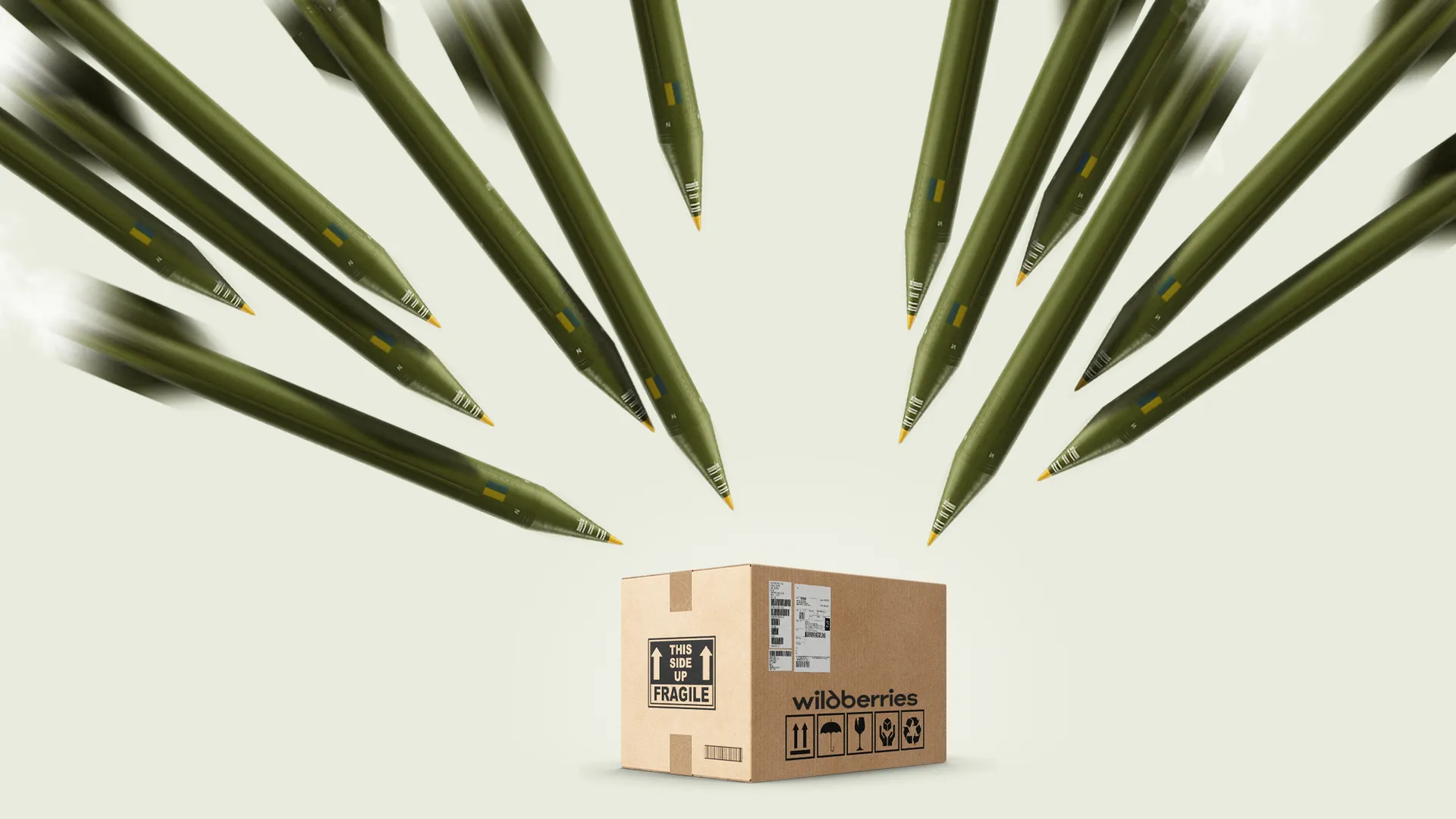
    Why is Russia’s e-commerce giant under attack?

    Long-range Ukrainian drones have continued to hit Wildberries warehouses across Russia since last month, as Ukraine claims the e-commerce giant is aiding the Russian war effort by allowing its logistics hubs to be part of the Kremlin’s military supply chain. But the retailer known as Russia’s Amazon denies all claims.

    What did the commentators say?
    Wildberries is also an “obvious target” because it’s a “linchpin of Russia’s consumer market,” said Nataliya Vasilyeva at The New York Times. Russia’s most popular marketplace platform is used every month by 79 million people — more than half of the country’s population — and can access even the “most remote corners of the country.”

    In a fractured nation whose vast size poses significant business challenges, Wildberries’ 95,000 pick-up points “represent a sense of economic normalcy” for both retailers and consumers, which the Kremlin has been “eager to preserve” amid sanctions and economic pressure from the war, said Vasilyeva. Since the outbreak of the conflict, Wildberries has been championed as a “symbol of Russian ingenuity and resilience despite Western sanctions,” said The Wall Street Journal.

    Ukraine insists the platform is a “legitimate” target because of its involvement in Russia’s “wartime logistics,” said The Independent. But the overwhelming motivation is financial. Alongside its smaller competitor Ozon and other rivals, Wildberries accounts for about 8.5% of Russia’s GDP and supports about 4 million jobs, “more than 5% of Russia’s workforce.”

    What next?
    This latest Kyiv tactic is making the “economic costs of the war harder for ordinary Russians to ignore,” said Yerzhan Tokbolat at The Conversation. The significance of the Wildberries strikes may not just be the destruction of warehouses but also their effect on the “millions of Russians whose incomes” and shopping habits “depend on them.”

    Support for Putin will not “automatically weaken,” but the “greater political risk is cumulative,” said Tokbolat. Along with the current fuel shortages and price increases, the strikes will make it harder to maintain the impression that the war can “continue without significantly changing everyday life in Russia.”


    Good day 🍴

    … for watching when you eat. Eating within a nine-hour window and avoiding food for four hours before bed could help to protect the brain as we age, according to a study presented at the American Society for Nutrition’s annual meeting. Older women who limit when they eat perform slightly better when it comes to memory, planning and problem-solving than those who don’t. 


    Bad day ⛱️

    … for saving a spot. Authorities in Italy are performing dawn raids on “umbrella cheaters” who try to secure the best seaside spots early and confiscating umbrellas, loungers and deck chairs left overnight on beaches in Liguria, Puglia and Sardinia, said The Guardian. Leaving equipment behind can now result in a fine of up to $580. 


    Picture of the day

    Break a (very short) leg

    A Welsh corgi competes in the fifth annual Corgi Race in Vilnius, Lithuania. A total of 150 small dogs battled for best costume, “smartest nose” and “loudest bark,” said The Associated Press. Participants hailed from nine countries including Britain, the Czech Republic, Latvia, Poland, Ukraine and the U.S.
    Mindaugas Kulbis / AP Photo


    Puzzles

    Daily sudoku

    Challenge yourself with The Week’s daily sudoku, part of our puzzles section, which also includes guess the number

    Play here


    The Week recommends

    The most primo Italian cookbooks of all time

    What we know about Italian food in the U.S. is a mere snapshot of the country’s grand diversity. These cookbooks unveil that scope, expanding the mind and guiding the hands in the myriad delicious ways Italian cooking exists.

    ‘Pasta e Verdure: 140 Vegetable Sauces’ 
    Jack Bishop’s book is like an infinity mirror, with a collection of more than 100 sauces organized alphabetically by vegetable base and with flavors and variations that go on and on. The “simple recipes” combine “common ingredients into gourmet vegetarian meals,” including asparagus with mushrooms and shallots, leeks with white wine and parmesan, spinach with melting gorgonzola, said Midland Daily News. ($27, ThriftBooks)

    ‘The Talisman of Happiness’ 
    Ada Boni published this compilation of more than 1,500 recipes in 1929. She’s the “most important forgotten culinary icon in Italian cooking history,” said the book’s publisher to NPR.

    As of 2025, it’s finally available in English. “Regional home cooking was essential to maintaining Italy’s national culture, and the book evolved along with the cuisine,” said The New York Times. ($60, Voracious)

    ‘La Terra Fortunata’ 
    In the U.S., we know well the red-sauce extravagances of southern Italian cooking. But a culinary blind spot for most Americans is the cooking of the far north.

    Fred Plotkin’s book captures the food and wine culture of Friuli-Venezia Giulia, Italy’s northeasternmost region. It’s a locale where gnocchi are stuffed with plums, and penne with cinnamon and ricotta sauce turns the “palate upside down,” said the Times. ($35, ThriftBooks)

    Read more


    Poll watch

    Over a quarter of younger Americans (27%) believe they or someone they know has lost a job after an employer replaced them with artificial intelligence, according to an Axios / Generation Lab survey of 1,075 18- to 34-year-olds. However, 71% are as comfortable or more comfortable using AI than they were a year ago.


    INSTANT OPINION

    Today’s best commentary

    ‘Subtraction isn’t the way out of the Colorado River crisis’
    Jim Madaffer at The Washington Post
    The Colorado River Compact of 1922 is “designed to divide a fixed supply of water, but there’s a problem: The river no longer offers one,” says Jim Madaffer. The “21st century must create water for the region,” but the “existing policies, designed as they were for another era, don’t create anything,” so “commercialization of water innovation is the path to giving Lower Basin states and their residents stable and full water supplies.”

    ‘Black Americans are reviving an ancient Nigerian apprenticeship model to build wealth’
    Ibe Imo at The Philadelphia Inquirer
    There’s a “growing, informal network” of apprentice programs using the Nigerian “Nwa Boy model’s core promise: a credentialed path from labor to ownership, built on relationships and trust rather than credit scores or venture capital,” says Ibe Imo. As “race-conscious funding efforts designed to level the playing field for African Americans are dismantled, that promise is drawing new attention from investors, workforce officials and Black entrepreneurs looking for an alternative route to generational wealth.”

    ‘Why Gov. Newsom should commute every death sentence in California before he leaves office’
    Nadia Daar at the San Francisco Chronicle
    “Shockingly, 25% of those on death row in the U.S. are sitting in California prisons,” and Gov. Gavin Newsom (D) should “seize a historic opportunity to move California closer to ending the death penalty by commuting all of the death sentences in the state,” says Nadia Daar. Newsom’s “promise to pause executions is only good until he leaves office” in 2027. What he does “next will determine whether California merely delayed executions or truly ended them.”


    WORD OF THE DAY

    Wolverine

    A popular combination of experimental peptide compounds BPC-157 and TB-500, named after the Marvel character because of claims about its regenerative effects. Google searches for the “Wolverine stack” have soared by 948% over the last year, according to analysis by Licensed Peptides. But despite its “proposed healing benefits,” the peptides are not FDA-approved, said Healthline.


    Evening Review was written and edited by Theara Coleman, Nadia Croes, Scott Hocker, Anya Jaremko-Greenwold, Justin Klawans and Joel Mathis with illustrations by Stephen Kelly and Julia Wytrazek.

    Image credits, from top: Illustration by Julia Wytrazek / Getty Images; Handout Photo / U.S. Navy / Getty Images; Illustration by Stephen P. Kelly / Shutterstock; Hachette / William Morrow Cookbooks / Penguin Random House
     

    Recent editions

    • Morning Report

      Trump’s new overture to North Korea’s Kim

    • Sunday Shortlist

      Big screen Bourdain

    • Saturday Wrap

      Out of ammo

    VIEW ALL
    TheWeek
    • About Us
    • Contact Future's experts
    • Terms and Conditions
    • Privacy Policy
    • Cookie Policy
    • Advertise With Us
    • FAQ
    Add as a preferred source on Google Add as a preferred source on Google

    The Week is part of Future US Inc, an international media group and leading digital publisher. Visit our corporate site.

    © Future US, Inc. Full 7th Floor, 130 West 42nd Street, New York, NY 10036.