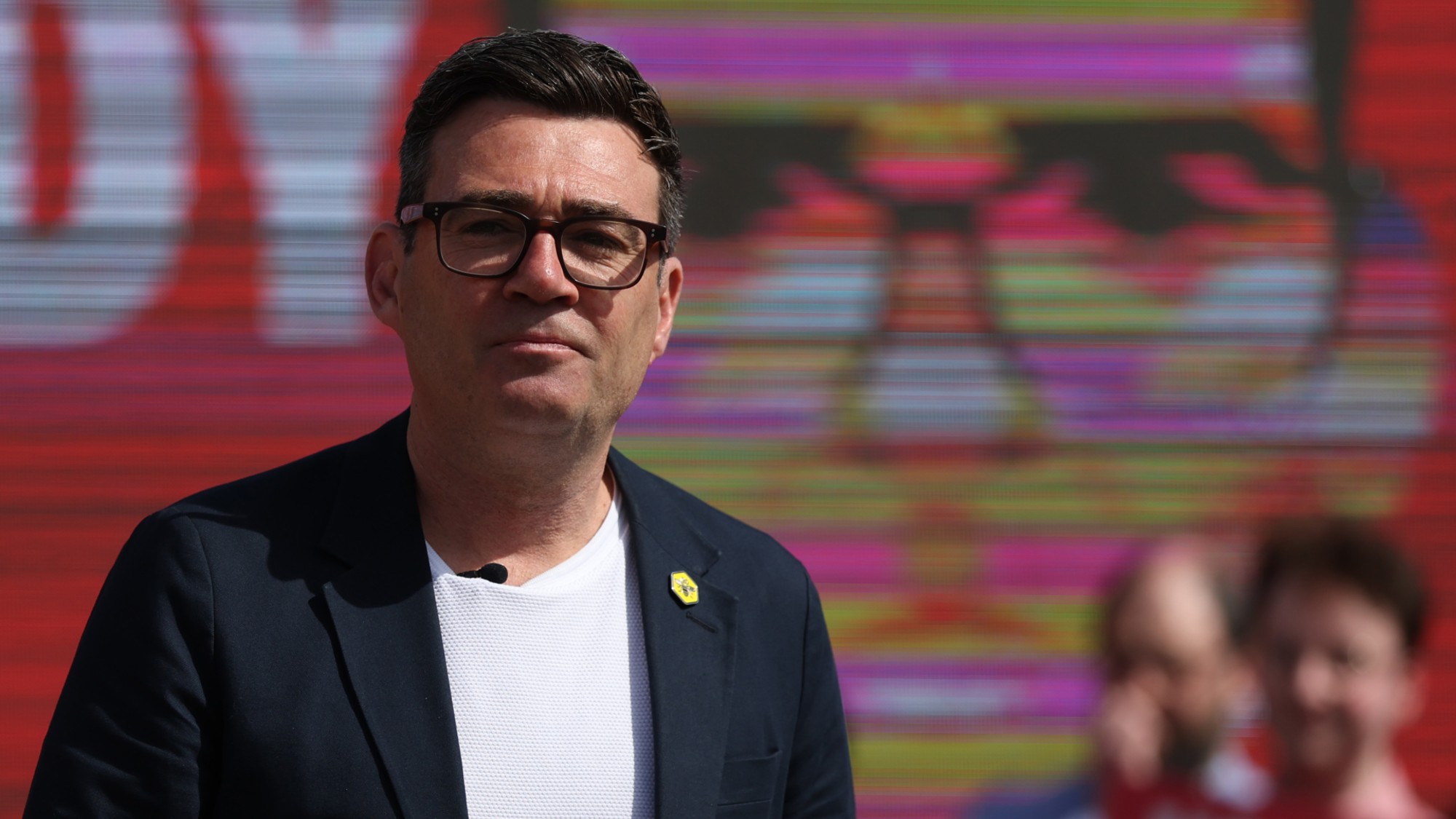
Andy Burnham faces an ‘impossible triple task’: win a by-election in a Brexit-voting area, woo progressive Labour members, and prepare for government
Andy Burnham launched his Makerfield by-election campaign last week, telling supporters that British politics was “tired” and needed “a new script”. The mayor of Greater Manchester will challenge Keir Starmer for the Labour leadership if he wins the 18 June vote. A spokesman said Burnham wouldn’t discuss a “national manifesto” during the campaign, but Burnham has set out his position on a few issues. He has, inter alia: confirmed his interest in replacing inheritance tax with a social care levy; said he thinks “land is undertaxed”; backed the immigration reforms of Home Secretary Shabana Mahmood; and voiced support for the government’s guidance on single-sex spaces.
Labour’s former health secretary, Wes Streeting, a rival leadership contender, said he would raise the rate of capital gains tax to align with income tax. Nigel Farage, the Reform UK leader who has pledged to “throw everything” at Makerfield, promised to end income tax on overtime pay. In a lengthy critique, Tony Blair accused Labour of lacking a “coherent plan” and warned that it was a “delusion” that voters want the party to shift further to the left.
How might the contest play out?
When Streeting resigned as health secretary a fortnight ago, triggering this leadership contest, he called for “a battle of ideas” within Labour, said The Telegraph. The few substantive ideas that have emerged since then – rejoining the EU, a wealth tax, a new care levy on estates at death – are all stale, failed concepts. There’s something to be said for Burnham’s proposal to overhaul the crazy council tax system, “under which London mansions pay less than two-beds in crumbling towns”, said The Economist. But fresh ideas are in short supply. Labour candidates are also ignoring difficult issues such as welfare reform.
Blair is right to argue that Labour has focused too much on personality and too little on its plan for office, said The Independent. As he put it: “Whether there is a leadership change or not is irrelevant if it doesn’t start with a policy debate”. The right also needs to look beyond petty considerations, said the Daily Mail. A poll put Labour three percentage points ahead of Reform in Makerfield, but also showed Restore Britain – the splinter party started by Rupert Lowe after he fell out with Farage – gaining 7% of the vote. Both Lowe and the Tories should withdraw from the contest, or they’ll risk handing the election to Burnham.
Burnham faces an “impossible triple task”, said John Rentoul in The Independent. He needs to win a by-election in a Brexit-voting area, while at the same time wooing progressive Labour members and preparing for government. His strategy so far has been to make lots of vague promises of “change” and take refuge behind his “man-of-the-people persona”. Whether an easy manner, a northern accent and a “vacuous” slogan – “I’m for us” – is enough to win him this by-election, he’ll need “an awful lot more” to be a successful prime minister.
Is Burnham the answer to Labour’s woes?
There are two narratives about Burnham, said Joshi Herrmann on The Mill. He’s either the visionary mayor who knows just how to rescue both Labour and the country, or a “cynical chameleon” with no substance. Having covered him up close for six years, I think both these analyses rather miss the mark. Burnham’s real skill is not devising plans like the Bee bus network, but selling them. He has “a wonderful sense of how to take hold of a moment” and enthuse people, and has a great gift for listening. “This is not a con trick or a gimmick”: it’s something voters need and value. His weakness is that “he wants to be liked and he’s not particularly ruthless”. These traits may be more of a liability in a PM than a metro mayor.
Burnham might prove a poor PM, said Daniel Finkelstein in The Times, but his popularity could last long enough to win the next election for Labour. He’s a good public performer and his “Manchesterism” agenda would at least provide his government with a direction. Burnham’s plans don’t have to be coherent and effective to be politically successful. They just need to look as if they’re working for a while. His most valuable contribution to Labour would be to end the factionalism of the Starmer era and instil a sense of collective purpose, said Tom Clark in Prospect. This, more than “any miraculous new policy programme”, would help arrest the government’s decline. And in today’s fractured political landscape, parties no longer need to be polling at 40% to be sure of winning. If Labour could even match the 28% share of Michael Foot’s 1983 defeat, it might be in with a chance.
What next?
Left-wing MPs unhappy about Burnham’s recent repositioning on the EU, immigration and single-sex spaces are considering fielding a candidate against him in any future leadership contest, reports The Times. This news will likely hasten calls for Burnham to be given a “coronation” if he wins Makerfield. Although Labour’s moderate wing is sure he’d come out on top, it fears a prolonged contest would force him to tack left. Ed Miliband is widely expected to be made chancellor if his close ally Burnham wins power. Were Miliband to choose to stay in the energy department, Pat McFadden, the work and pensions secretary, is tipped to take the job instead.