The 88-year-old was a playwright of dazzling wit and complex ideas
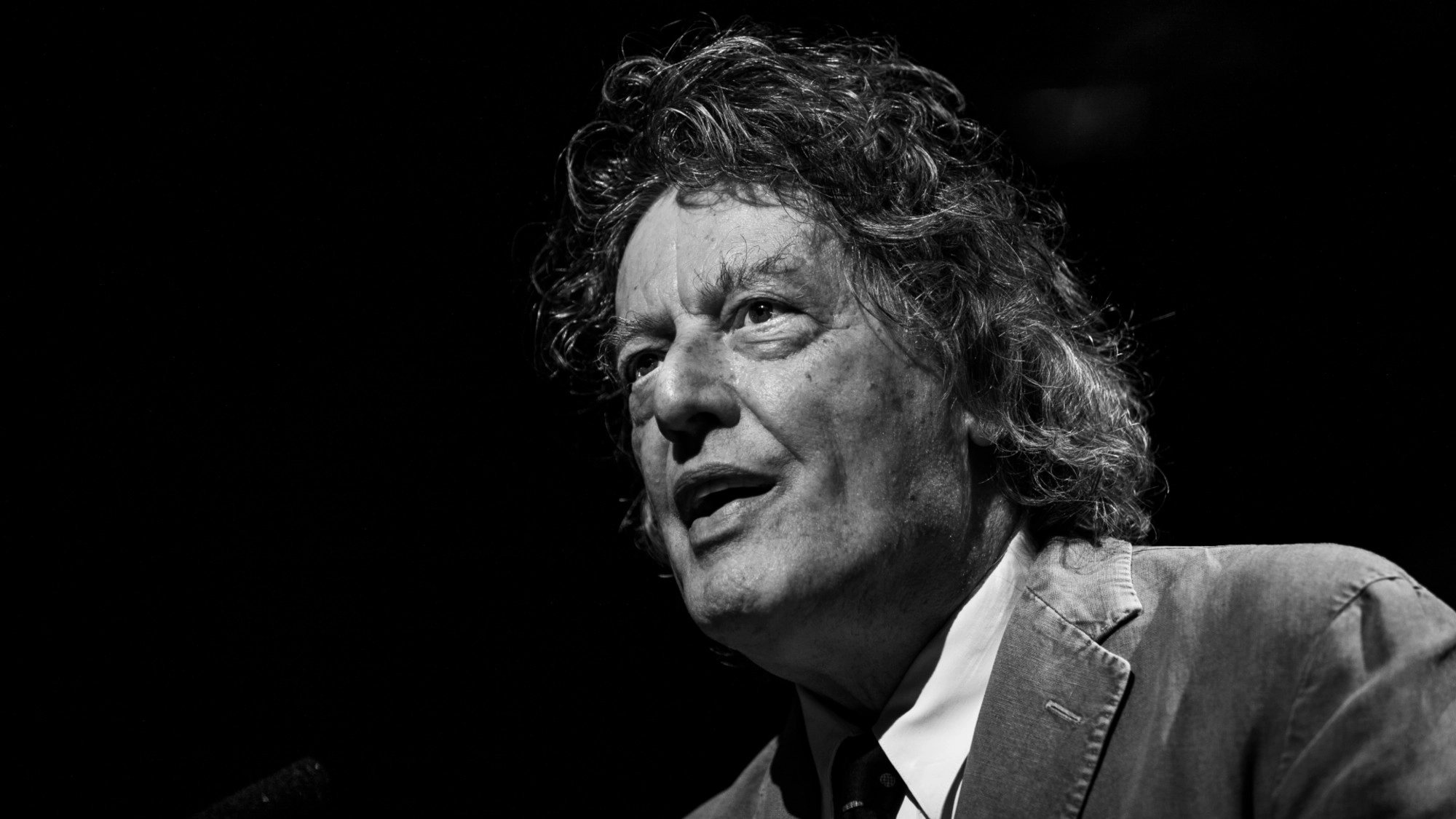
Sir Tom Stoppard, who has died aged 88, “wrote plays of dazzling language, intricate wit and dependably intelligent characterisation that touched on everything from quantum physics and landscape gardening to moral positivism and the lives of minor characters in ‘Hamlet’”, said The Telegraph.
The critic Kenneth Tynan argued that the key to understanding Stoppard was never to forget that he was an émigré: because he had no native land or mother tongue, he was freed from the cultural constraints that restrict other writers. Stoppard joked that he was “a bounced Czech”: he was born Tomáš Sträussler, in Zlín, a small town in Czechoslovakia, in 1937. His father, Eugen, was a doctor at the Bata shoe company. When Tom was one year old, the family fled the Nazis to Singapore. When it fell to the Japanese in 1942, Tom, his mother Martha and his older brother Petr escaped to India; but Eugen was detained. “It was only much later Tom learnt that his family was Jewish, that most of his relatives had perished in the death camps, and that his father had died on a Japanese prison ship.”
In India in 1945, Martha married an English army officer, Major Kenneth Stoppard. The family lived in Darjeeling, but after independence they moved to Britain. Tom took his stepfather’s name, and was sent to board at Pocklington Grammar School in Yorkshire, which he hated. He left school at 17 to become a reporter on the Western Daily Press. “His beat as a reporter took him to the Bristol Old Vic,” said Michael Coveney in The Guardian.
In the late 1950s, he saw Peter O’Toole play Hamlet and Jimmy Porter in “Look Back in Anger”. “He was hooked.”
Stoppard had some early plays accepted by the BBC for radio, and wrote a novel, today largely forgotten. Then came “Rosencrantz and Guildenstern are Dead”, which features two courtiers from “Hamlet” mulling existence on the sidelines of the action. It was first staged on the Edinburgh Fringe in 1966. When it opened at the Old Vic, it made him an overnight celebrity. Harold Hobson in The Sunday Times called it the most important event in British theatre since Harold Pinter’s “The Birthday Party” nine years earlier. He followed it with two plays of “pyrotechnical brilliance”, “Jumpers” (1972) which satirised moral philosophy by comparing it to a gymnastic display, and “Travesties” (1974), inspired by the discovery that Vladimir Lenin, James Joyce and the Dadaist poet Tristan Tzara were all living in Zürich in 1917.
By this point, Stoppard had “exhausted the vein of travesty” and his output “slowed considerably, with perhaps a really good new play emerging each decade”, said The Times. He had rarely aimed for realism, and he had been criticised for failing to portray real people and for a lack of social conscience. That began to change with “The Real Thing” (1982), “a tale of adultery among theatre folk” that was also an exploration of the place of politics in art. “Reality took a bow” in 1991, when Stoppard and his frequent leading lady, Felicity Kendal, left their respective spouses for each other.
Stoppard’s first wife was Jose Ingle, a nurse; the marriage lasted from 1965 to 1972. His second wife was Dr Miriam Stoppard, the agony aunt whom he had married in 1972. There were two sons from each marriage, including Ed Stoppard, the actor. Stoppard remained in a relationship with Kendal until 1998, and she starred in many of his plays of the period, including “Arcadia” (1993), which was “classic Stoppard”: a story that ranged from “the age of Byron to that of chaos theory”.
Stoppard’s contributions to cinema – “official and unofficial” – were prolific, said Tim Robey in The Telegraph. Among many others, he wrote the screenplay for Steven Spielberg’s “Empire of the Sun” (1987), and co-wrote those for Terry Gilliam’s “Brazil” (1985) and “Shakespeare in Love” (1998), for which he won an Oscar.
In his last play, “Leopoldstadt” (2020), which traces the fate of a Jewish family in middle Europe during the first half of the 20th century, Stoppard “took on his own personal history”, said Bruce Weber in The New York Times. “In a kind of apologia for a lifetime of obliviousness to the oppression and tragedy of many of his relatives”, he concludes with a scene of a Tom Stoppard-like character, an escapee as a child from fascism, visiting the city of his birth. Learning the fates of his family, he breaks down in tears – as did many audience members.
Stoppard was knighted in 1997. He is survived by his third wife, Sabrina Guinness, whom he married in 2014, and with whom he lived in Dorset.