Flamboyant painter, writer and fashion designer
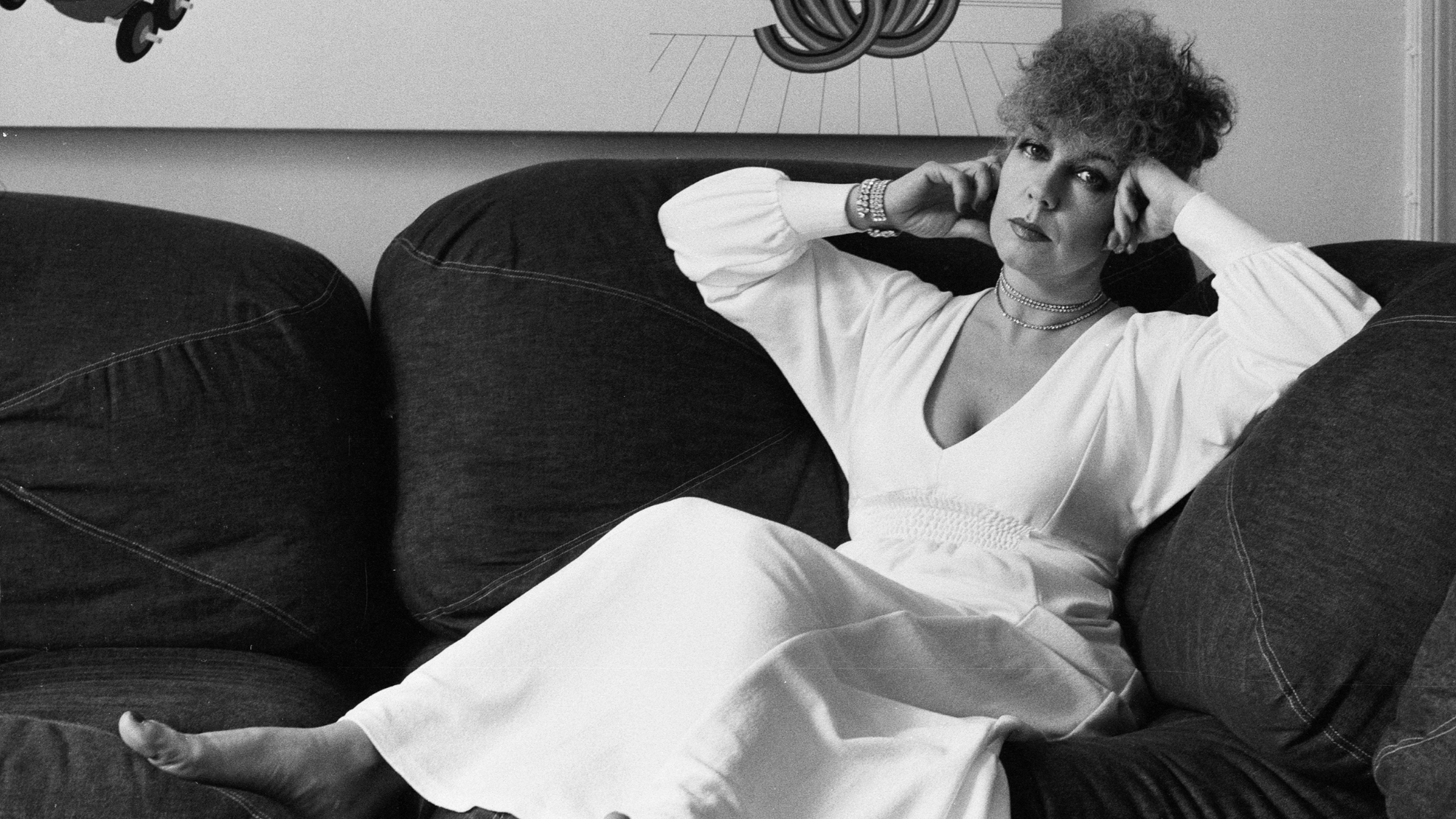
Molly Parkin was a girl from a chapel-going family in the Welsh Valleys who emerged as one of Swinging London’s most flamboyant figures. She was unmissable on that era’s social scene, in her extravagant hats and brightly coloured costumes. In a long career, she worked as a journalist and fashion designer. She ran her own boutique off the King’s Road in Chelsea, appeared on chat shows and wrote racy novels. She lived in 52 different homes, married twice, and had sexual encounters with “men beyond enumeration”, said The Guardian – experiences that informed her novels, and that she detailed in her memoirs. But she died, aged 93, as “an acknowledged artist”, which is what she’d really wanted to be. “Art was her first and last love”, and her “serious talent”.
She was born in 1932, and brought up in the mining village of Pontycymer. Her father aspired to be a painter, but ran a sweet shop; her mother played the organ in the chapel. Molly loved the local landscape; “the darkness was at home”, where her father beat her and sexually abused her. Later, when they moved to north London, he took her to stage doors – thinking to pimp her out to actors – and also to the National Gallery. In 1949, she won a scholarship to Goldsmiths College of Art. After graduating, she taught art at an inner-city school by day, and by night frequented West End clubs, where she sought out a “sugar daddy”. Aged 22, she began an affair with her “sexual Svengali”, the actor James Robertson Justice, who was married and 25 years her senior.
She ended it when her father died, in 1956, and soon after she met Michael Parkin – a charming, Oxford-educated media executive – at a party. They married in 1957, and settled in a house in Old Church Street, Chelsea, paid for largely with the proceeds of her paintings, which sold for large sums. They had two daughters, and joined the King’s Road “beau monde”, said The Daily Telegraph. But while her life then was one of “rackety splendour”, her excessive drinking was already leading her down a path to Hogarthian decay. When she found out that her husband was cheating on her, she threw him out. At that moment, her artistic inspiration left her. So to support her daughters she turned to designing hats and bags for Biba, and launched her boutique, The Shop, while pursuing a very busy romantic life. Her lovers ranged from John Mortimer (who loved being spanked, which she found tiring after a long day) and Anthony Shaffer (who wrote his play “Sleuth” in her bed) to John Thaw, Bo Diddley and George Melly.
At a party in 1965, she got talking about fashion to a magazine executive – which led to her being made the fashion editor of Nova. She later worked for Harpers & Queen, and in 1971 she was named fashion editor of the year. Around that time, she became a TV pundit (though the BBC soon banned her for swearing on air), and in 1974 she produced the first of her “comic-erotic” novels. By then, she was married to the artist Patrick Hughes, with whom she lived first in a converted barn in Cornwall and then in New York, at the Chelsea Hotel. Its hedonism was too much even for her. It was, she said, like “living in Hades”. She and Hughes split up, and she returned to London, where she became a habitué of the notorious Colony Room in Soho, and devised her own one-woman show. Her drinking, though, was now out of control.
She reached her nadir in 1986, when she woke up in a gutter in Smithfield Market. She joined Alcoholics Anonymous, and rediscovered painting. After going bankrupt in 1998, she moved into a one-bed flat on the World’s End estate in Chelsea, where she continued to paint. In 2012, she was awarded the rare honour of a civil list pension, for her lifelong contribution to the arts.