Music industry titan who signed Whitney Houston
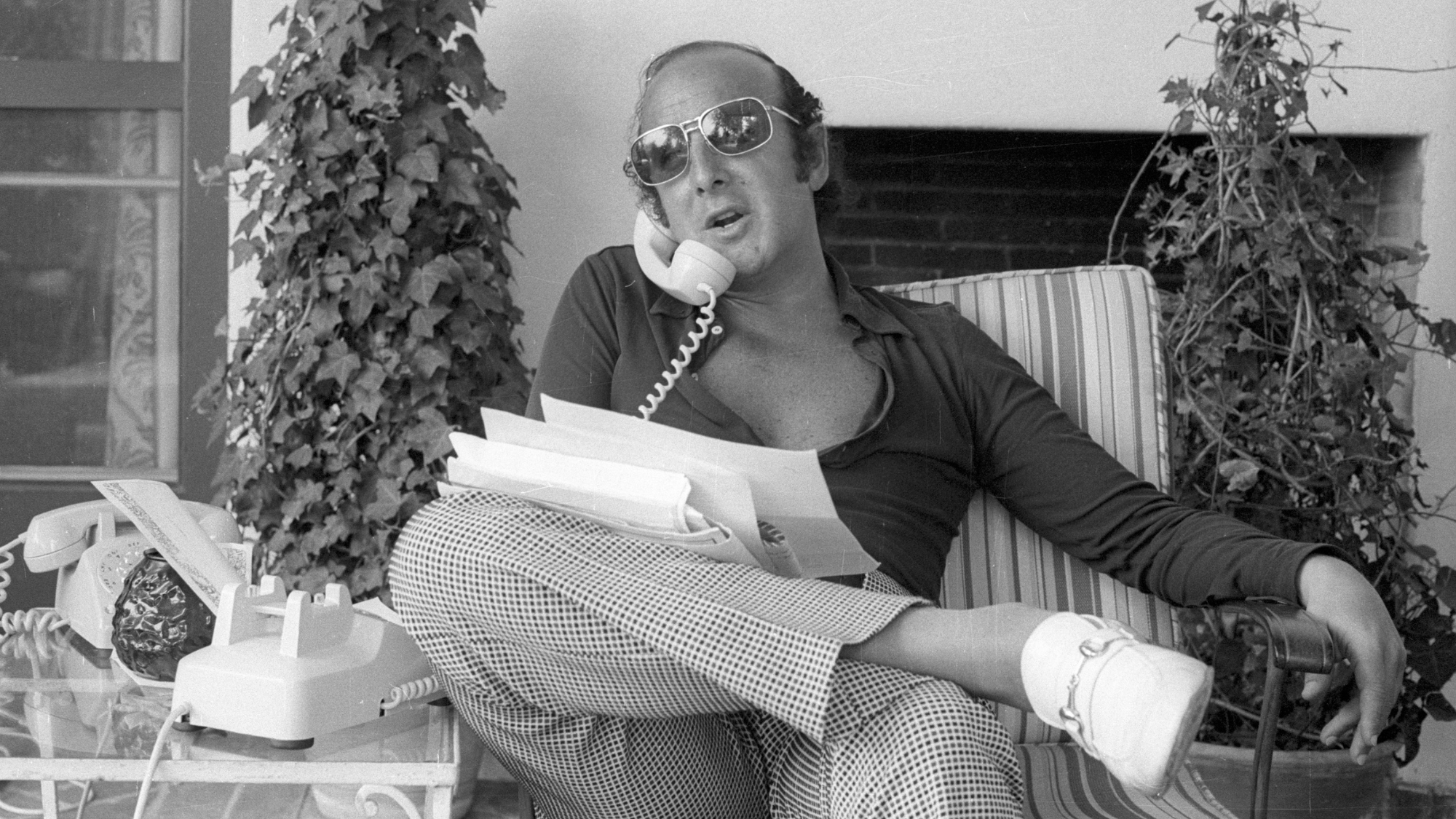
The son of a salesman from Brooklyn, who rose to become one of the most powerful figures in the American music industry, Clive Davis was once described as the “man with the golden ears”, said The Telegraph. He joined Columbia Records as an in-house lawyer in 1960, and became its president seven years later, when he was just 35. At the time, the label was known for owning the cast-recording rights to “My Fair Lady” and for mainstream hit-makers like Johnny Mathis. All that changed over one weekend in 1967, when Davis travelled to the Monterey Festival in the flower-power epicentre of San Francisco, and watched a set by Janis Joplin – then largely unknown outside the city. She was, he recalled, “mesmerising, like a white tornado”. He signed her immediately. Within a few years, he had also signed or developed Bruce Springsteen, Chicago, Aerosmith, Pink Floyd, Billy Joel and Earth Wind & Fire. Subsequently, at Arista Records, he encouraged Barry Manilow to release “Mandy”, the record that made his name in 1974, and “discovered” Patti Smith.
But his biggest success had its roots in 1983, when he heard the 19-year-old Whitney Houston singing in a nightclub in Manhattan, and became convinced that she had the makings of a major star. The daughter of the session singer Cissy Houston and a cousin of Dionne Warwick, she was outstandingly talented and photogenic too, and he made her his “personal project”. Over the next two years, he held weekly meetings with his team to plan the launch of her career, selecting songs and music producers in an effort to ensure that Houston – who had started singing in a gospel choir – had maximum crossover appeal. Released in 1985, her first album, “Whitney Houston”, sold 25 million copies, making it the bestselling debut album by a woman in history. She would go on to sell more than 220 million records.
Clive Jay Davis was born in 1932. His parents named him after Clive Brook, the suave British actor, said The New York Times. In his memoir, he noted that there were not many other Clives in his Crown Heights neighbourhood then; but in other respects he was, he said, a “garden-variety, ambitious, upwardly mobile, hard-working Jewish boy”. He won scholarships to New York University and Harvard Law School. He admitted that he was not really qualified to work in the music industry: he knew nothing about music and had no experience of A&R. But he proved to be a shrewd negotiator, and a ruthless boardroom player – and he understood that a record executive’s most vital relationship is with his or her artists. His first signing was the Scottish singer Donovan, in 1966. The next year, he had what he termed his “epiphany” at Monterey. “I realised that [rock] was going to be the future,” he said.
His division made tens of millions for CBS, but behind the scenes people were tiring of his egotism, and in 1973 he was accused of misusing corporate funds, and fired. A year or so later, however, he was hired by CBS’ rival Columbia Pictures, to reorganise its record division. That led to the launch of Arista – in which he took a 20% stake. There, he not only discovered new talent, but also masterminded massive comebacks for Carlos Santana, Aretha Franklin and Rod Stewart. And though he didn’t “get” hip hop, he saw its potential, and formed joint ventures to steer the careers of OutKast, The Notorious B.I.G. and others. By the time he left Arista in 2000, it was generating hundreds of millions a year. Soon after, he founded J Records, which had hits with the likes of Alicia Keys and Busta Rhymes. In 2008, aged 76, he was made chief creative officer of Sony Music – which had acquired Columbia, bringing him full circle. He was twice divorced; then in 2013, aged 80, he revealed that he was bisexual. His partner, Greg Schriefer, survives him, as do his four children.