The Iran war has trapped hundreds of ships in the Persian Gulf for months. What’s life like for their crews?
How many sailors are in the Gulf?
About 6,000 seafarers are stuck onboard several hundred tankers and cargo ships, many of which have been stranded in the Gulf since the U.S.-Israeli war with Iran erupted in late February. “It’s as if we are trapped in a pond,” Shafiqul Islam, captain of a ship carrying some 37,000 tons of fertilizer bound for South Africa, told the BBC last month. “There’s only one way out.” That’s via the Strait of Hormuz, the narrow waterway between Iran and Oman through which 20% of the world’s oil and liquefied natural gas—as well as shipments of crucial commodities including fertilizer, aluminum, and helium—once flowed from Saudi Arabia, Kuwait, Bahrain, Qatar, Iraq, and Iran to global markets. Before the war, more than 100 ships a day transited the strait, which is 21 miles wide at its tightest point. After hostilities began, Iran declared the waterway closed and launched missiles and drones at vessels trying to sail through, grinding traffic to a halt. At one point, up to 20,000 mariners and 2,000 ships were stuck in the Gulf, with only a few vessels squeezing through the strait each day.
How were they able to get out?
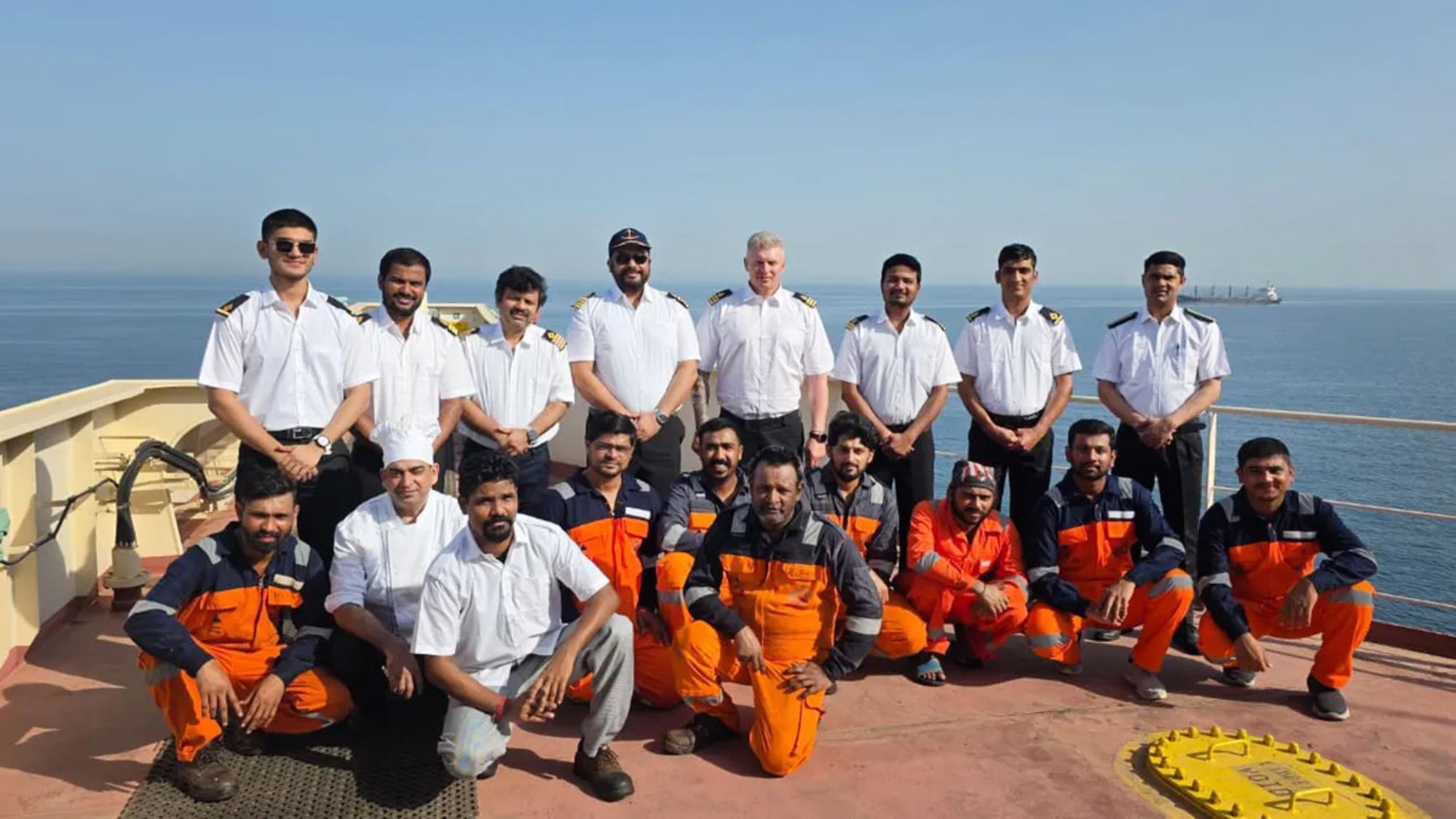
India, China, Pakistan, and other countries negotiated with Tehran for safe passage for their flagged vessels, and some tanker operators paid Iran up to $2 million for transit rights for individual ships. The logjam in the Gulf eased in June after Washington and Tehran struck a preliminary peace deal, after which about 30 ships a day were able to move through the strait. But that number dropped back to single digits last week after the war restarted. For the sailors stuck in this war zone—many of whom hail from the Philippines, India, Bangladesh, Pakistan, and Ukraine—the fear of death or injury is a constant. “Everyone is just exhausted,” said captain Hassan Khan, “both physically and mentally.” While standing on ships often loaded with highly explosive substances, the crews have watched missiles and drones streak overhead, and more than a dozen mariners have been killed in Iranian and U.S. strikes. Raman Kapoor, a tanker captain who had 10 days left on his tour when war erupted, watched helplessly in March as a nearby tanker exploded in flames after being hit by an unmanned craft. One crew member died. “Everyone was so scared,” Kapoor said. “We are just seafarers. We are not trained for any war.”
What are days like onboard?
Long, monotonous, and hot. While the crews work to ensure their ships remain seaworthy, and movies and ping-pong serve as distractions, staving off boredom and depression is a struggle. “We do our best to keep [up] morale,” Abhijit Chopra, the captain of a tanker that’s been stuck for more than 120 days, told Bloomberg. “But there is definitely a sense of strain and uncertainty.” To entertain themselves and add some diversity to onboard meals, some crews are catching and cooking fish; they report that dried ribbonfish is surprisingly delicious. Calls home are a boon, but infrequent, because satellite phone time is limited and expensive. To protect sailors’ mental health, captains encourage crews to do everything together and to never leave anyone alone—even when they dine or relax. Sailors report that access to knives and other sharp objects is more tightly controlled than normal, to prevent people from harming themselves or others. Meanwhile, food, water, and medicine on many vessels is running low.
Is anything being done about that?
Boats from nearby ports are delivering supplies, but prices keep going up. One Korean sailor told the BBC that it feels like suppliers “are trying to take advantage of the situation to make excessive profits.” The engineer of one ship said the cost of 180 tons of water has spiked in recent months from about $2,000 to $11,000. Price gouging isn’t the only way people are taking advantage of the stranded vessels. Scammers claiming to belong to Iran’s Revolutionary Guard have also tricked shipping firms into sending hefty payments to their cryptocurrency wallets in exchange for safe passage.
Have there been any evacuation attempts?
A short-lived one. While a ceasefire was in effect in late June, the U.N.’s International Maritime Organization began ushering ships through the strait’s southern and northern corridors—avoiding the central lanes where Iran had laid mines. Some 130 ships and 3,000 sailors made it out, but the U.S.-backed initiative was scrapped within days after Iran attacked a tanker that was not taking part in the evacuation off Oman’s coast. Some sailors have taken matters into their own hands. Stuck at an Iranian port, Santosh Kumar borrowed nearly $7,000 to pay an agent to drive him to neighboring Armenia, where he boarded a flight to Dubai and then on to his native India. “My family just wanted me home alive,” he said. But such escapes have become increasingly difficult: Some Gulf Arab states have restricted short-term shore passes for sailors over security concerns. Many merchant sailors are now wondering if the profession has become too dangerous, because the Iran war is only the latest crisis to ensnare the shipping industry.
What were the other crises?
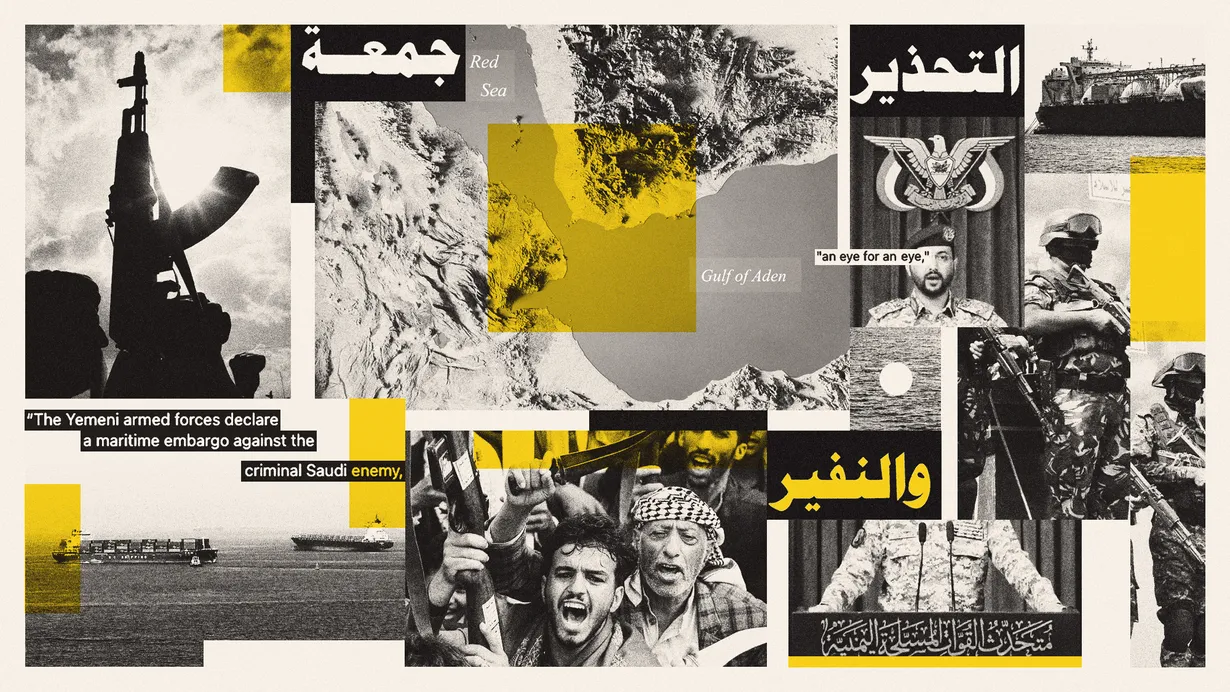
Mariners were stranded at sea during the pandemic, and drone attacks on vessels in the Black Sea have become routine since Russia’s 2022 invasion of Ukraine. Iran’s Houthi allies in Yemen—who attacked more than 100 vessels during the Hamas-Israel war—this week declared an embargo of Saudi Arabian shipping in the Red Sea, putting more commercial vessels in the line of fire. Merchant sailors seem increasingly wary of going to sea: Companies have struggled to secure replacement crews to relieve sailors in the Gulf whose contracts have expired, despite offering monthly salaries of up to $30,000. The war, said IMO Secretary-General Arsenio Dominguez, has shown that “people take seafarers for granted, they don’t value them.”