The Week The Week
flag of US
US
flag of UK
UK
https://cdn.mos.cms.futurecdn.net/flexiimages/jacafc5zvs1692883516.jpg

SUBSCRIBE & SAVE

Less than $3 per week

Sign in
  • View Profile
  • Sign out
  • The Explainer
  • The Week Recommends
  • Newsletters
  • Cartoons
  • From the Magazine
  • The Week Junior
  • Student Offers
  • More
    • Politics
    • World News
    • Business
    • Health
    • Science
    • Food & Drink
    • Travel
    • Culture
    • History
    • Personal Finance
    • Puzzles
    • Photos
    • The Blend
    • All Categories
  • Newsletter sign up Newsletter
  • Sunday Shortlist, from The Week
    A ‘marvellously camp’ horror film and an ‘eternally resonant’ comedy-drama

     
    Theatre Review

    Abigail’s Party

    Tamzin Outhwaite gives a ‘tour de force’ star turn in Nadia Fall’s assured revival of the 1977 comedy

    “Has any actor, especially a glamorous former ‘EastEnders’ star, embraced the grotesque on stage as admirably and wholeheartedly as Tamzin Outhwaite?” asked Nick Curtis in The London Standard. Following her “utterly un-vain” performance as Kath in “Entertaining Mr Sloane”, Outhwaite now reprises her “monstrous” turn as Beverly, the “egomaniac” hostess from hell in Mike Leigh’s 1977 comedy “Abigail’s Party”. 

    “In a diaphanous orange frock and ratted Farrah Fawcett wig”, she gives a “tour de force” star turn in Nadia Fall’s assured revival: “every gesture, every wag of her sandalled ankle, reeks of self-satisfaction and command”, even as her drinks party descends into chaos. And there’s fine support from Kevin Bishop, deploying a roster of “sitcom harrumphs and double takes” as Beverly’s “pretentious, prating” husband, Laurence. 

    “Revitalised by a crack cast, this is a party you won’t want to miss,” agreed Kirsten Grant in The Telegraph. Casting two Asian actors in the roles of new neighbours Angela and Tony adds edge to certain lines about the local area (in suburban Essex) going downhill. Lauren Patel is “deliciously tactless” as the prattling Angela. As the taciturn Tony, Omar Malik winces with “embarrassment and pent-up frustration”. 

    And Pandora Colin is “superlative” as Sue, said Fiona Mountford in The i Paper. A divorcée whose teenage daughter, Abigail, is holding her own party a few doors down, she’s an “unassuming woman who would just like some proper dinner”. 

    “Abigail’s Party” has often been accused of snobbily punching down on the aspiring working classes, said Clive Davis in The Times. In fact, like “The Diary of a Nobody” – of which Mike Leigh is a huge fan – the play is a brilliant study in “how we construct facades”. 

    The only flaw in this show, said Arifa Akbar in The Guardian, is that the darkness of the ending does not quite land. The play has all been so enjoyably comical that the switch to tragedy leaves Beverly “speechless and at sea, for once”. Otherwise, Fall’s production “proves that this period comedy of manners is eternally resonant”.

    Harold Pinter Theatre, London SW1. Until 19 September.


    Film REVIEW

    Teenage Sex and Death at Camp Miasma

    A ‘sexy’ and ‘slaughterous’ spectacle

    “Teenage Sex and Death at Camp Miasma” is “a title so good you feel the film to which it’s attached should really have to earn it”, said Robbie Collin in The Telegraph, and “happily it does”. 

    Starring Gillian Anderson as “fading horror queen”, it is both “extravagantly funny” and “recklessly bizarre”. Hannah Einbinder plays Kris, an “earnest yet self-loathing” director who has been asked by a Hollywood studio to reboot “Camp Miasma”, a fictional 1980s US slasher franchise. 

    The original is now regarded as “embarrassingly non-PC”, chiefly because its villain, Little Death, is the spirit of a gender-nonconforming child killed by other campers. As a celebrated, self-styled “queer filmmaker”, Kris is just the person to make the rebooted film: she’s a horror nerd who has been obsessed with the original since childhood, particularly with Squeak, its “final girl” (the last female character left alive). She tracks down Billy Presley (Anderson), who played Squeak and now lives, in creepy “Norma Desmond-esque” seclusion, at the former summer camp where the original was filmed. 

    As Kris tries to convince Billy to appear in the reboot, the pair form a bond, said David Sexton in The New Statesman. And as their relationship deepens, fiction and reality begin to blur, and the film turns into something both “sexy” and “slaughterous”. 

    “Teenage Sex and Death at Camp Miasma” “won’t be to everyone’s taste”, said Larushka Ivan-Zadeh in the Daily Mail – the title gives a fairly good sense of whether it’s for you or not. “It gets messy. It gets pretentious.” And it’s not particularly scary (the violence is “almost cartoon-like”). But it is beautifully shot, funny and “marvellously camp – in both senses of the word”. “Either way, Anderson is terrific.”


    ALBUM REVIEW

    Ariana Grande: Petal

    The video for Ariana Grande’s latest single (the title track of this new album) shows her “failing auditions under the harshly critical gaze of brutish male casting agents, before finally snapping and chopping them all up with a chainsaw”. This “gory fantasy”, said Ludovic Hunter-Tilney in the Financial Times, was followed by the announcement that Grande is to take a career break after her current tour owing to “endless, ongoing public scrutiny”. Thankfully, “Petal” – the album – is not nearly as “bloodthirsty” as that “video nasty”. Rather, this is a “beguiling” collection on which the singer gives “stylish expression” to her emotional tumult; but she “favours a honeyed, languorous tone, as if wanting to turn down the drama”. It’s a “luxurious and seductive” record, rather than a challenging one, said Neil McCormick in The Daily Telegraph. Grande – “sweetness personified” – has described “Petal” as her “feral”, “f**k it” record. In fact, the sound of this truly great singer in a rage turns out to be something like “being assaulted by a particularly lovely butterfly”. Let’s hope she’s not away too long.


    BOOK OF THE WEEK

    Conversations with an Executioner

    by Kazimierz Moczarski 

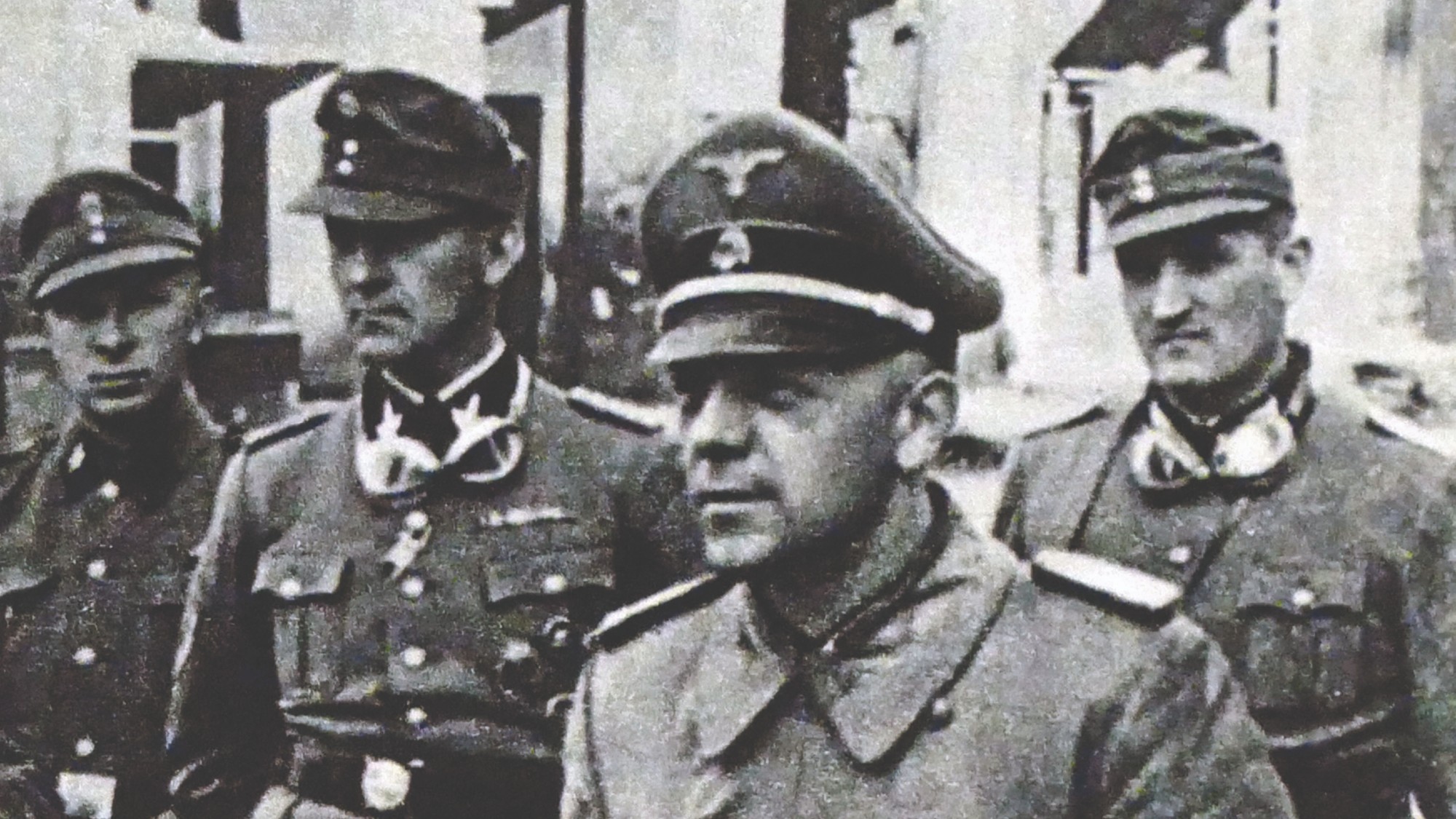
    Moczarski, the author of this “astonishing” book, was a Polish Resistance officer in the Second World War captured by Stalin’s secret police in 1945, and declared an enemy of the state and incarcerated for 11 years in Warsaw’s Mokotów Prison, said Frances Wilson in The Telegraph. 

    While there, he “endured 49 different types of torture”, one of which was to share a cell for 255 days in 1949 with the former SS Commander Jürgen Stroop, an “architect of the Holocaust and liquidator of the Warsaw ghetto, now awaiting execution”. 

    Moczarski, who had once tried to assassinate Stroop, discovered that his cellmate was entirely unrepentant, and willing to discuss his crimes freely. Lacking notebooks, he memorised what he was told and later used those memories to produce “Conversations with an Executioner” – a book first published in a censored edition in Poland in 1977, and only now fully translated into English. Composed largely of dialogue, it offers a unique perspective on the “narcissism of Nazism” – and deserves to be considered a “masterpiece”.

    Moczarski, a trained journalist and former law student, “grasped that he had been handed the opportunity of a professional lifetime” when he was forced to bunk up with Stroop, said Roger Boyes in The Times. Guided by Moczarski’s promptings, Stroop told him everything: about his rise through the Nazi ranks; about his time setting up Jewish labour camps in southern Poland; and finally, about how he oversaw the destruction of the Warsaw ghetto in 1943, which he still regarded as a “career high”. 

    With relish, Stroop recalled “tucking into steak and pommes frites” after spending the day watching flamethrowers being “blasted at Jews in hiding”. Asked if he ever pitied his victims, Stroop replied: “Praise be what hardens.” Superbly translated by Sean Gasper Bye, this book will “gnaw at you like a prison rat”. 

    Because Moczarski was forced to rely on memory, questions have been raised about the reliability of his account, said Jo Glanville in The Guardian. He argued that imprisonment had so intensified his recollections “that he could replay his conversations with Stroop as if they were a tape recording”. While writing the book after his release in 1956, he “fact-checked Stroop’s version of events” – and found that everything the SS general had told him seemed true. Moczarski died in 1975, two years before his book was finally published. It offers a “remarkable insight into the genesis and mindset of a Nazi war criminal”.


    OBITUARY

    Phyllida Law

    ‘Dotty’ character actress who founded a theatrical dynasty

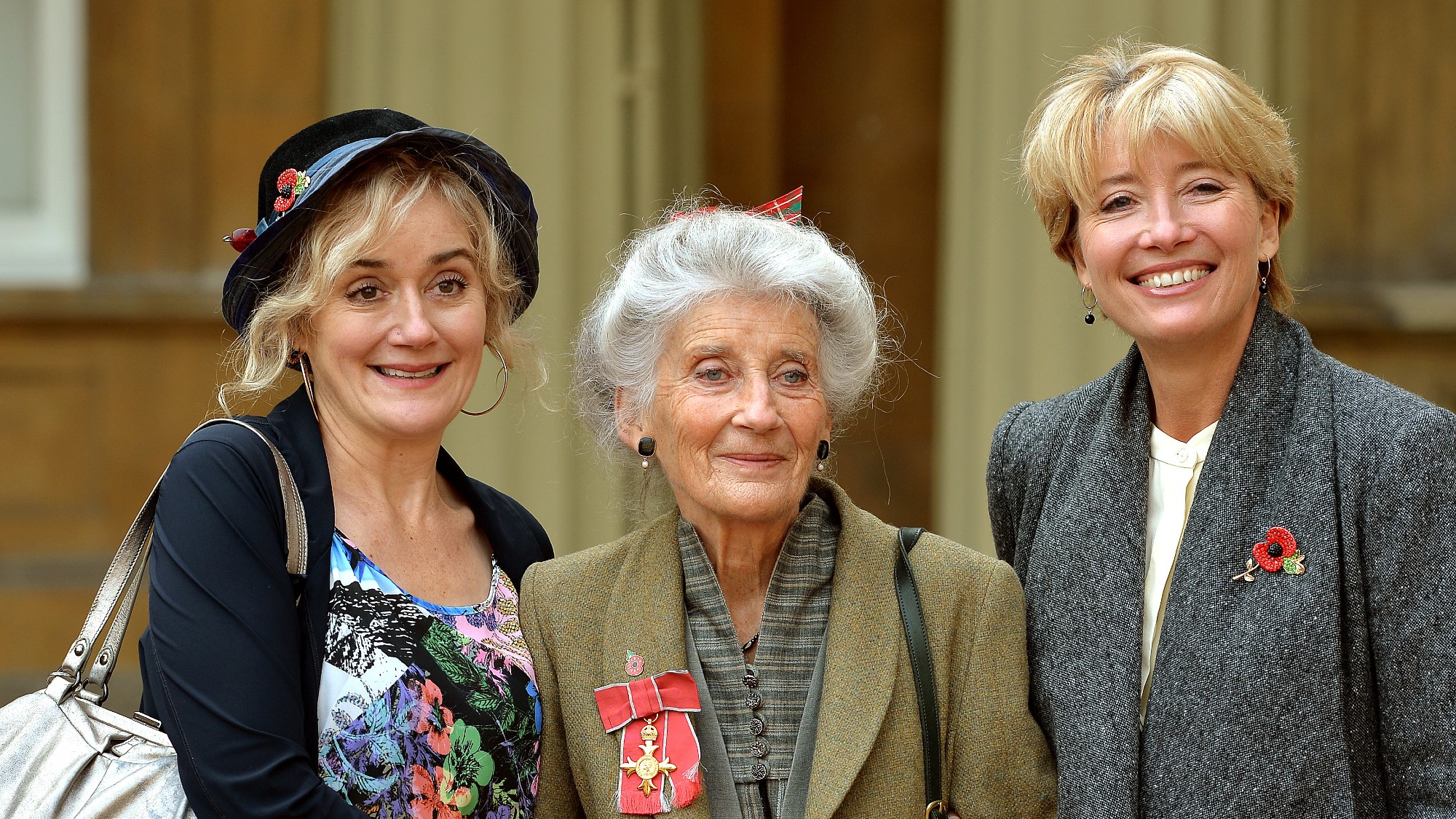
    “Although she was perhaps best known as the mother of two outstanding actors, Emma and Sophie Thompson, Phyllida Law, who has died aged 94, was supremely gifted herself,” said The Guardian. She was a writer, a costume designer and an actress: with her “silken Scottish vocal delivery” and “giddy sense of humour”, Law could be “both calm and scuttling on stage”. 

    Her stage and TV experience stretched back to the 1950s, but her film career blossomed fairly late, said Patrick Kidd in The Observer, helped in part by the success of her daughters. In 1997 she played Emma’s mother in “The Winter Guest”, directed by Alan Rickman. She also appeared in two films directed by her daughter’s then-husband, Kenneth Branagh, including “Peter’s Friends” (1992). In later life, her experience of looking after her deaf mother-in-law formed the basis of a memoir, “Notes to My Mother-in-Law”, which was followed by the bestseller “How Many Camels Are There in Holland?”, about caring for her own mother as she struggled with dementia. “Like the earlier book, it showed a talent for comic writing, tinged with poignancy and deep love.” 

    Phyllida Ann Law was born in Glasgow in 1932, the daughter of the journalist William and Meg “Mego” Law, who worked in a dress shop, said The Times. She was evacuated to Lenzie in Dunbartonshire during the Second World War. Her father joined the RAF and subsequently separated from her mother; Phyllida would not see him again until she was 18. 

    She attended boarding school in Bristol, and then won a place at the University of Glasgow to study French and history. She dropped out to attend Bristol Old Vic Theatre School – to the horror of her grandmother, who said that theatre was the “gateway to Hell”. Law, who initially wanted to be a set designer, discovered by “happy mistake” that she could act. 

    She met her future husband, Eric Thompson, at The Old Vic in London, where they had walk-on parts in a production of “Romeo and Juliet”. He asked her to marry him one night by a Christmas tree, but believing him to be drunk, she didn’t respond. “I just thought it was bad behaviour,” she said. Two weeks later, realising he was serious, she accepted. They married in 1957. While bringing up her two daughters, Law’s career on the London stage blossomed. She appeared with Alec Guinness in John Mortimer’s “A Voyage Round My Father” and Alan Bennett’s “Habeas Corpus”; in 1986 she starred in “La Cage aux Folles”. Eric, for his part, wrote and narrated more than 400 episodes of the children’s animation “The Magic Roundabout”. Law suspected that she had been the model for Ermintrude the cow. 

    Law “conveyed an appealing dottiness”, both in the “cardigan parts” of her later TV career and in real life, said The Daily Telegraph. She wore a monocle, claiming to find it “wonderfully effective” for scaring waiters, noting that passers-by probably mistook her for an “elderly Nazi”. The family home, in Hampstead, was crammed with theatrical mementoes; a doormat warned visitors to “Beware of the chickens”. 

    The one blight on her happy family life was Eric’s poor health; after two decades of heart problems, he died, aged 53, in 1982. She found widowhood “appallingly difficult”, and never remarried. In later life, she lived on the same Hampstead street as her daughters. Most evenings, one of them would phone her at six o’clock to inform her the bar was open. “At which point,” she said, “I put the phone down and go rather swiftly across the road.” Law was appointed OBE in 2014. She is survived by her daughters and four grandchildren.

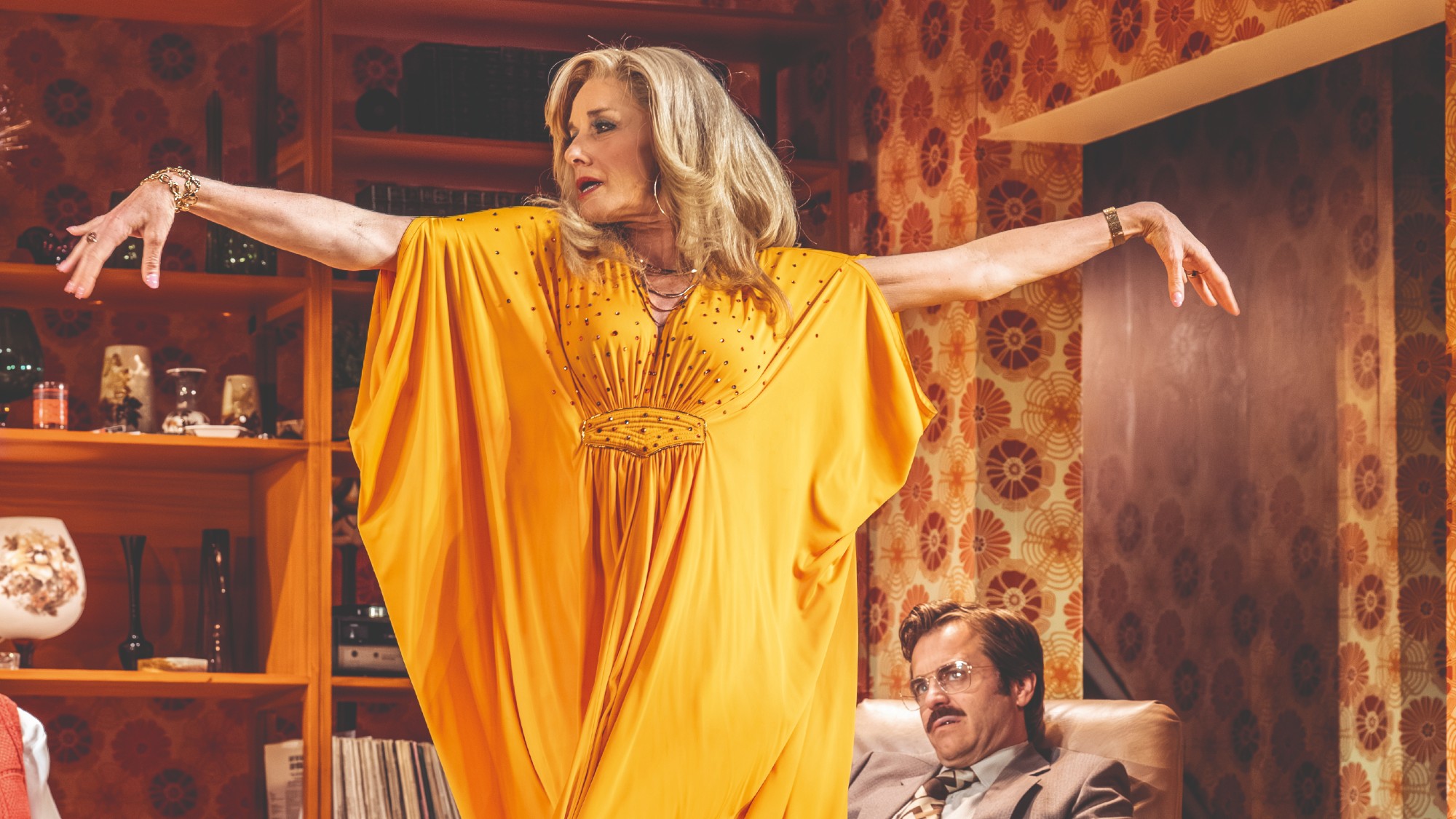


    Image credits, from top: Ryan Plummer Photography 2025; Ellie Kurttz; Universal History Archive / Universal Images Group / Getty Images; BBC / Big Talk; John Stillwell / Pool / AFP / Getty Images
     

    Recent editions

    • Evening Review

      The failing far-right firewall in Germany

    • Morning Report

      Trump’s bad day in court

    • Evening Review

      Trump goes after Canada

    VIEW ALL
    TheWeek
    • About Us
    • Contact Future's experts
    • Terms and Conditions
    • Privacy Policy
    • Cookie Policy
    • Advertise With Us
    • FAQ
    Add as a preferred source on Google Add as a preferred source on Google

    The Week is part of Future US Inc, an international media group and leading digital publisher. Visit our corporate site.

    © Future US, Inc. Full 7th Floor, 130 West 42nd Street, New York, NY 10036.