The Week The Week
flag of US
US
flag of UK
UK
https://cdn.mos.cms.futurecdn.net/flexiimages/jacafc5zvs1692883516.jpg

SUBSCRIBE & SAVE

Less than $3 per week

Sign in
  • View Profile
  • Sign out
  • The Explainer
  • The Week Recommends
  • Newsletters
  • Cartoons
  • From the Magazine
  • The Week Junior
  • Student Offers
  • More
    • Politics
    • World News
    • Business
    • Health
    • Science
    • Food & Drink
    • Travel
    • Culture
    • History
    • Personal Finance
    • Puzzles
    • Photos
    • The Blend
    • All Categories
  • Newsletter sign up Newsletter
  • Brand Logo
    Trump court setbacks, Great Lake rebrand and RFK Jr letters

     
    TODAY’S COURTS story

    Trump set back on voting, Kennedy Center, Anthropic

    What happened
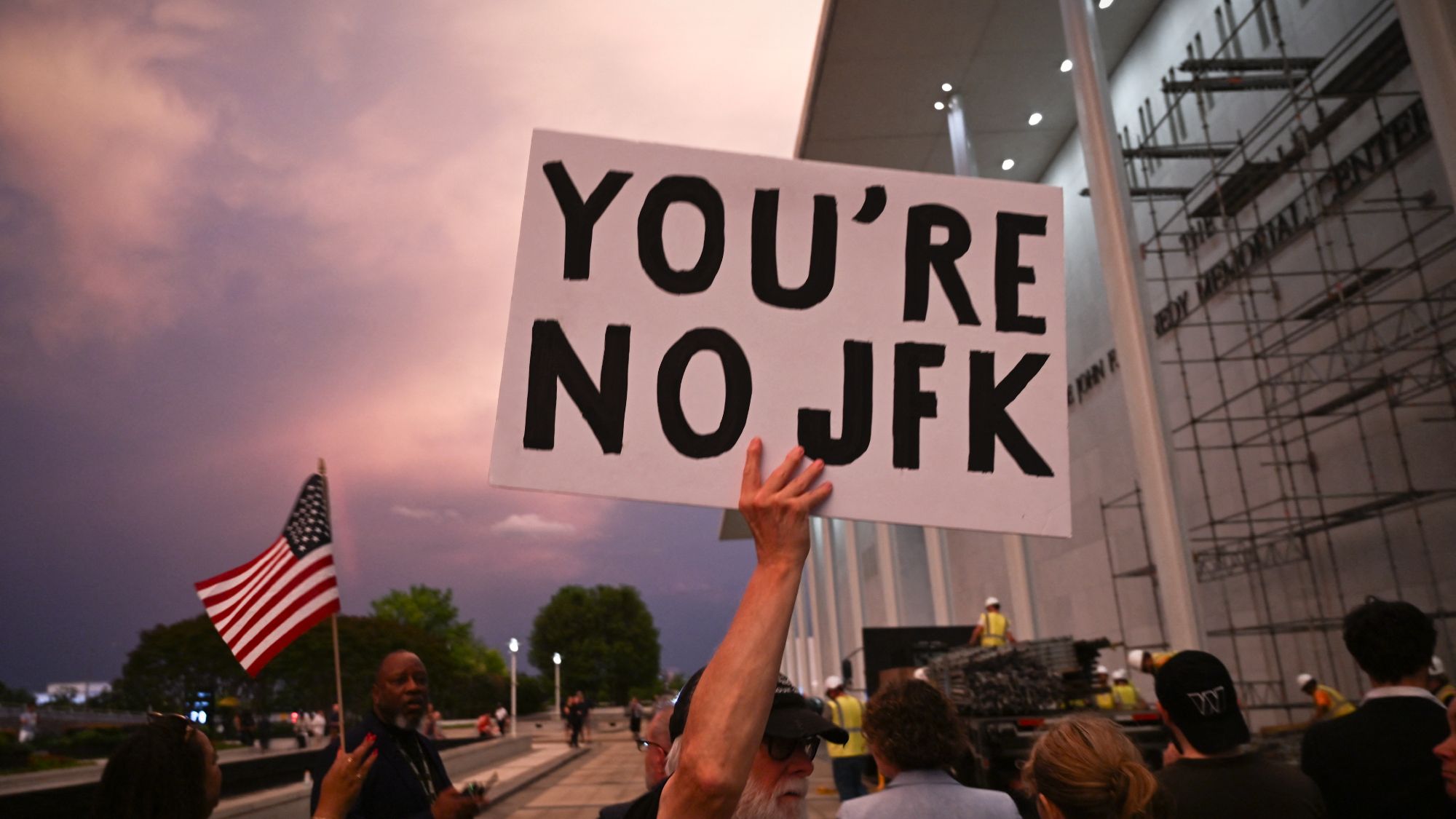
    Federal courts yesterday dealt President Donald Trump setbacks in several ongoing legal battles with broad implications. U.S. District Judge Indira Talwani in Boston issued a new block on the U.S. Postal Service carrying out Trump’s executive order to limit mail voting. In Northern California, U.S. District Judge Rita Lin ordered the Pentagon to end its “illegal and baseless” blacklisting of Anthropic. And U.S. District Judge Christopher Cooper in Washington, D.C., stalled administration plans to quickly inscribe Trump’s name back on the Kennedy Center.

    Who said what
    After Anthropic said it didn’t want its AI used for domestic surveillance or autonomous killing, Defense Secretary Pete Hegseth labeled it a supply-chain risk using an “obscure government-procurement statute” designed to thwart “foreign sabotage,” Reuters said. The administration’s “contemporaneous words and deeds confirm” it was actually acting to “make a public example out of Anthropic,” Lin wrote. “The empty invocation of national ​security is not a blank check to punish and retaliate against government critics.”

    Talwani issued a 14-day block of USPS mail voting action a day after lifting an earlier hold in response to a Supreme Court ruling. The “whipsaw of action” could “confuse voters,” The New York Times said. “But each delay has reduced the administration’s chances of clearing the legal hurdles to execute” Trump’s order before the midterms. Now that the USPS’s “likely unconstitutional regulation” is finalized, Talwani wrote, “compliance is practically impossible” before ballots go out “as early as next week.”

    What next?
    After Cooper threatened to block the Trump inscription if the Kennedy Center stuck to its Sept. 8 start date, the Justice Department last night said it would delay action until at least Oct. 8. 


    TODAY’S NOMENCLATURE story

    Trump orders Lake Ontario renamed amid Canada feud

    What happened
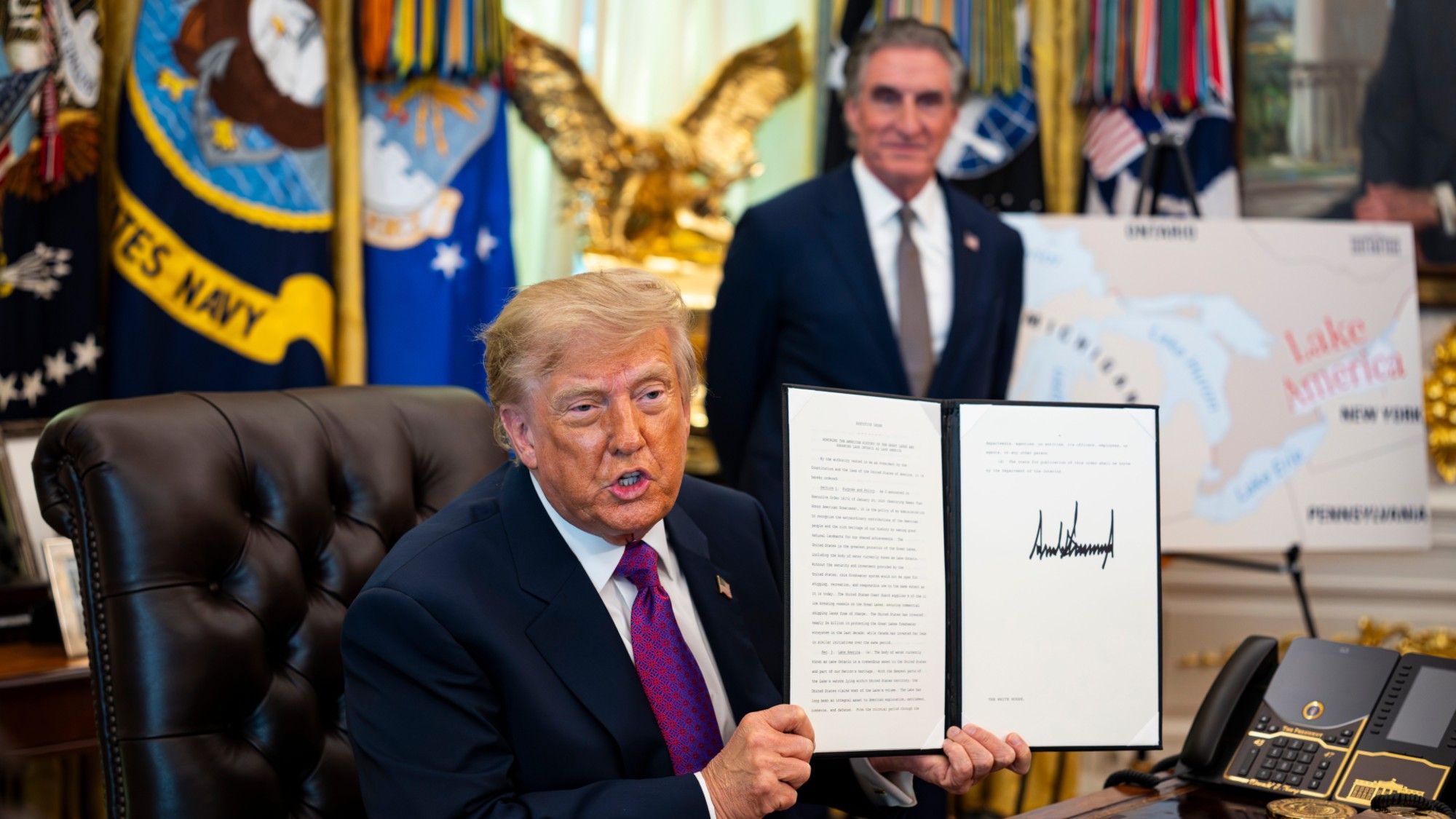
    President Donald Trump yesterday signed an executive order to rename Lake Ontario “Lake America” inside the U.S. government, needling Canada amid an intensifying trade war. Trump’s order directed the Interior Department and the Board on Geographic Names to remove and replace Lake Ontario on all federal maps and documents within 30 days, though he told reporters the name change was “effective immediately.”

    Who said what
    Trump’s Lake America rebrand “most likely requires only federal entities to recognize the change,” The New York Times said. “It does not have to be recognized by other countries.” New York, the only state that borders the lake, “won’t be calling it that,” said Gov. Kathy Hochul (D). Neither will Canada. The name, “from the Wendat word Ontari’io, which, appropriately, means ‘the lake is beautiful, the lake is big,’” is “more than 400 years old,” Prime Minister Mark Carney said on social media. “America is changing,” but Canadians “know that naming reality means calling it Lake Ontario — then, now and always.”

    What next?
    The Lake Ontario snub is “likely to harden public sentiment against the Trump administration in Canada,” The Wall Street Journal said. But Trump suggested he wasn’t satisfied with Lake America and the Gulf of America. “Now, all we need is an ocean,” Trump told reporters. “Maybe we’ll have to change the name of the Atlantic and/or the Pacific.”


    TODAY’S PUBLIC HEALTH Story

    RFK Jr’s Samoa vaccine testimony ‘refuted’ by letters

    What happened
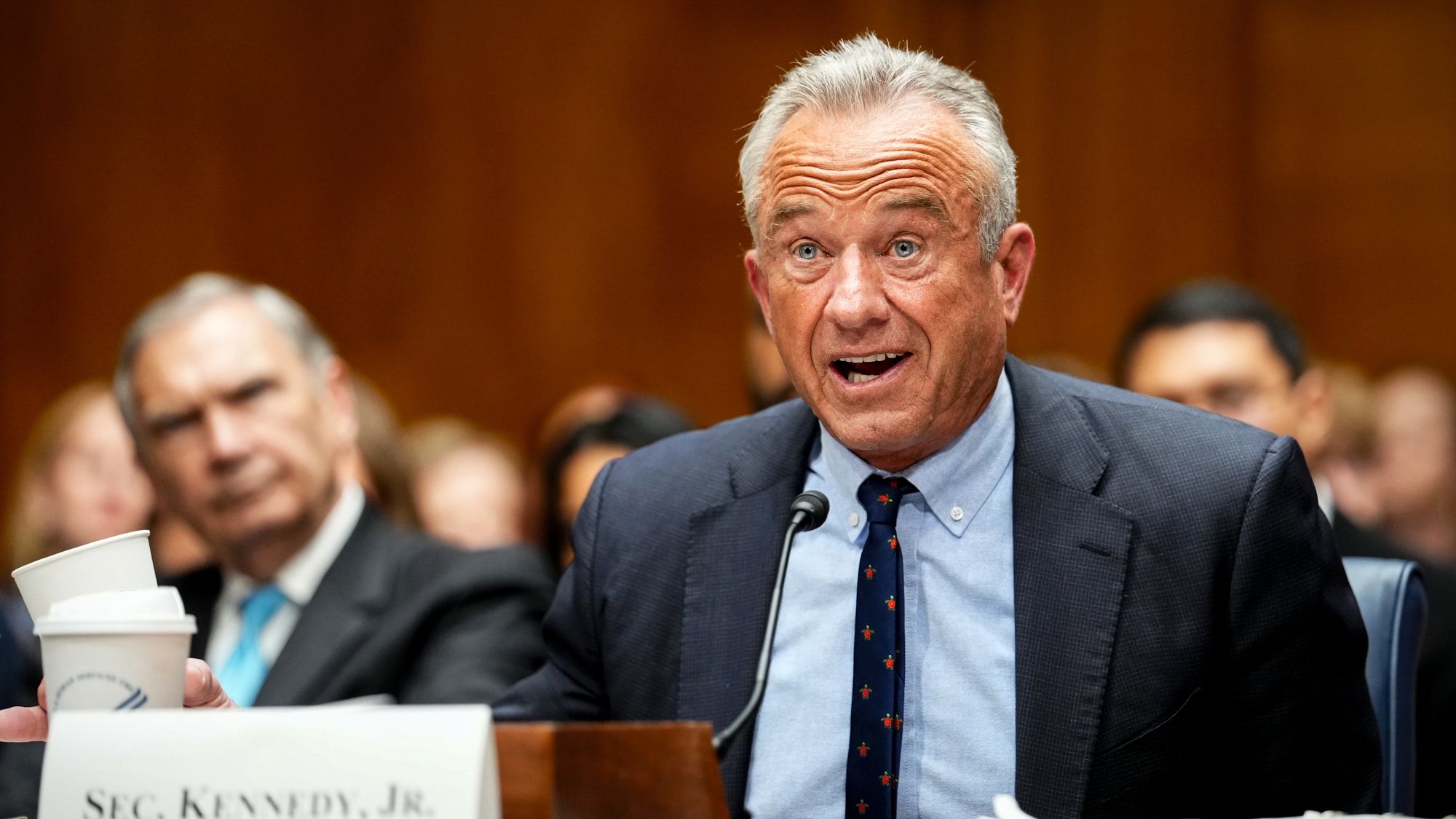
    Health Secretary Robert F. Kennedy Jr. repeatedly testified in his Senate confirmation hearing last year that a 2019 trip to Samoa had “nothing to do with vaccines.” But new documents obtained through freedom of information requests “refute that testimony,” The Associated Press said yesterday. Kennedy was a “prominent anti-vaccine activist" at the time, and "critics said the visit fueled anti-vaccine sentiment" before a measles outbreak that killed 83 Samoans. In one letter, The Guardian said, Kennedy “explicitly told the Samoan prime minister he wanted to study” the measles, mumps and rubella vaccine there and “used the words ‘vaccine’ or ‘vaccination’ eight times.”

    Who said what
    “RFK’s platform is built on lies” that “leave a trail of dead children,” said Sen. Ron Wyden (Ore.), the top Democrat on the Senate Finance Committee. “There are consequences for lying to Congress.” Watchdog group American Oversight yesterday asked the Justice Department to investigate Kennedy’s testimony for false statements. The Health and Human Services Department told the AP that “any claim or insinuation” Kennedy “lied under oath or to Congress” based on these letters is “not only false but outright defamatory.” 

    What next?
    “Lying to Congress is a crime, whether or not the witness is under oath,” Georgetown law professor Josh Chafetz told The Guardian. But this Justice Department is “unlikely” to prosecute Kennedy.


    It’s not all bad

    About two dozen tree species in the Brazilian Amazon rainforest are able to thrive in the poor soil conditions of former farmlands, according to a study published in Global Change Biology. The findings are “fantastic” proof that the forest is “resilient,” researcher Fernando Elias said to Agence France-Presse. The study focused on secondary forests growing in formerly razed areas. Elias said trees like the Cecropia palmata “dominate” the functioning of the ecosystems such that conservationists can “direct restoration efforts toward them.”


    Under the radar

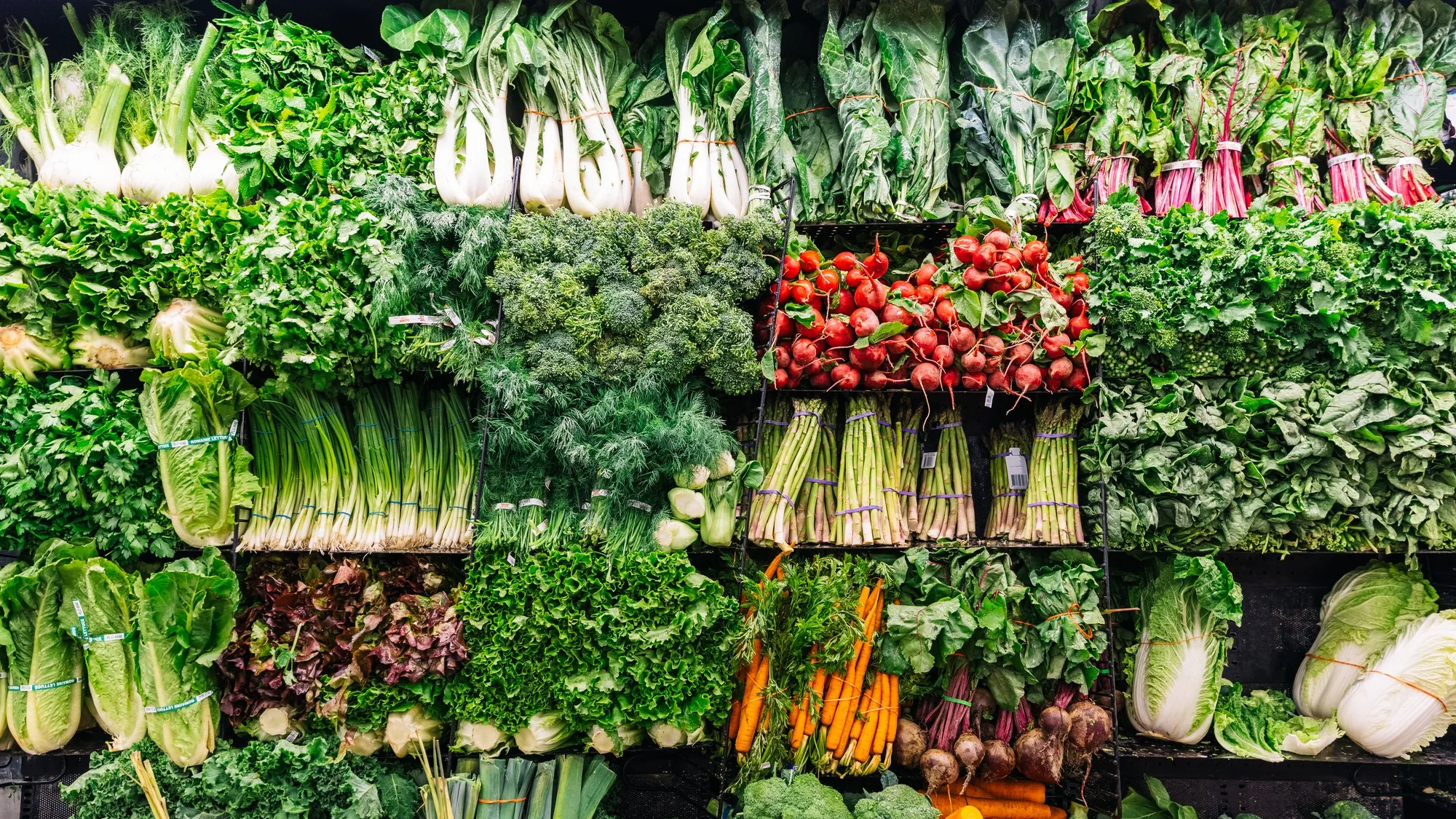
    The rapid, troubling disappearance of vegetables

    Produce shelves are becoming sparser and feature fewer options. Economic, cultural and environmental factors have reduced the variety of vegetables available to consumers, and that can have negative health consequences and make crops more susceptible to climate change.

    Vegetable diversity is “declining due to market homogenization, land-use change and other threats,” said a study published in the journal PNAS,  and the “current conservation is insufficient.” There have been “substantial declines in the range of traditional vegetable varieties grown over the past century, while almost one-quarter of assessed wild relatives of major vegetable crops are threatened with extinction,” said a release by the World Vegetable Center. 

    Agricultural practices like “monoculture, the practice of growing a single crop variety across vast areas,” are a “risky business, both economically and ecologically,” said IFL Science. If a “disease takes root in one plant, it rapidly spreads through the entire identical field like wildfire.”

    People worldwide “consume nearly 40% fewer vegetables than recommended by the World Health Organization,” the World Vegetable Center said. Low vegetable consumption is “among the five leading dietary risk factors contributing to the global burden of disease.” The good news is that there are 1,480 known species of edible vegetables, most of which are underused.

    “Vegetable biodiversity is one of the world’s greatest assets for improving diets and adapting agriculture to a changing climate,” said Colin Khoury, the global conservation lead at the crop diversity preservation nonprofit Crop Trust. “But we are losing it at exactly the time we need it most.”


    On this day

    August 28, 1955

    Emmett Till, a Black 14-year-old from Chicago, was kidnapped and murdered in Mississippi after allegedly whistling at a white woman. His brutal death, and his mother’s decision to display his mutilated body, helped ignite the Civil Rights Movement. Exactly eight years later, Dr. Martin Luther King Jr. delivered his “I Have a Dream” speech on the National Mall.


    TODAY’S newspaperS

    ‘Beyond critical’

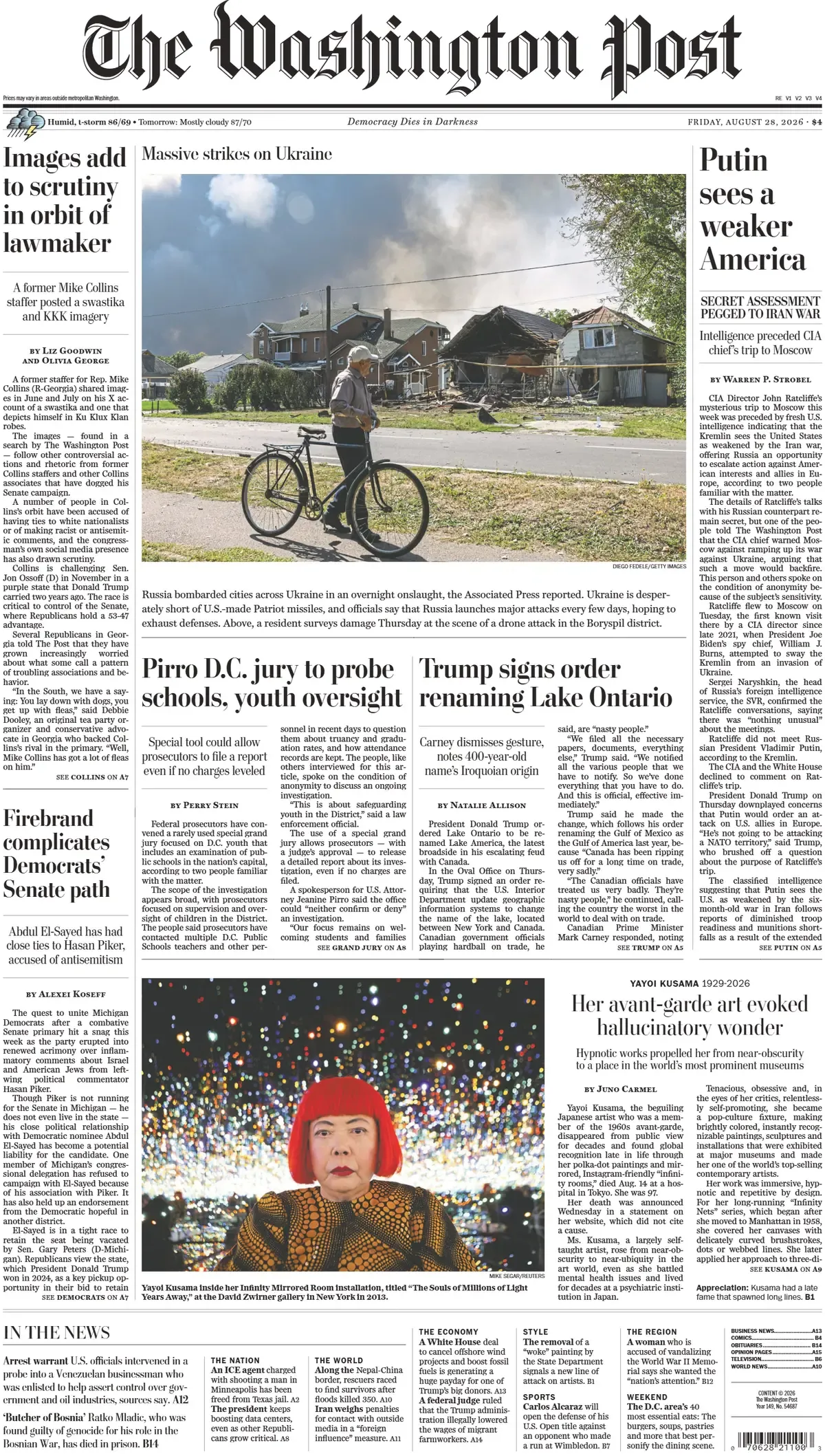
    “‘We won.’ ‘Close to over.’ Trump’s Iran war timeline,” says the Los Angeles Times. Six months in, “will war haunt Trump’s legacy?” USA Today says. “Officials: U.S. arsenal ‘beyond critical,’” says the Chicago Tribune. “Putin sees a weaker America” in “secret assessment pegged to Iran war,” says The Washington Post. “Combative Treasury chief” Scott Bessent “confronts his limits,” The New York Times says. “ICE arrests of those with no criminal record soar,” says The Minnesota Star Tribune. “ICE agent accused in shooting” in Minneapolis “freed from jail in South Texas,” says the Austin American-Statesman. Florida grand jury finds “$10M for Medicaid ‘misappropriated’” as “DeSantis team diverted funds for political use,” says The Palm Beach Post. “Abu Dhabi ‘spy sheikh’ is a major shareholder in Trumps’ new bank,” says The Wall Street Journal. 

    ► See the newspaper front pages


    Tall tale

    Falling for each other

    Mike Missroon and Megan Walsh started their married life together on a leap of faith, jumping out of an airplane with their entire wedding party and officiant. They said their “vows on the ground in the landing zone,” however, Walsh told People. The couple met when Missroon was Walsh’s skydiving instructor, and together they own Skydive Seneca Lake in New York. Wedding guests received wooden airplanes with N72626 on the tail to mark the date.


    Morning Report was written and edited by Nadia Croes, Catherine Garcia, Scott Hocker, Anya Jaremko-Greenwold, Justin Klawans, Rafi Schwartz, Peter Weber and Kari Wilkin, with illustrations by Stephen Kelly and Julia Wytrazek.

    Image credits, from top: Alex Wroblewski / AFP via Getty Images; Al Drago / The Washington Post / Bloomberg via Getty Images; Eric Lee / Bloomberg via Getty Images; Alexander Spatari / Getty Images
     

    Recent editions

    • Evening Review

      Trump goes after Canada

    • Morning Report

      Meta pays a price for social media addiction

    • Evening Review

      Trump’s crypto bank

    VIEW ALL
    TheWeek
    • About Us
    • Contact Future's experts
    • Terms and Conditions
    • Privacy Policy
    • Cookie Policy
    • Advertise With Us
    • FAQ
    Add as a preferred source on Google Add as a preferred source on Google

    The Week is part of Future US Inc, an international media group and leading digital publisher. Visit our corporate site.

    © Future US, Inc. Full 7th Floor, 130 West 42nd Street, New York, NY 10036.