The Week US
flag of US
US
flag of UK
UK
https://cdn.mos.cms.futurecdn.net/flexiimages/jacafc5zvs1692883516.jpg

SUBSCRIBE & SAVE

Less than $3 per week

Sign in
  • View Profile
  • Sign out
  • The Explainer
  • The Week Recommends
  • Newsletters
  • Cartoons
  • From the Magazine
  • The Week Junior
  • More
    • Politics
    • World News
    • Business
    • Health
    • Science
    • Food & Drink
    • Travel
    • Culture
    • History
    • Personal Finance
    • Puzzles
    • Photos
    • The Blend
    • All Categories
  • Newsletter sign up Newsletter
  • The Week Evening Review
    The coming C-suite crackdown, a small-market World Series, and ‘skillcations’

     
    talking points

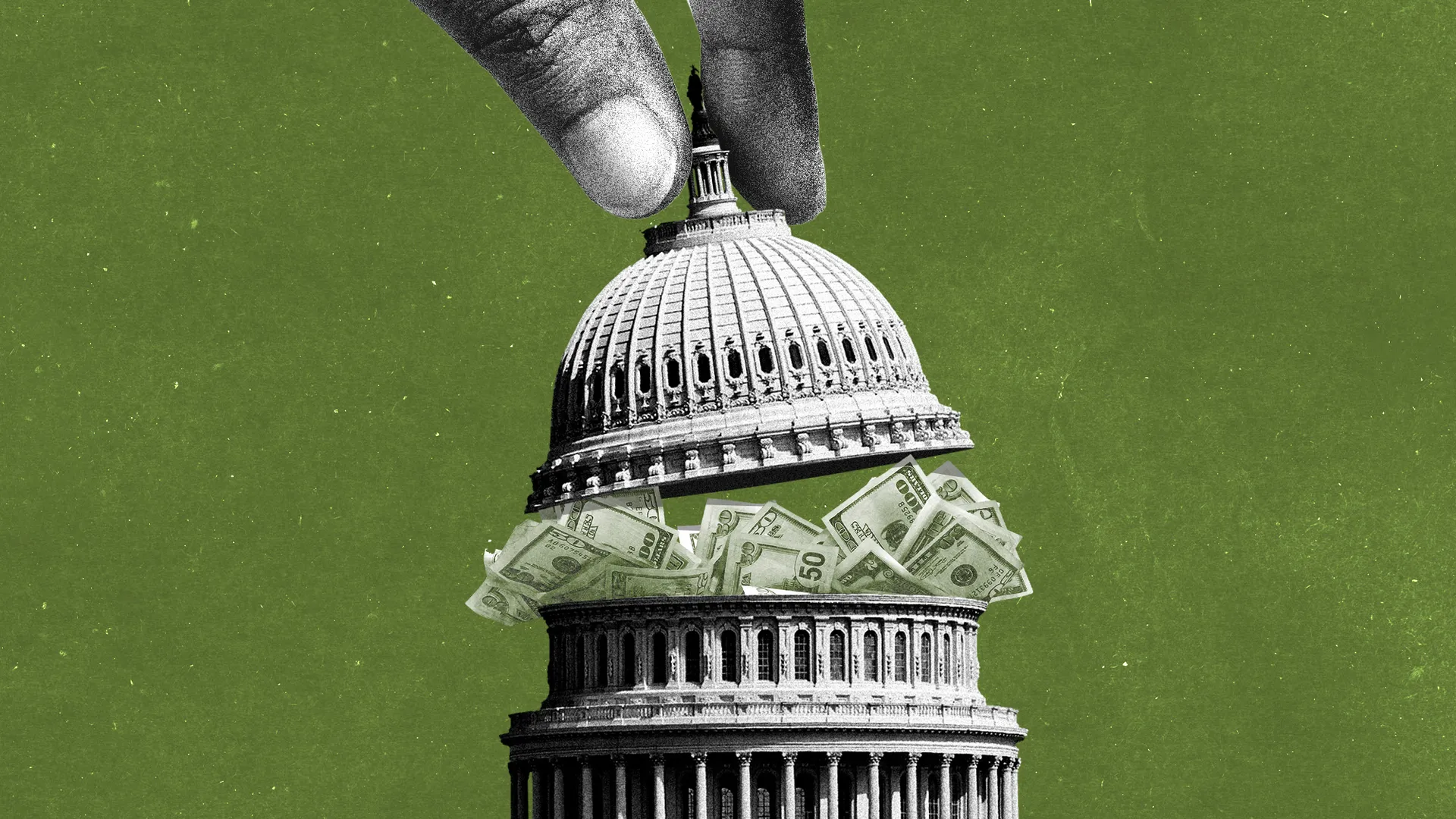
    Will business leaders face a backlash after the midterms?

    Corporate chiefs embraced President Donald Trump when he returned to the White House last year. Some wanted to avoid a crackdown, while others wanted to curry favor with the administration. Now, they are increasingly worried about consequences if Democrats take back control of Congress next week.

    ‘Holding Trump accountable’
    Leading executives “fear a reckoning” after the midterms, said The Washington Post. Silicon Valley firms such as Meta, OpenAI and Palantir that “ingratiated themselves with Trump’s Washington” now anticipate a Democratic Congress will scrutinize their dealings with the president. Companies tied to Donald Trump Jr. and Elon Musk are also expected to get a close look. Trump-aligned businesses have a “very rough couple of years ahead,” said Democratic strategist Cooper Teboe to the outlet.

    Corporate investigations could be Democrats’ “secret weapon for holding Trump accountable,” said Molly Claflin at MS NOW. For example, Chevron “gained the rights to vast oil reserves in Venezuela” after making “multimillion-dollar contributions” to presidential projects, while R. J. Reynolds Tobacco Company made similar donations before the government lifted vaping restrictions. Democrats would be continuing a “long tradition” of looking at big businesses to “investigate government corruption.”

    Democrats are “coming for the CEOs,” said The Wall Street Journal in an editorial. Private-sector officials “may not have liked writing checks for the inaugural or White House ballroom” but also had little choice “given how much leverage” Trump had over their businesses. Regardless, corporate America should “lawyer up.”

    ‘Perils of plutopopulism’
    Democrats in Congress are split over “how hard to go after companies that courted” the White House, said Politico. “The corruption is everywhere,” said Sen. Elizabeth Warren (D-Mass.) to the outlet. Others would prefer to focus on affordability issues instead of “weaponizing the federal government,” said Sen. Catherine Cortez Masto to Politico.

    U.S. CEOs are now discovering the “perils of plutopopulism,” said Chrystia Freeland at the Financial Times. Businesses embraced Trump believing he would “deliver tax cuts and deregulation.” That bet is “starting to go wrong” now that the president’s “political star is shining less brightly.”


    QUOTE OF THE DAY

    ‘They don’t want to have to go all over the place changing their clocks. And even churches and municipal governments — they have to hire cranes to go up.’

    Trump at a rally in Corinth, Mississippi, on daylight saving time. Changing the clocks is “stupid” and always makes him late, he added. The president urged the Senate to take a vote on permanent daylight saving time. 


    today’s big question

    How will a small-market World Series affect baseball?

    With the Milwaukee Brewers and Tampa Bay Rays battling in the World Series, Major League Baseball has something it rarely gets: a small-market Fall Classic. But with a potential December lockout on the horizon, this year’s World Series could affect the game’s future beyond the baseball diamond.

    What did the commentators say?
    This World Series is “equally intriguing for what it means on the field” as for “what it means off the field, as terms such as ‘market size,’ ‘payroll’ and ‘revenue sharing’ have become as big a part of baseball as hits, home runs and RBIs,” said NBC News. The small-spending Brewers and Rays beat out several big spenders to make it to the Fall Classic. Milwaukee “swept the Los Angeles Dodgers and their $412 million team in the NLCS,” while Tampa took down the New York Yankees’ $310 million-payroll club.

    Whoever emerges victorious will be the first team to win the World Series in the bottom half of the league’s spending since the Kansas City Royals in 2015, a “rebuke of sorts to what MLB Commissioner Rob Manfred” said about the sport, said NBC. Manfred “set this winter up to be a big huffy showdown over runaway major market payrolls and the desperate need to install a salary cap,” said The Wall Street Journal. Then a “couple of crafty, thrifty, well-run teams with low payrolls but dynamo management knocked out the spenders to reach the big show.”

    For team owners, it “plays right into the hands of their opponent in the labor dispute,” said the Journal. The MLB Players Association has long argued that a “cap isn’t necessary, because money isn’t what delivers championships.” The “truth is” that both matter. A baseball team “needs smart management,” and “money can make up for mistakes.”

    What next?
    Many players see the small-market World Series as a positive trend. It “kind of paints a different picture, right? You don’t really need all the money out there to win baseball games,” said Brewers closer Trevor Megill to USA Today. It “kind of just matters who’s in the clubhouse and what they are willing to do for each other.’’


    Statistic of the day

    50,000: The number of heat-related deaths in Europe this summer — far higher than the previous record of 29,000 in 2022, according to estimates by scientists at universities in Bern, Copenhagen, London and Venice. France, Germany, Italy, Spain and the U.K. suffered the most deaths.


    in the spotlight

    Why the ‘skillcation’ is taking off

    Rising flight and hotel costs, combined with “stubbornly finite” annual leave, mean most vacationers can take “one or two big trips” per year, said Sarah Rappaport at Bloomberg. So a “growing cohort” of time-poor travelers is treating holidays as an “investment” in themselves. The desire to “come home with more than Instagram shots as souvenirs” has given rise to “purposeful travel” called the skillcation.

    ‘Satisfaction and accomplishment’
    Tourists are seeking experiences that “create muscle memories,” said Natalia Lechmanova, a senior economist at Mastercard, in the company’s published research. From “winemaking and woodworking” to pottery and painting, consumers are “opening their wallets” for a taste of local culture and a “lesson that lasts long after they have arrived home.” Skill-based travel also “tends to draw people beyond the crowded hot spots” to smaller towns and lower seasons, reducing the impact of overtourism.

    These trips tend to cost more than conventional holidays, but the pay-off is high. People often see “longer-lasting positive effects on psychological well-being” than from holidays focused on “sun, sea and partying,” said Andrew Stevenson, a psychology professor at the U.K.’s Manchester Metropolitan University, to Bloomberg. Learning a new skill adds a “feeling of satisfaction and accomplishment.”

    ‘Teach, reconnect and transform’
    Over the years, “I have clumsily thrown myself into swing dancing lessons in Italy, free-diving sessions in French Polynesia, and Spanish intensives in Ecuador,” said Julia Eskins at Vogue. “I came home from each one feeling a little more capable than when I arrived.”

    A trip like this has a “purpose,” said Alex Ledsom at Forbes. The traveler is looking for more than “just a break.” The goal is to fill time with experiences that “teach, reconnect and transform.” 

    Travelers going on skillcations usually learn something unavailable at home, with tactile crafts like “Peruvian weaving or Japanese pottery-making” becoming increasingly popular activities, said Ledsom. They are more interested in “heritage, expertise, traditions and customs” than ever before.

    That has led to one of the “fastest-growing segments” in the tourism industry, said Lindsay Cohn at W Magazine. Hotels everywhere are “ramping up” their activity programs to offer the chance to develop “new experiential abilities.” 


    Good day 🇧🇷

    … for Brazilian workers. Brazil’s Congress has approved a constitutional amendment to shorten the country’s work week to a 40-hour maximum. The move could affect 30 million employees and “hand a political victory” to newly reelected leftist President Luiz Inácio Lula da Silva, said The Guardian.


    Bad day 🧊

    … for Colorado glaciers. Three of Colorado’s biggest glaciers have shrunk dramatically over the past year from global warming, according to researchers at Colorado State University in Fort Collins. The Andrew, Arapaho and Isabelle glaciers have thinned by 12, 10 and 6.5 feet, respectively, and a fourth glacier melted entirely last month. 


    Picture of the day

    Copycats

    Lion cubs pile onto a bench in their enclosure at Germany’s Dortmund Zoo. Twelve were born to lionesses Saba and Zuri and male lion Boeti over four days at the end of July.
    Ina Fassbender / AFP / Getty Images


    Puzzles

    Daily sudoku

    Challenge yourself with The Week’s daily sudoku, part of our puzzles section, which also includes guess the number

    Play here


    The Week recommends

    The very best science-fiction thriller movies

    Science fiction is a broad genre, and in one of its most beloved forms, it’s fused with the dynamics of a thriller. The best of these films are simultaneously suspenseful, thought-provoking and dazzling.

    ‘Aliens’ (1986)
    Ripley (Sigourney Weaver), the lone survivor of the slow-burn rampage in 1979’s “Alien,” reluctantly tags along with a squad of Marines to a colony menaced by the Xenomorphs. This “perfect sequel” is a “war movie fused inextricably with science fiction,” said Ian Nathan at Empire. (Netflix)

    ‘12 Monkeys’ (1995)
    Convict James Cole (Bruce Willis) is sent back in time from 2035 to find the source of a manufactured virus that wipes out 99% of the global population. The film succeeds as a “vigorous work of dark surprise-filled science fiction,” said Janet Maslin at The New York Times. (Prime Video)

    ‘Children of Men’ (2006)
    As a long fertility crisis threatens total societal collapse, Theo (Clive Owen) escorts a pregnant woman to safety through a bleak U.K. teeming with refugees and fear. This masterful parable is a “fast-paced, kinetically shot dystopia,” said Brian Eggert at Deep Focus Review. (Prime Video)

    ‘Annihilation’ (2018)
    Biologist Lena (Natalie Portman, pictured above) joins an expedition into a slowly expanding extraterrestrial bubble in which plant and animal life, as well as reality itself, are subject to bizarre mutations. Watching this “shimmering sci-fi art installation” is a “foreboding, unique and wholly challenging experience,” said David Crow at Den of Geek. (MGM+)


    Poll watch

    Over half of reproductive-age women living in states with abortion bans (53%) don’t know where to get an abortion or find information about getting one, according to a KFF survey of 3,538 women. Two-fifths of women (40%) living in states with 6- to 12-week gestational limits say the same.


    INSTANT OPINION

    Today’s best commentary

    ‘The White House will fail to overturn any elections’ 
    Noah Feldman at Bloomberg
    Since Trump “first ran for office 10 years ago,” he has tried to use the courts to “meddle in elections,” says Noah Feldman. His multiple efforts to “subvert democracy” after the 2020 election “still haunt our politics, as they should.” But protecting democracy “rises above politics,” and it’s not served by “too much fretting” about the “now-standard and unsuccessful attempts” to use the courts as “one vector in the delegitimization process.” They “won’t work.”

    ‘Disability claims have shot up. It’s time for verification.’
    Freddie deBoer at The Boston Globe
    The core issue is that “accommodation is allocative,” says Freddie deBoer. Formal disability accommodations are “not about sentiment or respect”; they are about the “distribution of finite goods.” If everyone “receives special consideration,” that consideration “can’t be said to exist.” The “loud online chorus” that insists it’s offensive to “ask for a little documentary evidence” has done “exactly nothing” for the most vulnerable. “Something has to give.” Our “present scenario” is “not sustainable.” 

    ‘Anthropic’s big IPO gamble’
    The Wall Street Journal editorial board
    There has “never been a public IPO” like Anthropic’s with such a “promising but also risky technology,” says The Wall Street Journal editorial board. A “paradox” runs through its prospectus, as the company “repeatedly says it can benefit humanity” while also saying AI may pose catastrophic risks. Beyond this “small existential matter,” other risks remain. The largest is whether Anthropic will “ever generate the revenue” to cover its “soaring costs to stay at the AI frontier.”


    WORD OF THE DAY

    Skincubator

    A wearable neonatal device that allows skin-to-skin contact between parents and newborns while also functioning as a portable incubator. The Skincubator’s creators have “already reported successful trials in countries like Germany,” said Popular Science, and recently began clinical trials in the U.S. 


    Evening Review was written and edited by Theara Coleman, Nadia Croes, David Faris, Anya Jaremko-Greenwold, Justin Klawans, Joel Mathis and Deeya Sonalkar, with illustrations by Julia Wytrazek.

    Image credits, from top: Illustration by Julia Wytrazek / Getty Images; Jamie Squire / Getty Images; PixelsEffect / Getty Images; Paramount Pictures / Pictorial Press / Alamy
     

    Recent editions

    • Morning Report

      Trump’s topsy-turvy Comey retribution campaign

    • Evening Review

      Will the AI bubble pop?

    • Morning Report

      Brazil bucks Latin America’s rightward drift

    VIEW ALL
    TheWeek
    • About Us
    • Contact Future's experts
    • Terms and Conditions
    • Privacy Policy
    • Cookie Policy
    • Advertise With Us
    • FAQ
    Add as a preferred source on Google Add as a preferred source on Google

    The Week US is part of Future US Inc, an international media group and leading digital publisher. Visit our corporate site.

    © Future US, Inc. Full 7th Floor, 130 West 42nd Street, New York, NY 10036.