The Week The Week
flag of US
US
flag of UK
UK
https://cdn.mos.cms.futurecdn.net/flexiimages/jacafc5zvs1692883516.jpg

SUBSCRIBE & SAVE

Less than $3 per week

Sign in
  • View Profile
  • Sign out
  • The Explainer
  • The Week Recommends
  • Newsletters
  • Cartoons
  • From the Magazine
  • The Week Junior
  • Student Offers
  • More
    • Politics
    • World News
    • Business
    • Health
    • Science
    • Food & Drink
    • Travel
    • Culture
    • History
    • Personal Finance
    • Puzzles
    • Photos
    • The Blend
    • All Categories
  • Newsletter sign up Newsletter
  • The Week Evening Review
    Germany’s far-right control, overheating classrooms, and the ‘infladating’ trend

     
    TODAY’S BIG QUESTION

    How did the ‘firewall’ against Germany’s far-right fail?

    The far-right Alternative fur Deutschland Party is on course to take control of a German state for the first time, blasting through a postwar consensus designed to keep extremists out of power. With polls suggesting the AfD will win 40% of the vote in Saxony-Anhalt in next week’s state election, it’s now “completely undemocratic to permanently exclude” the former fringe movement, said left-wing party leader Sahra Wagenknecht. “The firewall has failed.”

    What did the commentators say?
    Germany’s political firewall, the Brandmauer, is an agreement between mainstream parties to refuse to cooperate or work with extremists. It has succeeded in keeping the AfD out of power at state and federal level until now but has done nothing to harm the party’s popularity. If anything, being excluded has contributed to the AfD’s rise in national polls, where it now has a clear lead over its mainstream rivals.

    Maintaining the firewall has created a “hollowed-out center,” said Alexander Gorlach, a politics professor at New York University, at Jacobin magazine. Building majorities that exclude the far-right has “led to uncomfortable compromises”: Parties on the left and center-right have made coalitions “born of necessity rather than conviction.” Not only has this alienated some voters and even driven them toward extremist alternatives, but it has also blurred the distinctions between mainstream parties, reinforcing the AfD’s line that they are carbon-copy “cartel parties.”

    The Brandmauer also means the AfD has “no incentive” to moderate its policies to gain power, as some other populists in Europe have done, said The Economist. Behind the firewall, the party is protected from the “disappointment that accountability in a democracy implies,” said Christian Stecker, a political scientist at German university TU Darmstadt, to the outlet.

    What next?
    If current polling proves accurate, the AfD could secure an absolute majority in the Saxony-Anhalt election on Sept. 6 — a rarity under Germany’s proportional-voting system. The consequences of this “would be far-reaching,” said the Center for Strategic and International Studies think tank in Washingon, D.C. It would not only “create a shock to the ideological spectrum” but also, for the first time, enable a far-right party in Germany to “put some of its agenda into practice.” 


    QUOTE OF THE DAY

    ‘Canada has turned into almost a wholly owned subsidiary of the Chinese Communist Party.’

    Right-wing pundit Steve Bannon on his War Room podcast to White House trade adviser Peter Navarro on how Vancouver is now “big Hong Kong.” Hong Kong “itself is little Hong Kong,” he added. Vancouver has a population of 752,000; Hong Kong has 7.5 million.


    the explainer

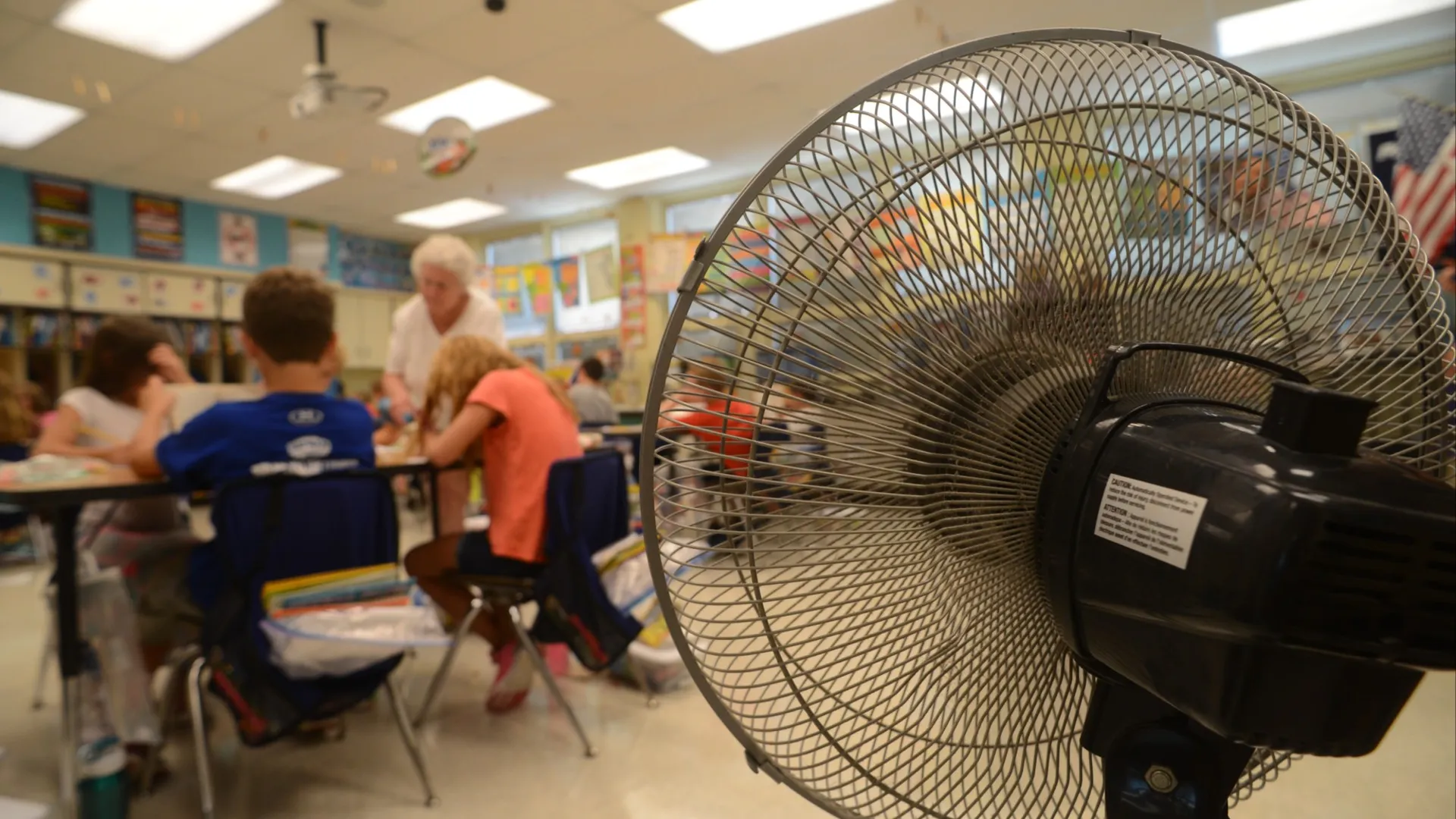
    Overheated classrooms reach a boiling point

    While cooler fall days may be on the horizon, many students returning to school are still dealing with scorching end-of-summer temperatures. As climate change exacerbates the heat, experts say the negative effects of sizzling classrooms are here to stay, especially in school districts that may not have the resources to combat hotter weather.

    How do hot classrooms affect students?
    Students can often “struggle to learn in hot, stuffy classrooms,” as “air quality, temperature and ventilation” can affect how people “think, focus and perform,” said Time. These factors are aggravated in poorer school districts, where a lack of air conditioning can “impair cognitive function, while excessive heat diverts the body’s energy from learning.” Average temperatures of 80 to 90 degrees Fahrenheit and above are “known to exacerbate student absenteeism and disciplinary referrals.”

    While heat has always been an issue in underfunded classrooms, it “doesn’t just affect” hotter states, Allison Poulos and Jennifer Vanos, health solutions professors at Arizona State University, said at The Conversation. Even cities in the northern U.S. are now “oppressively hot when the new school year begins in August or September, and they are only getting warmer.” Many schools have also “moved the start of the academic year earlier into the summer.” But they “lack the infrastructure — from inadequate air conditioning to fields and play areas that are not shaded — to cope.”

    How are schools fighting the heat?
    In Boston, classrooms averaged 100 F over several days in June, forcing teachers in “non-air-conditioned buildings to turn off lights and spritz students with water to keep them cool,” said The Boston Globe. Toward the end of this month, students in a Northern Colorado district “spent the first three school days of the year leaving class two hours early” due to heat, said CBS News.

    Many districts are working to combat issues with HVAC systems, which experts say “offer schools a way to deliver reliable heating and cooling while reducing exposure to volatile fossil fuel costs,” said Time. Via “energy tax credits and a mechanism known as Elective Pay, public school districts can receive direct financial support to invest in these improvements.” 


    Statistic of the day

    $108 million: The total prize fund for this year’s U.S. Open tennis tournament — a 44% increase since 2024. Each singles champion will earn $5.5 million, and each of those who don’t go passed the first round, which begins this Sunday, will get $140,000, the “largest amount in tennis history for making the main draw,” said The Guardian.


    in the spotlight

    Singles turn to ‘infladating’ amid ‘dateflation’

    Dating can take a toll on your emotions. Now it’s also wrecking people’s finances as “dateflation” makes standard dating-related expenses out of reach for many singles. Faced with the economic pressure of inflation, many are turning to “infladating” and going on budget-friendly dates.

    Rising costs 
    Finances impact “nearly every aspect of life to varying degrees,” said USA Today. Your dating life is “no exception.” Not only does the “state of the economy impact the kinds of dates people go on,” but it may also “influence who people decide to go out with.” As dating expenses continue to rise, people become “more selective about who they choose to take out.” 

    On average, Gen Z spends $205 on a date, and millennials spend $252, according to CNBC analysis of BMO Financial Group’s survey of 2,501 U.S. adults. Yet nearly 47% of singles feel dating isn’t worth the money, while 48% of Gen Z and 40% of millennials say the high cost of dating is an obstacle to reaching their financial goals.

    Infladating does not mean “investing less energy into your dating life,” said Vice. Rather, it’s “investing less money into it.” Effort goes a “long way with the right person.”

    Better than giving up
    If infladating worries people, experts note the alternative could be worse. In reality, many people are “struggling in today’s economy” and are “opting out of dating completely because it’s too expensive,” said dating coach Amy Chan to USA Today. She sees it more in her “male clients who feel embarrassed that they cannot take a date out to a nice restaurant.” If the “antidote for that is infladating,” then she’s “all for it.”

    This isn’t just a dating issue but one about “how our finances and the things that impact them affect every area of our lives,” including “how we pursue relationships,” said Michael McAuliffe, the president and founder of Family Credit Management, to Vice. Basic everyday costs have been “increasing much faster than most people’s paychecks.”


    Good day 👟

    … for papal fashion. Pope Leo has scored a spot on Vanity Fair’s “best dressed” list, for his “sartorial combination” of Nike sneakers, a baseball cap and a papal cassock, said The Times. The Catholic leader is among the entrants in the outlet’s “first ranking this decade of the most fashionable people in the world this year.”


    Bad day 🪎

    … for Spanish art. Thieves have stolen jewelry and artifacts from “one of the most important prehistoric gold collections” at a museum in Spain’s Alicante province, said the BBC. The Treasure of Villena includes “almost 10 kilos of gold, bowls, bottles and bracelets” from the Bronze Age. It’s valued at about $2 million, though the 3,000-year-old trove is considered invaluable.


    Picture of the day

    Memorial tributes

    Mourners gather at Oslo, Norway’s Royal Palace Square to pay their respects to King Harald V. He died this morning at age 89 after being hospitalized for a rare blood condition. He’s succeeded by his son, King Haakon VIII.
    Rune Hellestad / Getty Images


    Puzzles

    Daily sudoku

    Challenge yourself with The Week’s daily sudoku, part of our puzzles section, which also includes guess the number

    Play here


    The Week recommends

    The most romantic movies of all time

    Falling in love is close to a universal human experience. So it’s no surprise that audiences return again and again to see glamorous movie stars go through both the mundane and sublime beats of getting swept away, and sometimes shattered, by love, as in these brilliant films.

    ‘Roman Holiday’ (1953)
    Audrey Hepburn plays Ann, the glamorous princess of some unnamed European kingdom, who when she falls asleep on a bench is attended to by a journalist, Joe Bradley (Gregory Peck). The movie (pictured above), rather than hitting the familiar beats of a romantic comedy, ultimately “swerves to something more poignant,” said Caroline Siede at The A.V. Club. (Prime Video)

    ‘In the Mood for Love’ (2000)
    In perhaps the most beautiful film ever made about unconsummated love, Chow Mo-wan (Tony Leung Chiu-wai) and Su Li-zhen (Maggie Cheung) are neighbors who gradually develop feelings for one another. Director Wong Kar-wai’s movie is “ravishing beyond mortal words,” said Ed Gonzalez at Slant magazine, and its protagonists “come to resemble butterflies caught in a rainbow-tinted industrial web.” (HBO Max)

    ‘Portrait of a Lady on Fire’ (2019)
    Writer-director Céline Sciamma’s searing love story follows Marianne (Noémie Merlant), who’s hired to paint a wedding portrait for Héloise (Adèle Haenel). The two fall madly in forbidden love. It’s a film about the “electric connection between women,” but it’s “equally about the powers of art to validate, preserve and console after a romance is over,” said Rachel Syme at The New Yorker. (HBO Max)

    Read more


    Poll watch

    Two in five American passengers (40%) believe airlines should ban phone and video calls aboard an aircraft, with 27% labeling calls as the most annoying passenger behavior, according to a survey of 2,500 U.S. adults by travel site The Points Guy and YouGov. Over 70% think the most appropriate flying attire is “whatever is comfortable.”


    INSTANT OPINION

    Today’s best commentary

    ‘Healthcare is more badly broken than political leaders admit’
    Marj Halperin at the Chicago Tribune
    While “rising costs are a barrier for too many, even those who can afford comprehensive health insurance are finding money can’t buy you a timely appointment,” says Marj Halperin. Americans in cities are now in “much the same bind as patients in rural areas who have long found limited doctors available for routine care, with specialists often a few hours’ drive away.” It is “time for political leaders to spell out a strategy to speed in the opposite direction.”

    ‘Meta’s $18 billion settlement could reshape social media for young people’
    Tom Jones at the Poynter Institute
    Meta “reached a landmark settlement and agreed to pay up to $18 billion to 47 states” to settle claims it “endangered children through addictive features,” says Tom Jones. Meta’s promised changes are “meant to curb endless scrolling, which can interrupt sleep and have other negative effects on young people’s health and well-being.” The “smart move for Meta was to settle,” as a “major challenge for all social media companies is verifying the ages of their users.”

    ‘A wildly popular movie meets the film world’s most revered label’
    Sophia Nguyen at The Atlantic
    “KPop Demon Hunters” seems to have “completely overtaken culture,” says Sophia Nguyen. But “even the most ardent fans likely did not anticipate the megahit’s next big merch drop: a disc release from the Criterion Collection, home to some of cinema’s most distinguished titles.” Some of the label’s “longtime devotees greeted the addition of ‘KPop Demon Hunters’ with an eye roll,” but Criterion has “good reason to widen the net: Netflix, Apple and Amazon make and distribute a significant share of films.”


    WORD OF THE DAY

    Moai

    Easter Island’s monolithic stone figures, whose name means “statue” in the Polynesian language Rapa Nui. The Moai emoji has had a “meteoric rise,” driven by young people using it to “indicate a deadpan response or a raised eyebrow,” said The New York Times. It was the 33rd most used emoji last year, up from 482nd in 2021, according to Google.


    Evening Review was written and edited by Theara Coleman, Nadia Croes, David Faris, Elliott Goat, Scott Hocker, Anya Jaremko-Greenwold and Justin Klawans.

    Image credits, from top: Ronny Hartmann / AFP / Getty Images; MediaNews Group / Reading Eagle / Getty Images; ImagesBazaar / Getty Images; Carlo Bollo / Alamy
     

    Recent editions

    • Morning Report

      Trump’s bad day in court

    • Evening Review

      Trump goes after Canada

    • Morning Report

      Meta pays a price for social media addiction

    VIEW ALL
    TheWeek
    • About Us
    • Contact Future's experts
    • Terms and Conditions
    • Privacy Policy
    • Cookie Policy
    • Advertise With Us
    • FAQ
    Add as a preferred source on Google Add as a preferred source on Google

    The Week is part of Future US Inc, an international media group and leading digital publisher. Visit our corporate site.

    © Future US, Inc. Full 7th Floor, 130 West 42nd Street, New York, NY 10036.