The Week The Week
flag of US
US
flag of UK
UK
https://cdn.mos.cms.futurecdn.net/flexiimages/jacafc5zvs1692883516.jpg

SUBSCRIBE & SAVE

Less than $3 per week

Sign in
  • View Profile
  • Sign out
  • The Explainer
  • The Week Recommends
  • Newsletters
  • Cartoons
  • From the Magazine
  • The Week Junior
  • Student Offers
  • More
    • Politics
    • World News
    • Business
    • Health
    • Science
    • Food & Drink
    • Travel
    • Culture
    • History
    • Personal Finance
    • Puzzles
    • Photos
    • The Blend
    • All Categories
  • Newsletter sign up Newsletter
  • The Week Evening Review
    Threats against defense firms, Greenlanders’ future, and Utah’s media powerhouse

     
    TALKING POINTS

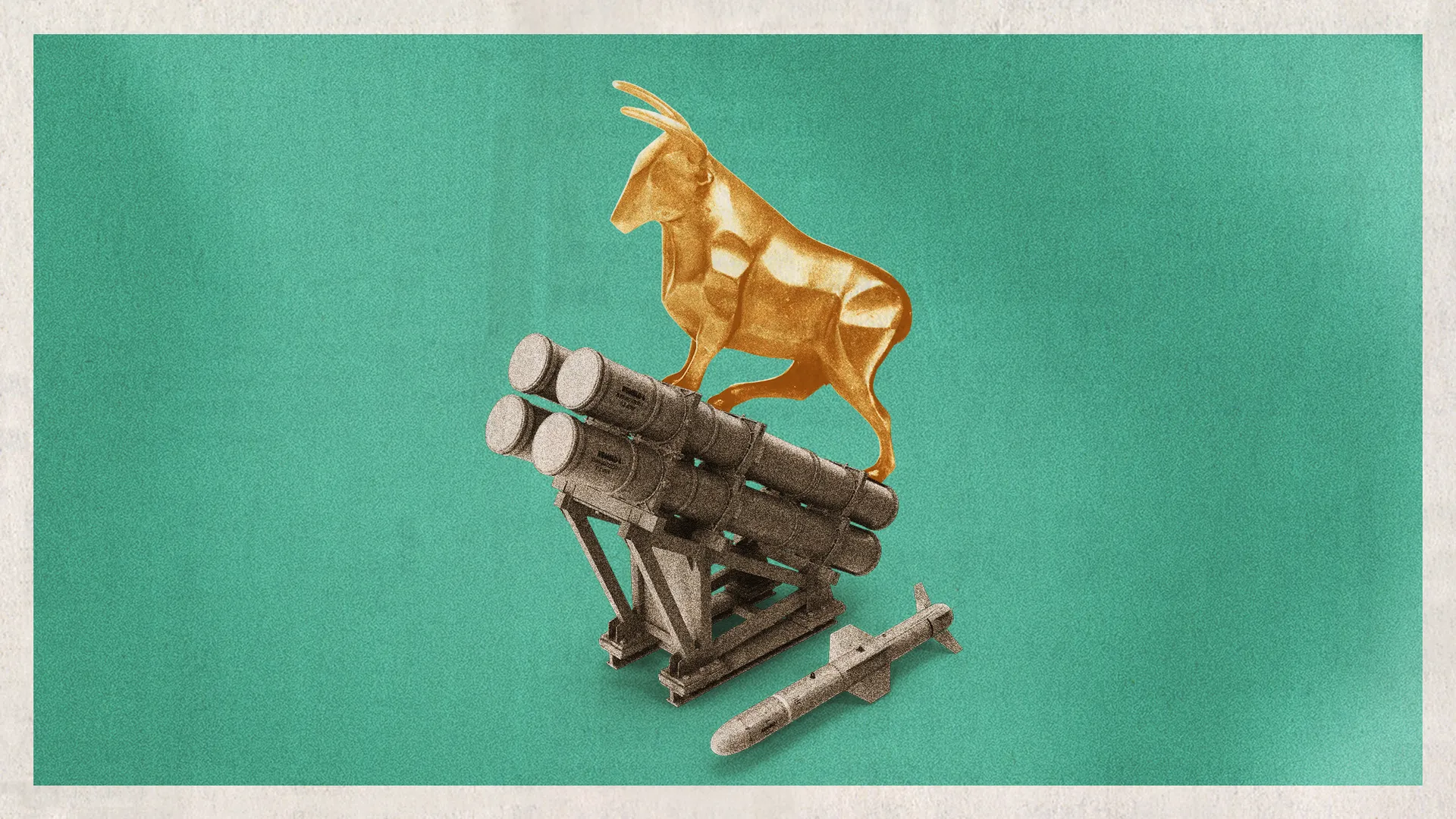
    Why is Trump threatening defense firms?

    President Donald Trump giveth to defense contractors and he also taketh away. Trump says he wants a major boost in defense spending, which contractors undoubtedly welcome. But he has also ordered a crackdown on executive pay and stock buybacks at the companies that make armaments for the United States.

    Trump’s financial threat against defense firms came just “hours before saying he’s decided to substantially increase the defense budget” to $1.5 trillion, said CNN. The U.S. makes the “best military equipment in the world,” the president said in a Truth Social post. But the taxpayer cash that ends up going to defense company stock buybacks comes at the “expense and detriment of investing in plants and equipment.” No executive at those firms should make more than $5 million a year, he said.

    A wartime footing?
    “Patience in the White House appears to be running out” with contractors who are struggling to “ramp up production of key munitions,” said The Telegraph. A think tank report predicted that U.S. anti-ship missiles would run out in under a week during any war with China. That has raised fears that America “may struggle to produce a host of weapons faster than it consumes them.” The U.S. is “no longer the manufacturing powerhouse it once was.”

    “Defense CEOs get paid a lot,” said Barron’s. Northrop Grumman CEO Kathy Warden, for example, received total compensation of $24.4 million in 2024. The government’s status as the defense industry’s “biggest customer” gives it substantial leverage to put conditions on that pay. The Defense Department has “every right to try to incentivize companies to speed up deliveries and production” of U.S. arms, said Kevin Murphy, the vice dean of faculty and academic affairs at USC Marshall School of Business, to Barron’s.

    A market risk
    Trump’s “selective state capitalism” is setting a “dangerous precedent,” said Doug Kass at The Street. His intervention in defense contractor finances, paired with announced limits on home purchases by institutional investors, is creating an “underappreciated market risk.” Trump’s latest policy announcements are “not market friendly.”

    Reining in defense contractors is “one issue where Democrats think Trump is right,” said Politico. Big arms firms have “done extraordinarily well,” said Sen. Jack Reed (D-R.I.), “and yet we’re behind in so many different systems.”


    QUOTE OF THE DAY

    ‘When Trump is done, goons like this will have to be put in check. Stripped of pensions, fired and prosecuted for abuse of power.’ 

    Sen. Ruben Gallego (D-Ariz.) responding to Border Patrol Commander Gregory Bovino on X, after the two argued over the latter’s presence in a Minnesota Target. The senator accused CBP of intimidating Target shoppers, while Bovino said he was merely using the store’s bathroom.


    TODAY’S BIG QUESTION

    What do Greenlanders want for their future?

    “Nobody in Greenland takes such an absurd scenario seriously.” That was the assessment of James Meek in the London Review of Books last April, after he had discussed the possibility of a U.S. Marine-led invasion with the island’s inhabitants. 

    But in the wake of the U.S. special forces operation in Venezuela and President Donald Trump’s rebooted desire to claim Greenland for the U.S., that “absurd scenario” looks a little less absurd, although economic coercion appears a more likely route. U.S. officials apparently have discussed “sending lump sum payments to Greenlanders as part of a bid to convince them to secede from Denmark and potentially join the U.S.,” said Reuters. 

    What did the commentators say? 
    Greenlanders are “taking it in their stride,” said Dominic Waghorn at Sky News. “A very small minority welcomes” the U.S. attempt to annex their land, but most reject it outright. 

    Their feelings toward Denmark, however, are not warm. Many people are “angry at being treated as inferiors,” said Dennis Lehtonen, who has lived in Greenland for three years, at The Independent. “We are already losing a lot from being under the Danish government,” said Aleqatsiaq Peary, an Inuit hunter, to the BBC. Coming under U.S. control would be “switching from one master to another, from one occupier to another.” 

    The leader of Greenland’s main opposition party said this week that their government should have a direct dialogue with the U.S., without interference from Copenhagen. Danish officials are “antagonizing both Greenland and the U.S. with their mediation,” said Pele Broberg, the leader of Naleraq, a political party that won 25% of the national vote last year. 

    What next? 
    The Trump administration has stressed its intention to buy Greenland from Denmark, but isn’t taking a military intervention off the table. Many Greenlanders feel the American rhetoric is pushing them to choose between the U.S. and Denmark — something that nobody in Greenland wants. “We are not for sale,” and “we will not be annexed,” said Jess Berthelsen, the chair of Greenland’s national trade union confederation, to The Guardian. “We will determine our own future, and we will continue to work with Denmark and the United States.”


    Statistic of the day

    51: The number of years the U.S. has maintained the “Doomsday Plane,” a command aircraft to be used by the president in the event of a nuclear disaster. The plane, a modified Boeing E-4B Nightwatch, was spotted in Los Angeles last week in one of its only public appearances ever.


    IN THE SPOTLIGHT

    How Utah became a media focal point

    Utah has emerged as a powerhouse in the media sphere. While interest in wholesome family content, particularly of the Mormon variety, has garnered the region growing attention in recent years, the state’s online popularity has also resulted in a new set of child protection laws.

    Social media hub
    Amid the trad wife phenomenon, Utah has become “known as a hotspot for social media content creators,” Fox 13 said. The state is also a hub for Mormons, and the Church of Latter-day Saints has been a “source of public fascination for years,” said A Frank Voice. LDS culture emphasizes “documentation, memory-keeping and family presentation,” so when social media came along, “many LDS women were basically already halfway to being influencers.” 

    The stars of the Hulu series “The Secret Lives of Mormon Wives” particularly epitomize the power of Utah momfluencers; the series follows a #MomTok group as they navigate faith, relationships and public perception. Another Mormon creator, Hannah Neeleman — a former ballerina and mother of eight — has gained an immense following by chronicling her life on the aptly named Ballerina Farm. 

    Reality staples
    Reality TV staple Bravo has two Utah-based shows: “The Real Housewives of Salt Lake City,” which debuted in 2020, and “Sold on SLC,” which came out last year. Their casts have to “battle between the religious and social standards in Utah” and “external temptations from the media and pop culture,” said Collider, a conflict that creates a welcome new dynamic for reality TV.

    The backlash
    Even as family vloggers and parenting influencers have surged in popularity, a pall was cast over the community by the 2023 arrest of Ruby Franke, a Utah mother of six who gave parenting advice on YouTube. Franke was charged with child abuse alongside her partner in crime, therapist Jodi Hildebrandt. 

    Last year, Utah added new protections for the children of online content creators following Franke’s conviction. The law gives adults a path to “scrub from all platforms the digital content they were featured in as minors” and requires parents to set aside money for kids spotlighted in content, said The Associated Press.


    Good day 🐕

    … for gifted dogs. Scientists studying “gifted word learner” dogs have found they can learn the names of new toys even when the names are never spoken to them, said The Associated Press. After “eavesdropping” on their owners as they talked to another person about a particular toy, 7 out of 10 dogs in the study were able to retrieve it by name.


    Bad day 🔍

    … for AI summaries. Google has removed some of its artificial intelligence health summaries after an investigation by The Guardian exposed that users were put at risk by “false and misleading information.” In one case, Google’s AI provided inaccurate facts about crucial liver function tests, which experts described as “dangerous” and “alarming.”


    Picture of the day

    One for the ages

    Kimono-clad women take photos after their Coming of Age Day ceremony in Japan’s second-largest city, Yokohama. The centuries-old tradition is marked with a national holiday dedicated to celebrating all those who are turning 20, seen as the milestone between childhood and adulthood.
    Franck Robichon / EPA / Shutterstock


    Puzzles

    Daily sudoku

    Challenge yourself with The Week’s daily sudoku, part of our puzzles section, which also includes guess the number 

    Play here


    The Week recommends

    Doctors, spies and squires in January TV

    January is the height of winter, a time of year when people tend to consume a lot of television. With several new and returning series headlining this month’s streaming options, there will be plenty to choose from.

    ‘The Night Manager’
    The second season of “The Night Manager” has dropped a full decade after the widely praised first. Tom Hiddleston reprises his role as Jonathan Pine, the night manager at a luxury hotel in Cairo who is hired by MI6 to infiltrate and take down an international arms dealer. In season two, he is drawn back into high-level intrigue, a “comeback” resulting in the “first must-watch show of 2026,” said The Guardian. (on Prime Video now)

    ‘The Pitt’
    Season one of this hospital drama was a discourse-driving hit, unfolding over the course of a single day following a mass shooting. In season two, emergency doctor Michael “Robby” Robinavitch (Noah Wyle) is heading in for his final shift before taking a well-deserved leave. This season “shows little interest” in “hysterical stake-raising,” focusing instead on the “subtler pleasures of observing how characters evolve and connect,” said Time. (on HBO Max now)

    ‘A Knight of the Seven Kingdoms’
    With the success of 2024’s “Dune: Prophecy” prequel, HBO is trying a similar approach with the second “Game of Thrones” spinoff after “House of the Dragon.” Peter Claffey plays Ser Duncan “Dunk” the Tall (pictured above), who is accompanied by his adolescent squire Egg as they travel around Westeros. The series will be lighter in tone than its epic counterparts. (Jan. 18 on HBO Max)

    Read more


    Poll watch

    A record-high 45% of Americans identified as political independents in 2025, according to a Gallup survey, surpassing the 43% who did in 2024 and 2023. The poll of 13,454 adults found Gen Z had the most independents at 56%, followed by millennials at 54% and Gen X at 42%. 


    INSTANT OPINION

    Today's best commentary

    ‘In recognizing Somaliland, Israel sets a dangerous precedent’
    Dahir Hassan Abdi at The Hill
    Israel’s “recognition of Somaliland — the northwest Somali region — as an independent country has marked a deliberate break with longstanding international practice,” says Dahir Hassan Abdi. It “left Israel isolated as the only U.N. member state to recognize a territory the international community still treats as part” of Somalia. Somaliland is “under strain from the war in Yemen,” and “any political shock along this stretch of coast risks adding yet another layer of instability to an already fragile corridor.”

    ‘Subsidies are not health care reform’
    Tony LoSasso and Kosali Simon at Newsweek
    Not “all ACA-subsidized enrollees are being impacted the same way,” say Tony LoSasso and Kosali Simon. Medicaid “eligibility remains unchanged, and lower-income exchange enrollees are continuing to receive substantial subsidies under the original ACA rules,” so the “families facing the greatest economic hardship remain largely insulated from this change.” The ACA change “does not automatically translate into widespread coverage losses,” though “none of this is to deny that rising premiums impose real financial strain.”

    ‘Grok’s “weapons of abuse”’
    The Washington Post editorial board
    The U.K. is “responding directly to sexualized and violent imagery being generated by Elon Musk’s AI chatbot Grok,” and Musk has made a “colossal error by allowing the chatbot to create and circulate these explicit images,” says The Washington Post editorial board. Unlike so “many areas of artificial intelligence development and information sharing, the lines here are not blurry.” Using “photos of real girls to create sexualized imagery is child exploitation,” and Musk’s “choice threatens the whole industry.”


    WORD OF THE DAY

    choremance

    A “refreshingly real” trend in which two people turn mundane errands, like a supermarket shop, into a date, said Cosmopolitan. “It’s casual” and “low stakes.” And for a generation that’s “perpetually short on time and patience” and values “authenticity over aesthetics,” it’s “catching on fast.”


    Evening Review was written and edited by Theara Coleman, David Faris, Anya Jaremko-Greenwold, Justin Klawans, Joel Mathis, Summer Meza and Jamie Timson, with illustrations by Stephen Kelly and Julia Wytrazek.

    Image credits, from top: Illustration by Julia Wytrazek / Getty Images; Christian Klindt Soelbeck / Ritzau Scanpix / AFP / Getty Images; Illustration by Stephen Kelly / Getty Images; BFA / Steffan Hill / HBO / Alamy
     

    Recent editions

    • Morning Report

      Minnesota sues over ‘federal invasion’

    • Evening Review

      An ICE investigation showdown

    • Morning Report

      Trump’s Fed fight heats up

    VIEW ALL
    TheWeek
    • About Us
    • Contact Future's experts
    • Terms and Conditions
    • Privacy Policy
    • Cookie Policy
    • Advertise With Us
    • FAQ
    Add as a preferred source on Google

    The Week is part of Future US Inc, an international media group and leading digital publisher. Visit our corporate site.

    © Future US, Inc. Full 7th Floor, 130 West 42nd Street, New York, NY 10036.