The Week The Week
flag of US
US
flag of UK
UK
https://cdn.mos.cms.futurecdn.net/flexiimages/jacafc5zvs1692883516.jpg

SUBSCRIBE & SAVE

Less than $3 per week

Sign in
  • View Profile
  • Sign out
  • The Explainer
  • The Week Recommends
  • Newsletters
  • Cartoons
  • From the Magazine
  • The Week Junior
  • Student Offers
  • More
    • Politics
    • World News
    • Business
    • Health
    • Science
    • Food & Drink
    • Travel
    • Culture
    • History
    • Personal Finance
    • Puzzles
    • Photos
    • The Blend
    • All Categories
  • Newsletter sign up Newsletter
  • The Week Evening Review
    A major hiring slowdown, Vietnam’s balancing act, and AI washing

     
    TODAY’S BIG QUESTION

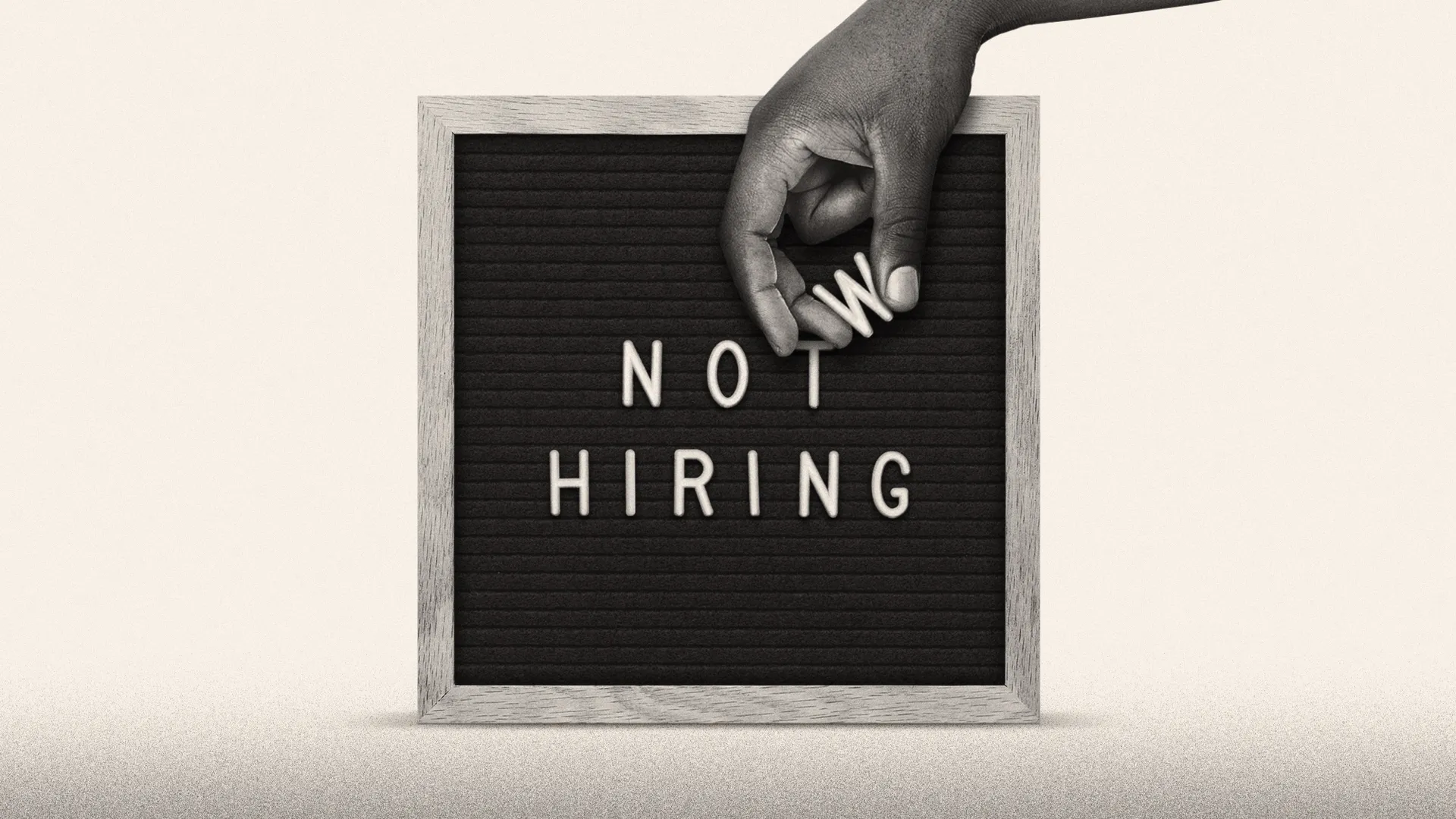
    Is the US in a hiring recession?

    American workers are staring down a terrible labor market. It’s so bad that job postings are at their lowest level since the depths of the pandemic.

    The demand for new hires “continues to wane,” said CNN. The Bureau of Labor Statistics reported last week that there were just 6.54 million job openings in December, the “lowest level since September 2020.” That leaves “slim pickings” for Americans seeking a new job, said Elizabeth Renter of NerdWallet, per the network. And layoffs last month were the highest since the 2009 financial crisis plunged the U.S. economy into the “steepest downturn since the Great Depression,” said CNBC.

    Economists are cautious about how tariffs, immigration policy and artificial intelligence will affect the job market going forward. The hiring recession “isn’t going to end anytime soon,” said Heather Long, the chief economist at Navy Federal Credit Union, in a statement.

    What did the commentators say?
    Republicans have an “economy problem,” said Karl Rove at The Wall Street Journal. President Donald Trump is not helping himself with a “triumphal tone” that suggests the economy is “booming.” That makes struggling Americans “feel unseen and abandoned.” If Republicans are to survive this year’s midterm elections, they “need a better economic message” than what they are currently delivering.

    The U.S. is in a “jobless boom,” said Long at Vox. The stock market is reaching “record levels,” and economic growth is above 4%. But the “K-shaped economy” is delivering the benefits to the upper end of the income scale while the “bottom 80% are just getting by.” The end of the post-pandemic hiring boom is a factor, but so is Trump’s trade wars and the rise of artificial intelligence. The country is poised for a “hot growth year,” but “hiring could remain anemic for a while.” And that could “mean trouble” for Republicans in November.

    What next?
    The hiring slowdown is concentrated in “manufacturing, professional and business services,” said NBC News. A report from ADP Research found that job growth, where it exists, is happening mostly in “education and health services.”

    The job numbers are a “warning sign for Trump’s economy,” said Politico. The president’s approval ratings have been “battered by affordability, inflation and labor market anxieties.” That could complicate White House messaging that has framed the economy as the “dawn of a new Golden Age.”


    QUOTE OF THE DAY

    ‘I’m not in a room because of a social experiment. I’m in the room because I belong there and the room was incomplete until I got there.’

    Maryland Gov. Wes Moore (D), on CNN’s “State of the Union,” after being left out of an annual White House event with the National Governors Association. The U.S.’s only Black governor found the slight “particularly painful” since he’s the association’s vice chair.


    IN THE SPOTLIGHT

    Vietnam’s ‘balancing act’ with Europe, the US and China

    Vietnam has prepared a “second U.S. invasion plan” amid fears of an American “war of aggression” more than half a century after the end of the Vietnam War, according to a leaked internal military report. There’s a “consensus here across the government and across different ministries,” said Ben Swanton, the co-director of human rights group Project88, which published the classified document. This isn’t “just some kind of fringe element or paranoid element within the party or within the government,” he said to The Associated Press. 

    ‘Hanoi’s duality’ 
    Hanoi has “mastered the art of managing” President Donald Trump since he has been in office, said Le Monde. Vietnam has adopted an “accommodating attitude,” permitting a $1.5 billion Trump-branded golf project and joining the president’s Board of Peace “without much hesitation,” as the country seeks a “favorable trade agreement ahead of its neighbors.” Yet “deep distrust remains,” exacerbated by Washington’s recent “renewed aggression” toward Venezuela and Iran. 

    As well as “exposing Hanoi’s duality” toward the US, the leaked report “confirms a deep-seated fear” of international intervention, said the AP. With precedents such as the 2004 Orange Revolution in Ukraine and the 1986 Yellow Revolution in the Philippines, the Vietnamese Communist Party fears a similar “color revolution” against its internally unchallenged leadership. 

    ‘Deliberate strategy’ 
    Vietnam is one of the world’s “fastest-growing economies,” said the Financial Times. Its government has an “ambitious” annual growth target of 10% for this year and aims to turn Vietnam into a “developed country by 2045.” Hanoi has also agreed to a “comprehensive strategic partnership” with the EU in recent weeks as part of a “deliberate strategy” to “diversify and balance its diplomatic ties” and “avoid becoming too dependent on any single center of power,” said DW. 

    The country has to maintain a delicate “balancing act” between the U.S. and China, with the former its largest export market and the latter its largest two-way trade partner, said the AP. But even though China’s influence is more immediate geographically, the leaked invasion plan implies that China is seen “more as a regional rival than a threat” like the U.S.


    Statistic of the day

    22.6 million: The number of additional deaths that will occur globally by 2030 due to the U.S.’s humanitarian aid cuts to programs in 93 countries, according to a study in The Lancet. At least 5.4 million of the deaths are expected to be children under age 5.


    the explainer

    Companies are increasingly AI washing

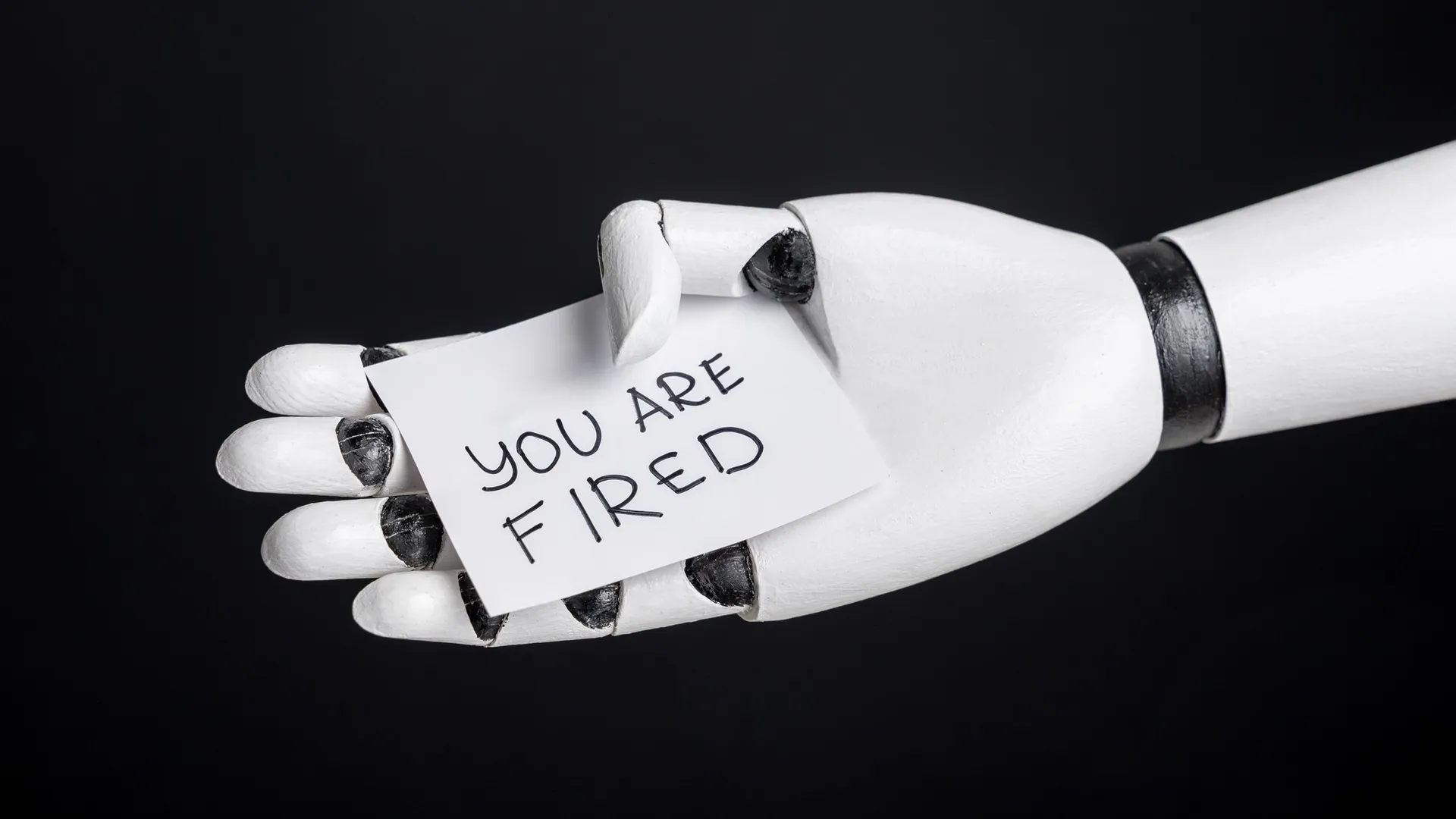
    Companies are exaggerating their AI capabilities to raise their value and, in turn, creating a host of problems for executives and employees alike. They are using this so-called AI washing to justify layoffs and avoid government scrutiny and public scorn. 

    What does AI washing look like?
    AI washing can appear in several ways, most commonly through company claims of “integrating the newest technology” and being a “technological front-runner,” even if they don’t actually have the technology to support the claim, said Fabian Stephany, a departmental research lecturer at the Oxford Internet Institute, to The Guardian. Firms can also “showcase back-tested results where AI appears to outperform human analysts, while omitting real-world scenarios where the same models falter,” said the New York State Bar Association (NYSBA).

    Another form of AI washing involves the “rebranding of traditional analytics as AI,” said the NYSBA. “Regression models, statistical analyses and even Excel-based automation tools are frequently repackaged under the AI banner.” This allows companies to “capitalize on AI’s market appeal without investing in the underlying technology.” 

    Since 2023, AI has been cited in over 71,000 job cut announcements, according to research firm Challenger, Gray & Christmas. But while AI may inspire layoffs with hopes of replacing workers with bots, it may not yet be possible. As a result, said research firm Forrester, “over half of layoffs attributed to AI will be quietly reversed as companies realize the operational challenges of replacing human talent prematurely.”

    Why is it happening?
    AI discussions are “full of wild exaggeration,” said Forbes. People say the technology “can do everything you have ever dreamed of.” That makes it a perfect scapegoat for laying people off. Using AI as a reason for layoffs “may be less controversial than other reasons, like bad company planning,” said The New York Times. CEOs could be “blaming layoffs on AI advancements when they actually just overhired during the pandemic,” said The Guardian. And blaming layoffs on AI instead of Trump administration policies like tariffs may reflect that companies “feel there will be consequences” if they “say anything negative” about government decisions, said Martha Gimbel, the executive director of the Budget Lab at Yale University, to The Guardian.


    Good day 🦻

    … for representation. Children’s TV show “Peppa Pig” will feature another groundbreaking theme as Peppa’s little brother, George, will be diagnosed with a hearing problem. This latest storyline will have a huge impact because deaf children “will watch this episode and feel represented in a way they have not been before,” said The Times.


    Bad day 🥱

    … for insomnia. Sleep loss can physically damage the brain in ways that slow down thinking and reaction time, according to researchers from the University of Camerino in Italy. It can impact cholesterol regulation in the brain and thin the fatty insulation around nerve fibers that helps signals move quickly and efficiently.


    Picture of the day

    Colorful statement

    Bad Bunny holds the Puerto Rican flag with light blue — the original 1895 design representative of the island’s independence movement — during his Super Bowl halftime show. The performance was viewed by an estimated 135 million people, according to preliminary counts, making it the most-watched performance in the game’s history.
    Kevin Sabitus / Getty Images


    Puzzles

    Daily sudoku

    Challenge yourself with The Week’s daily sudoku, part of our puzzles section, which also includes guess the number

    Play here


    The Week recommends

    TV’s mistaken identity, legal woes and reborn comedy

    In the past, February would mark the beginning of the home stretch for network series that typically went on hiatus over the holidays and concluded in May. But in the streaming era, programs new and old can debut pretty much whenever they want, including these eagerly awaited shows.

    ‘How to Get to Heaven From Belfast’
    The creator of the hit Irish comedy “Derry Girls,” Lisa McGee, returns with a highly anticipated new series for Netflix. The comedy-thriller combines “early ‘Derry Girls’ vibes from the female-friendship-group-plus-token-Englishman dynamic” with a “detectable hint of ‘Bad Sisters,’” said Jordan King at Empire. (Feb. 12 on Netflix)

    ‘Strip Law’
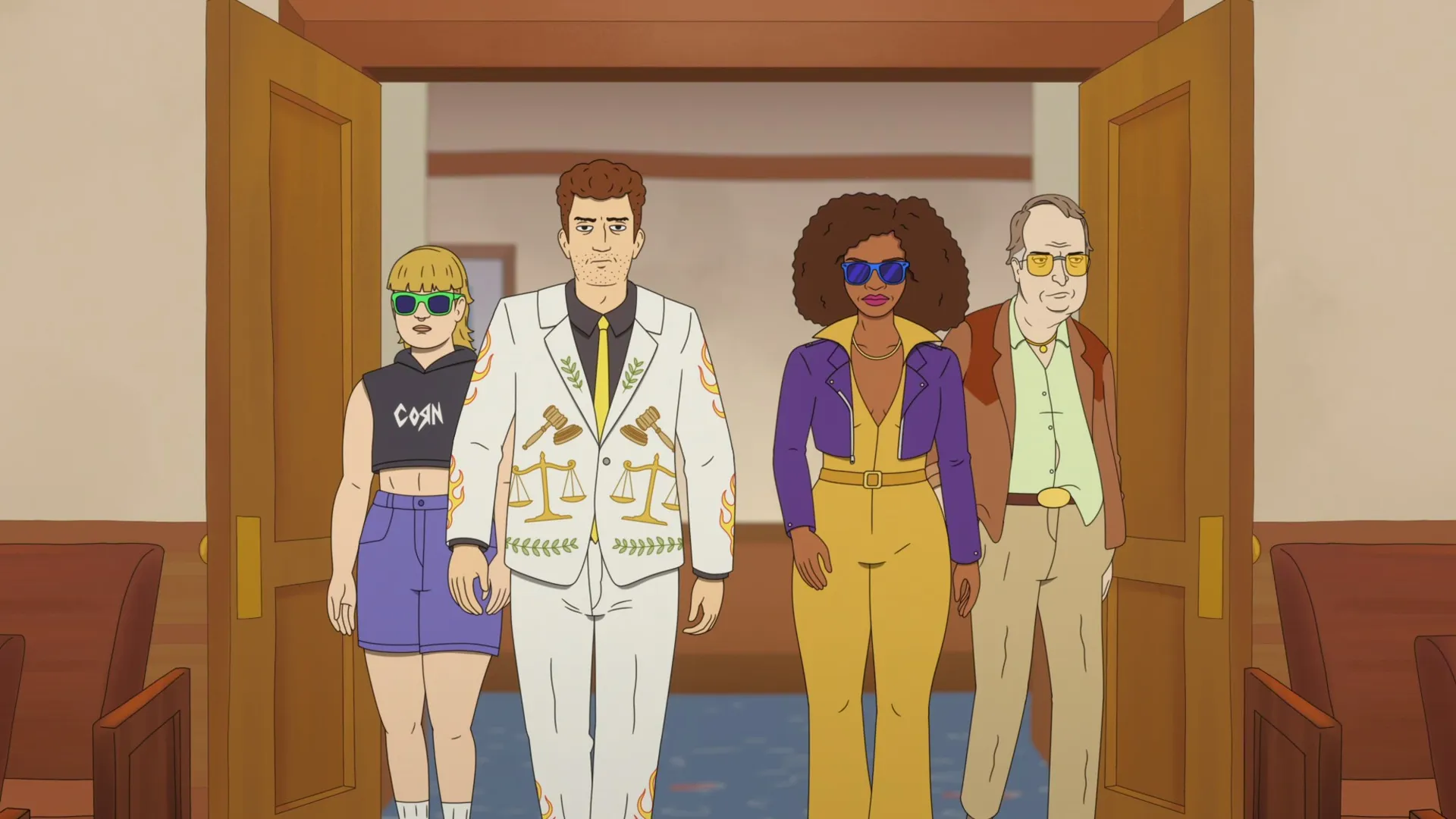
    Adam Scott (“Severance”) and Janelle James (“Abbott Elementary”) headline this Netflix adult animated comedy (pictured above). The series is a “raunchy parody of legal dramas and a salute to the topsy-turvy morality of Vegas,” said Noel Murray at The New York Times. (Feb. 20 on Netflix)

    ‘Scrubs,’ season 10
    This unexpected 10th season revival stars virtually the entire core cast of the long-running series. A “pivotal show in recent television history,” it “straddled both the ‘very special episode’ tone of ’80s sitcoms and the joke-a-minute style that dominates the single-camera era,” said Ryan Vlastelica at AV Club. It also “helped usher in a new era of comedy” now associated with “30 Rock” and “Parks and Recreation.” (Feb. 25 on ABC)

    Read more


    Poll watch

    Nearly a quarter of people (23%) across 107 countries feel the economy is their nation’s most important problem, according to a Gallup survey. This is more than double the percentage of people who feel work issues (10%) are most important, followed by politics (8%) and safety (7%).


    INSTANT OPINION

    Today’s best commentary

    ‘Depoliticize the National Guard’
    Adam Kinzinger at Newsweek
    The military and National Guard are “trusted precisely because they are professional, nonpartisan and committed to service, not political agendas. But today, that norm is under strain,” says former Rep. Adam Kinzinger. The Guard has been “redirected away from their communities for reasons that have little to do with public safety and everything to do with politics.” Politicizing the military “erodes public trust, undermines civilian control, dishonors service members and weakens one of America’s most respected institutions.”

    ‘Wine against the New Prohibitionism’
    N.C. Stevens at Slate
    An “increasing push toward sobriety has flooded the market with nonalcoholic alternatives to traditional tipples,” and “some in the beverage alcohol industry have begun decrying what they view as a dastardly neo-temperance, even neo-Prohibitionist, movement,” says N.C. Stevens. But where beer and spirits have “largely opted for diversification into nonalcoholic renditions of their traditional offerings as a hedge against the surge in sobriety, wine is relying on its smooth and rounded voice to push back.”

    ‘Is nixing aid to Israel a poison chalice?’
    Kelley Beaucar Vlahos at The American Conservative
    There’s a “lot of talk about getting rid of the massive agreement that guarantees Israel billions of dollars in military aid each year,” says Kelley Beaucar Vlahos. But while a debate “over the annual package would be a most welcome one given the enormous sums of American taxpayer money that have flowed to Israel’s wars in recent years, it’s important to keep an eye on what might be a bait and switch.”


    WORD OF THE DAY

    skimo

    Short for ski mountaineering, a new Winter Olympics event. Athletes “run up a mountain and ski back down it again” in what may be “understood as an elaborate metaphor for the human condition,” said The Guardian. Let’s hope it does better than ski ballet, bandy and military patrol.


    Evening Review was written and edited by Will Barker, Theara Coleman, Nadia Croes, David Faris, Scott Hocker,  Justin Klawans, Joel Mathis, Summer Meza and Devika Rao, with illustrations by Stephen Kelly and Julia Wytrazek.

    Image credits, from top: Illustration by Stephen Kelly / Getty Images; Chris Ratcliffe / Bloomberg / Getty Images; karetoria / Getty Images; Netflix
     

    Recent editions

    • Morning Report

      Seahawks celebrate Super Bowl victory

    • Sunday Shortlist

      The end of an era for Sundance

    • Saturday Wrap

      The Trump administration’s ‘dress rehearsal’

    VIEW ALL
    TheWeek
    • About Us
    • Contact Future's experts
    • Terms and Conditions
    • Privacy Policy
    • Cookie Policy
    • Advertise With Us
    • FAQ
    Add as a preferred source on Google

    The Week is part of Future US Inc, an international media group and leading digital publisher. Visit our corporate site.

    © Future US, Inc. Full 7th Floor, 130 West 42nd Street, New York, NY 10036.