Sign up to get Today’s Best Articles in your inbox
Join 350,000+ subscribers and keep yourself informed with a selection of
The Week’s most interesting, enlightening and entertaining stories - plus daily puzzles.
You are now subscribed
Your newsletter sign-up was successful
Want to add more newsletters?
An account already exists for this email address, please log in.
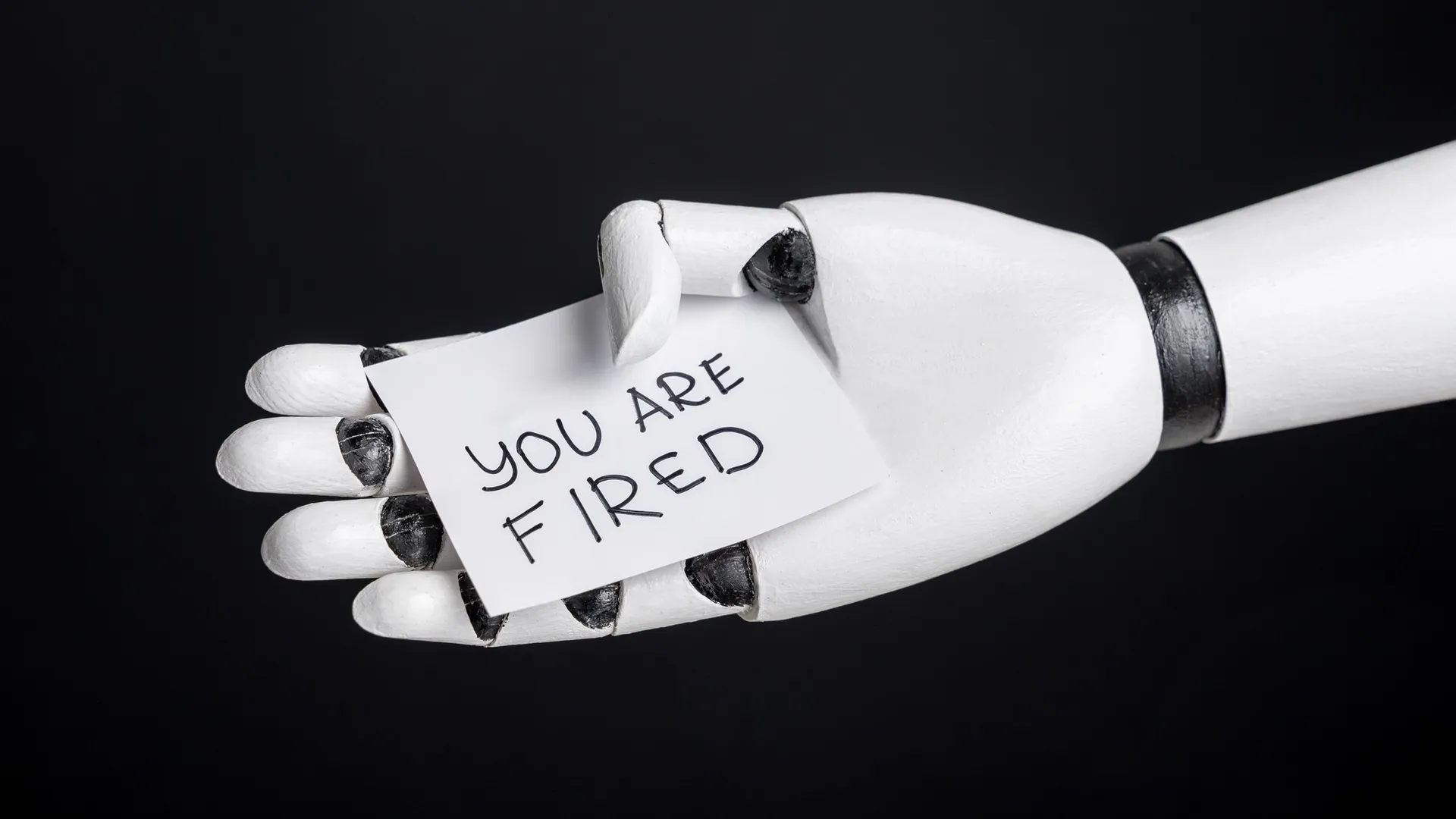
Companies are exaggerating their AI capabilities to raise their value and, in turn, creating a host of problems for executives and employees alike. They are using this so-called AI washing to justify layoffs and avoid government scrutiny and public scorn.
What does AI washing look like?
AI washing can appear in several ways, most commonly through company claims that they are “integrating the newest technology” and are a “technological frontrunner,” even if they don’t actually have the technology to support this claim, said Fabian Stephany, a departmental research lecturer at the Oxford Internet Institute, to The Guardian. Firms can also “showcase back-tested results where AI appears to outperform human analysts, while omitting real-world scenarios where the same models falter,” said the New York State Bar Association (NYSBA).
Another form of AI washing “involves the rebranding of traditional analytics as AI,” said the NYSBA. “Regression models, statistical analyses and even Excel-based automation tools are frequently repackaged under the AI banner.” This allows companies to “capitalize on AI’s market appeal without investing in the underlying technology.” A common denominator is the usage of AI advancement as a reason for layoffs.
The Week
Escape your echo chamber. Get the facts behind the news, plus analysis from multiple perspectives.
Join more than 350,000 subscribers and keep yourself informed with a selection of The Week’s most interesting, enlightening and entertaining stories - plus daily puzzles.
Join more than 350,000 subscribers and keep yourself informed with a selection of The Week’s most interesting, enlightening and entertaining stories - plus daily puzzles.
Artificial intelligence was deemed responsible for almost 55,000 announced layoff plans in 2025 and since 2023, it has been cited in over 71,000 job cut announcements, according to an analysis by the research firm Challenger, Gray & Christmas. “A lot of companies are making a big mistake because their CEO, who isn’t very deep into the weeds of AI, is saying, ‘Well, let’s go ahead and lay off 20 to 30% of our employees and we will backfill them with AI,’” said JP Gownder, a vice-president and principal analyst for the research firm Forrester, to The Guardian. However, many of these companies “do not have mature, vetted AI applications ready to fill those roles,” said Forrester. As a result, “over half of layoffs attributed to AI will be quietly reversed as companies realize the operational challenges of replacing human talent prematurely.”
Why is it happening?
AI discussions are “full of wild exaggeration,” said Forbes. “People say the technology can do everything you’ve ever dreamed of. It can be used to dramatically change your business instantly. AI chatbots know everything.” That makes it a perfect scapegoat for laying people off. Using AI as a reason for layoffs “may be less controversial than other reasons — like bad company planning,” said The New York Times. CEOs could also be “blaming layoffs on AI advancements when they actually just overhired during the pandemic,” said The Guardian.
A big elephant in the room is that many businesses fear the Trump administration, making them wary of blaming layoffs on policies like tariffs. There has been a “real hesitance among some parts of corporate America to say anything negative about the economic impacts of the Trump administration because they feel that there will be consequences,” said Martha Gimbel, the executive director and co-founder of the Budget Lab at Yale University, to The Guardian. “By saying that the layoffs are due to new efficiencies created by AI, you avoid that potential pushback.”
Sign up to get Today’s Best Articles in your inbox
A free daily email with the day’s biggest news and analysis – and the best features from TheWeek.com
Devika Rao has worked as a staff writer at The Week since 2022, covering science, the environment, climate and business. She previously worked as a policy associate for a nonprofit organization advocating for environmental action from a business perspective.